Theater review: Flawed foundation, confused goals cause ‘Sylvia Sylvia Sylvia’ to fall short
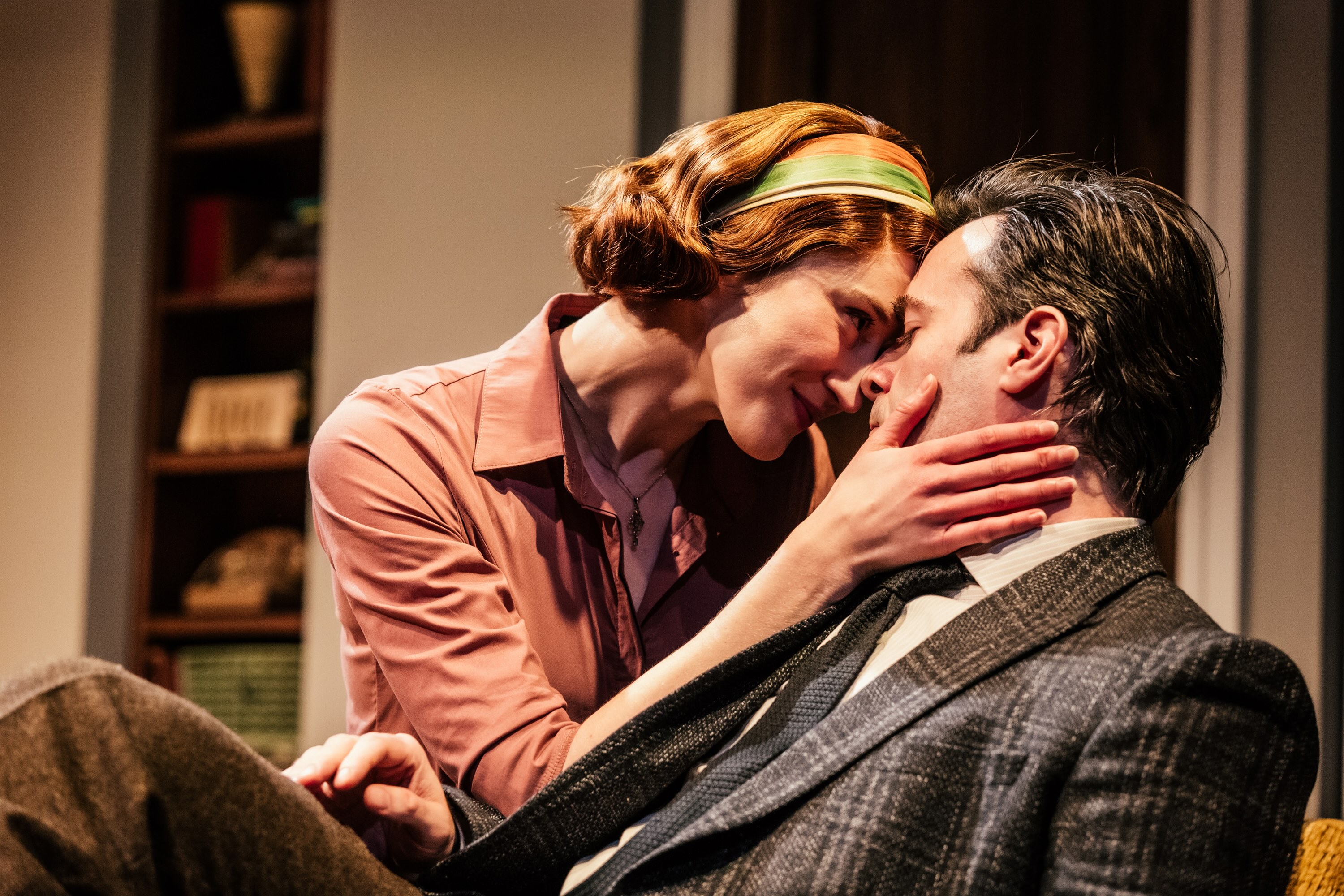
Marianna Gailus as Sylvia Plath (left) and Cillian O’Sullivan as Ted Hughes (right) pose intimately with their foreheads pressed together. Written by Beth Hyland, the award-winning production “Sylvia Sylvia Sylvia” debuted at the Geffen Playhouse Feb. 4. (Courtesy of Jeff Lorch)
“SYLVIA SYLVIA SYLVIA ”
Feb. 4-Mar. 8
Geffen Playhouse


By Mya Ward
Feb. 24, 2026 2:25 p.m.
This post was updated Feb. 26 at 8:28 p.m.
“Sylvia Sylvia Sylvia” is a valentine, a dialectic and a seance, but it is not quite sure which one to believe in.
Written by Beth Hyland and directed by Jo Bonney, the Edgerton Foundation New Play Award-winning production “Sylvia Sylvia Sylvia” debuted at the Geffen Playhouse on Feb. 4. The production follows Sally (Midori Francis), a once-vaunted novelist, who – while searching for inspiration – rents an Airbnb in the former apartment of mid-century poets Sylvia Plath (Marianna Gailus) and Ted Hughes (Cillian O’Sullivan). As her husband, Theo (Noah Keyishian), reaches new heights in his literary career, Sally is stuck at a decade-long plateau, struggling to finish her second novel, which fictionalizes the married life of Plath and Hughes. In the fog of an approaching deadline, writer’s block and rising resentment toward Theo, Sally manages to summon the ghosts of Sylvia and Ted.
The show attempts to illustrate the competition underlying the marriages between creative peers, the fracturing of a woman’s mental health and the long-lasting effects of patriarchy, all while being a ghost story about Sylvia Plath. If this sounds like a lot to tackle in under two hours, that’s because it is.
The show is ambitious, and at times, riveting, but it suffers from tonal and thematic muddling. In popular media, the sordid details of Plath’s life and death are either used as a pretense or a punchline. There are moments in “Sylvia Sylvia Sylvia” that contend with this framework, though in a consistently didactic way. On Plath, Sally says, “People assume she was this mopey, dour person, but she wasn’t, at all! She was so vibrant, and funny!” A few scenes later, though, Sally makes a quip about the oven. Any interesting comments that “Sylvia Sylvia Sylvia” might make about Plath, the perversion of her legacy and her anointment as the patron saint of madwomen all become insignificant because of narrative expediency.
[Related: Theater review: ‘Richard III’ deftly reimagines Shakespeare’s classic through standout acting]
To Hyland’s credit, there are several meticulous allusions to the writer’s life braided through the production – dialogue drawn directly from her diaries, Plath’s and Hughes’ recreational occultism and Plath’s lemon meringue recipe. While preparing vegetables for dinner, Sally even slices her thumb and is piqued by the rushing blood – a nod to Plath’s iconic poem, “Cut.” To this end, the scenes featuring Sylvia and Ted are the production’s tour de force – sharp, witty, effervescent – and actors Gailus and O’Sullivan trade barbs and sweet nothings like the Cambridge poets they portray.
Even the revolving set design, constructed by Studio Bent, seems to mirror a Plathian fugue. The tidy little apartment turns crimson and blood-streaked as Sally reaches an emotional breaking point and Sylvia discovers Ted’s infidelity.
And yet, these Plathian mementos do little to justify “Sylvia Sylvia Sylvia.” Despite billing itself by the name of the tortured poetess, the show is not about Plath – not formally anyway. “Sylvia Sylvia Sylvia” is a thesis on the emotional economy of literary couples, and unfortunately, it is an incomplete one.
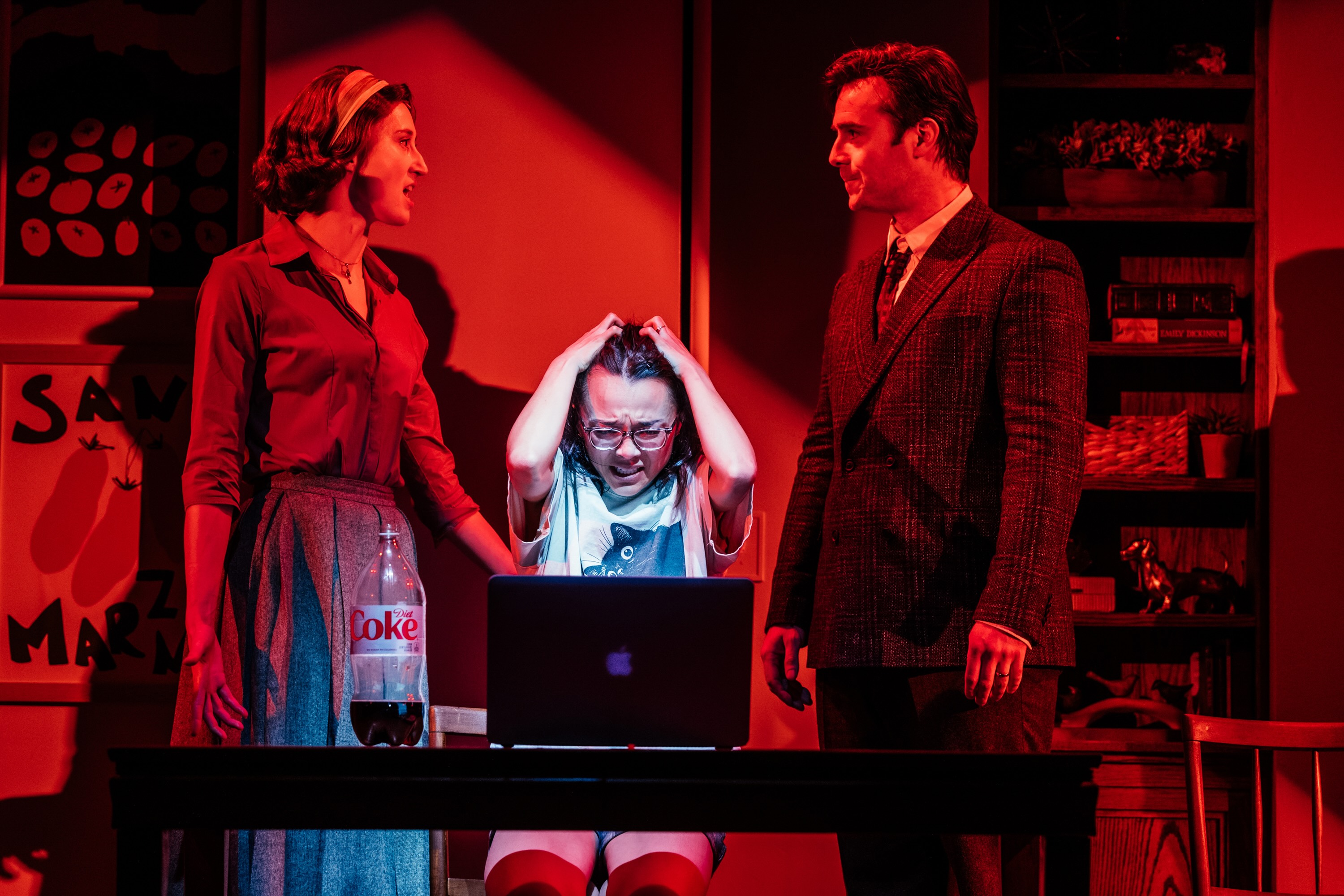
The play relies on the supposed comparability of the two literary couples, but fails to supply equal time or care in developing them. The cleverly composed acrimony between Sylvia and Ted is juxtaposed by the relentless therapy speak of Sally and Theo. Their dialogue does seem accurate to the 2020s and Francis and Keyishian deliver convincing performances, yet the writing simply generates less interest for them and their half-baked drafts. “Sylvia Sylvia Sylvia” desperately attempts to persuade the audience that Sally and Theo share a dynamic similar to that of Plath and Hughes, as the scenes between the couples mirror one another, and the resulting climax sees both couples simultaneously clash – their lines and staging overlaid. The play has a lot to say – about mental health, Sylvia Plath, marriage and patriarchy – but it has one fatal flaw: Sally is not Sylvia Plath.
This is true on a functional level, of course – and the show has various characters say so at great length – but on a conceptual level, Sylvia and Sally are only reflections of one another, in that they are both depressed female writers. Sally is pitched as a descendant of Sylvia – or at least a disciple of hers – but the play’s central analogy hinges on the audience believing that Sally is as subjugated as Sylvia, which she is not. Although Sally and Sylvia both experience marital discord and the pressures of their own high standards, the men under whom they suffer and stew are very different.
In the play, Ted is a condescending tyrant, and Sylvia’s antipathy for him is earned. “Sylvia Sylvia Sylvia” is happy to divulge all of Hughes’ transgressions, with Ted quite literally turning to the audience to deliver a monologue on his machinations against Plath’s legacy. Theo, on the other hand, is so mild and self-effacing that Sally’s treatment of him occasionally tips from the righteously indignant into the outright abusive.
[Related: Modern-spin Macbeth crafts Shakespeare to 1970s context with feminist tones]
Like Ted, Sally is envious of Theo’s successes, reminiscing on the days when she was the breadwinner. The opening of the show has Ted brooding over Sylvia’s acceptance into the Boston Herald directly followed by a scene of Sally sobbing after learning of Theo’s work receiving a prestigious award. And like Sylvia, Theo bears the majority of the domestic labor while also suffering his spouse’s jealousy. One leaves the theater wondering why Sylvia and Ted did not haunt Theo instead. “Sylvia Sylvia Sylvia” gestures toward the role reversal, but ultimately refuses it because Plath’s foil must be a damned female writer or the analogy collapses.
On one occasion when Sylvia appears to Sally, the poet swears she will prevent Sally from finishing her novel. Sylvia leaves Sally with what could be read as a warning, a curse or maybe a friendly piece of advice: “Don’t follow me.” The sentiment was a refreshingly novel one, and it seemed instructive for a particular sect of aspiring writers in pursuit of their deceased idol’s greatness. But the production does not trust the deliverance enough to let it stand. Instead, it is reiterated in Sally’s wandering and overwrought monologue that serves as the production’s lazy resolution.
By the end of “Sylvia Sylvia Sylvia,” the audience is left not with a fully-developed story, but the ghost of one.