Arts
Oct. 25, 2026 9:31 p.m.A historic Westwood theater returned to the spotlight Friday.
For UCLA students, the Bruin Theater’s reopening offered more than a chance to watch a movie. It marked the return of a historic movie palace that first opened in 1937.
By Presley Liu, Julia Kinion, and Sophia Pu
On this week’s episode of Bruin to Bruin, UCLA student and company founder Kimberly Cui joins host Emma Susilo to share how she transformed her passion for matcha into a thriving business. She discusses the challenges of building a brand from the ground up, the lessons she’s learned along the way and advice for future entrepreneurs following their dreams.
Emma Susilo: Hello everyone, and welcome back to Bruin to Bruin, a show where we sit down with accomplished members of the UCLA community. I’m Emma Susilo, and today, I’m joined by current UCLA student and founder of Mida Matcha, Kimberly Cui. Kimberly is building her own brand in the matcha space while balancing student life, and today we’re talking about what it takes to actually turn a passion into a business. Hi Kimberly, how are you?
Kimberly Cui: I’m good, how are you?
ES: Doing good, doing good. Awesome. So let’s start at the beginning. Matcha has definitely grown in popularity recently, but everyone’s entry point is different. How did you first get into matcha, and when did you realize it was something you wanted to turn into a brand?
KC: Yeah, of course. I mean, that’s a great question. Like we all know, matcha has been really popular, I think especially since last summer. That, there’s like a huge craze, there’s just a lot of trends and the whole performative male thing, like, I think that honestly did really well for the matcha industry, now that there’s a shortage. But for me, I’ve always loved the flavor. I’ve always loved the tea.
I would say my first, my first taste of it was probably just traveling to Japan when I was a lot younger. That’s when I actually discovered what it was, and I was like, “Oh wait, it’s like, it just tastes good. It’s another flavor, like chocolate and vanilla, but one that you haven’t really heard of, growing up.”
So for me I’ve always enjoyed the drink and throughout high school I would make my own and go to a lot of cafes and I think for me, I kind of had my turning point in college. I run my own food account on Instagram where I blog restaurants and cafes, and there was a time when I started receiving packages from different matcha companies to review their powders, and for me, that’s kind of how I got into the industry a little bit.
I would say that just being able to try a bunch of different powders from different brands and understanding the different regions, the different flavor profiles, all of that kind of came with trying more and more and I was privileged enough to be able to share my thoughts on my own platform. So yeah, I think for me, I realized that I wanted to turn it into a brand. I’ve always wanted to be the owner of something, or, I’ve always had an entrepreneurial vision especially since entering college and yeah that’s, I don’t know. It’s like – I kind of just had the idea one day, I was like, “Hmm, I could probably combine my passion with some of the extra time I have and turn it into something that is not only passive income but something that I could speak volumes for.”
ES: Yeah, that sounds really cool. So once you have an interest, making a jump from consumer to founder is a really big step. So how did you kind of transition into being a founder, and what did the first few months of building the brand look like behind the scenes?
KC: So this is actually kind of a funny story. I’ve actually had the idea for a while, and it’s been about a year since I’ve started doing passive work for the brand, like sending out emails and outreaching to farms and manufacturers. But over the summer, I actually broke my ankle and it was a really, really bad injury. It was one of the most severe ankle surgeries out there that I had to do, and for that reason, I wasn’t able to come to school last quarter.
So I was at home, kind of on a gap quarter still taking classes online but with that, it was, first of all, a very physically challenging time of my life and also mentally challenging because I had to be at home the whole quarter, I couldn’t see my friends and I basically couldn’t walk, couldn’t move. It was just first of all very painful and secondly, I had so much extra time that I was left alone with – just me and my thoughts. So, having so much time, I wanted to remember this time a bit more fondly than just lying in bed all day on my phone, and that’s why I kind of decided, “Okay, this is the right amount of time to be taking action,” and that’s when I actually decided to launched the matcha company.
I started ideating and I started doing very heavy research. Every night I would be awake at 1 a.m. to 4 a.m just talking to suppliers in Asia just because they work a 9 to 5. They don’t care if you’re not awake during their time zones. So I had to be awake and being at home and just having that injury it all led to this moment which is a little bit cliche, but honestly, I’m really happy that I was able to take something good out of a physical injury. I would say that’s what actually pushed me to launch it since I had so much extra time and I’m also very passionate about it, so I felt like I had enough expertise to create it.
ES: Yeah, that sounds like a really inspiring story, and especially, I think creating something out of a really big challenge and a big struggle and making something really beautiful is a really amazing thing. Did – kind of a fun question – how did you come up with the name of the brand?
KC: Oh my god, it’s – so many people ask me this question. It’s so stupid, actually, but my food account’s username is @kimicomida, and a lot of people just know me by that nickname now so the end of it is “Mida,” so like Kimi Comida, that’s where it came from. There’s no meaning behind it, I just came up with it with my roommate one day and it stuck.
ES: Wait, I love that. That’s so fun. Yeah, and as you mentioned, coming back to school you’re also a UCLA student, and what has been the biggest challenge of building a business while balancing your school?
KC: Okay. That’s also a really good question because I feel like a lot of people don’t realize how much work it is to even run something small. First of all, being a student just comes with so many responsibilities. Like, I’m taking six classes right now, and it’s not easy. But I do like having that busy aspect to my life, being able to maintain my social relationships and also academic responsibilities and then on top of that, running a business, it’s definitely a lot to think about, and I would say the most unexpected challenges would be all of the small, nitty-gritty things that come with the business. Sorry, that’s not super clear of an answer, but I have to reply to a lot of DMs, and I have to give a lot of detailed feedback and detailed customer replies when they message me and also there’s just so much outreach and so much in my mind all the time.
I’m constantly thinking about different ways I can keep expanding the business whether that’s when I’m walking to class, I’m thinking about which matcha video I’m going to make later that day.
Or, even when I am in class, I’m reciting things that I’m going to say for a speaker’s presentation I have that night. So it’s kind of just consumed my life in way, in the sense that it is fun and enjoyable. But also, it keeps me really busy in a way that contributes to how I was already busy before.
ES: Wait yeah, it’s, I feel like it’s definitely a challenge balancing school and a business. How have you expanded? Have you taken different people, or like interns or how has that been?
KC: Yeah, I think for expansion so far, I’ve been mainly just trying to build the presence of my brand by posting a lot on social media and talking about it to a lot of people. I’ve honestly been taking every single little opportunity I could, whether that’s even just a dinner with one of my friends who’s curious about it, or even going to these sort of certain events and doing speaker things.
I’ve been trying to figure out different ways to organically grow my business. So one of the things is my main business model is selling the tins online through my website, but I also supply to cafes and supply to pop-ups. So that’s been my main source of expansion right now.
I’m currently supplying to around seven pop-ups across the United States in Texas, Michigan and also Nashville. So if you are ever in Tennessee, you could probably try Mida Matcha. But yeah, I’m planning on supplying to a pop-up concept that is opening at USC in late April and then also, supplying to a cafe that’s fully opening in Phoenix early June so it’s a lot of build up of things. It’s definitely taking up time, but yeah. It’s really fun. I’m growing my business a lot, like in the behind the scenes too, since I sell the tins online but behind the scenes I do a whole lot of wholesale supplying work as well. And yeah, I did a few pop ups for the business just at UCLA like hosting a pop up at the Hip Hop Congress.
I was able to sell drinks to the UCLA population and I think the feedback was great! I was really happy with how people enjoyed their drinks. So just a lot of small events and taking every opportunity I can has been my main focus so far.
ES: Yeah, that’s such a great mindset to look at. So I guess, to push that good momentum, do you think there’s been a most rewarding moment, or a moment where you were like, “Okay, this is definitely worth it, this is what I want to do”?
KC: I don’t know, I think I’ve had a lot of good moments where I’m just honestly, looking back, really proud of myself that I was able to come up with this and actually fully implement and execute it even during a really dark time of my life.
I would say the most rewarding moment would probably be when I made a matcha for my dad.
Umm, cause – he’s pretty critical when it comes to tea and also just cooking and trying new drinks, but he actually liked it, so I was really happy and that made me very proud since I feel like it’s hard to impress my parents, and they’ve been taking care of me my whole life, making drinks for me, making food, so being able to give that back was very rewarding. Now, I’m happy because I’ve converted him to a matcha drinker, when before, he would only drink coffee and loose-leaf tea.
ES: Wait, I love that. I feel like a big part of identity – especially Asian American – it’s making people proud and trying to connect with your culture but also trying to branch out, so I feel like that was a really powerful moment. So yeah, so looking ahead, you mentioned you have a lot of things in the works, a lot of exciting projects. Are there any launches, goals or ideas that you’re specifically excited about?
KC: Yeah, I touched on some of the stuff I was going to say, but I’m supplying a few pop ups coming up. I think one thing I am particularly excited about is that I am going to be interning in New York this summer, so I’m going to try bringing Mida to New York and take advantage of all of my surroundings when I’m there.
I’m doing a few partnerships with some pretty big brands, which I’m really excited about. I’m going to keep it a secret for now, but it’s been a lot of work and it’s been really fun just because I wouldn’t have imagined any of this just a few months ago and, yeah, honestly, I’m coming up ideas every single day, so it’s changing a lot. The direction of the business that I think is – sorry – I think the direction of the business is changing a lot every single day, but I think the main thing is I’m proud of how the matcha tastes like, and that’s enough for me to trust my future.
ES: Wow, that’s amazing. So, are there any kind of fun – little lighter question – are there any creators you look to?
KC: Ooh, I can’t lie. I can’t answer this question without saying urmomashley (Ashley Alexander) the owner of Nami Matcha. She’s honestly a really big inspiration for me and I’m trying my best to not directly replicate her work, but I do think that my matcha company and matcha powder is a very good direct competitor to hers, but she’s taught me a lot just about marketing and about how to position a consumer product very well, and yeah, she’s just a big inspiration to me. I am, by no means, trying to take her throne. I mean I couldn’t – she’s like, the queen, but yeah she’s definitely one of them.
I think I also enjoy – there’s a user on Instagram – @hungrymaianh – I really like the way she films her videos and edits things, so I’ve been taking a lot of inspiration from different content creators and I’ve also gained a lot of respect for them. It’s definitely not easy editing videos and even just setting up a tripod. My phone has fell over so many times when I was filming videos, but it’s been a fun process.
ES: And also, wait, that’s so great to hear. I also love following Asian creators and big fan of Ashley as well. More for the student side and for any students listening who might have an idea but feel intimidated to start, what advice would you give them?
KC: That’s so good. I actually have so much advice, I don’t think I could fit it into this podcast but I would say the main thing is just to be very passionate about what you’re doing. For me, money was never the motive. I know that obviously having passive income is great, but the main mission and the main product that you end up formulating, it should be something that you’re passionate about that you know a lot about and something that people can trust you with. I think that’s the main thing. The rest of it comes with patience and a lot of trust in yourself.
This is honestly really cliché advice, but it’s all true. And for me, I realized the most important thing is marketing. Once your product reaches a certain threshold or a certain quality level, it’s good, it can sell – but the next step is being able to push that in front of the right people and create a brand for yourself that you want to be – that you want to see longterm.
ES: Awesome. Thank you so much for joining us and also as well, thank you so much for your time today. It’s been a pleasure.
KC: Thank you!

Men's Water Polo
Oct. 25, 2026 6:55 p.m.
Opinion
Oct. 25, 2026 3:05 p.m.Sports
Oct. 25, 2026 10:54 p.m.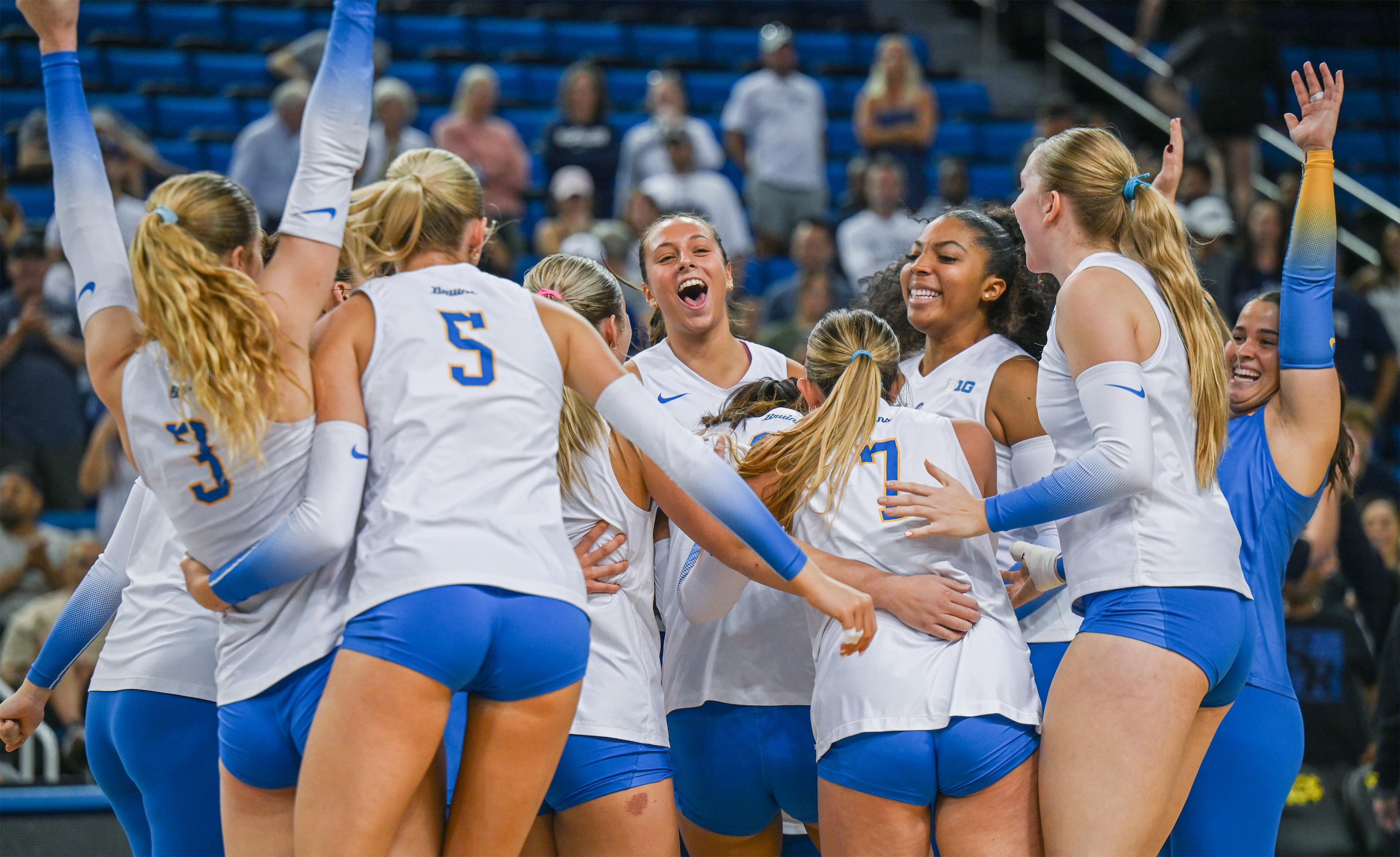
UCLA women’s volleyball celebrates together. The team fell to both No. 1 Nebraska and Iowa this past weekend. (Andrew Ramiro Diaz/Photo editor)
The opponents stood at opposite ends of the Big Ten.
But the Bruins ended up in the same place.
UCLA women’s volleyball (15–6, 6–4 Big Ten) was swept by No.