


Politics
Nov. 14, 2026 6:54 p.m.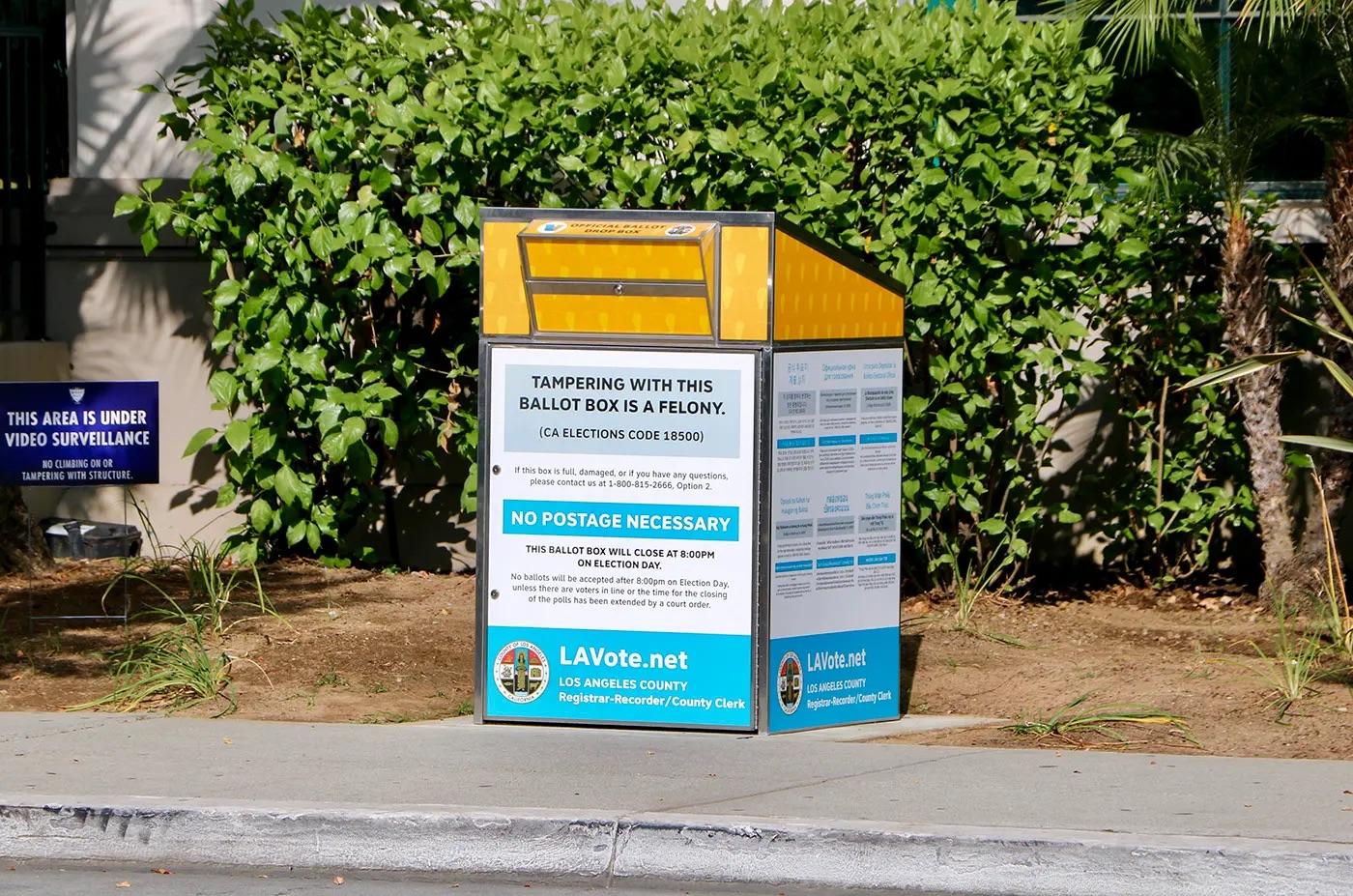
A Los Angeles County ballot box is pictured. There were 14 propositions for Californians to vote on in the Nov. 3 election, and one remains uncalled. (Daily Bruin file photo)
This post was updated Nov. 16 at 12:39 p.m.
Californians are no strangers to long ballots with a sprawling list of propositions.
The Nov. 3 election featured California’s longest proposition list in a decade, allowing voters to decide on several hot-button issues.
By Josephine Murphy and Mattea Gutierrez
Politics
Oct. 15, 2026 11:13 p.m.As the Nov. 3 midterm election nears, voter registration deadlines across the country are quickly approaching – or have already passed.
Californians have until Oct. 19 – or 15 days prior to Election Day – to register to vote.
By Josephine Murphy

Politics
April 26, 2026 1:02 p.m.Will Newsom run for president? How his national rise is shaping public perception
Speculation surrounding California Gov. Gavin Newsom’s potential 2028 presidential run has grown over the past year.
Having served two consecutive four-year terms, Newsom is ineligible to run for governor again, and his term will conclude in early January 2027.
By Isabelle Tan

Politics
April 17, 2026 10:30 p.m.Immigration enforcement in ways ‘never been done before’: A look at Trump’s DHS
Amid a partial government shutdown, the United States Department of Homeland Security observed its 23rd anniversary in March.
DHS oversees Immigration and Customs Enforcement, U.S. Customs and Border Protection and the Federal Emergency Management Agency.
By Nicholas Mouchawar

Politics
Jan. 29, 2026 7:33 p.m.Mixed-immigration status families face separation, uncertainty amid ICE crackdowns
Family separation, foster care, displacement, changes in guardianship – these are only a few possible outcomes for children with undocumented family members in the wake of increased immigration enforcement.
By Rachel Lee

Lifestyle
Dec. 2, 2025 6:15 p.m.How Californians worked to fight food insecurity amid delays in SNAP benefits
When the government shutdown delayed Supplemental Nutrition Assistance Program benefits, Californians – from state leaders to local organizations – stepped in to support those in need.
By Savannah Cunningham

Politics
Nov. 25, 2025 4:31 p.m.The expansion, evolution of zero-emission vehicle policies amid federal pushback
Zero-emission vehicles accounted for 29.1% of all new car purchases in California in the third quarter of 2025, marking progress in the state’s goals of achieving a fully clean-energy future.
By Jennifer Michel


Academics
Oct. 16, 2025 8:18 p.m.Federal funding application process, impact of loss of funding for researchers
This post was updated Oct. 21 at 3:20 p.m.
UCLA and the Trump Administration have been at odds over federal funding for months.
In July, The Trump administration suspended an estimated $584 million of research funding to UCLA, alleging that the university failed to protect Jewish and Israeli students from antisemitism, implemented affirmative action in their admission practices and allegedly allowed “men to participate in women’s sports.”
While a federal judge ordered the restoration of most of the funding, the struggle breaks a long tradition of cooperation between university institutions and the federal government in research development.
By Anna Gu and Bockman Cheung



searching for more articles...