New Housing & Hospitality associate vice chancellor must prioritize accountability
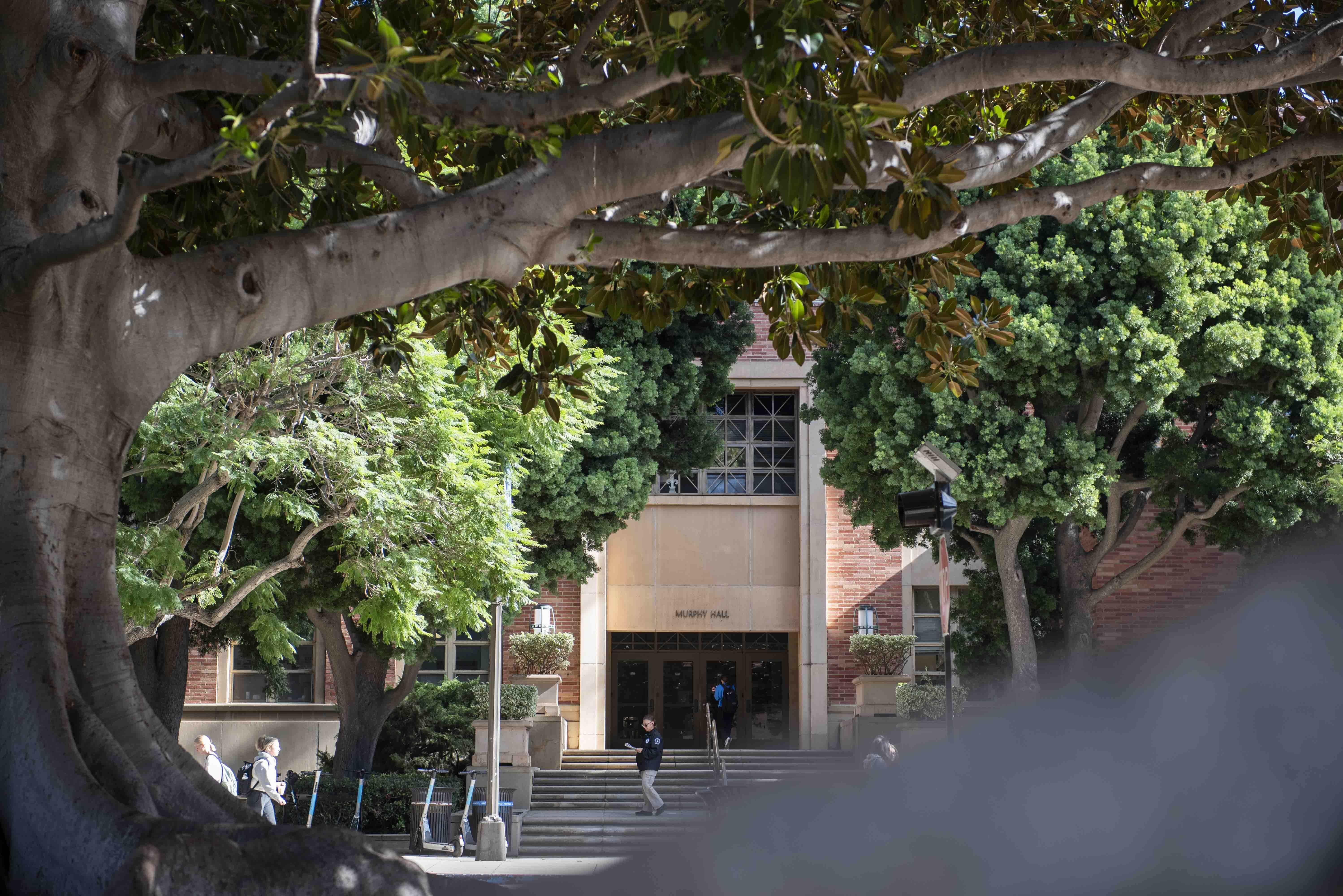
Murphy Hall is pictured. Columnist Ruby Galbraith writes that new associate vice chancellor of UCLA Housing and Hospitality Sarah Dundish must focus on transparency and accountability within her department. (Daily Bruin file photo)

By Ruby Galbraith
Sept. 17, 2026 8:59 p.m.
There are some big shoes to fill at UCLA Housing & Hospitality.
Pete Angelis, the former associate vice chancellor of the department, retired in June. Under his management, UCLA implemented a four-year housing guarantee, expanded its housing capacity almost threefold and opened Epicuria at Ackerman.
But a long to-do list remains for his successor.
On Aug. 5, Sarah Dundish assumed Angelis’ position as associate vice chancellor. She was previously the director of administration and chief of staff of UCLA Housing & Hospitality.
Dundish is stepping into this role with bounds of potential. But if food truck controversies and overcrowded apartments prove anything, it’s that Dundish has one major gap to fill at UCLA Housing & Hospitality: accountability.
UCLA administration has struggled with that task in recent years, but Dundish has the opportunity to change this within her department.
I challenge her to do so.
There should be three parts to that transparency in Dundish’s administration: fiscal transparency, feedback and open communication.
UCLA’s spending habits are questionable at best. The university recently announced a $220 million budget deficit. Daily Bruin reporting exposed that UCLA has wasted $213 million on a failed financial systems upgrade.
Granted, these budget mishaps extend far beyond the scope of Housing & Hospitality. Still, Dundish is uniquely positioned to be open about the services many students interact with daily.
“It would mean a lot to see clearer and more accessible breakdowns of where our fees are going, and to see students brought into budget conversations early rather than after they have already been made,” said Corea Kim, the USAC financial supports commissioner, in an emailed statement.
Implementing feedback should also be a priority for Dundish.
Housing and dining services have failed to properly respond to the needs of students in the past: just take the widely unpopular restriction of lunch swipes to ASUCLA-operated restaurants or the threat of food truck closures.
Administrators should use feedback to direct resources toward where students need them most, said Ashley Spreen, a rising second-year biochemistry student who lived on the Hill last year.
Perhaps most importantly, Dundish must prioritize communication.
That doesn’t mean repeating the futile attempts at communication that UCLA has made in the past. Dundish should commit to regular, open communication such as hosting consistent town halls and office hours. It’d be a departure from sending announcements solely through campuswide emails, which Undergraduate Students Association Council President Jayha Buhs-Jackson said students often don’t read.
Of course, grabbing students’ attention can be difficult. Few are interested in the university’s everyday budget decisions.
But these are decisions that directly impact a large portion of the student body. Students, whose tuition dollars fund the university, should be able to give feedback if they have it.
Speaking to student media falls into this category. Several Daily Bruin interviews with campus leaders were canceled or denied last year, raising questions about UCLA’s commitment to media transparency. Dundish must continue to respond and engage with student media to maintain that channel of external accountability.
Fortunately, it seems Dundish already understands the importance of accountability.
“An important part of that work will be communicating clearly about our priorities, listening to feedback and being accountable for the decisions we make,” Dundish said in an emailed statement.
I challenge her to stay true to that commitment.