Opinion: UCLA must retain food trucks to serve students’ dining needs
(Sadie Lee/Daily Bruin)

By Joshua Perry
Jan. 22, 2026 11:11 a.m.
This post was updated Feb. 3 at 8:19 p.m.
New student advisors warn students at orientation about UCLA’s lines, telling stories of waiting for hours in the sun. I brushed off these comments at the time, sure my advisor was exaggerating.
That was before I saw Smile Hotdog.
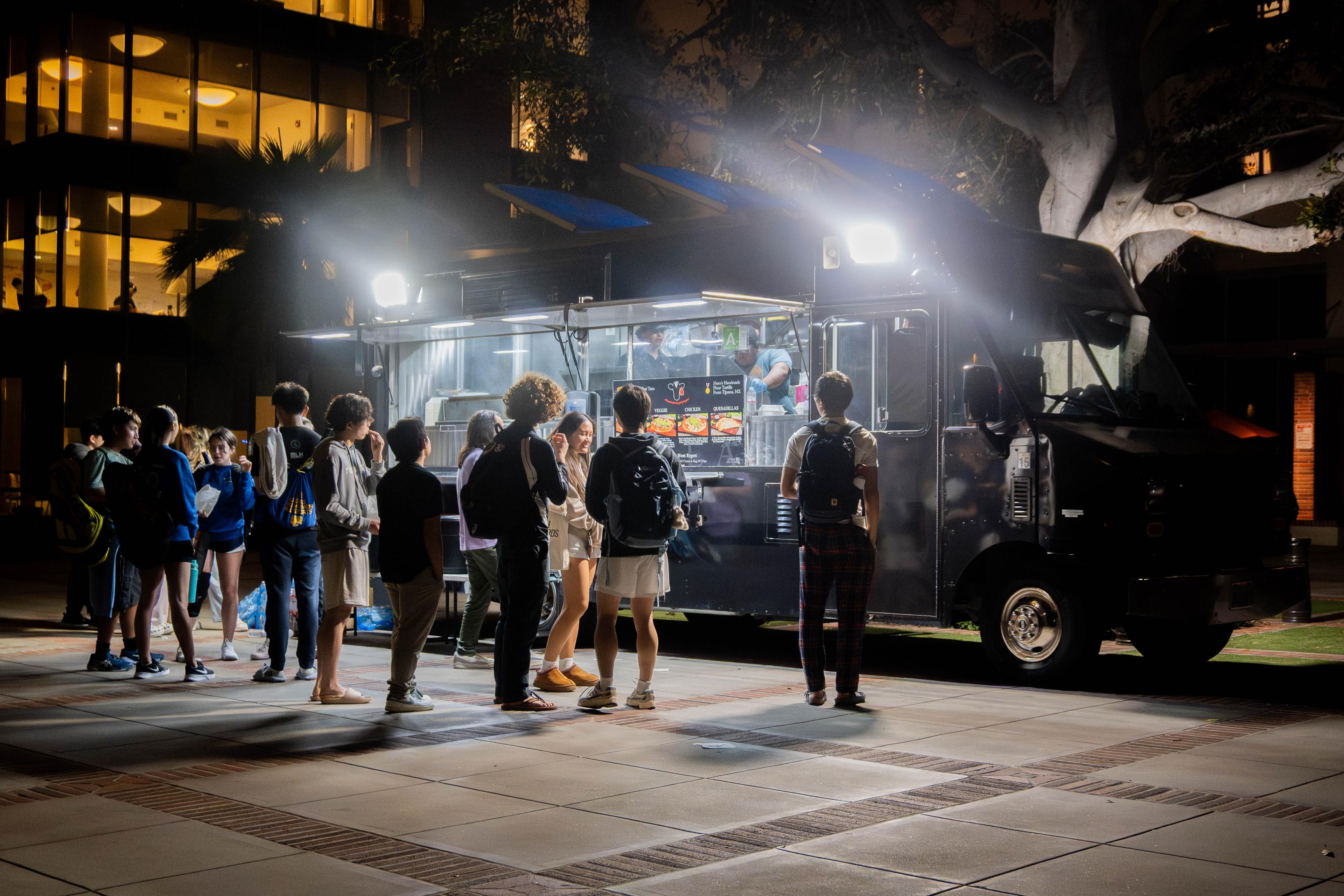
Smile Hotdog’s impossibly long line – and the lines of other food trucks – stands as proof of food trucks’ integral place on campus. During the 2022-23 school year, 18% of dining swipes used on the Hill were used on food trucks.
However as time has gone on, the number of food trucks on the Hill has decreased from six at a time during dinner hours in 2023 to only one or two food trucks available for late-night dining between 9 p.m. and midnight in 2026.
The current process of phasing out food trucks is a detriment to the student body and a betrayal of UCLA Dining’s commitment to the student experience.
“As UCLA continues to expand residential restaurant hours, the goal is to reduce third-party food vendors (food trucks) from the Hill,” a UCLA spokesperson said in an emailed statement.
The ambiguity of this statement suggests UCLA may be planning to remove food trucks entirely. It also relies on the premise that the school is expanding residential restaurant hours, which has not been the case.
UCLA closes late-night dining at Feast at Rieber one hour earlier than other late-night options, and – after months of anticipation and promise – has only just brought back De Neve Late Night pizza. This leaves students who have classes that end late at night with the choice of either a small meal from The Study at Hedrick or a pizza or chicken tenders from De Neve. These options hardly indicate a continual expansion of residential restaurant hours.
Furthermore, the expansion of residential dining hours within the last year has been insufficient. The reopening of Bruin Bowl with only four hours of service a week, as well as the relocation of Feast back to its larger venue after being forced out because of a rat infestation in spring 2025, feel like only marginal changes to the state of dining.
UCLA must reinforce its commitment to the student experience by retaining the option of food trucks.
The food trucks not only provide a diverse selection of foods, but also lower congestion in dining halls, said Ava Eagle, a second-year microbiology, immunology and molecular genetics student.
Even at takeout dining halls, more than 50 people wait in line at a time, Eagle added.
As the food trucks fade away, the dining halls become increasingly more crowded. As a result, students may have to forgo dinner out of respect for their other obligations, such as classes.
Tiffany Chen, a first-year cognitive science student, said she loves the selection available from the food trucks, including options for Korean, Chinese and Thai food.
“I didn’t know they had Thai food here, and it’s been so good to be able to try all the time,” she added.
The variety of food trucks provides a beautiful exposure to the culture of LA, educating students in a unique but nevertheless essential way they cannot get from classes.
This culture of food trucks has become a core part of the student experience, providing students from diverse backgrounds opportunities to connect as they complain about the four-hour waits in the Smile Hotdog line. The length of the lines is a testament to the effect these trucks have on students, how excited they are to eat from them and how much it makes their day.
UCLA needs to take action, not only to preserve the late-night food trucks that remain, but also to reinstate food trucks during dinner hours. The phasing out of food trucks must stop.
Students love the food trucks, and this gradual process of limiting them is the removal of something that has become a valuable aspect of the UCLA experience – the delicious food, lasting friendships and shared suffering in seemingly endless lines that define our food truck community.