Theater review: ”Master Harold’ …and the Boys’ creates hope, the chance to fly
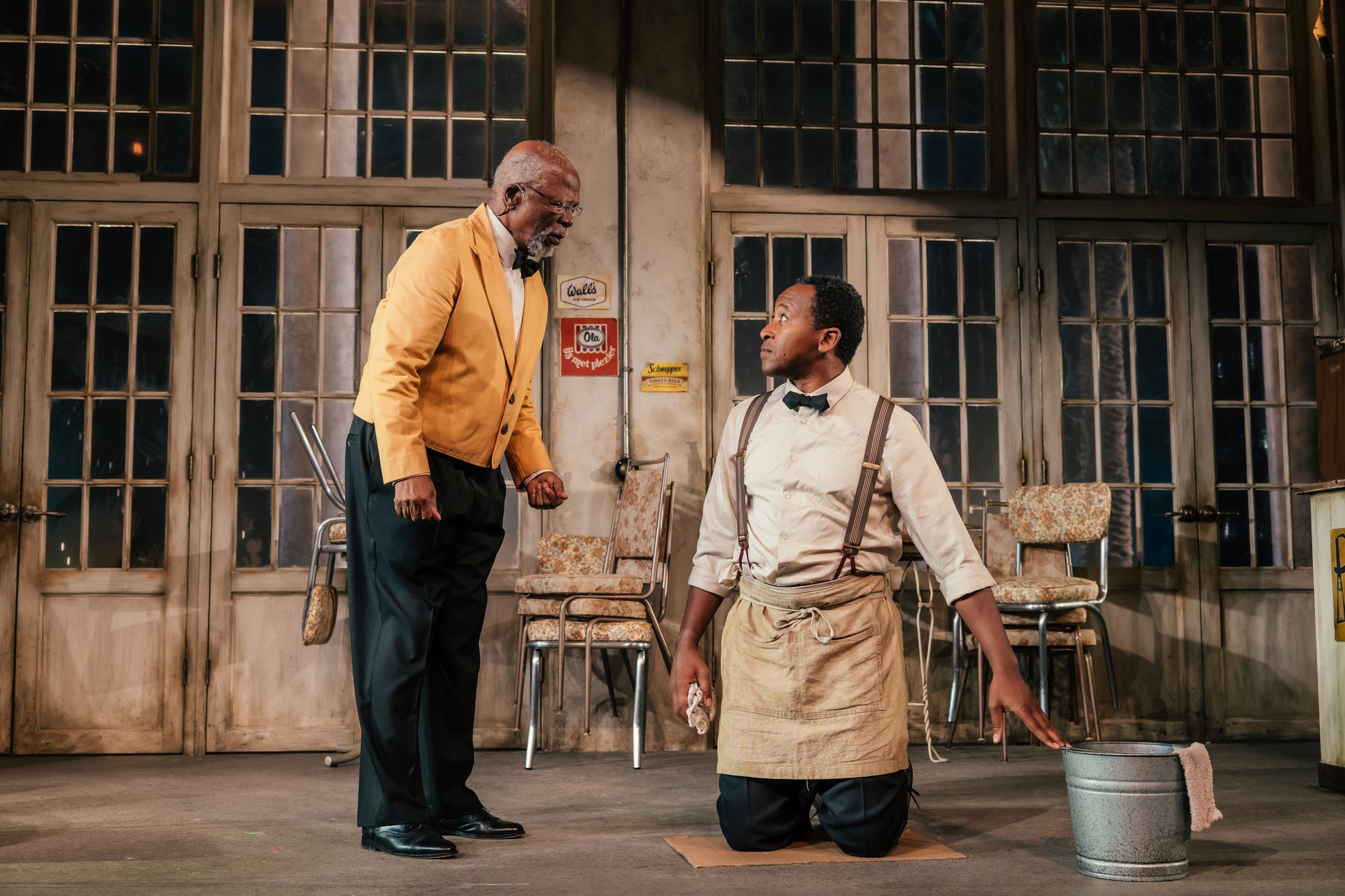
John Kani (left) in a yellow sweater and Nyasha Hatendi (right), kneeling, pose in “‘Master Harold’…and the Boys”. Written by Athol Fugard and directed by Emily Mann and Tarell Alvin McCraney, the production opened at the Geffen Playhouse in Westwood on April 8. (Courtesy of Jeff Lorch)
“‘Master Harold’ … and the Boys”
Apr. 8-May 10
Geffen Playhouse


By Alexis Coffee
May 5, 2026 5:37 p.m.
This post was updated May 5 at 11:59 p.m.
What does a man know about flying a kite? More than one might think.
Written by Athol Fugard and directed by Emily Mann and Tarell Alvin McCraney, the Geffen Playhouse’s production of “‘Master Harold’ …and the Boys” opened in Westwood on April 8. The play follows Sam (John Kani) and Willie (Nyasha Hatendi) – two Black waiters killing time on a rainy afternoon in a 1950s tea shop in Port Elizabeth, South Africa – as well as Hally (Ben Beatty), the white teenage son of the shop owner who visits the shop after school looking for an argument. The three debate history’s greatest figures and religion, rehearse ballroom steps for a competition and reminisce about when Hally used to find sanctuary in the servants’ quarters in Sam’s room, “before things got complicated.”
The play takes on many different roles. It aims to express that racism and segregation do not just oppress the people they target but warp the people they hand power to – even the ones who don’t think they want it. Hally – a privileged pessimist who has all the opportunities he could want in life – is depicted as still not happy with what he has. “‘Master Harold’ …and the Boys” is a memory play, a political fable and a meditation on imagination and dignity. There is much to unpack with the three complex characters in 95 minutes – and it works completely.
[Related: ‘THIS IS OUR YOUTH’ play aims to reach multiple generations, spark conversation]
The production never eases up on emotion, and the impact of the subject matter remains strong throughout. The show takes place in the stage’s singular intimate setting. The tea room set by scenic designer Beowulf Boritt looks like a diner candy store and features green soda bottles, colored candies, floral chairs rusting at the metal legs and a concrete floor. When Sam and Willie run through their ballroom steps between their tasks of scrubbing the floor and preparing the food, the space feels warm and alive. Moreover, as Hally starts to become more entranced with control and superiority over Sam and Willie, the warmth disappears and the descent into misguided hatred feels inevitable.
The through line of the play involves a kite that Sam built with young Hally. One day, they fly it together, but shortly after getting it in the air, Sam hands it to Hally and walks back to work, leaving Hally on a bench alone. This experience leads him to resent Sam years later. At the end of the play, the audience watches Hally discover that it had been a segregated bench that Sam was not allowed to sit on. Sam had protected Hally from this distressing reality, willing him to find the lesson in getting up and walking away from anything he needed to.
Later in “‘Master Harold’ …and the Boys,” as Hally sits at a table reluctant to complete his assignment – 500 words about an annual cultural event of historical significance of his choice – Sam thinks Hally should use the ballroom competition Willie is training for. The ballroom dancing metaphor begins there and runs through the rest of the show. Sam believes ballroom dancing is a political vision – everyone moving to the same music, trying not to crash into each other.
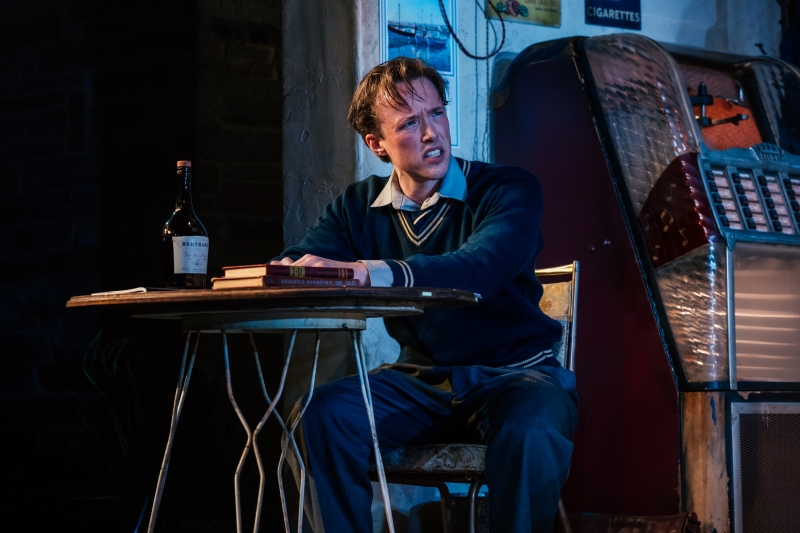
At one point, Sam monologues that the world is full of people colliding – for instance, the United States with Russia and the rich man with the poor man – but dreaming about how the future is much more fulfilling to the human soul. Hally states that Sam tends to forget the people who are immobilized – those who can’t dance but try to and only collide. This is when the audience learns of Hally’s relationship with his disabled dad and the subsequent projection of his own struggles with it onto the world.
The dancing metaphor gives way into another equally crucial debate after Hally continues to spew out opinions about the world – thinking he is educating Sam and Willie. He argues that Sam confuses art with entertainment. Hally says art is merely the giving of meaning to matter, form to the formless, while Sam says it is beautiful. The gap between them – a man who finds beauty in a broken world and a boy who thinks the world was built for him – is the core of this play.
[Related: Theater review: ‘For Want of a Horse’ exploration of zoophilia falls flat but humor excels]
Performances by the three actors are astounding. Hatendi spends much of the play using facial expressions and body language to convey his emotions, which excelled in captivating the audience. Similarly, Kani carries on with a quiet wisdom and resilience through Beatty’s teenage tantrums of a boy who doesn’t recognize the things he has all around him.
Finally, Beatty plays Hally as someone who genuinely loves Sam, even though he might never show it – which makes the play’s ending so devastating. He deflects, laughs too loud and doesn’t take responsibility for his actions. When he spits in Sam’s face and demands that he call him Master Harold, this discourse feels inevitable and final.
The play ends with Master Harold leaving the tea shop in a hurry by the demands of his father who is now home from the hospital. Sam and Willie are alone and put on the juke box. As Ella Fitzgerald’s “Dream a Little Dream of Me” serenades them, the two men dance slowly together. This visual is a small message of hope – two people and the dream of a floor where nobody crashes.
“‘Master Harold’ …and the Boys” is precise and playful – it offers the chance at flying a kite again, on a day when it doesn’t rain.