Theater review: ‘For Want of a Horse’ exploration of zoophilia falls flat but humor excels

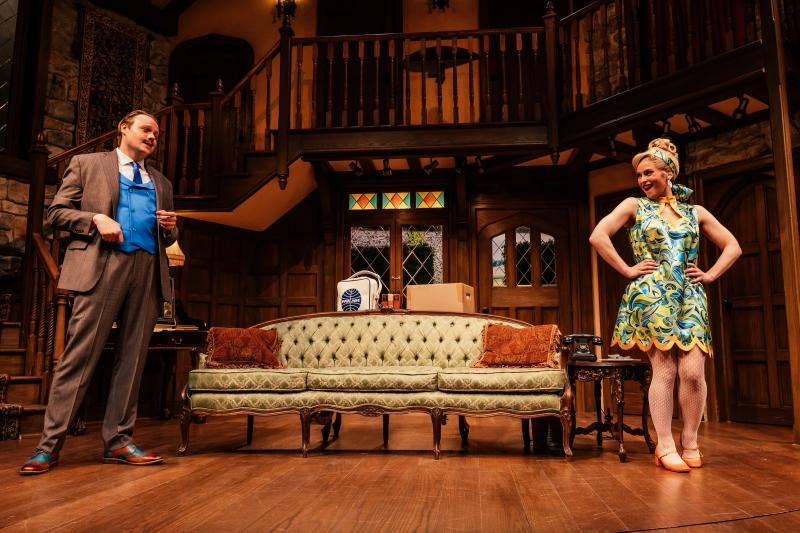
Steven Culp (left) and Joey Stromberg (right) are pictured on stage. Echo Theater Company held the world premiere of “For Want of a Horse” on April 18 at the Atwater Village Theater. (Courtesy of Cooper Bates)
“For Want of a Horse”
Apr. 18
Echo Theater Company


By Abby Shewmaker
April 23, 2026 5:14 p.m.
This post was updated April 23 at 7:59 p.m.
Editor’s note: This review contains descriptions of criminal sexual activity involving animals that some readers may find disturbing.
In “For Want of a Horse,” laughter arrives with a wince.
Echo Theater Company held the world premiere of the original play, written by Olivia Dufault and directed by Elana Luo, on Saturday night at the Atwater Village Theatre. With it unfurled a sharp, knotty and often funny exploration of empathy, progress, consent and human (and animal) sexuality.
The play’s premise may sound outrageous. Everyman Calvin (Joey Stromberg) and his wife Bonnie (Jenny Soo), an elementary school teacher, decide to open their relationship to include Calvin having sex with Q-Tip – a horse played by Griffin Kelly – to satisfy Calvin’s lifelong sexual attraction to horses, all the while airing his wants and confusion with his fellow zoophile (someone sexually attracted to animals) friend PJ (Steven Culp). Dufault wrote “For Want of a Horse” after reading a 2014 New York Magazine interview with a man who, like Calvin, has sex with mares while married to a human woman with the woman’s knowledge and consent.
It’s a daring story to tell, but “For Want of a Horse” navigates through one of the criminal taboos in the Western world with assurance, humor and an astounding amount of heart, setting and blurring boundaries between notions of right and wrong, pride and disgust, all the while asking the audience where to draw the line.
[Related: Sara Porkalob’s ‘Dragon Mama’ compels audiences, falls short of predecessor]
Before the 99-seat audience in the Atwater Village Theater’s black box, characters move through emotional landmines with humor and utmost vulnerability. The play’s set is minimal and versatile, lending itself well to the complex emotional bleeding between Calvin’s two relationships. His and Bonnie’s bed lies right next to Q-Tip’s stable. The bed transforms into the bench where Calvin confides in PJ about his zoophilia, and it contains the stool Bonnie sits on while she watches her husband have intercourse with a horse. It is small, intimate and undecorated, bringing the audience into their messy lives.
Q-Tip, the Arabian mare caught up in Calvin’s web of human desire, gallops through the heart of the show with an embodied immediacy and simplicity that grounds “For Want of a Horse” in reality. She sees the world in terms of apples; her soliloquies give commentary on domination, her animal body’s purpose and domesticity. She talks of her dreams of running free forever with a pack of other free, wild creatures. Kelly is particularly funny in this role, with a simultaneously earnest and deadpan delivery and full-bodied commitment that is hilarious and wholly equine. It’s through Q-Tip that Dufault imagines what might possibly be going through a horse’s head – though as PJ ironically points out, “Anyone who tries to pretend they know what an animal is actually thinking is either a liar or an idiot.”

The primary weakness of “For Want of a Horse” lies in its leading man, Calvin. For audience members who have read the original article prior to seeing the play, Calvin’s characterization felt noticeably declawed. Many aspects of Calvin are different from the man interviewed in 2014, which is no issue on its own, but what emerges from these changes is a character who – stripped of a unique voice in an attempt to make him more relatable and less likely to disgust a general audience – exhibits very few personality traits besides being a normal guy who likes having sex with horses. When Calvin confides in Q-Tip about the darkest parts of his history, the facts are presented, but they’re not portrayed with an impact that can be felt by the audience. It’s as if someone dressed a Ken Doll up in a flannel and placed it alongside one of Barbie’s horses to see if something would happen.
[Related: Theater review: Writing flaws, overacting mean ‘Spamalot’ fumbles the Holy Grail]
It’s in this way that the play’s balance between analysis and storytelling falls askew. Dufault asks the audience to place themselves in Calvin’s shoes over and over again, and some methods are more effective than others. With something like zoophilia that triggers extreme disgust in most people, softening that repulsion ultimately shallows the work rather than enriches it. Without being able to see many of the complex layers within Calvin, the audience is left jarred to wonder why he makes the choices he does.
In the end, “For Want of a Horse” succeeds less as a portrait of one man than as a live wire of a thought experiment – one that crackles with humor, discomfort and real emotional risk. The play’s intelligence, tonal control and radical willingness to linger inside contradiction make it difficult to dismiss and even harder to forget. Dufault does not offer the audience the relief of a clean emotional verdict. What’s left is the far thornier task of individually deciding where empathy ends, where ethics begin and whether those boundaries were ever as stable as they seemed.