Opinion: UC must stop tuition hikes, lower prices to reduce student debt
By Diana Villegas / Daily Bruin staff & Helen Juwon Park / Illustrations Director

By Catherine Price
Feb. 18, 2026 2:16 p.m.
This post was updated March 8 at 7:11 p.m.
The Trump administration delayed the garnishment of wages from student loan borrowers in default, despite announcing its plans to start collecting funds in early January.
Wage garnishment means borrowers who failed to make loan payments could have a portion of their pay and tax refunds withheld by the government.
This pause, although a victory for debtors and critics of wage garnishment, leaves open the possibility of restarting garnishment in the future. The Department of Education did not respond in time to questions about what the pause means.
Student loan debt is a constant hot topic – from past cancellations of debt to the Supreme Court overruling former President Joe Biden’s loan forgiveness program. The federal government has never clearly answered the question of how student loans should be collected – or if they should be collected at all.
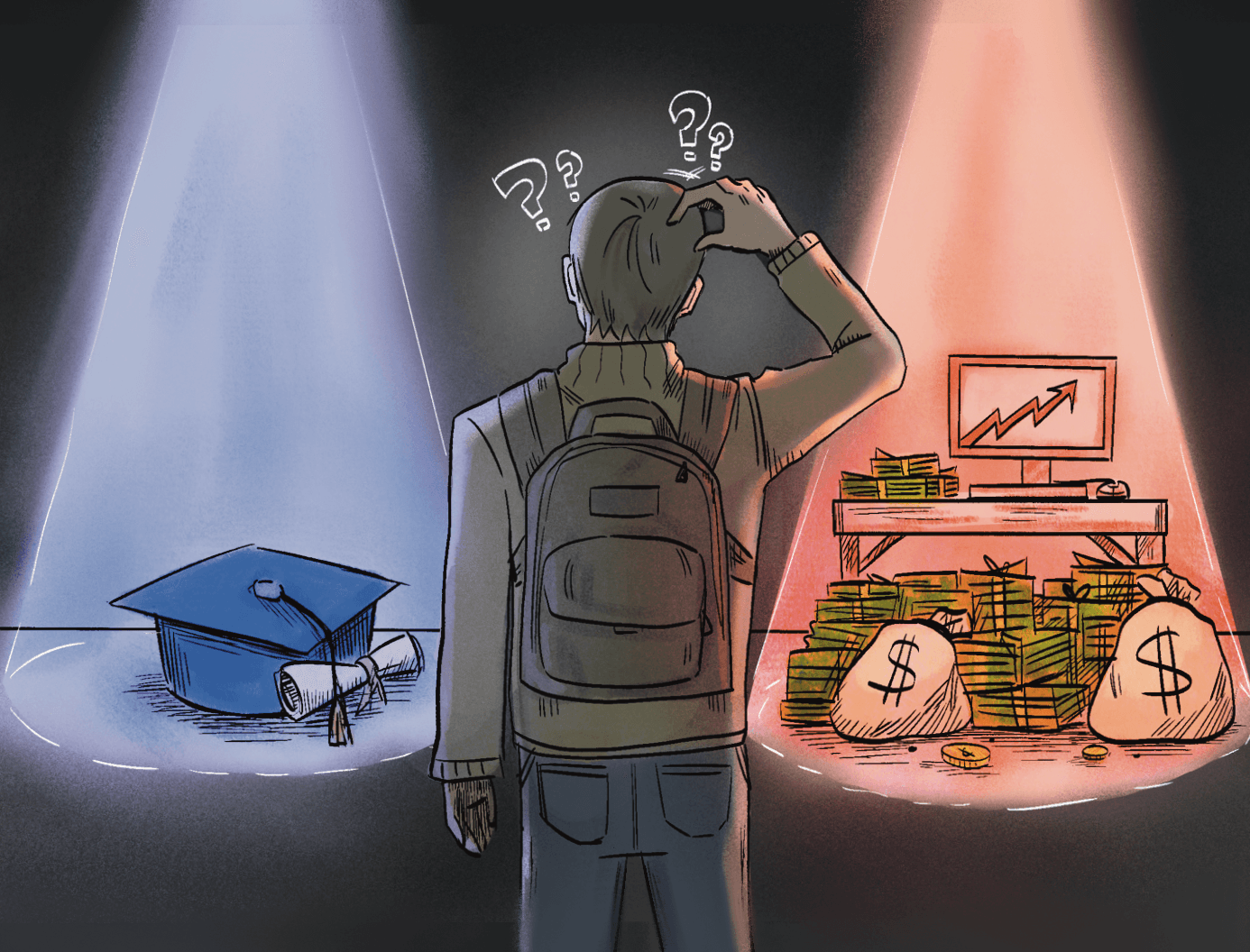
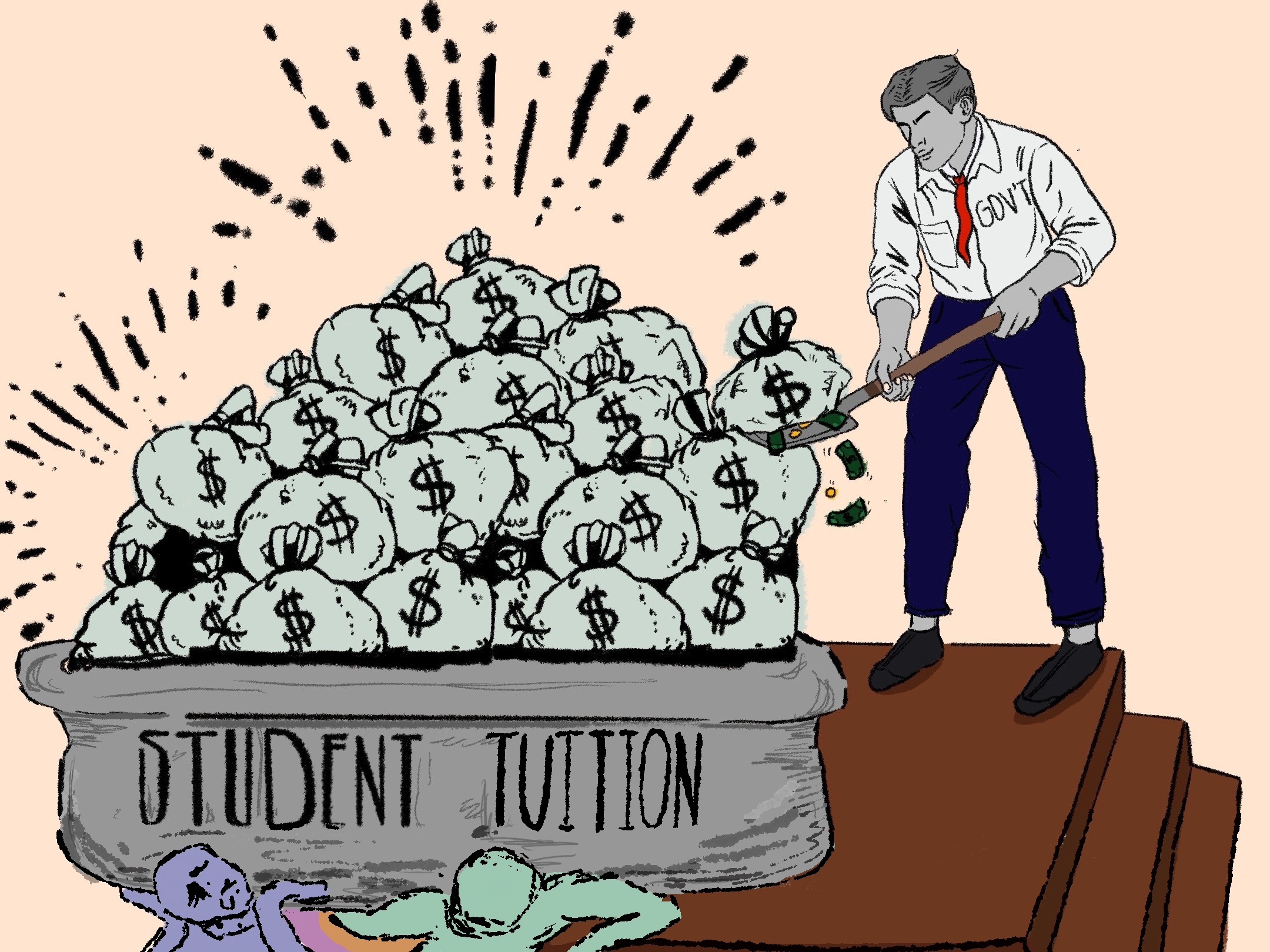
Universities must stop tuition hikes and reduce prices to help their graduates who may have debt in the future.
While campaigns around student debt cancellation and rising tuition are often fought as separate issues, they’re linked at the root.
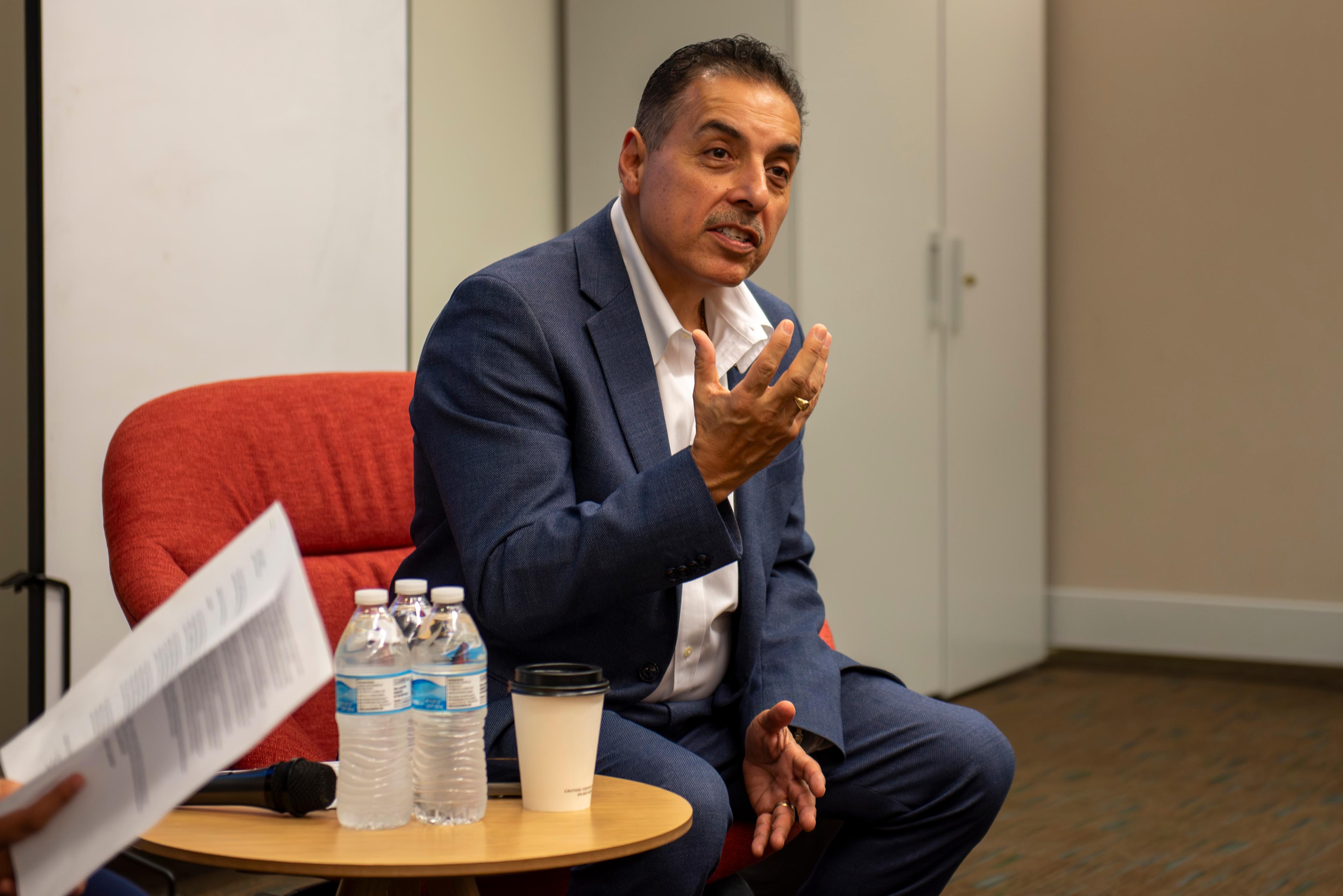
“Every time the UC raises its tuition, what that really means is more student debt for most folks who go here,” said Hannah Appel, an associate anthropology professor and co-founder of The Debt Collective.
43% of in-state and 11% of out-of-state undergraduates had student loan debt after leaving school, according to a 2024 University of California accountability report.
These students will eventually face struggles that debtors today are dealing with, including threats of wage garnishment.
Additionally, they will pay more than current debtors as the UC has no plans of reducing tuition. Instead, the UC Board of Regents approved hiking it as much as 5% for each incoming class.
[Related: Tuition increases raise accessibility concerns in higher education]
“UCLA’s commitment to access and affordability is ongoing, with nearly half of California resident undergraduates paying no tuition at all. Currently, the average net cost of attendance for California undergraduates, when adjusted for inflation, is lower than before the pandemic. We continue to build on our efforts to create a more accessible UCLA while remaining uncompromising in our pursuit of academic excellence,” a spokesperson from UCLA Financial Aid & Scholarships said in a written statement.
While exorbitant tuition is an expected part of going to college today, that has not always been the case.
The UC system was largely tuition-free until the 1970s.
Former California Gov. Ronald Reagan – who was also a UC Regent – proposed charging students tuition to deter them from protesting, Appel said.
Reagan argued that students would be less inclined to “carry a picket sign” if they were paying to go to school in a 1967 press conference.
The decision also grew out of need. Reagan’s plan to reduce funding also cited the state budget deficit.
“There is the problem we just simply have a shortage of dollars,” Reagan said in a 1967 statement on tuition.
He cut university budget requests by 20% during his time as governor.
Appel wrote about the history of tuition in an article for the New York Review. As tax revenue fell, students’ money rose to cover the gap.
In 1970, the UC charged an educational fee of $150 per year for undergraduate students. Tuition fees increased progressively.
Reduced funding per student, economic downturns and competition for state funds left the UC in search of more revenue.
In 2004, then-Gov. Arnold Schwarzenegger, then-UC President Robert Dynes and then-CSU Chancellor Charles Reed agreed on a Higher Education Compact, which allowed the Board to increase tuition by 10% a year if needed.
It is the move to tuition that caused student debt to start in the first place.
The UC now gets 53% of its budget from tuition and other fees.
“Universities across the country, including UC, are facing unprecedented threats and funding cuts from the federal government. UC cannot generate enough funds through tuition, alone, to cover these losses. Increases in cohort tuition will only be used to directly support our core mission (including student support and research), expand financial aid, and to help address critical needs at all our campuses,” a UCOP spokesperson said in a written statement.
Yvonne Liu, a first-year art history student, said high costs play a role in making decisions about college. She said she has looked for ways to offset high tuition but opportunities are rare.
“Unless we’re given more advantageous stuff or more benefits for the students or staff, I don’t see why this should happen,” Liu said, in regard to raising tuition.
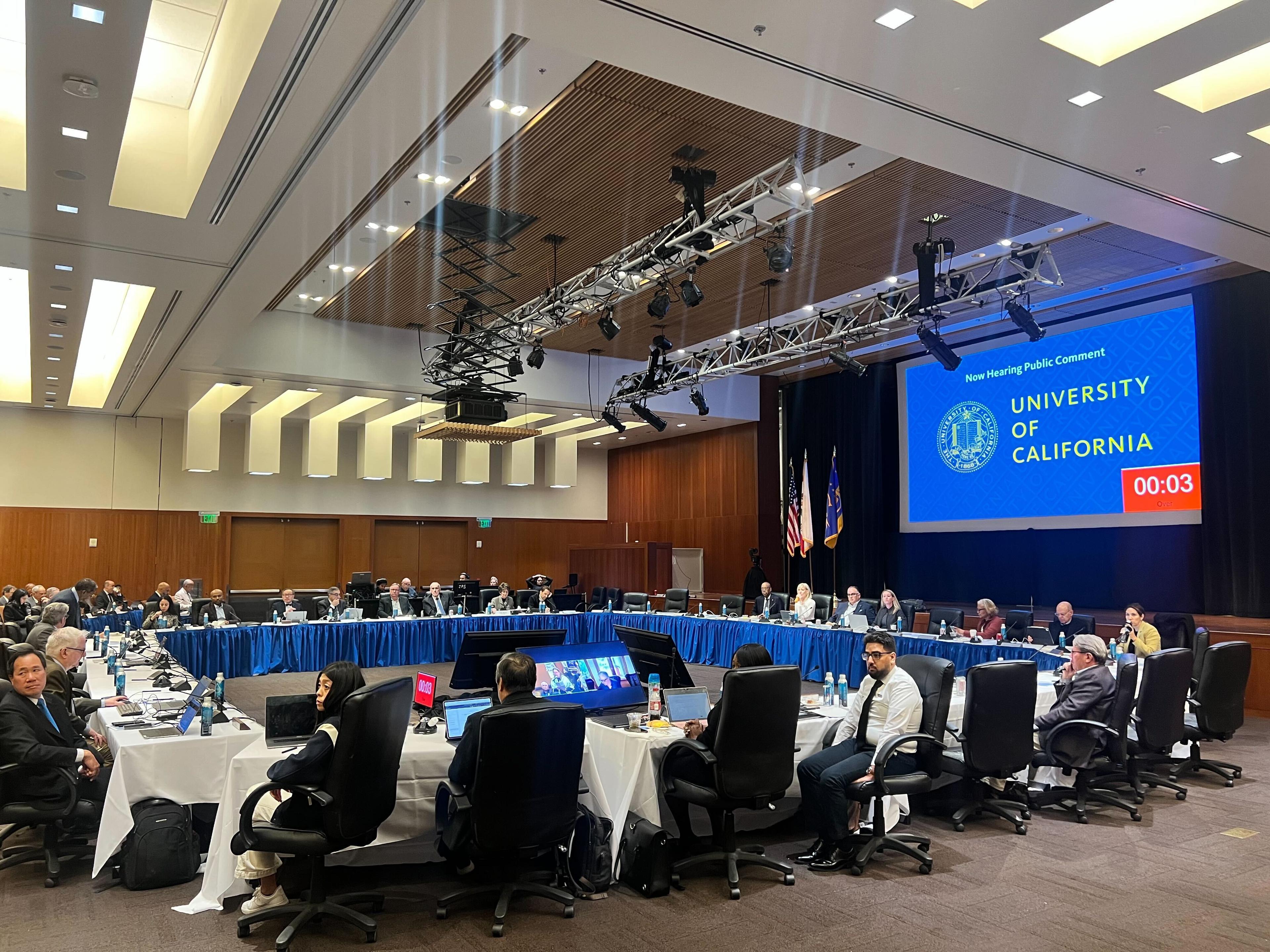
Liu is not alone in this thinking. When the UC Board of Regents met in November to approve the plan to raise tuition, demonstrators gathered outside their meetings to protest the move.
Although getting rid of tuition completely is a far-off goal, stopping persistent increases and lowering costs for UC students doesn’t have to be.
What the UC really needs is more state and federal funding. The reason the UCs were able to operate for so long only charging minimal fees is because they received tax money to operate.
“The UC should be fighting in Sacramento and in Washington, D.C. And the students are not the UC’s backup budget plan,” said USAC President Diego Bollo at the Nov. 19 student rally outside the Board of Regents meeting.
The plan to keep raising student tuition to cover costs is not sustainable for students. It is not even sustainable for the UC, which still has budget deficits. The UC must push for more funding from the state and federal government in order to meet the standards of public education that it advertises.
[Related: Financial mismanagement contributed to $425 million annual deficit, UCLA CFO says]
One point of hope for current students and graduates is that they do have the power to make change. After the Trump administration announced its plan to garnish wages, debtors pushed back.
“This is really good evidence of the power of social movements,” Appel said.
And not just for debtors – students can start advocating for changing the tuition system while still attending school.
The UC Regents amended their proposed tuition hike from 7% to 5% after concerns were raised about the impacts on students. While not enough, the reduction shows where students could achieve bigger wins in the future.
Tuition will affect many students for long after we graduate. Now is the time to advocate for ourselves and the next generation of students.
Even when administrators seem against affordable education, it is important we remember our secret weapon – our power in numbers.
There are over 42 million people with student debt in the United States and over 301,000 students enrolled in the UC system.
With the right leverage and the right momentum, we can change how our “public” education is funded and protect our future.