UC Regents amend, renew progressive tuition increases for new students
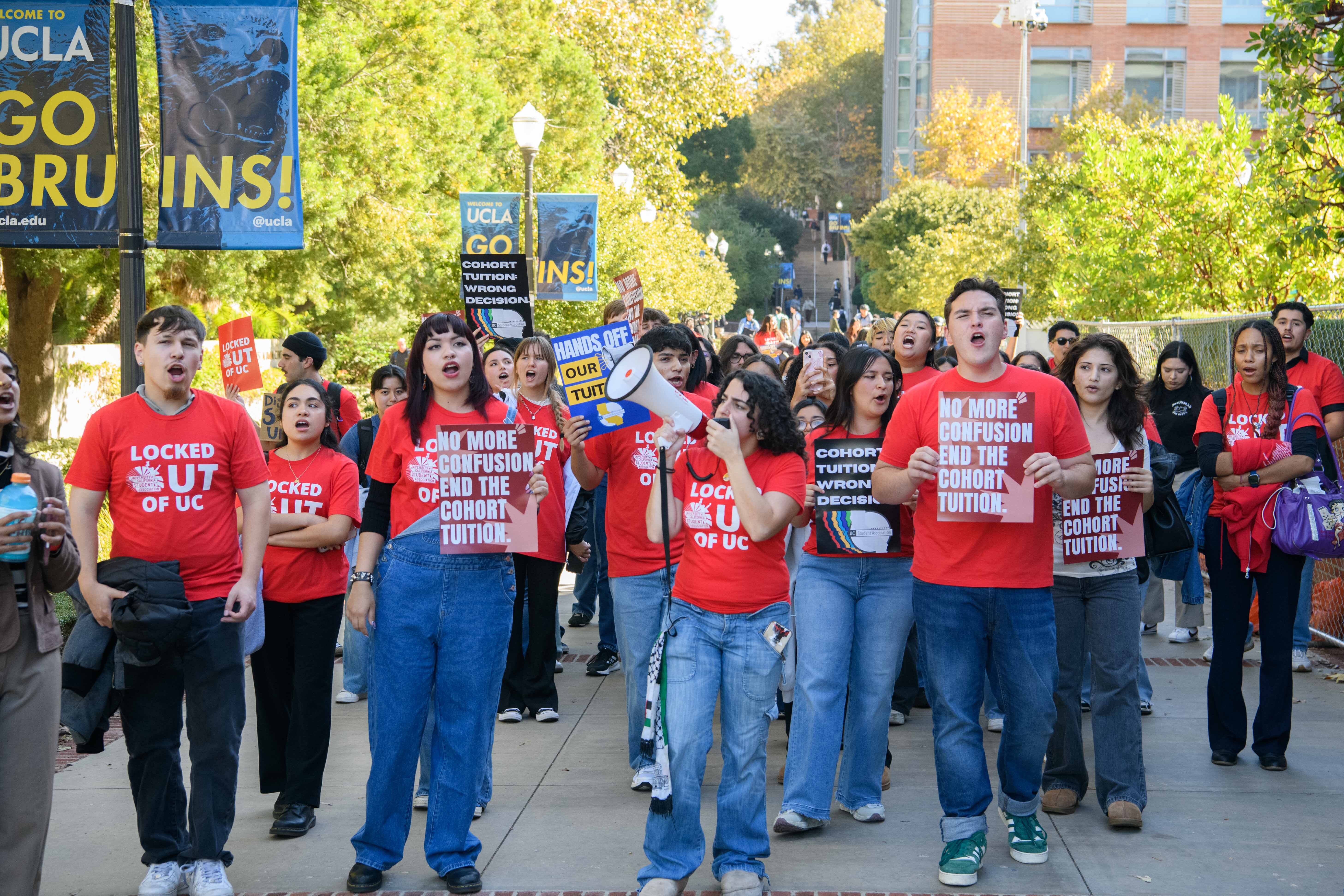
Students protest outside the Luskin Conference Center on Wednesday morning. The students called on the UC Board of Regents – which is meeting Tuesday to Thursday at UCLA – to reject tuition increases, which the Board approved outside the Meyer and Renee Luskin Conference Center Wednesday afternoon. (Izzy Greig/Daily Bruin)
By Josephine Murphy
Nov. 19, 2025 5:35 p.m.
This post was updated Nov. 20 at 11:47 p.m.
The UC Board of Regents approved tuition raises for future students Wednesday following opposition from students across the UC system.
The Tuition Stability Plan – which was first developed under former UC President Michael Drake – was approved by the UC Board of Regents in July 2021. The renewal of the plan, which had its reauthorization vote initially set for 2026, was approved with several amendments at the regents’ November meeting, which began Tuesday and will run until Thursday at UCLA.
The plan freezes in-state and nonresident tuition costs at time of entrance for both first-year and transfer students for up to six years of a student’s undergraduate career. The plan also sets the Student Service Fee – which covers students’ expenses for health, social and cultural programming, campus services and education and career support services.
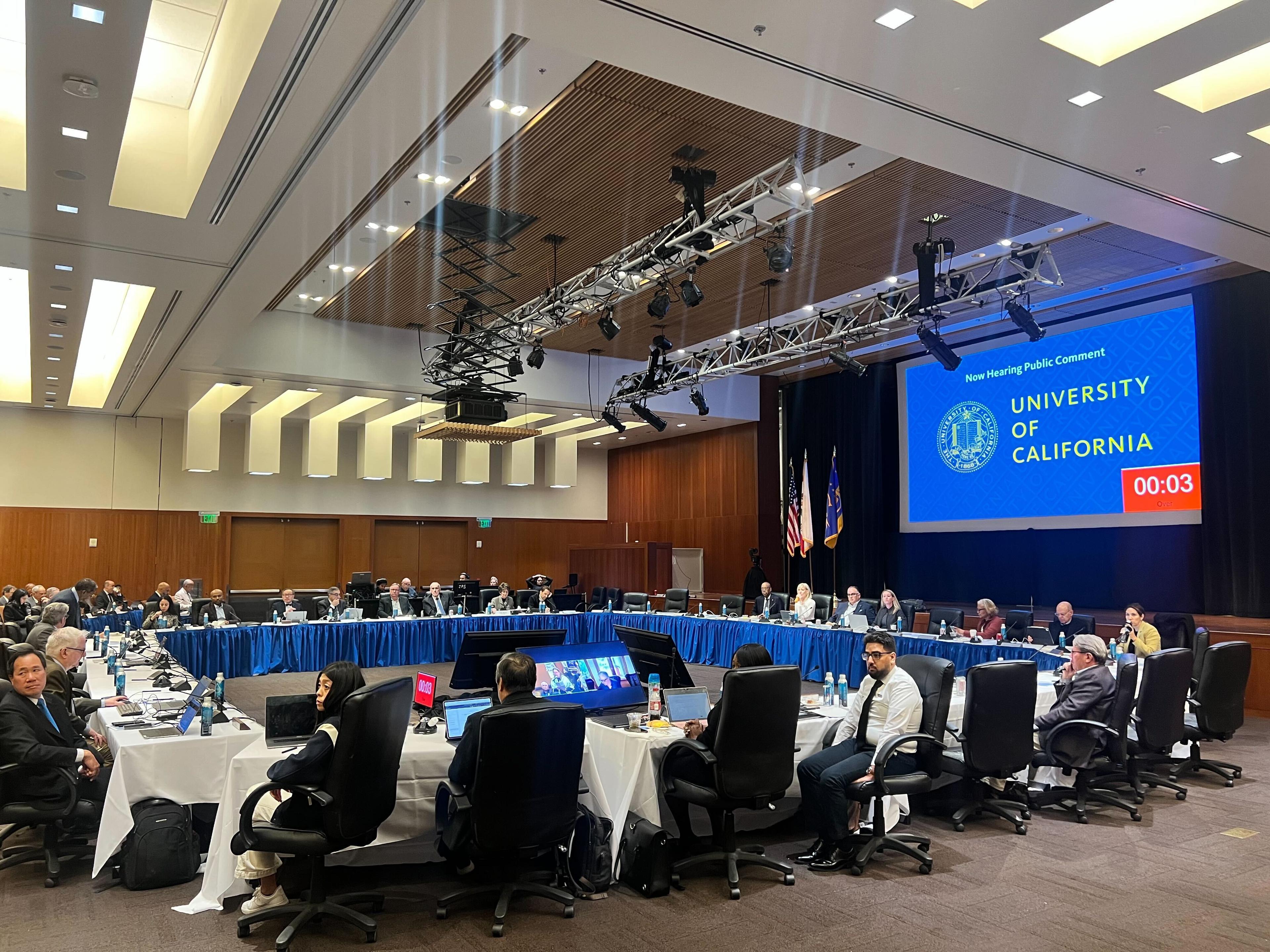
The UC Board of Regents was set to begin its discussion on the topic at 12:30 p.m., but no one in line was allowed into the Meyer and Renee Luskin Conference Center until about 1:20 p.m.
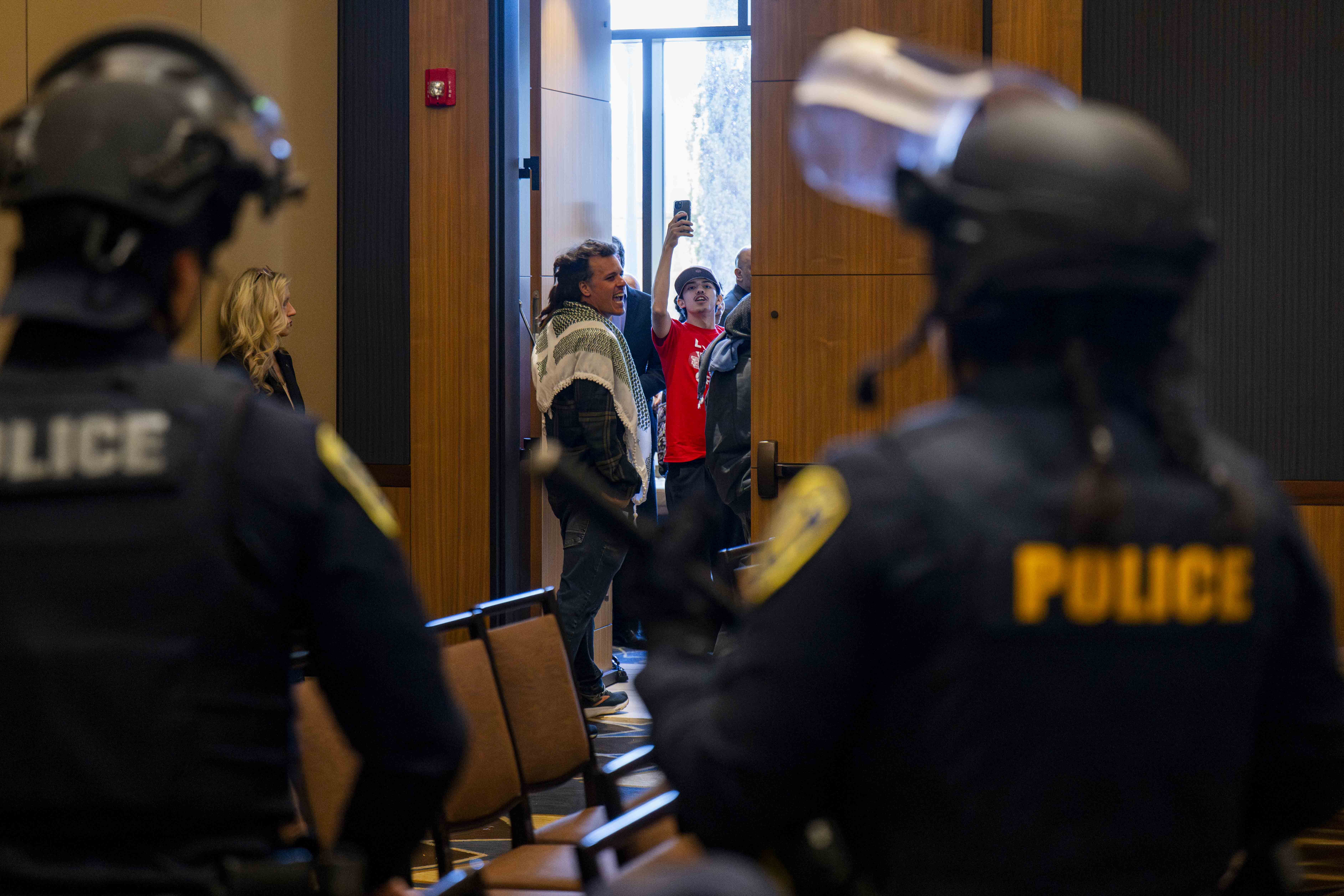
Several dozen demonstrators were directed to leave the UC Board of Regents meeting around 1:28 p.m. after disrupting the meeting, which began nearly 50 minutes late. The protesters – many of whom were wearing UC Student Association shirts – chanted, “disclose, divest.”
Board Chair Janet Reilly said several times that the meeting would end or “reconvene elsewhere” if the interruptions did not stop, and officially told everyone to clear the room around 1:28 p.m.
About two minutes later, a UCPD officer began reading a dispersal order to the demonstrators shortly before UCPD officers equipped with batons and face shields walked in. The officers followed the protesters as they walked out of the room.
The meeting restarted at 1:36 p.m., with Nathan Brostrom, the executive vice president and chief financial officer of the UC, being asked by Reilly to restart his presentation regarding the Tuition Stability Plan’s renewal.
Under the renewed version of the plan, the UC Board of Regents will still only be able to raise tuition by 5%, according to the agenda item. However, the regents could “take action” to change the ceiling on increases.
The newly renewed plan, which will go into effect at the start of the 2026-27 academic year, will lower the return-to-aid rate by five percentage points to 40%, with the eventual goal of returning it to the pre-Tuition Stability Plan rate of 33%.
For the first year of the renewed plan with implemented changes, there will be an increase in student fees and tuition calculated based on the year’s inflation rate plus an additional 1% increase for campus facilities and other construction improvements. For every year thereafter, if the inflation rate and 1% increase total less than 5%, the regents can also add an additional “banked” amount so long as the total figure still equates to 5% or less.
The agenda item cites “capital improvements” as the reason for the additional 1% on top of inflation.
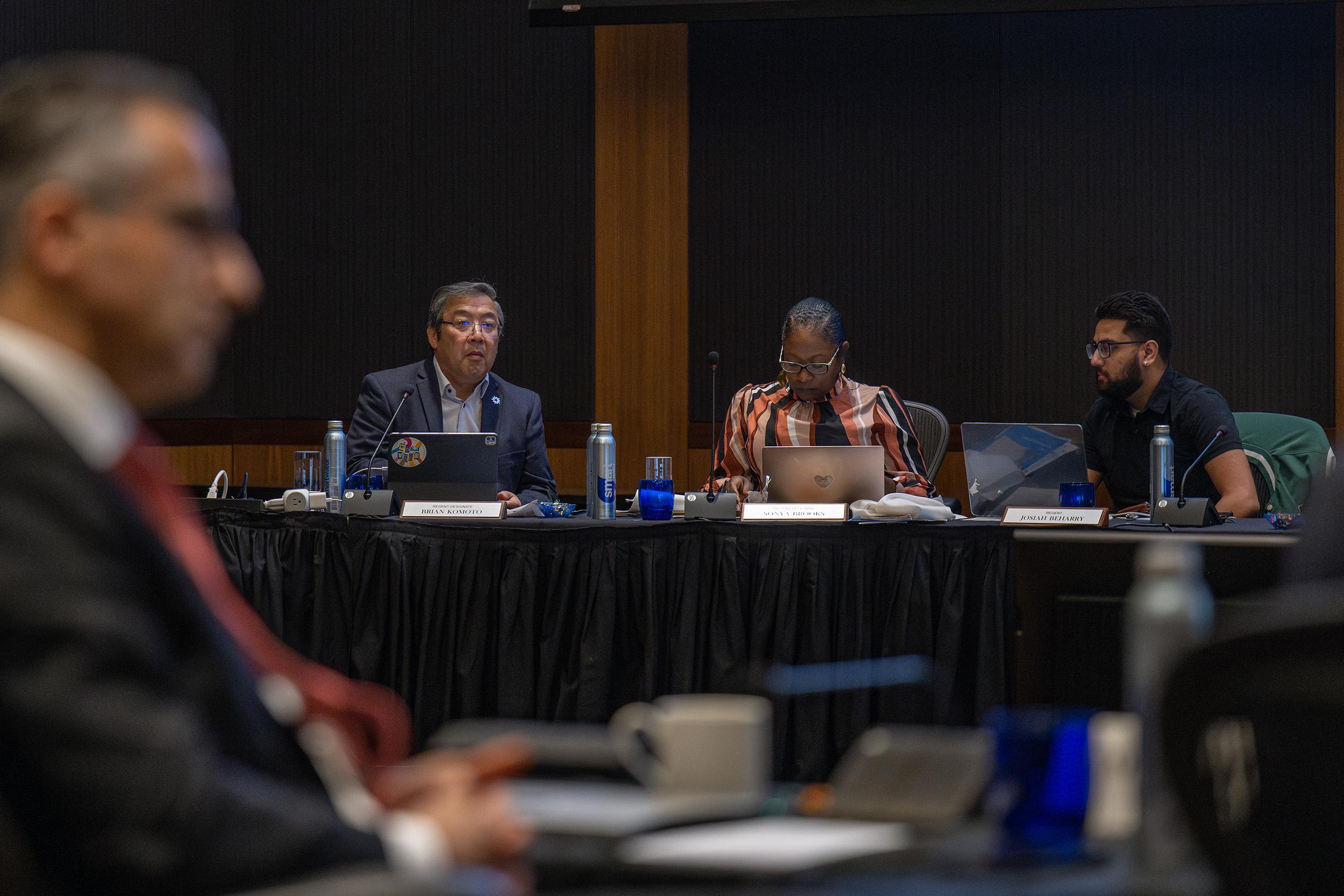
“If it ain’t broke, why fix it?” Student Regent Sonya Brooks said in response to the added 1% tuition increase.
The regents passed an amendment allowing the 1% increase to be used at the discretion of campus leaders, rather than specifically for campus facilities and other construction improvements. UC President James Milliken and Reilly were among those who voted “no” on the amendment.
“People like to be close to the money in terms of who is paying,” Leib said at Wednesday’s meeting. “They like to sort of see what the benefits are and experience the benefits more tangibly.”
Under the current plan, which began in fall 2022, increases to tuition and fees for incoming undergraduate students are capped at 5% per year, and tuition has a return-to-aid rate of 45%, which is funneled to lower and middle-income California undergraduates.
Prior to the establishment of the Tuition Stability Plan, the return-to-aid rate sat at 33% and applied tuition increases to all students, rather than making specific changes within cohorts.
Brostrom said at the regents’ May meeting that the cap “burned” the University since its implementation. During both the 2023-24 and 2024-25 fiscal years, increases in tuition that matched the rate of inflation would have exceeded the 5% cap, according to the agenda item.
[Related: UC Board of Regents discusses tuition increases in response to state finance cuts]
The UC Office of the President proposed a return-to-aid rate of 35% – a decrease of 10 percentage points from the status quo – and increasing the cap on tuition and fee increases to 7% during the July UC Board of Regents meeting, according to July’s agenda item.
Throughout the plan’s presentation, many of the regents asked questions about its potential impact on students.
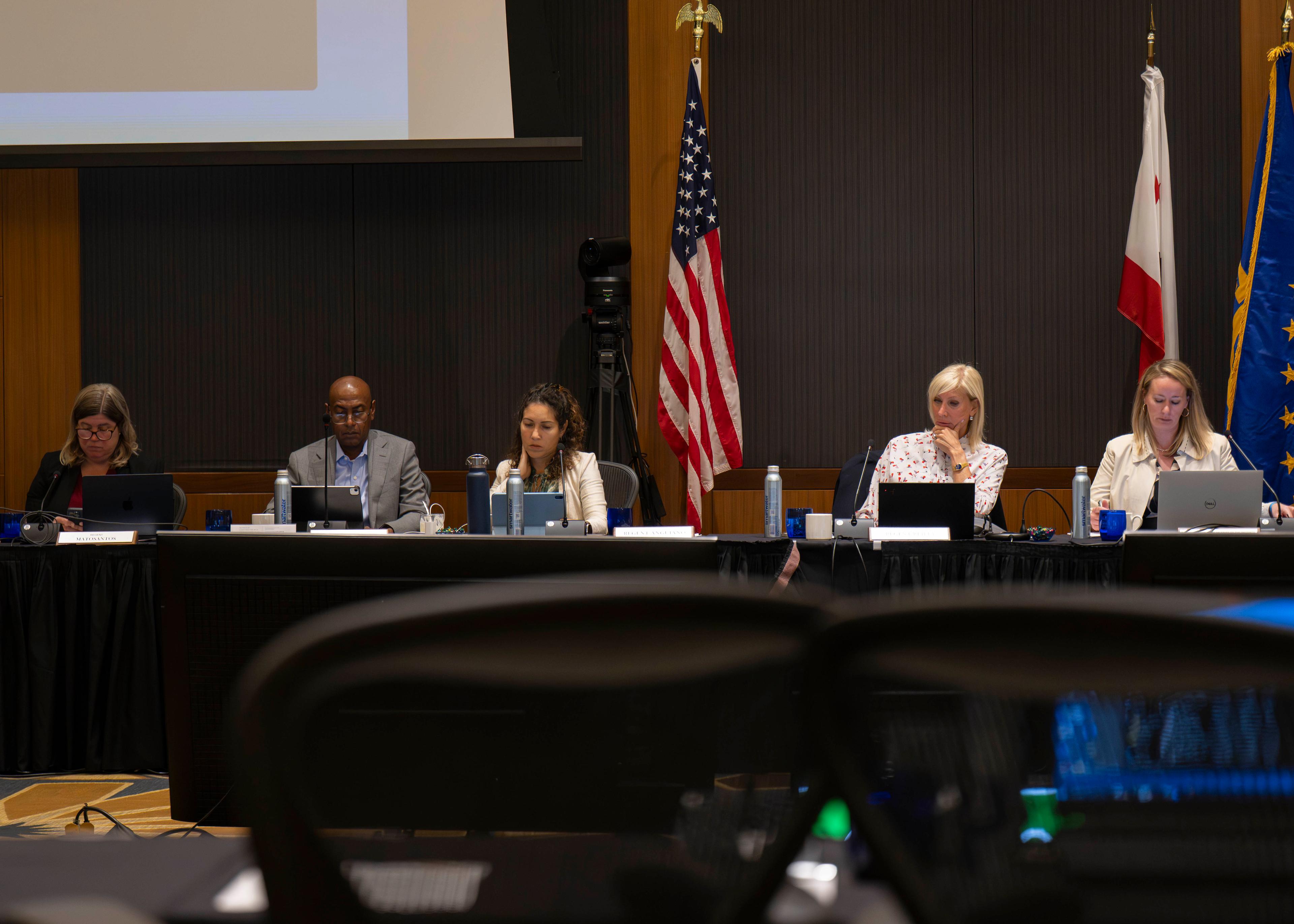
Regent Ann Wang said she questioned the timing of amending the plan, as both higher education and the economy undergo unprecedented challenges. She added that, given these concerns, stakeholders will likely have an emotional reaction to the tuition increases.
Eleni Kounalakis, the lieutenant governor of California and ex officio member of the UC Board of Regents, called the conversations surrounding the plan confusing, adding that the Tuition Stability Plan is “one of the biggest decisions that we will have ever taken when it comes to the future of the University.”
“This is all in the context of our students (being) under threat from an administration that’s also going after their SNAP benefits, which may also drive more of our students out of being able to attend,” she said. “Not to mention, of course, the cruel attacks on undocumented students. So I’m very disappointed that there isn’t a better, harder, clearer analysis of what this vote will be.”
The board also voted to review the plan’s increases every seven years. There was previously no set procedure for review.
The move to increase tuition follows the University’s filing of an emergency request to the state government for nearly $130 million to offset budget pressures, especially as a result of the federal government’s financial targeting of higher education, according to the Los Angeles Times. Brostrom said during the meeting that the state approved the request, but added that he was unsure it would be paid on time, alleging that the state has delayed past payments to the University.
About 60 demonstrators gathered outside of the Luskin Conference Center on Wednesday morning to protest the proposed changes. The rally, hosted by the UCSA, included call-and-response chants, testimonies from students and faculty – including Aditi Hariharan, the president of UCSA – and a brief march next to the conference center.
Many of the attendees wore UCSA shirts that read, “F*ck Tuition” on the back. They also held posters that read, “Locked Out of UC,” “Cohort Tuition: Wrong Decision,” “Hands Off Our Tuition” and “No More Confusion End the Cohort Tuition.”
At about 10:15 a.m., the demonstrators began marching toward Pauley Pavilion and chanted “UC, UC, can’t you see? We don’t want your tuition fees,” “Five, six, seven, eight, students will retaliate” and “Across the state, across the nation. End the war on education”
Hariharan, a fifth-year student at UC Davis, said UCSA has been speaking with the regents and UCOP for several months about the potential tuition increase and hopes the board will listen to students’ concerns.
“The UC is already requesting this money from the state, and it should not come from students’ pockets,” Hariharan said.
Diego Bollo, the president of the Undergraduate Students Association Council, said while tuition raises do not affect current students, student debt should not be a “rite of passage.”
“We want to protect and fight for the generations of Californians that aren’t here at the table,” Bollo said. “The UC shouldn’t be taxing its students to solve the budget.”