Theater Review: ‘Purpose’ at the Geffen Playhouse weighs faith and legacy in a funny, moving family drama
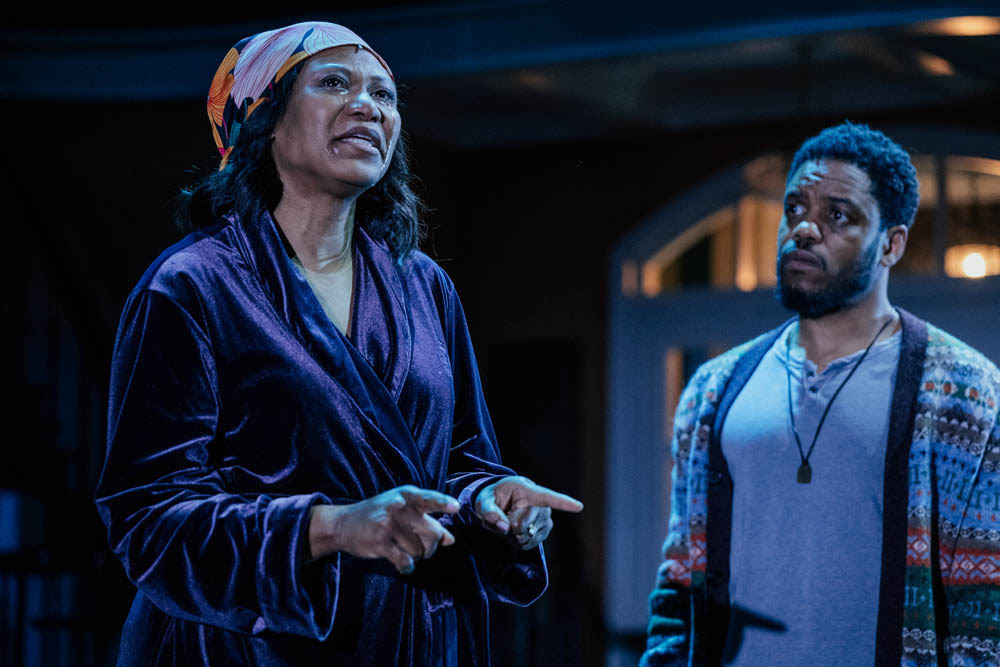
Alana Arenas (left) speaks to the audience while Jon Michael Hill (right) listens. “Purpose” hit the Westwood mainstage Nov. 11 and is set to run until Dec. 20. (Courtesy of Geffen Playhouse)
“Purpose”
Directed by Phylicia Rashad
Geffen Playhouse
Nov. 11 to Dec. 20


By Julia Kinion
Nov. 21, 2026 1:41 p.m.
Warning: Spoilers ahead.
The Geffen Playhouse’s latest production delivers a triumph of intentional reflection.
“Purpose” hit the Westwood mainstage Nov. 11 and is set to run until Dec. 20. Written by Pulitzer Prize-winning playwright Branden Jacobs-Jenkins, the comedy drama centers on the enigmatic Jasper family, a Black political dynasty with buried secrets. When the family’s youngest son Nazareth, or Naz (Jon Michael Hill), returns home to celebrate his brother’s release from prison, the unspoken tension – created by their strained relationships struggling under the veneer of their reputation – threatens to rise to the surface. Phenomenal performances – paired with hilarious yet heartbreaking writing with thoughtful exploration of its themes of family, faith and legacy – render “Purpose” a guaranteed classic.
Hill, the play’s leading man, brings the most understated – although not underwhelming – performance as Naz, an introverted nature photographer and outsider in his family of preachers and performers who returns for his brother’s homecoming.
Naz breaks the fourth wall throughout the play. Hill’s charisma and comedic timing render his performance endearing rather than cliched, and he effortlessly transitions from lighthearted quips to grounded depictions of anger and grief. After his best friend Aziza (Kara Young) is pressured into staying with the family for the evening, Naz tells her not to tell his conservative family about his being the sperm donor for her child. An explosive fight between Naz and Aziza ensues after Aziza lets the secret slip during dinner. Naz’s calm demeanor changes, creating one of the most powerful moments in the production. The argument shows the layers to Naz’s character beyond his carefree demeanor and highlights the tension between embracing one’s truth in a family with a carefully curated reputation.
[Related: ‘Chrysalis,’ UCLA alum-produced film, revisits childhood in war-torn Saigon]
Hill’s supporting cast delivers captivating and dramatic stage presences worthy of their characters’ fictional fame and reputation. Junior (Glenn Davis), a disgraced politician freshly released from a stint in a minimum-security prison, deftly fluctuates between opportunistic yet earnest monologues. Davis’ performance of Junior’s experiences with his bipolar I disorder – and, specifically, the character’s manic episode during the climax, when he destroys his father’s bee colony – is easily another one of the play’s most moving moments. It demonstrates how the family’s reputation has torn it apart, while the ensuing reconciliation shows that its shared love keeps it together.
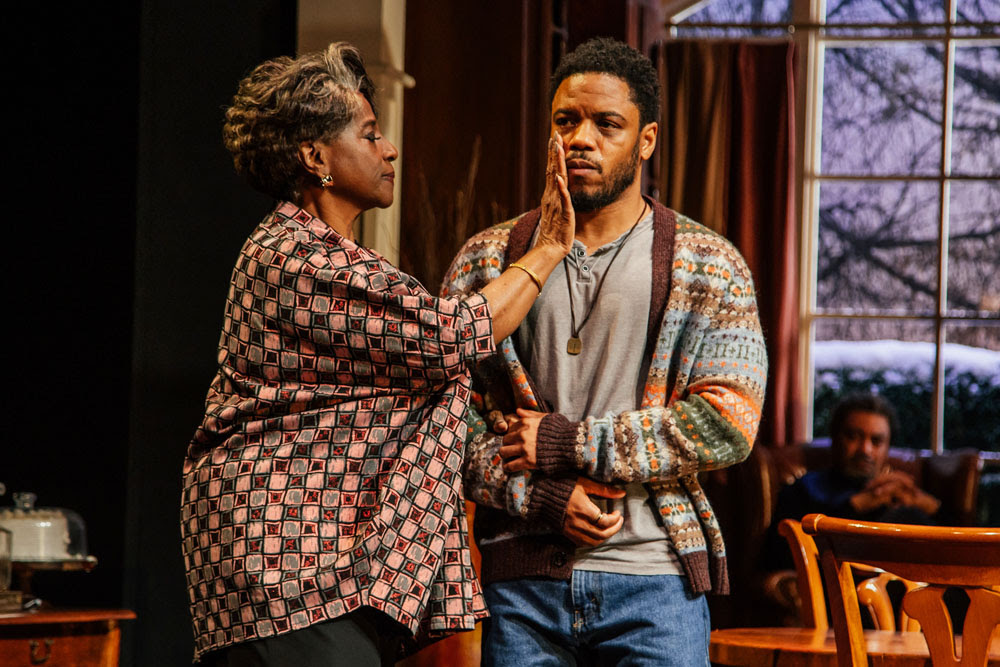
Jacobs-Jenkins masterfully balances laugh-out-loud quips and comedic timing with serious drama in his writing. While, at times, the text struggles with balancing timelessness and contemporary references – with the mentions of the COVID-19 pandemic and the incorporation of cell phones feeling a bit jarring – these ties with the present overall enhance the piece. Aziza’s monologue to Naz’s parents, Claudine and Solomon, links her profound emotional experience participating in Black Lives Matter protests to their work during the Civil Rights Movement.
The first half of the play is remarkably engaging and fast paced, though the second half drags with a much slower plot. While the environment of the Jasper household is meant to become increasingly suffocating and uncomfortable as arguments between the characters mount, the production takes this discomfort a step too far. The pace picks back up during the climax of the play. Jacobs-Jenkins delivers the necessary payoff from the tension established in the opening monologue.
Still, compelling performances and emotional connection between the characters keep the viewer engaged through the slower moments.
The intricate set design only adds to the momentous atmosphere. The characters are positioned in the living room and dining room of the Jasper household throughout the show, with the recurring set creating a sense of narrative fluidity. Warm lighting creates a welcoming environment, drawing suspense from the dichotomy between the play’s lighthearted beginning of a family homecoming and Naz’s initial forewarning about chaos to the audience during his opening monologue. The walls of the house primarily feature portraits of Black political leaders. The painting of Martin Luther King Jr. – whom the family’s patriarch knew well – and several other photographs also remain illuminated during many of the play’s monologues, underscoring that the Jasper family’s historical legacy is omnipresent in the characters’ lives.
The lighting adds to the play’s storytelling, signaling the alternation between monologues from Naz, indicated through a spotlight and the dimming of the lights of the set, and interactions between the Jasper family and their two guests, which are lit with full lighting.
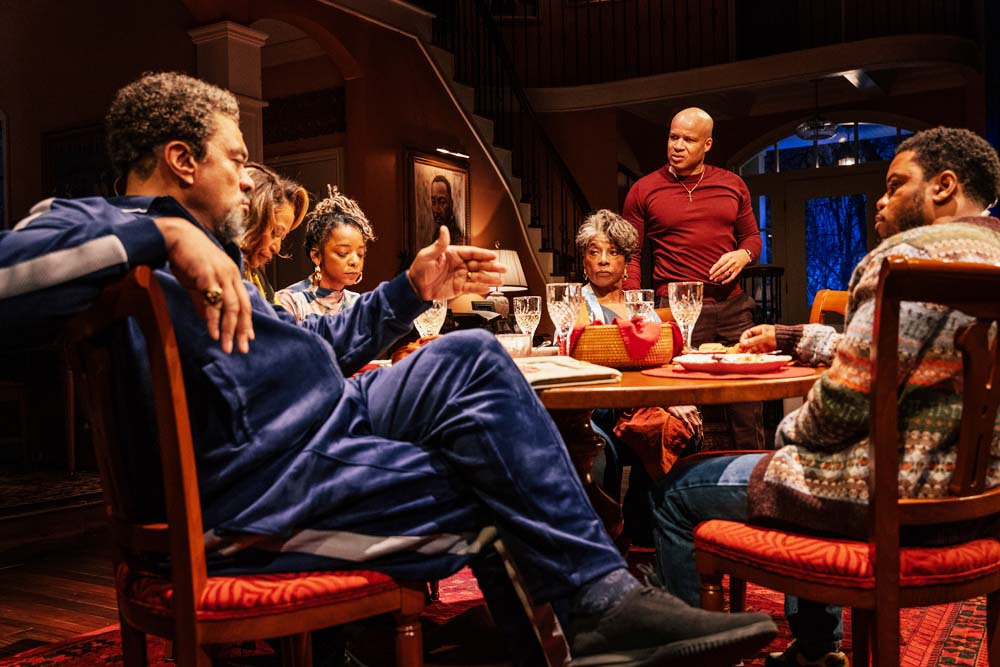
Jacobs-Jenkins’ storytelling excels in its humanity. Each of the characters, while having moments where they are profoundly unlikable, remain deeply compelling and ultimately sympathetic to the viewer. The play thrives in nuance, and the thoughtful exploration of the characters enchants the audience and draws them into a contemplation.
Standout performances elevated an already strong script to even more moving heights, delivering a phenomenon of storytelling.