Film Review: Gripping ‘Fjord’ navigates the treacherous terrain between faith, family and justice
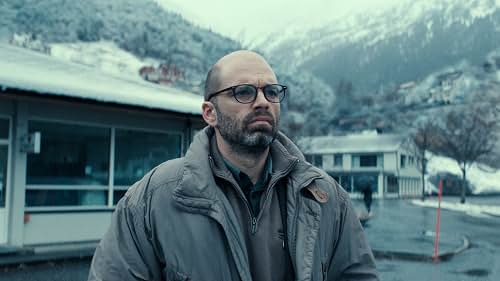
Sebastian Stan as Mihai Gheorghiu stares to the side while wearing glasses and a jacket. “Fjord,” directed by Cristian Mungiu, centers on a Romanian-Norwegian couple whose strict religious beliefs and parenting methods ignite a child-protection investigation. (Courtesy of IMDb)
“Fjord”
Directed by Cristian Mungiu
Neon
Oct. 9


By Gianluca Centola
Oct. 10, 2026 4:23 p.m.
Warning: Spoilers Ahead.
In Cristian Mungiu’s “Fjord,” the mountains are not the only things on the verge of collapse.
Following a limited theatrical release Friday, Sebastian Stan and Renate Reinsve anchor the Palme d’Or-winning drama as a Romanian-Norwegian couple whose strict religious beliefs and parenting methods ignite a child-protection investigation – forcing their family into a battle over faith and culture. Through precise visual storytelling and restrained performances, Mungiu turns this family’s ordeal into a complex explanation of the limits of tolerance. Though the film doesn’t provide a simple answer, its very refusal to simplify the conflict makes it all the more rewarding and a must-see hit.
Recently relocated from Romania to a small Norwegian town, Mihai and Lisbet Gheorghiu – played by Stan and Reinsve, respectively – struggle to find their footing along with their five children, who range from a newborn to teenagers. Despite Lisbet speaking Norwegian, the family finds itself culturally isolated. The Gheorghiu family’s strict religious views, rejection of technology and overall conservative lifestyle separate them from their progressive Norwegian neighbors, creating a divide far beyond language.
From weekly family Bible studies to Mihai being asked not to evangelize as he plays a religious song on the school piano – an act he views simply as playing music – Mungiu underscores the ideological divide that makes the family stick out.
Tensions escalate when one of their daughters arrives at school with a bruise on her neck. Child Protection Services launches an investigation, and eventually Mihai and Lisbet defend themselves and their use of an occasional slap as punishment or to keep their kids out of danger.
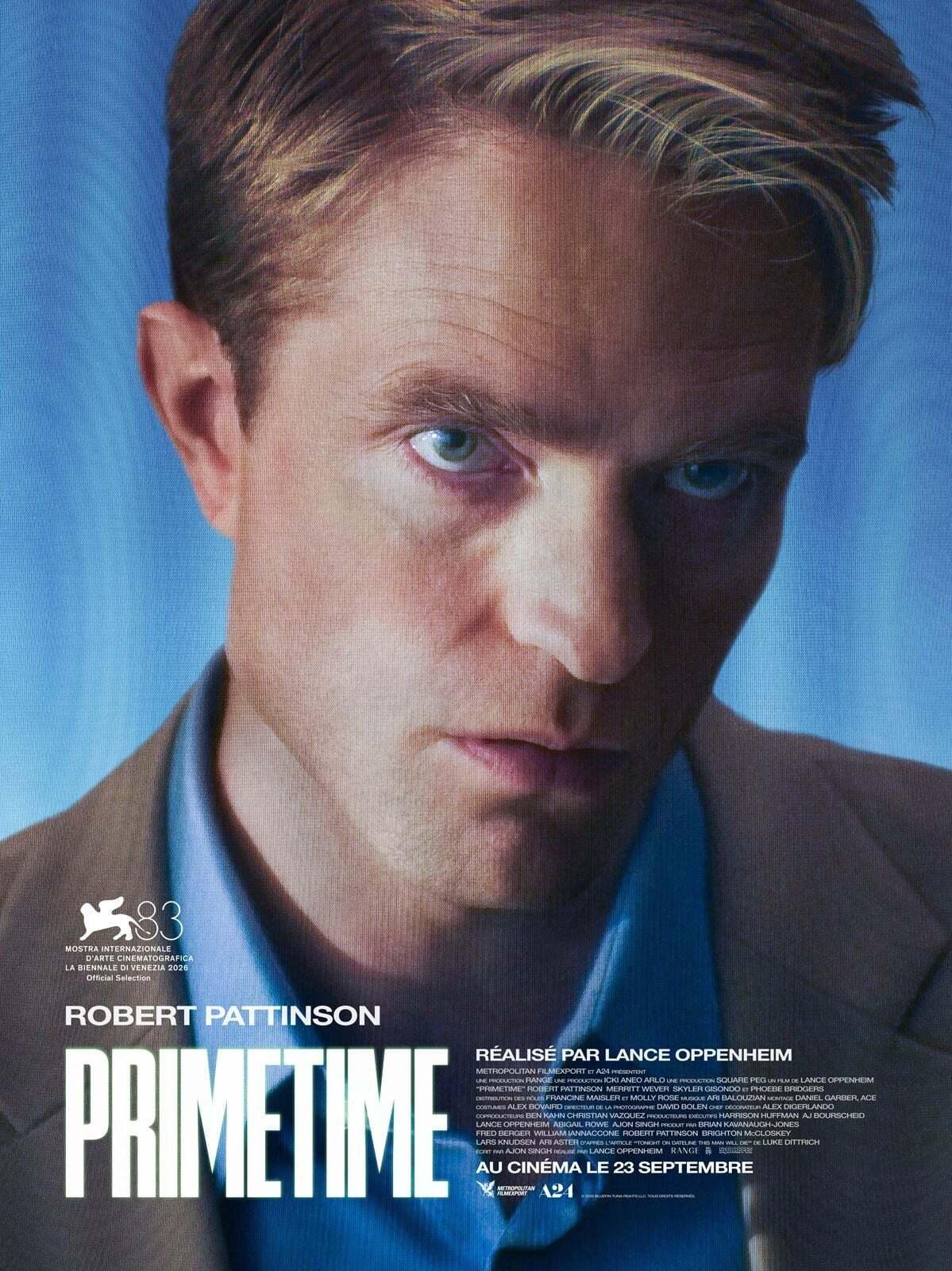
[Related: Film Review: In gripping, clever ‘Primetime,’ the pursuit of justice becomes unjust]
As the small village distances itself from the family, a few people stick by them, and yet still feel conflicted about the situation unfolding.
As the drama migrates to the courtroom, Mungiu excels in establishing contrast and highlighting the complexity of the situation through surgical blocking, breathtaking landscapes and the minutiae of everyday life. In one telling scene, Mihai reads his youngest children a religious children’s book with his two eldest and Noora alongside them. Mungiu carefully positions the characters to reflect Mihai’s worldview, with Noora and Elia on his left (camera right) and his eldest son Emmanuel (Jonathan Ciprian Breazu) on his right (camera left). Mungiu underscores the contrast between Elia and Noora’s budding relationship and Emmanuel’s obedience. The blocking and camera work invite the audience to question Mihai’s perspective, revealing how the same family can be understood through radically different perspectives.
The film’s attention to detail does not stop at the cinematography and symbolism. It extends into the powerful and nuanced performances from Stan and Reinsve.
Like the grey monotone palette of Mihai’s wardrobe, Stan disappears into a stoic patriarch with deep internal anger at his family’s situation rather than external rage. In many of the big events in the film, Mihai needs a translator to understand what is going on. Instead of expressing that confusion in grand or extreme ways, Stan utilizes his tense body language to bring a sense of worry and frustration that soon evolves into anger. By exploring these grey areas of the film, both in terms of what actually happened and who is right and wrong, Stan shines as one of the anchors of the film. Mihai’s distress is clear, yet the film never asks the audience to excuse his actions.
As for Reinsve, she delivers a subdued and complex performance of a mother who is a caregiver of her community and her family. However, that image gets warped as the secular locals turn against her after they discover in court that she left a cross in the casket following the death of one of her patients. What she views as a source of comfort becomes another point of contention as it is weaponized during the investigation. Mungiu again crafts a complex climate in which Reinsve thrives at portraying a mother navigating an impossible situation through a court that seemingly works against her. On top of that, Lisbet’s Norwegian background makes the scenario all the more complex as a system that claims to be tolerant, especially toward Norwegians, is suddenly on the other side of her case.
At a certain point, the question in the film is no longer about the anatomy of a bruise but instead about where the line is drawn at tolerance and polarization.
Mungiu masterfully explores these grey areas, yet doesn’t provide a definitive answer to the question either. Mungiu does not suggest that religious conviction excuses harmful parenting, nor does he present institutional intervention as inherently unjust. Instead, he has the audience wonder if a family can be wrongfully persecuted. Part of that is what makes the film so rewarding by the end – that like Mungiu, the audience too is exploring how they feel about these issues and people as their stories unfold.
Like the avalanches that fall in the scenic background of the small village in Norway, “Fjord” reminds audiences that when it comes to morality, what lies beneath the surface can be just as destructive as what comes crashing down from above.