

UC Health plans to increase AI’s role in taking notes, answering patient questions

UCLA Health, along with the other UC Health systems, plans to increase its AI use, according to speakers at a Tuesday UC Board of Regents meeting at the UC San Francisco Mission Bay Conference Center. (Kai Dizon/Assistant Photo editor)

By Charlie Hamilton
Nov. 19, 2026 9:10 p.m.
This story was updated Nov. 19 at 10:14 p.m.
UC Health will start integrating AI agents into medical records software and aims to eventually use the technology for phone services, administrators said at the UC Board of Regents’ meeting Tuesday.
The UC Regents met Tuesday and Wednesday at the UC San Francisco Mission Bay Conference Center to discuss topics relevant to the University, including the role of AI in healthcare.
ChatGPT will be added to the medical records software for all UC medical centers once approved by administrators, said Dr. Smitha Ganeshan, medical director for AI programs at UCSF Health. If implementation at UC San Diego Health is successful, all UC campuses will be offered AI agents to answer phone calls and help patients prepare for procedures, added Dr. David Rubin, the executive vice president of UC Health.
At UCSD Health, AI agents answer phone calls to help patients prepare for colonoscopies and schedule follow-up appointments, which saves nurses time for their other duties, said Dr. Karandeep Singh, chief health AI officer at UCSD Health. Patients have expressed both suspicion of and gratitude for from the time saved by these AI agents, he added.
“Many of our patients give us feedback that, even though they generally have distrust for AI, they’re very thankful for the ways that we’ve made it available to them,” he said. “They get clear instructions and are able to spend time with them.”
All UC campuses with attached hospitals already use an AI scribe system to take notes and generate chart notes, which are summaries of a patient’s visit that are saved in their medical record, said Suresh Gunasekaran, president and chief executive officer of UCSF Health.
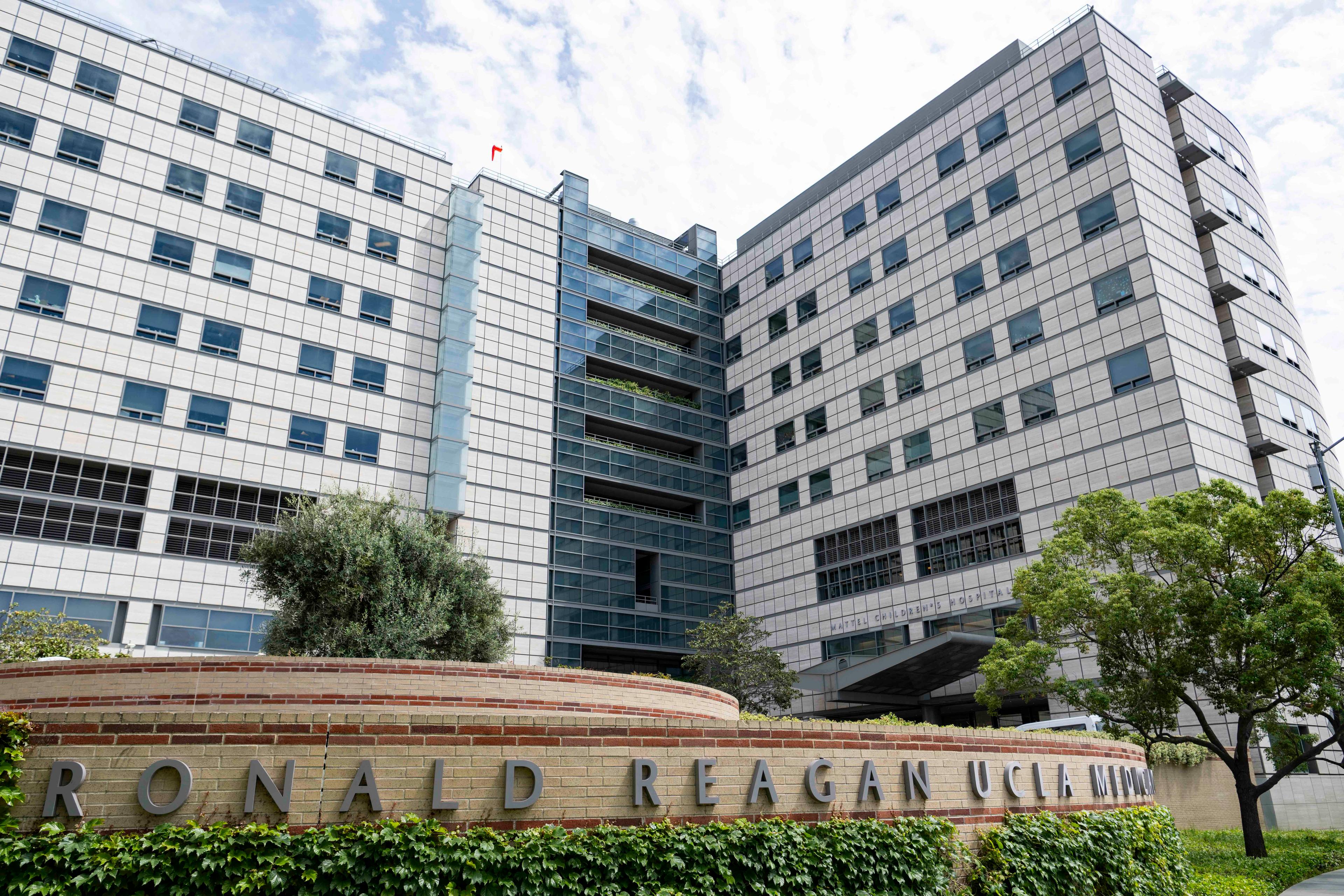
UCLA Health physicians currently use AI to take notes during patient interactions, answer patient questions online and assist radiologists with using X-rays and other technologies to diagnose and treat patients, according to a June 3 UCLA Health Newsroom press release.
A central challenge for healthcare providers is extracting relevant information from a patient’s medical record, which can be extremely long, before an appointment or procedure, Ganeshan said. However, AI could help address that problem, she added.
“We’ve been working to integrate ChatGPT into the medical record to empower clinical and operational workflows,” Ganeshan said.
Ganeshan said her team tested ChatGPT’s ability to summarize information from patient’s charts before appointments with 100 clinicians and found that AI saved physicians’ time in 80% of the trials.
Student Regent-designate Jordan Roiland said using AI to write chart notes could cause a decline in physicians’ ability to recall their interactions with patients, citing a June 2025 Massachusetts Institute of Technology study that found that AI users have a harder time recalling information when they allow AI to write it down for them.
“We see the most complicated patients in the world at UC,” said Roiland, a medical student at the UCSF School of Medicine. “I’m really worried that this is going to drastically reduce our quality of care and our ability to come up with those very rare diagnoses and hard-to-come-to conclusions when we’re pumping through patient visits.”
Gunasekaran said AI often does not work as its developers advertise, so he and other leaders plan to ensure all tools are thoroughly tested before they are implemented at any UC campus.
Dr. Katherine Andriole, associate dean for health AI strategy and innovation at the UCLA David Geffen School of Medicine, said UCLA Health’s use of AI to help write summaries for patients’ discharge has increased the quality of those records. These notes are monitored and reviewed by a large language model – another form of AI – and through focus groups with clinicians, she added.
“Adoption and deployment has to be paired with monitoring and governance,” Andriole said.
UCLA Health is working to expand AI literacy – and general information on AI and its uses in healthcare have been added to some of the lectures at UC medical schools, he added.
Some medical students are still hesitant to use AI tools, Andriole said. The University, however, must stay ahead of new AI developments in healthcare, Ganeshan said.
“This industry is investing hundreds of billions of dollars in AI development every quarter, and our enterprise platforms aren’t always at the cutting edge of innovation,” Ganeshan said. “We don’t want UC to miss out on that learning and that opportunity for our patients and our health systems.”