On ‘equitable care’: LGBTQIA+ SoCal Health Conference targets access, education
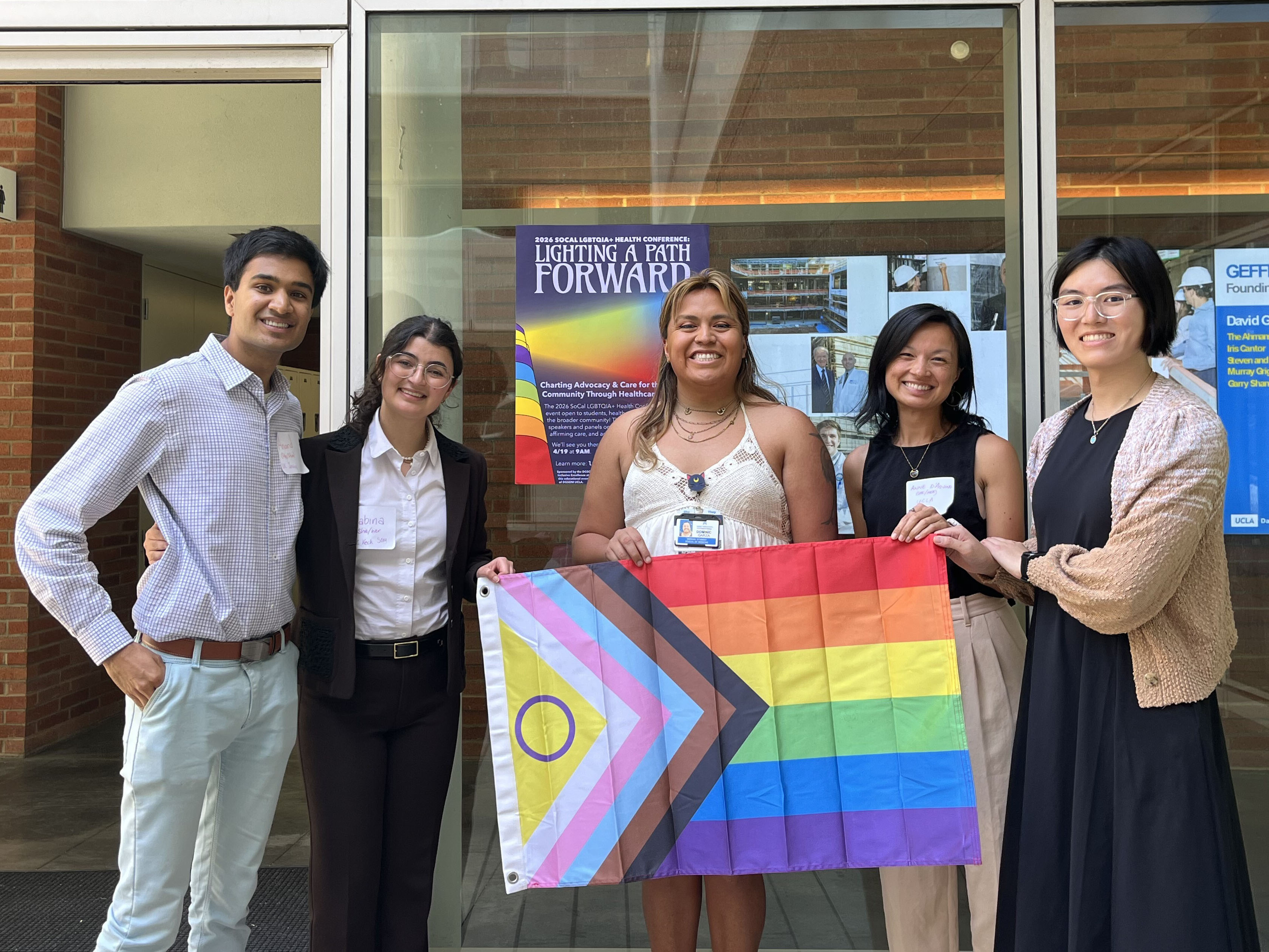
The organizers of the event are pictured. The 11th annual LGBTQIA+ SoCal Health Conference brought together UCLA physicians, medical students and community members to discuss gender-affirming care, mental health and policy issues in the LGBTQ+ community. (Courtesy of Ruchi Agashe and Anne d’Aquino)

By Keira Perkin
April 26, 2026 10:48 p.m.
Healthcare providers emphasized the importance of supporting LGBTQ+ patients amid federal rollbacks on the community’s access to care at an April 19 UCLA conference.
The 11th annual LGBTQIA+ SoCal Health Conference brought together UCLA physicians, medical students and community members to discuss gender-affirming care, mental health and policy issues in the LGBTQ+ community. A coalition of students founded the conference in 2015 to address LGBTQ+ health education shortcomings in medical education.
“This is a place for people to find community, to talk over issues that are affecting the queer community and really educate each other,” said Evelyn Juan, a medical student at UCLA and organizer of the event.
President Donald Trump has signed executive orders targeting transgender rights since taking office and has threatened to withhold federal funding from health institutions that provide gender-affirming care for minors. The National Institutes of Health eliminated at least $125 million in funding for LGBTQ+ research funding last spring, according to NBC.
The event – themed “Lighting a Path Forward” – aimed to provide hope for the LGBTQ+ community, said Sabina, a medical student at the USC Keck School of Medicine and event organizer who was granted partial anonymity out of fear for retaliation. It allowed attendees to make connections with other professionals in the field and share resources for supporting LGBTQ+ patients, said Dom Garza, a medical student at the USC Keck School of Medicine and event organizer.
“It’s not just LGBTQ providers who should be focused on LGBTQ health,” said Anne d’Aquino, an event organizer. “It should be everybody because it’s everywhere. And you never know who you’re talking to and what patient really needs that support.”
The day began with a panel of three UCLA physicians who provide gender-affirming care: Dr. Rebecca Rada, Dr. Naomi Duncan and Dr. Maliha Khan. The physicians said it can be challenging to provide care to their patients because of the constantly shifting political landscape.
Ivan Alvarado, a medical student at UC Irvine, said he enjoyed learning about how physicians can advocate for the needs of their LGBTQ+ patients, such as by writing letters of support to insurance companies who have denied coverage for hormone therapy.
Jay-Riley Small, the director of mental health and community engagement with the Alexis Project – which provides mental and physical healthcare for Los Angeles’ LGBTQ+ community – emphasized the importance of trust and relationship-building between LGBTQ+ patients and their medical providers during a panel about mental health.
“It’s really important that we have safe spaces, where they can express those feelings without feeling pathologized, without feeling that their care is going to be taken away from them or limited as a result of sharing,” Small said.
Physicians should think about how to incorporate patients’ support systems when they may be transitioning, licensed therapist Sara Stanizai said during the panel.
Eric Cortez, a doctoral student in health psychology at UCLA who attended the event, said he was reassured to see physicians are putting in the work to support the community despite federal policy challenges. He added that many of his LGBTQ+ friends have increasingly struggled to access gender-affirming care.
“It’s important for medical institutions to stand strong in their values,” d’Aquino said. “Everybody deserves equitable care.”