What’s going on with ballot propositions?
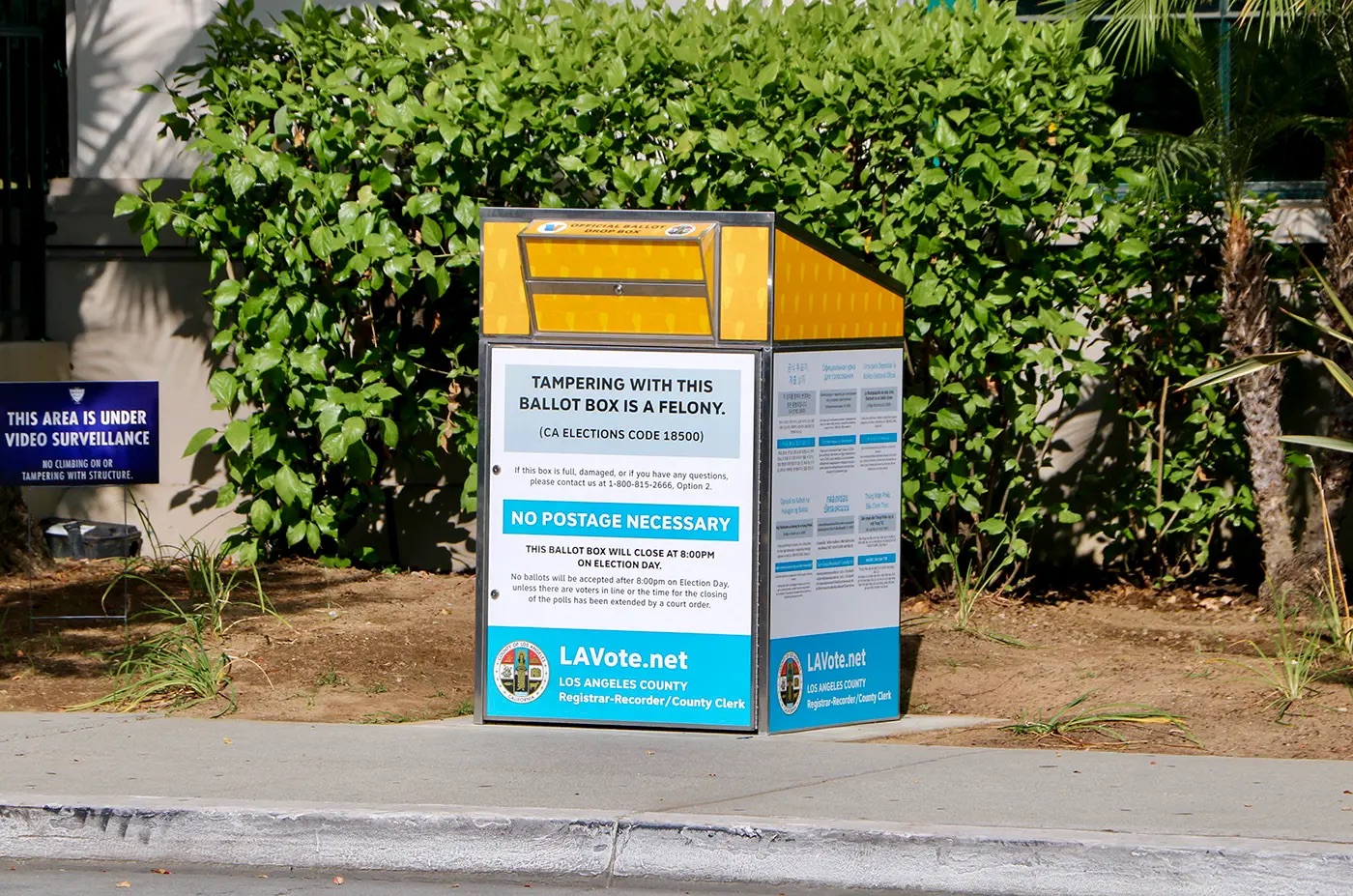
A Los Angeles County ballot box is pictured. There were 14 propositions for Californians to vote on in the Nov. 3 election, and one remains uncalled. (Daily Bruin file photo)


Californians are no stranger to long ballots with a sprawling list of propositions.
The Nov. 3 election featured California’s longest proposition list in a decade, allowing voters to decide on several hot-button issues. Eleven days post-Election Day, the results to one of the 14 propositions remains outstanding.
[Related: Californians reject Prop 40, preventing one-time billionaire tax]
This year’s propositions included a one-time tax on billionaires, a measure which would free up $8.4 billion in state bonds for immunology research – including for a UC-affiliated research institute, one that would implement voter identification requirements and another which would authorize state borrowing of up to $11.25 billion for housing construction and renovation projects, among others.
[Related: Ballot Breakdown | 2026 Midterm Elections]
The outstanding measure, Proposition 4, would allow state and local governments to create public financing for political campaigns.
Why have some propositions still not been called?
Propositions can be called minutes after the polls close. Others take days or even weeks before the final outcome can be determined.
Proposition 50 – a November 2025 initiative led by Gov. Gavin Newsom, which proposed a mid-decade electoral redistricting in California in favor of Democrats to counter Texas’s move to do the same for Republicans – was called as polls closed.
[Related: California voters pass Proposition 50 for congressional redistricting]
Mark Baldassare, the statewide survey director for the Public Policy Institute of California, said when an election is called, it’s not simply based on the actual vote count – it’s also based on how the districts that have been counted tend to vote, with the same consideration made for those that have yet to be tallied. However, if the race is close and there is a mixture of typically Democratic and Republican counties with votes left to count, a call is delayed until there is greater certainty, he added.
“If you have millions of votes that haven’t been counted, and some of them are from Democratic areas or some of them are from Republican areas, you don’t know how it’s going to shift the responses one way or the other,” Baldassare said.
What happens next if a proposition passes or fails?
Once a proposition passes, the path forward is quite simple: It becomes the law, and lawmakers must implement it, with few exceptions.
The effects of a passed proposition can sometimes take years to see, said Joseph Fishkin, a professor of law. He added that the time it takes for a proposition’s outcome to become clear once it’s passed can depends on the number of government actors involved in the implementation.
For example, Los Angeles’ Proposition HHH – which authorized the development and acquisition of thousands of supportive housing units – was approved in 2016. However, the rise of overall per-unit costs and the complicated process to obtain funds from multiple sources have hindered the enactment of the initiative, according to a 2022 report by LA City Controller Kenneth Mejia.
“There’s a few different things that at every level of government that will, in the long run, make a difference,” Fishkin said. “We’re just now seeing some effects of ballot measures that were voted on two, four, six years ago because things just take a while to implement.”
People can file lawsuits claiming a proposition is unconstitutional if they wish to challenge it, Baldassare said. State Republicans sued Newsom less than 24 hours after Proposition 50 passed, claiming the maps it sought to enact were unconstitutional.
However, Baldassare said he does not think that any of the propositions passed will give rise to a legal battle – although the billionaire tax may have faced legal pushback had voters approved it.
Propositions can originate from the state legislature, but they are typically created via initiative – a process that allows voters to propose laws or constitutional amendments – when legislators do not act on the issue, said Zev Yaroslavsky, the director of the Los Angeles Initiative at the UCLA Luskin School of Public Affairs.
Some proponents of failed propositions will try to get their initiative on the ballot several more times, Fishkin said. He added that this process can be expensive, however – $193.37 million was spent nationally on signatures across 45 certified ballot initiatives for the 2026 election, according to Ballotpedia.
What does it take to get a proposition on a ballot?
Any U.S. citizen living in California can initiate a ballot measure by gathering 546,651 signatures for statutory ballot measures and 874,641 signatures for constitutional amendments in the last two years. However, many do not have the means to get their proposition on the ballot, Fishkin said.
Few signature drives are able to be supported by volunteers, with some campaigns paying collectors several dollars for each signature they collect – an amount that goes up based on the timeline, number of petitions in circulation and how many signatures are needed, according to the Los Angeles Times.
Yaroslavsky, who between 1975 and 2014 served on the Los Angeles City Council for 19 years and the LA County Board of Supervisors for 20 years, said the cost of gathering signatures alone would be a barrier for him if he were to propose a measure today.
“In my day, 70 cents would get you a signature,” Yaroslavsky said. “Now it’s $7. It’s sometimes even more than that.”
California first began – in 1911 – allowing regular citizens to propose initiatives with the goal of increasing the representation of those who weren’t wealthy, creating a more direct democracy, Fishkin said.
“We created a system that now is so expensive to use that we basically have replicated the original problem that it was trying to solve,” Fishkin said.
After a proposition has made it onto the ballot, money continues to play a significant role, Yaroslavsky said. The campaigns for and against this year’s propositions have spent nearly $1 billion, making it the most expensive California ballot measure election cycle ever, according to CalMatters.
However, who spends the most isn’t always necessarily the winner, Yaroslavsky added. Supporters of Prop. 39 spent $1.3 million more than the measure’s opponents, but the measure failed with 60.5% of voters casting a ballot against it.
“Just because you spend more money than your opponent, whether it’s in a campaign or whether it’s in an initiative, the voters are a lot smarter than the political class gives them credit for,” Yaroslavsky said.
Why does California have so many propositions?
California has protections ensuring a proposition’s original intent and language are preserved throughout its implementation.
The California Legislature is not allowed to change or modify ballot measures once passed unless the measure explicitly grants it the ability to, Fishkin said. In order to alter passed initiatives, the California Legislature can place the suggested change on the ballot with a majority vote.
In other states with an initiative process – such as Florida, Colorado and Michigan – the government has some ability to alter propositions that are approved by voters.
There are also several types of measures which can appear on ballots. Citizens can initiate constitutional amendments, state statutes and referendums – which allow voters to decide whether they would like to uphold or repeal a law – and the legislature can refer constitutional amendments as well as statutes or bond measures to a popular vote.
Passed constitutional amendments would require another constitutional amendment to be changed, Fishkin said.
The ability for citizens to propose initiatives and referendums – something only possible in about half of U.S. states – also contributes to the length of the ballot. Nine of this year’s 14 initiatives were placed on the ballot by citizens, rather than the legislature, Baldassare said.
The election type – primary or general – can also play a role in the ballot’s length.
Ballot initiatives and referendums were often split into the primary and general elections until former Gov. Jerry Brown signed a bill into law to consolidate all of them to the November elections in 2011. This was largely due to the higher voter turnout in general elections, a factor which also often leads the legislature – who can still place measures on the June ballot – to give measures for voters to decide on in November, Baldassare said.
Yaroslavsky said that while he believes it’s best that the largest number of voters are able to vote on the measure, the general election ballot was more manageable before the change.
How voters see the ballot
Californians tend to complain about the length of the ballot, Yaroslavsky said. The amount of time it takes to fill out the ballot can raise questions about how much voters are looking at each issue, but he said he believes voters put in the effort when making their decisions.
“I have a lot more confidence in the voters than a lot of people do,” he said.
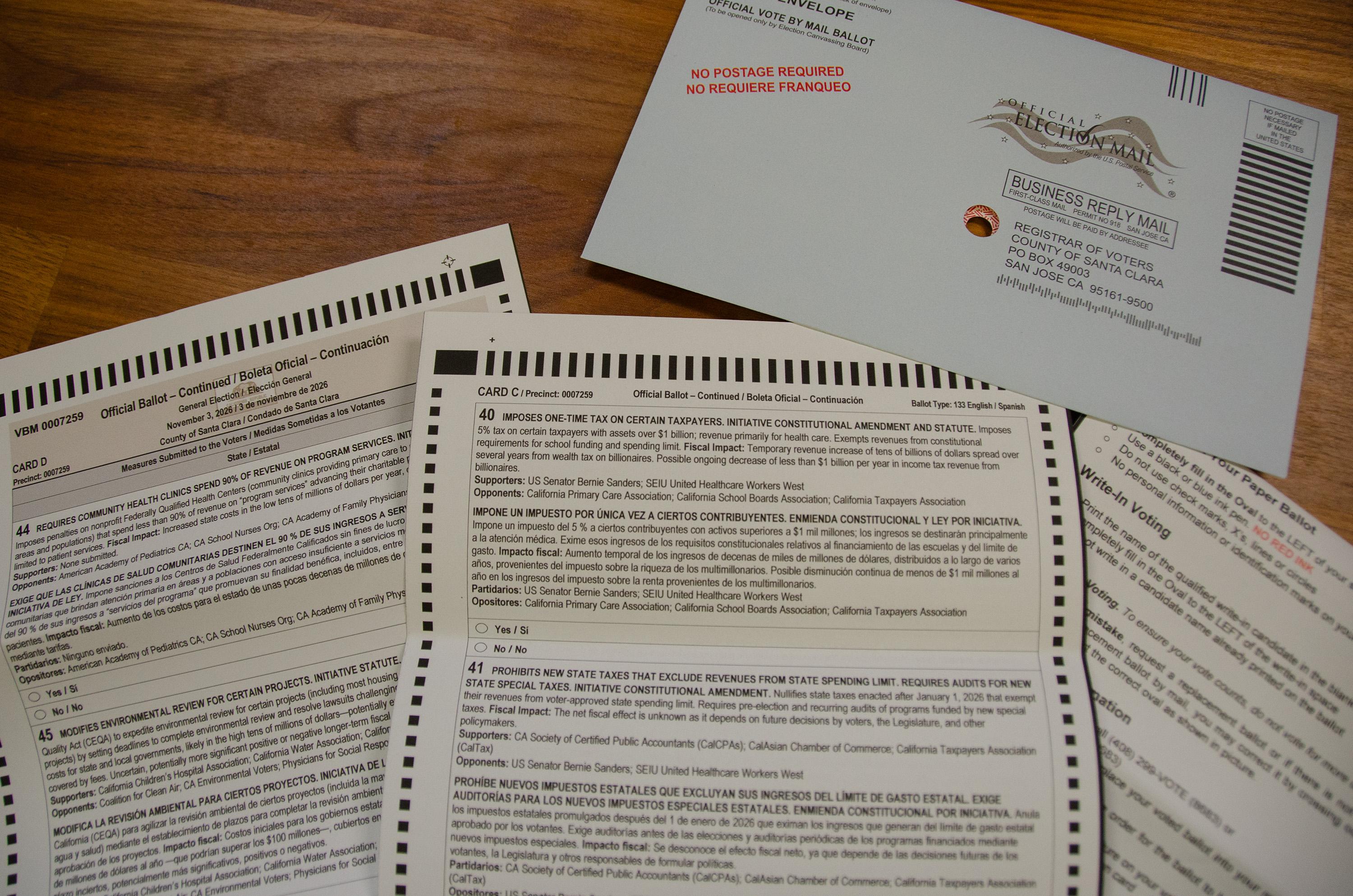
One important aspect of the ballot is the language on the propositions, including the title, the summary and the fiscal impact, Baldassare said.
“In our polling, Californians overwhelmingly tell us that there are too many propositions on the ballot, and they overwhelmingly tell us that the wording is often confusing and hard for them to understand what happens if something passes,” he said.
This often leaves voters looking for clues – something the recent addition of supporters and opposition of a proposition has helped, Baldassare added. If voters are unsure of how to vote on a proposition, especially due to confusing language, they are more likely to vote against it, he said.
Language also creates a unique challenge for tax measures put forth by local governments, which require a two-thirds majority among voters to push through, Yaroslavsky said.
If a proposition explicitly mentions a tax early on in a proposal, it can deter voters, Yaroslavsky added.
As a lawmaker, Yaroslavsky intentionally placed language in a tax measure toward the end of its title to avoid this on a 2002 parcel tax intended to maintain LA County’s emergency medical and trauma centers, he said. Tax measures he proposed both during his time on the City Council and Board of Supervisors – including the 2002 tax – passed, he added.
While language can potentially be weaponized by a proposition;s proponents or political consultants, Yaroslavsky said he believes voters will choose what’s best for them at the end of the day.
“With all the faults of the initiative process, especially lately, with the amount of money that’s being spent on it, I would never give it up,” Yaroslavsky said. “It’s one of the great things about California democracy.”