Here’s what to know about some of Gov. Newsom’s final bills in office
Gov. Gavin Newsom gives a speech. He signed his final set of laws as California’s governor in September. (Andrew Ramiro Diaz/Photo editor)

By Alyson Jeong
Nov. 10, 2026 7:18 p.m.
Gov. Gavin Newsom signed his final bill Sept. 30, capping a term of 1,040 approvals and 120 vetoes.
Newsom will leave office in January after being California’s governor for eight years. Several of the laws he signed – including bills covering election security, higher education and research funding – could face legal challenges, while others will phase in over the next several years, students and experts said.
Newsom signed a 13-bill election package Sept. 19, weeks before the November midterm election. The package aims to protect the state’s electoral process from interference from the Trump administration, according to a Sept. 19 press release.
The United States Department of Justice and the Department of Homeland Security filed a federal complaint against the state of California, alleging that more than 20,000 people registered to vote in the state are likely noncitizens, according to an Oct. 15 press release. The federal government asked the court to block California from counting some mail-in ballots until people’s citizenship is verified.
Assembly Bill 282, one of the measures in the package, makes it a felony to seize ballots, election records or certified voting equipment before results are certified.
Shelby Wayment, a staff attorney at the UCLA School of Law Safeguarding Democracy Project, said the U.S. Constitution gives states primary responsibility for administering elections, leaving the DOJ and executive branch without power to intervene in state election processes.
The DOJ dropped the lawsuit Friday, after a federal judge rejected the request Oct. 28, and the Supreme Court rejected the department’s emergency appeal Nov. 2 – the day before the midterm election.
“What they’re doing with the voter rolls, what they’re doing with the ballot segregation case in Los Angeles, what they’re trying to do with voter intimidation by sending DHS agents to doors – all of that is completely out of any statutory authority they have,” Wayment said.
AB 282 more so clarifies the law rather than it changes it, Wayment said. That distinction was reflected in a case in February, she added, where Riverside County Sheriff Chad Bianco seized about 650,000 ballots from a 2025 special election. The California Supreme Court unanimously ruled Sept. 24 that the seizure broke state election law.
Some provisions of the law could be challenged, but a challenger would need to demonstrate concrete injury, Wayment added.
“I certainly think it would make the DOJ hesitate to seize ballots, but I’m not sure to the extent it would actually be enforced if it came down to the DOJ actually trying to seize ballots,” she said.
Parvati Kaushik, co-president of student-run organization Activism Through Policy and a former legislative intern for the U.S. House of Representatives, said the legislation reassures her that states are working to safeguard democracy.
“Young voters are always kind of wary about whether or not their political voice will be heard,” said Kaushik, a fourth-year political science student. “California’s steps, along with steps taken by other states, does instill some faith in me that state governments are protecting citizens against attacks on rule of law and democratic governance.”
Newsom signed Senate Bill 1360, which was authored by Sen. Sabrina Cervantes, on Sept. 19. The law requires election officials in certain counties to provide translated ballots, voter registration forms, election notices and instructions and have a certain number of bilingual election workers at the polls.
Kaushik said the state should push for both election security and voter access, adding that people should be able to vote free of intimidation, language barriers or cultural barriers.
Senate Bill 884, another bill in the package that Newsom signed Sept. 19, requires counties to keep vote-by-mail ballot drop-off locations open during regular business hours starting at least 30 days before Election Day. The bill will be in effect through 2029.
The extended voting period, Wayment said, could make voting easier for students balancing school and elections.
Federal proposals such as the Safeguard American Voter Eligibility Act – a bill introduced by Rep. Chip Roy in 2024 that requires proof of U.S. citizenship when registering to vote in federal elections – could create additional barriers for young voters, she added.
“As a student, you have a lot of ways to access your ballot, and California is trying to protect that from federal interference and rules that would change it federally,” Wayment said. “Stuff like the SAVE Act would be devastating on students who don’t maybe have an updated ID with their current address. I certainly don’t.”
Other bills Newsom signed included measures to support students and protect research institutions in California.
Newsom signed Assembly Bill 2422 on Sept. 27, which addresses financial aid delays caused by circumstances outside students’ control, including administrative processing and disbursement delays.
The law requests the UC to extend certain enrollment and payment deadlines for affected students starting in the 2027-28 academic year. It bars other public universities from dropping students from classes, charging late fees or interest, and placing administrative or transcript holds because of delays, and requests the University do the same.
Chloe Serrano – North Orange County Community College District Trustee for Area 3, state policy manager for legislative advocacy organization What We All Deserve and a UCLA alumnus – helped develop and pitch the bill. Serrano said financial aid delays left her and other students worried about meeting payment deadlines, with some students considering taking out loans or asking their parents for financial help.
“A lot of schools have more punitive measures when you don’t pay on time,” she said. “But having financial aid delays is a very common experience.”
In 2025, students faced delays in receiving the Middle Class Scholarship, which is awarded to low- and middle-income students attending California public colleges. Some UCLA students learned they were eligible for the scholarship in September 2025, and payments were delayed until late November 2025.
About 11,000 recipients had their scholarships delayed, and some awards remained under review through December, the UCLA Financial Aid & Scholarships Office said.
[Related: Bruin Financial Aid scholarship delays, costly overawards spark frustrations]
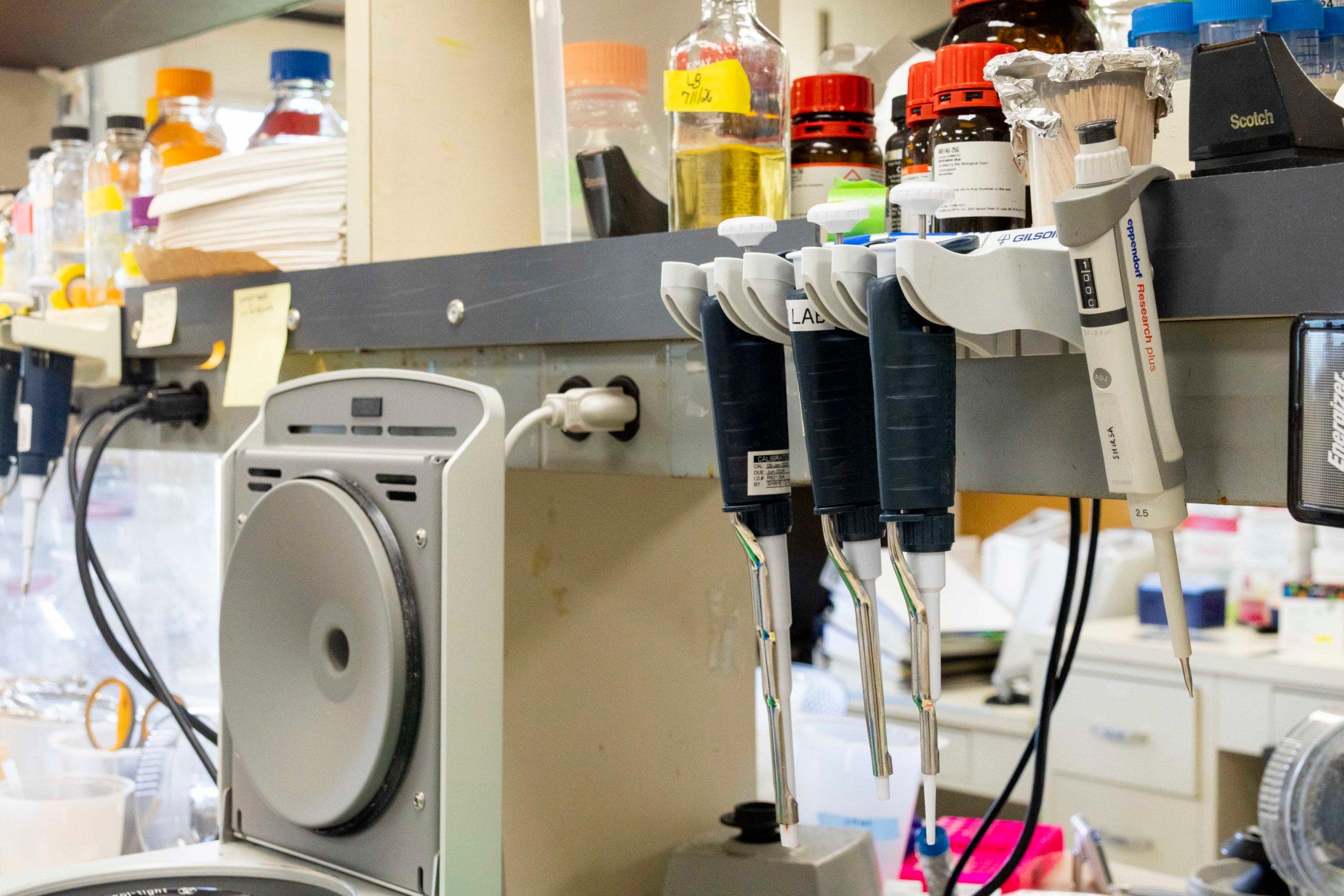
Newsom sought to address federal research funding uncertainties by signing UC-backed Senate Bill 895 on Sept. 30, which will put a $7.5 billion research bond on the March 2028 ballot. The bill missed the deadline to appear on the November 2026 ballot after lawmakers failed to approve it in time.
[Related: Newsom signs UC-backed $7.5 billion research bond measure for 2028 ballot]
The Trump administration froze $584 million of UCLA’s federal research grants from the National Science Foundation, National Institutes of Health and U.S. Department of Energy in July 2025, alleging that the university allowed antisemitism, affirmative action and “men to participate in women’s sports.” Chancellor Julio Frenk denied these allegations in a January interview with the Daily Bruin.
A federal judge restored most of the grants in August and September 2025, and ruled separately in November that the federal government could not freeze or threaten to freeze anymore of the university’s research grants.
[Related: One year after $584 million federal funding freeze, UCLA research still recovering]
Declining federal research funding has placed pressure on research institutions to sustain research programs and cover funding shortfalls, said David Jassby, a civil and environmental engineering professor. State investment could help offset some of the funding losses, though California would not be able to fully bounce back, he added.
“We’re losing capacity,” Jassby said. “We have to shut down programs. We have to lay off people.”
California’s actions set a national example for protecting voter access, Wayment said. She added that she hopes the new laws improve communication between local election officials and voters.
“This is a really important example of something here, which is a response to a wave of federal and state laws that would restrict your access to the ballot,” Wayment said. “Here, we’re seeing a state do the opposite and try to protect that. … I hope this makes it so other states follow suit.”