Film review: ‘Six’ live recording delivers dazzling vocals, misses the mark with new movie medium
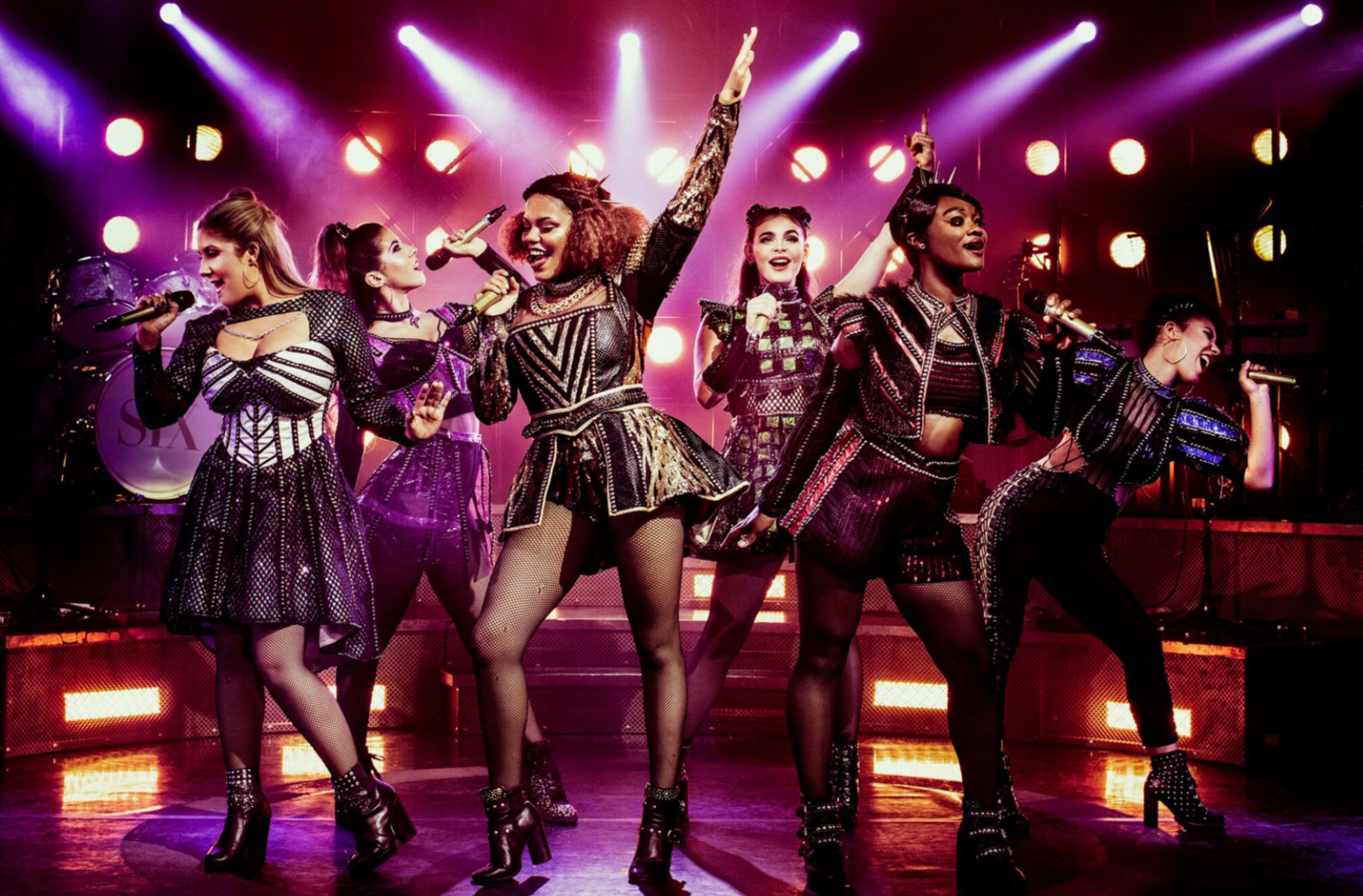
Natalie Paris (Jane Seymour), Aimie Atkinson (Katherine Howard), Jarnéia Richard-Noel (Catherine of Aragon), Millie O’Connell (Anne Boleyn), Alexia McIntosh (Anna of Cleves) and Maiya Quansah-Breed (Catherine Parr) (left to right) belt into microphones. “Six: The Musical Live!” graced theaters in the United States on Friday. (Courtesy of Playbill)
“Six: The Musical Live!”
Directed by Liz Clare
Focus Features
August 14 (U.S. Release)


By Julia Kinion
Aug. 15, 2026 9:12 p.m.
This post was updated Aug. 16 at 2:16 a.m.
A new stage-to-film adaptation invites viewers to “Get Down” with the wives of Henry VIII, featuring stunning songwriting but subpar cinematography.
Released in the United Kingdom last year, “Six: The Musical Live!” graced theaters in the United States on Friday. Focus Feature’s film shows the original West End cast reuniting live at the Vaudeville Theatre in London, as it performs the Tony Award-winning musical based around the six wives of Henry VIII. The queens engage in a musical competition to determine which of the wives was dealt the worst hand from the king – and as a result, decide the winner, who will then become the lead singer of the band. “Six” delivers with enchanting vocals and dazzling costumes, establishing itself among a stacked gauntlet of recorded musicals, but is hindered by middling camerawork and lulls in performance.
The film begins with a behind-the-scenes segment before the recorded musical itself starts. This section drags out audience anticipation and provides little substance in return. While the actresses’s off-screen friendship is touching, their connection onstage makes this apparent enough without the behind-the-scenes setup and renders their at-length explanations of their bond a redundant example of telling instead of showing. Director Liz Clare would have been better served giving more attention to showing the development of the musical – how it started at Cambridge University, written by two university students before later moving onto Broadway, or cutting the behind the scenes portion entirely. It leaves audiences impatiently rolling their eyes rather than clutching their seats as they wait for the actual musical to begin.
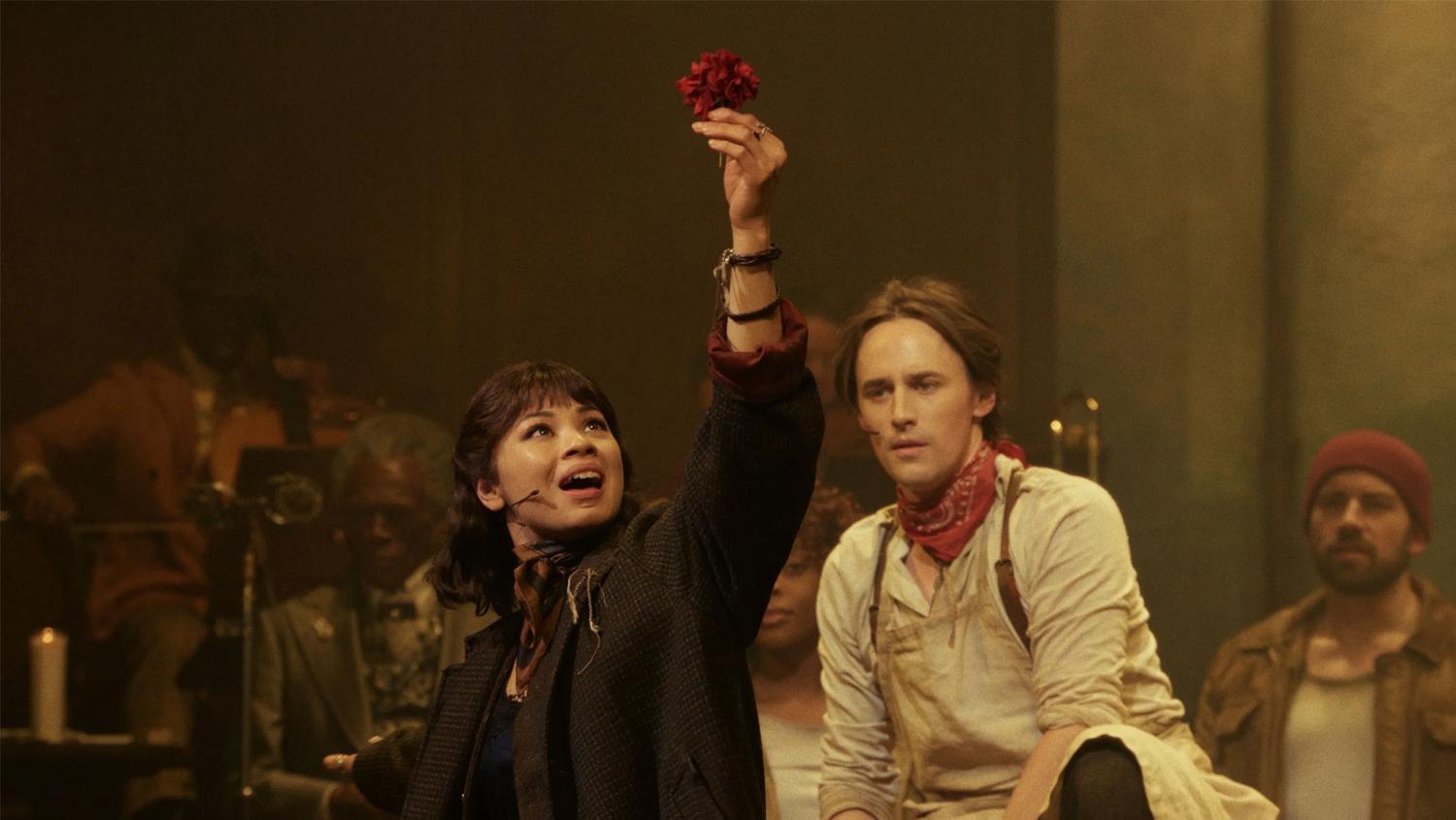
[Related: Theater review: ‘Hadestown’ live recording resurrects Broadway’s beloved musical for the big screen]
The songwriting is one of the strongest elements of the musical. “Six” received the Tony Award for Best Original Score in 2020 for a reason. Across nine tracks, songwriters Toby Marlow and Lucy Moss constructed clever and catchy beats, inspired by contemporary female pop stars such as Beyoncé and Ariana Grande. Unlike other historical musicals, like “Hamilton,” that give enough details for fans to pass a US history exam, “Six” is far more interested in entertainment than education. Although, the many coy allusions to the religious conflict between Catholicism and Protestantism underscoring this period in the monarchy are sure to leave any history enthusiast satisfied, while not alienating casual fans.
Structured in an episodic rather than narrative fashion, each wife performs a song explaining her marriage to the king. While some performances ooze energy and emotion, others stall and fail to stun.
Alexia McIntosh as Anna of Cleves, Henry VII’s fourth wife, is a clear standout. “Get Down,” sonically inspired by rap singer Nicki Minaj, tells the story of Anna being left by Henry VII after her physical appearance failed to live up to the Hans Holbein the Younger’s portrait he was shown. Anna, with exuberant joy and bursting stage presence, lauds the economic and social freedom her divorce has given her. Out of all the women, McIntosh seems to have the most fun, and her energy and charisma is infectious.
Another highlight performance is Natalie Paris as Jane Seymour, Henry VIII’s third wife, who died in childbirth after bearing his only son. Unlike McIntosh and his other wives’s songs – which feature pounding beats, flashing strobe lights and coordinated choreography – Paris’ “Heart of Stone” offers a lament to her unyielding love for the king in scenes that feel understated and intimate. Jane eschews backup dancers and opts for a single spotlight in a grounded moment of emotional resonance in a sea of gaudy maximalism.
Aside from McIntosh and Paris’ performances, the other wives, while gifted vocalists and actresses, often fail to distinguish themselves in a sea of six. Millie O’Connell as Anne Boleyn struggles to strike a balance between comical and sympathetic, leading to a confused and disorienting performance. Maiya Quansah-Breed fails to establish a distinct identity as Catherine Parr compared to her more memorable counterparts. While supposed to be the learned voice of reason that compels the women to cast aside competition, Quansah-Breed comes across as more self-righteous than empowering.
The film’s greatest weakness is its failure to adapt to the new medium. Unlike the recent release “Hadestown: The Musical,” which uses camera movement strategically to captivate the audience and capture the emotion of the film, “Six” keeps the camera firmly planted for the majority of the performance. The one exception to this is the shift to a shaky, hand-held camera that includes the audience in the frame during the musical’s moment of supposed emotional grounding, when Catherine Parr encourages the wives to look past comparison. However, the new camera angle, while intended to capture the audience’s perspective, only calls attention to the presence of the camera itself. This creative decision is jarring enough to take the viewer out of the performance, at the moment they are meant to be the most captivated.
[Related: More than a movie: The Bruin Theater’s reopening sparks community in Westwood]
Regardless, the cameras do manage to capture each of the queens as they sparkle in costume designer Gabriella Slade’s bedazzled gowns. Slade, who won a Tony Award for her work on the musical, gives each queen a distinct visual identity – Anne Boleyn in emerald, Catherine of Aragon (Jarneia Richard-Noel) in gold – building a charmingly ostentatious aesthetic despite the lackluster camera work.
The musical’s strength is the wholehearted embrace of optimistic female empowerment – and frankly, camp. Instead of taking itself too seriously, “Six” knows exactly what it is as a musical, and leans into it: the end result is 95 minutes of fun, which captures the zeitgeist of girlboss poptimism of the 2010s with charm and heart. While the musical is feel-good and engaging, the recording fails to elevate the original performance in a meaningful way, resulting in an overall viewing experience that is relatively equal to a YouTube bootleg.
“Six: The Musical Live!” fails to embrace film as a medium, proving that despite superb vocals and costumes, there is “No Way” to have it all.