‘Still moving forward’: Jerry LeVasseur film shows overcoming adversity with hope
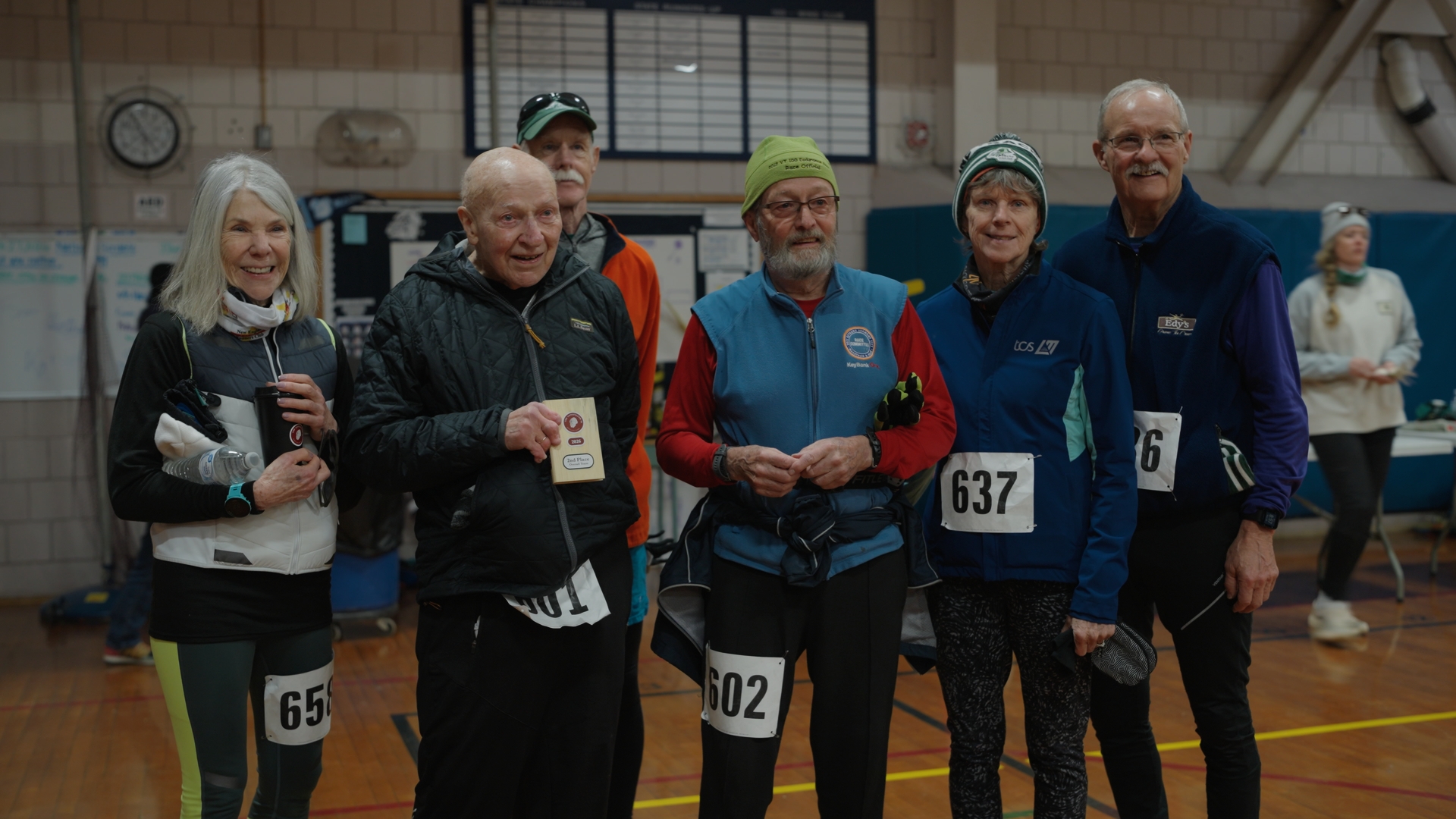
Jerry LeVasseur, wearing a black jacket, stands together with his friends. LeVasseur’s career will be told in UCLA School of Theater, Film and Television’s graduate Andrew McGowan’s upcoming sports biographical documentary. (Courtey of Andrew McGowan)

By Eleanor Meyers
April 30, 2026 2:09 p.m.
This post was updated April 30 at 8:43 pm.
At 88 years old, Jerry LeVasseur is still moving forward.
Nearly eight decades after surviving the 1944 Hartford Circus Fire – a tragedy that claimed around 170 lives, including his mother’s – LeVasseur continues to train five days a week, compete nationally in masters track and field and approach each new challenge with the same philosophy that has defined his life: keep moving, keep helping others and keep finding joy in the process.
Now, that life story is headed to the screen. Andrew McGowan, a 2025 alumnus of the UCLA School of Theater, Film and Television’s Producers Program, is directing a feature-length documentary chronicling LeVasseur’s extraordinary athletic career, personal resilience and enduring optimism, with Maine-based cinematographer Josh Gerritsen serving as director of photography.
“Jerry is a living testament to the idea of overcoming adversity with optimism, aging with grace and proving that somebody can keep going despite so much happening,” McGowan said. “He has lived through so many things and has not let any of it slow him down. Even at 88, he’s still moving forward, still looking forward to the future and still living life to the fullest.”
For McGowan, the documentary is also deeply personal. Before studying filmmaking in Los Angeles, he said he knew LeVasseur as an assistant coach for track and field and cross country at Bowdoin College, where McGowan ran competitively as an undergraduate. Their mentor-mentee relationship – forged on the track and strengthened over years of friendship – eventually became the foundation for the project.
[Related: ‘THIS IS OUR YOUTH’ play aims to reach multiple generations, spark conversation]
What began as an assignment in his Documentary Producing class with UCLA professor Kristy Guevara-Flanagan soon evolved into something much larger. Guided by what he learned at TFT, McGowan revisited LeVasseur’s story with a producer’s eye and realized its cinematic potential: a sweeping biography shaped by archival photographs, intimate interviews and present-day footage following LeVasseur’s training toward the National Masters Championships in Ohio this July.
McGowan said his education at UCLA gave him both the strategic tools and creative confidence to think ambitiously about the documentary’s scale. He added that he formed the project as an LLC, launched community fundraising efforts and began building a production model that combines independent filmmaking with the professional rigor he developed in LA. At the same time, he said returning to Maine has grounded the project in the kind of close-knit community that first shaped his relationship with LeVasseur.
This duality – Maine’s communal spirit and LA’s cinematic ambition – has become central to the film’s identity. McGowan said he feels distinguished in each place by what the other taught him – the Maine in him stands out in LA, while the LA in him distinguishes him in Maine. In many ways, the documentary is a product of both worlds, pairing heartfelt intimacy with expansive storytelling. This unique narrative – one looking back at a life marked by tragedy, reinvention and athletic longevity, the other capturing LeVasseur’s contemporary pursuit of competition and camaraderie – is what gives the film its heartbeat.
“There’s a lot of doom and gloom in the world right now – and a lot of doom and gloom in the documentary space,” McGowan said. “Jerry’s story is something that everyone can appreciate, and everyone can take something positive out of. I think there’s an appetite for that right now.”
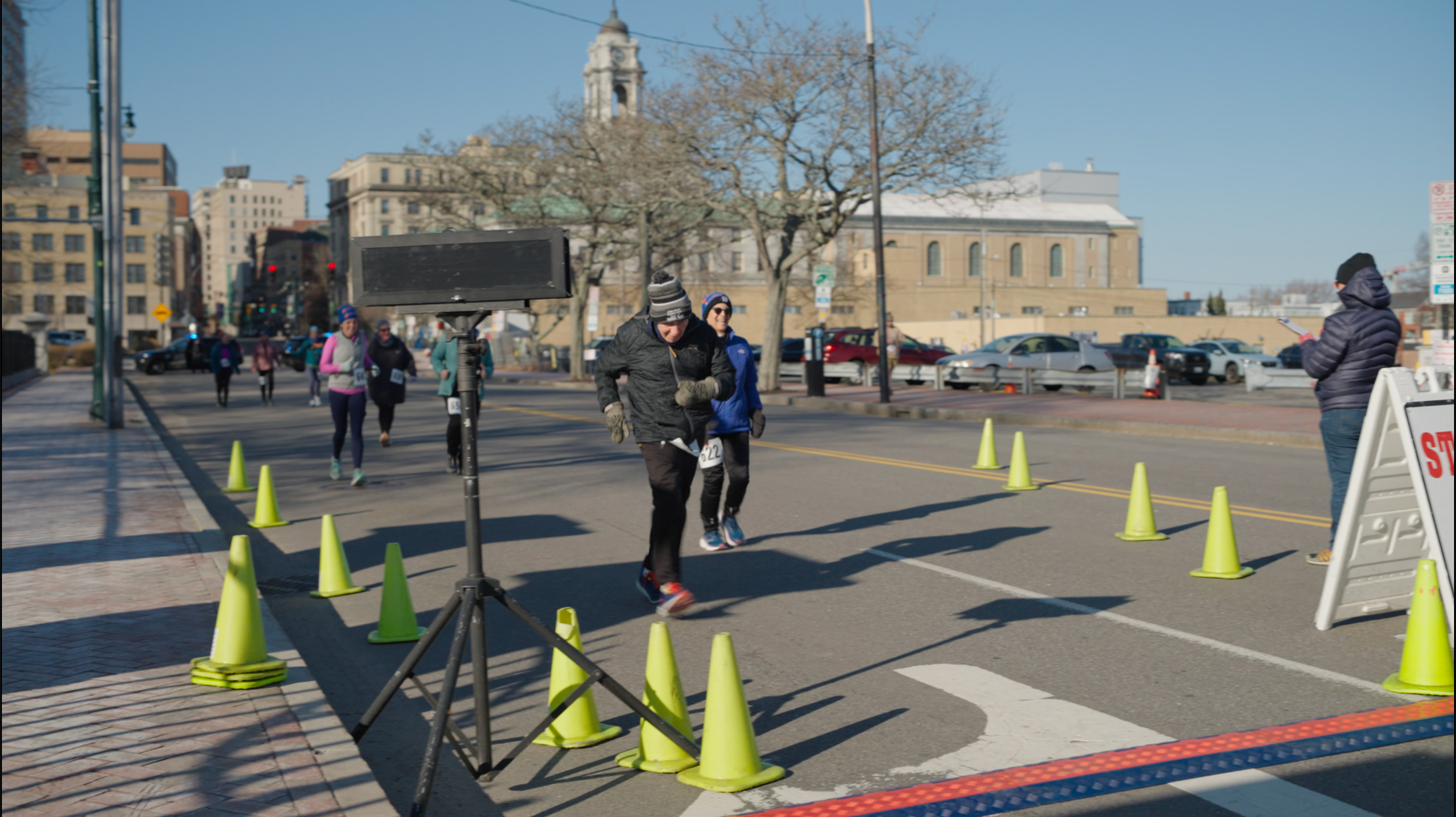
LeVasseur’s life spans far beyond the track. A former collegiate athlete at Lehigh University – as well as a sled dog racer, photographer, Hall of Fame inductee and coach – he has spent decades building a philosophy rooted in fitness, fun and friendship. Even after cancers, surgeries and other physical setbacks, he has returned repeatedly to movement – not only for himself, but in service of others.
He said at one point he raced 40 to 50 times a year, setting a goal to win his age group more than half the time. Over the years, that consistency translated into more than 1,200 first-place finishes, multiple relay world records and induction into five halls of fame. Yet, LeVasseur said he cares far less about accolades than he does about friendships formed through competition, athletes he has mentored and the joy of simply remaining active.
That generosity is central to how those around him describe him. At Bowdoin, LeVasseur said he coached developing runners with an emphasis on staying healthy, improving steadily and enjoying the process. In competition, he often prioritized helping fellow athletes achieve personal records over chasing medals himself.
“I try as much as I can to help others,” LeVasseur said. “Helping somebody through a race sometimes gives me more satisfaction than winning a medal.”
That spirit has also shaped the film’s visual language. Gerritsen, whose previous documentary work has centered older subjects who have dedicated decades to meaningful pursuits, said he immediately connected to LeVasseur’s story of endurance and purpose. His camera, he added, often lingers on close-ups of LeVasseur’s hands – scarred by childhood burns but still strong – and frames him with a heroic scale that reflects the way the crew sees him.
[Related: John Thomas cut and sewed basketball, fashion interests together with JT Made That]
Gerritsen said one of the most surprising parts of filming has simply been witnessing LeVasseur’s athleticism firsthand. Watching the 88-year-old compete in long jump, triple jump and steeplechase training sessions challenged his own assumptions about aging and physical capability, Gerritsen added, making the project not only visually compelling but personally motivating.
The production will continue filming through summer, said Gerritsen and McGowan, including LeVasseur’s 70th high school reunion and the National Masters Championships, where he plans to compete alongside longtime teammates and friends. However, the races themselves are only part of the reward, LeVasseur said.
He said he is eager to see old friends, explore new places, find a good meal and raise a beer to shared memories – proof that, for him, competition has always been inseparable from community. Even now, LeVasseur said his ambitions remain strikingly simple: stay fit, enjoy the people around him and keep showing up. While McGowan hopes the documentary launches audiences into LeVasseur’s remarkable story, LeVasseur said his own reason for participating remains simple: If sharing his life can help someone else keep going, then it is worth telling.
“I don’t like all the publicity and that sort of thing,” LeVasseur said. “The reason I’ll go with it (the film) is if it could help somebody get through issues and say, ‘Hey, if he can do it, I can do it.’”