Theater review: Writing flaws, overacting mean ‘Spamalot’ fumbles the Holy Grail

From left to right, Sean Bell, Leo Roberts, Major Attaway, Blake Segal, Chris Collins-Pisano and Ellis C. Dawson III gather together as King Arthur and his Knights of the Round Table. “Spamalot,” which is based on the 1975 cult classic film “Monty Python and the Holy Grail,” will play at the Hollywood Pantages Theatre until April 12. (Courtesy of Broadway in Hollywood)
“Spamalot”
March 25
Pantages Theatre

By Victoria Munck
April 1, 2026 7:01 p.m.
This post was updated April 2 at 8:14 p.m.
With “Spamalot,” it’s unclear if the Holy Grail is half-full or half-empty.
To the sound of clanking coconuts, the Tony Award-winning musical comedy galloped into the Hollywood Pantages Theatre on March 24 for a tour stop lasting until April 12. The production – deemed 2005’s “Best Musical” – is based on the 1975 cult classic film “Monty Python and the Holy Grail,” parodying the medieval legends of King Arthur (Major Attaway) and his Knights of the Round Table. The musical excels in matching the movie’s absurdist humor and aptly wields its live format to build upon the film with similar wit. Nevertheless, this format is often misused, as flawed writing and exaggerated performances indicate “Spamalot” isn’t always sure what it’s trying to do or who it’s trying to entertain.
From the musical’s very first moments, its visuals serve as the ideal backdrop for Monty Python’s dry comedic style and as a strong appeal to devoted fans of the original film. A cartoonish digital backdrop nods to the movie’s various animated sequences, while practical set pieces in front are deliberately flat and low-tech to evoke a meta, community theater aesthetic. Throughout the show, props ranging from stuffed cows to SPAM cans heighten the show’s physical comedy by putting heart ahead of realism.
This warm embrace of theatricality can be a drawback of other parts of Act 1, most notably its lyricism. Many of writer Eric Idle’s songs wobble along the line between campy and flat-out bad with basic rhyme schemes and amateur lines such as, “My name is Lancelot / I’m big and strong and hot,” and “I want to be a knight / But I don’t like to fight.” While it maybe wouldn’t be sensible to expect highbrow writing from a show so rooted in absurdity, this middling music feels oddly oppositional to the extremely clever spoken dialogue.
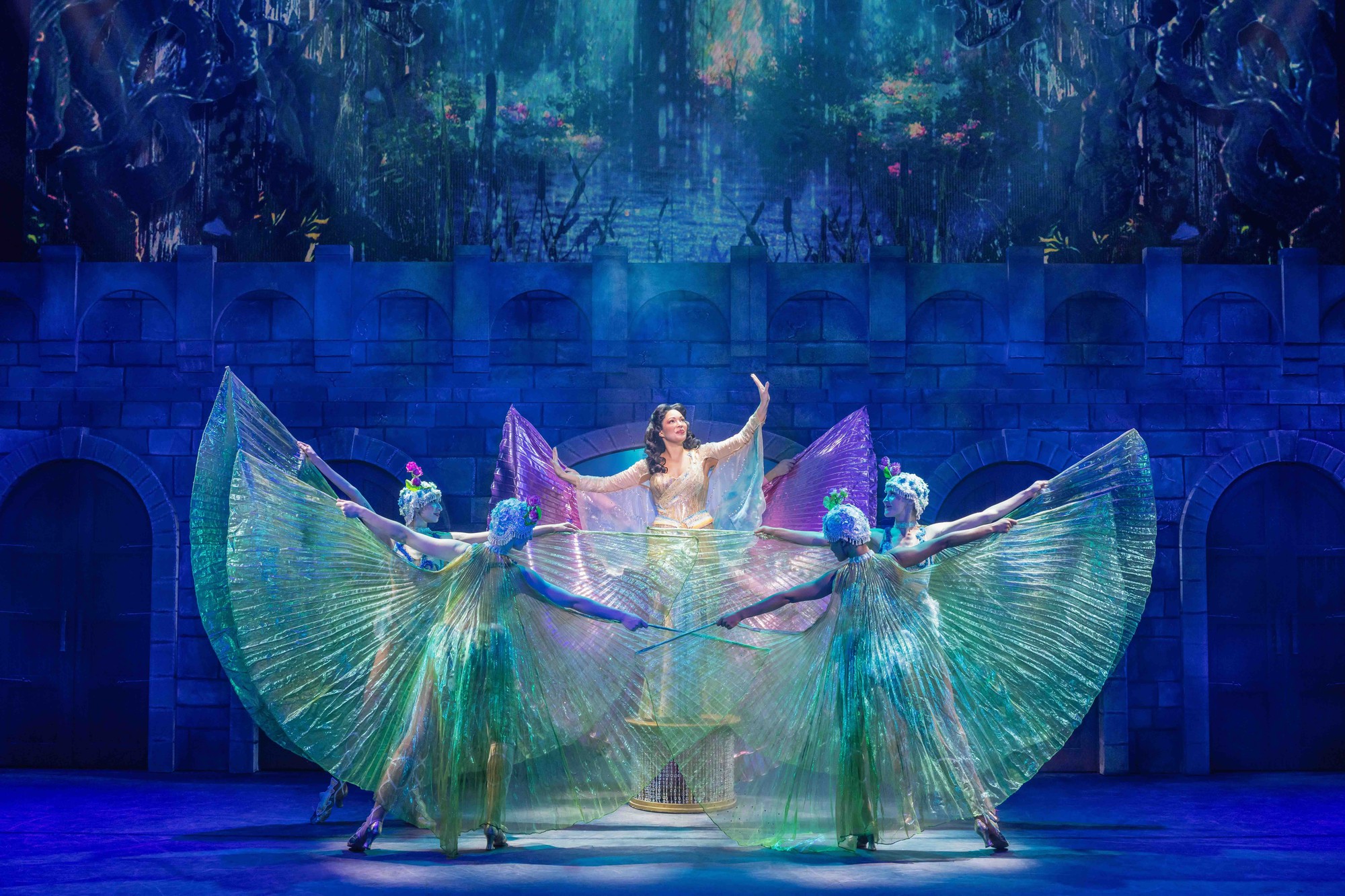
Fortunately, “Spamalot” is rather skilled when it comes to distracting audiences with something shiny. The musical fully commits to delivering the quintessential big Broadway number for almost every weakly written song, complete with tap dancing, kicklines and glittering headpieces. One of Act 1’s best examples is “Laker Girls Cheer,” which features pom-poms and handwritten banners encouraging the crowd to clap along with the rhythm.
The success of these high-energy moments is completely owed to the production’s ensemble, which consists of bold voices, dazzling dancers and true comedic performers. That being said, the show’s devotion to laugh-out-loud zaniness puts several actors at risk of overdoing it and coming across as annoying instead. This occurs most often with actress Amanda Robles, who portrays The Lady of the Lake, presenting a unique conundrum, as she is also easily the most talented of the cast. In some of her grandest numbers, such as “Find Your Grail,” Robles displays an angelic vocal range and sharp comedic timing, but she also distracts from them with excessively silly riffs and vocal growls.
[Related: LA Opera’s ‘Akhnaten’ slowly submerges viewers in sound, detailed visuals]
Nonetheless, the cast seems to come back stronger for Act 2, which is not only funnier but also boasts a clearer arc and better songs. It’s nearly impossible to decide the best sequence of this half, which includes a song about The Lady of the Lake’s dwindling stage time, a coming out story with a disco routine and a clever destruction of the fourth wall. The captivating and hilarious number “You Won’t Succeed On Broadway” even endearingly caters to theater kids in the audience with references to “Fiddler on the Roof” and “Funny Girl.”
In moments such as those, it is clear to see whose hearts “Spamalot” is after. There’s something for Monty Python fans and musical devotees alike. However, other jokes seem to fit within such bizarre contexts that it’s hard to identify their purposes in the first place. The show’s biggest flaw is its scattered attempts at modernizing its humor, which manifest in references ranging from “KPop Demon Hunters” to George Santos to brain rot to Diddy. None of these existed in the Middle Ages, and for good reason – they were already going through enough. These jokes may get a quick laugh, albeit awfully cheap ones and embarrassing in contrast to the timeless wit at the script’s core.
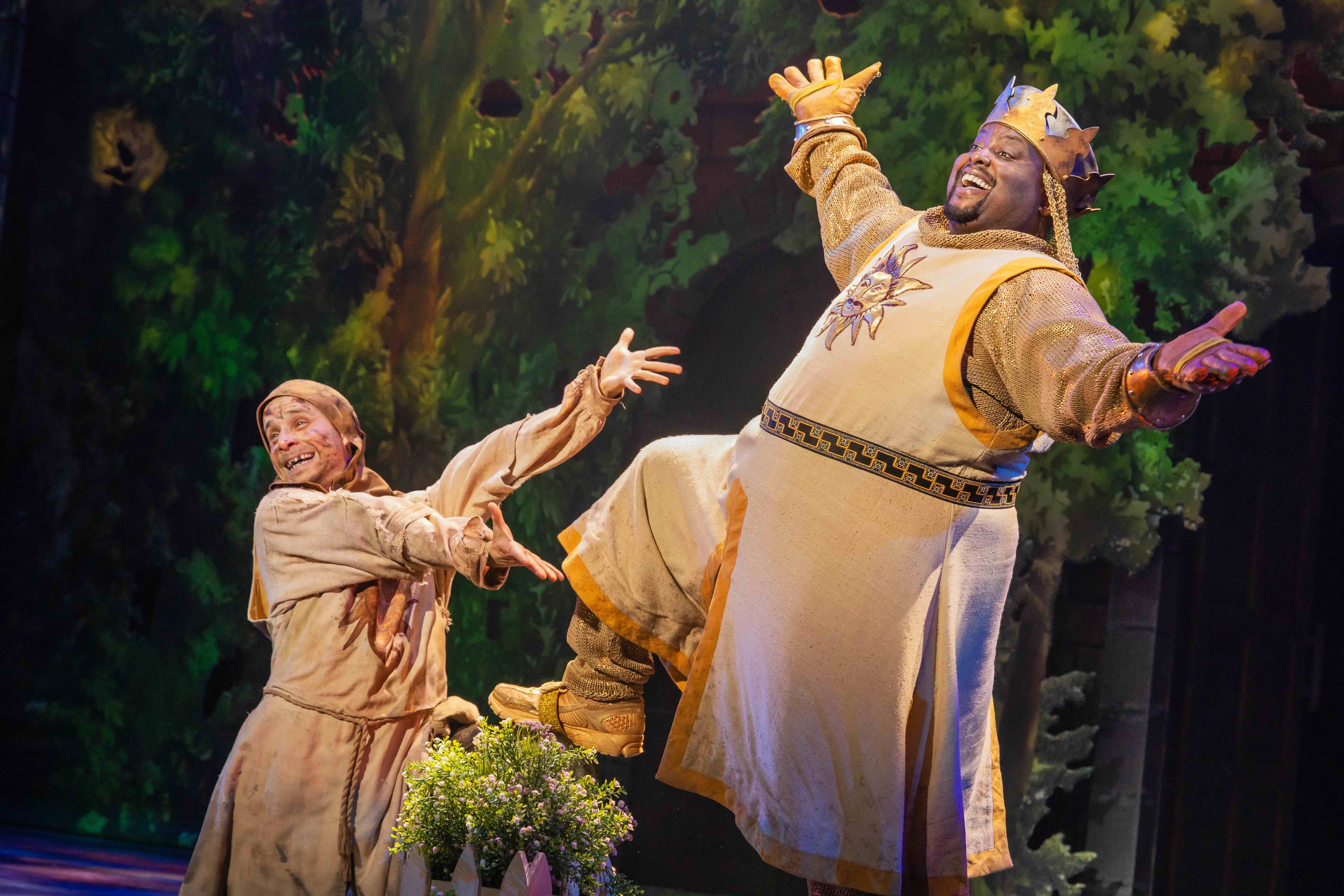
This is only further emphasized when compared to the reception of the classic bits taken directly from the film’s script. The line that earned the loudest laughter of the evening, in addition to applause, was when Dennis’ mother (Ellis C. Dawson III) tells Arthur, “Well, I didn’t vote for you,” after he declares himself her king, a segment that originated in the movie. If this joke, written in the 1970s without any knowledge of the current political climate, can still resonate so deeply with viewers today, it proves “Spamalot” can stand tall without the crutch of pop culture. It’s a choice that works for many productions but not all: They wouldn’t put a Labubu in “The Sound of Music.”
[Related: Album review: Harry Styles’ ‘Kiss All The Time. Disco, Occasionally.’ ultimately misses the beat]
“Spamalot” ends with a singalong of the show’s most popular track, “Always Look On The Bright Side of Life.” As the audience stands and joins in on the familiar tune, one thing is apparent: Everyone is very happy. Candidly, the musical does a lot right, and it’s guaranteed to get at least one laugh out of even its harshest critics. It’s a true, vibrant celebration of comedy and theater, which makes it a valuable watch. Even so, it’s probably still worth warning anyone under the age of 25 that there’s some cringing in store, too.
With such a wide range of humor on display, there’s a decent chance viewers will find their own Grail in Hollywood this spring.