UC Regents hear public comment on international students, union negotiations
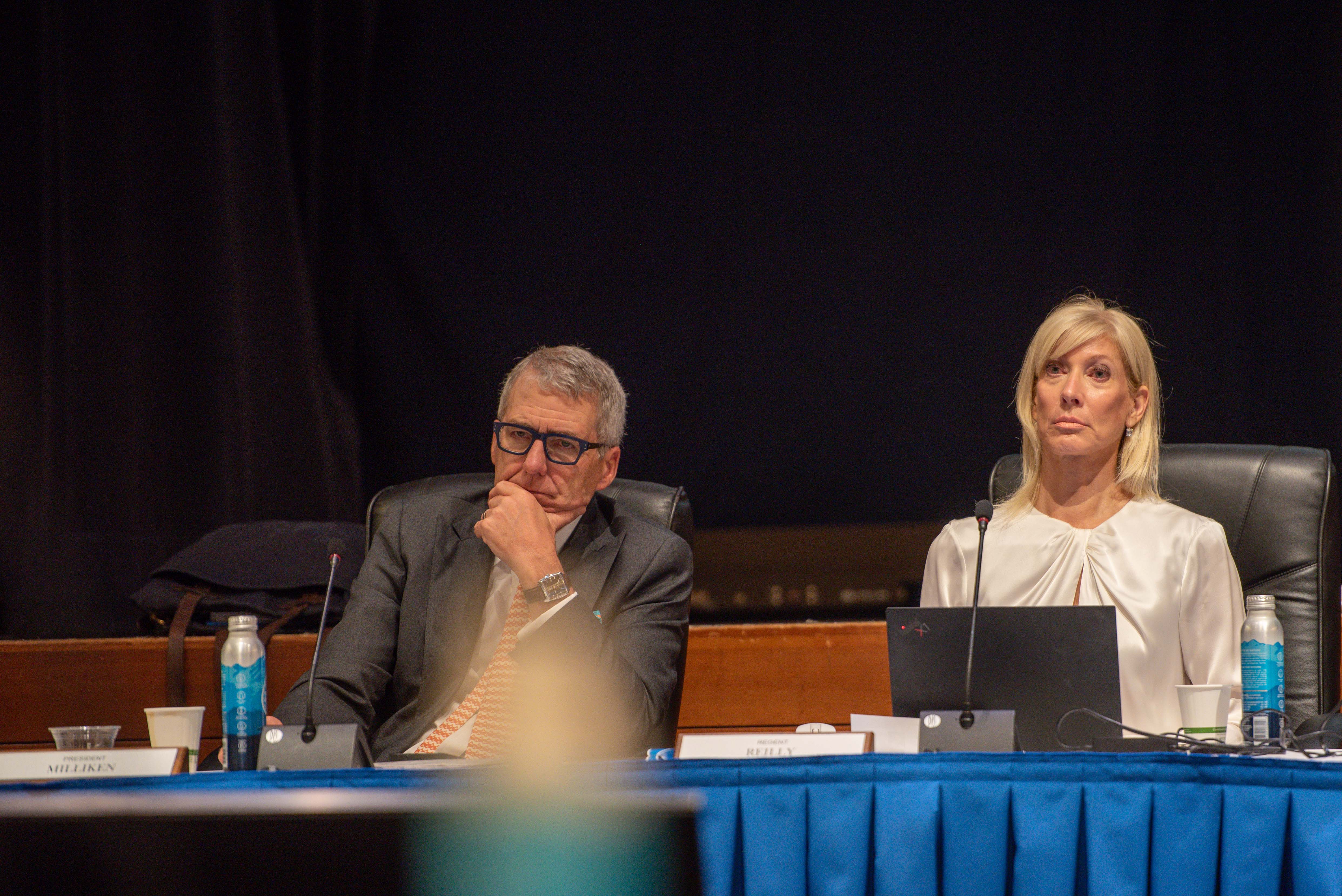
UC President James Milliken and UC Board of Regents’s Chair Janet Reilly are pictured at UC San Francisco. UC community members called on the University to support basic needs initiatives, repatriate Indigenous cultural items and restore certain academic support programs at the UC Board of Regents’s March meeting (Maggie Konecky/Daily Bruin senior staff)

By Josephine Murphy
March 21, 2026 8:06 p.m.
This post was updated March 24 at 9:07 a.m.
UC community members called on the University to support basic needs initiatives, repatriate Indigenous cultural items and restore funding for certain academic support programs at the UC Board of Regents’ March meeting.
The board heard public comment on both days of its bimonthly meeting Tuesday and Wednesday at UC San Francisco.
Amiee Scott, a fourth-year psychology student at UCLA, urged the University to comply with the Native American Graves Protection and Repatriation Act – which requires institutions receiving federal funding to return culturally significant Native American artifacts, such as human remains and funerary objects.
She alleged that several UC campuses have failed to fulfill the act’s requirements, but the UC Office of the President did not immediately respond to a request for comment on the University’s compliance with NAGPRA.
“Without transparency and accountability, university will continue to fail its legal and moral obligations to native nations,” Scott said.
Yamaanibah Johnson – a fourth-year political science student at UCLA who said she is the great-great-granddaughter of Dixie Johnson, the last Omaha Tribe chieftain – alleged that UC Berkeley has recordings of her grandfather speaking that have not been returned.
“I have never heard any of our songs, and I have never known the sound of my own language – but UC Berkeley has,” Johnson said. “They have hours and hours of my grandfather speaking our traditional language on recordings located at their institution.”
UC Berkeley has brought its total of ancestors awaiting repatriation from 11,000 to 2,300 since 2020 – including 2,724 over the past year – according to a fact sheet provided by a university spokesperson. The university’s NAGPRA department has consulted with nearly 90% of California’s Indigenous tribes since October, according to the sheet.
“UC Berkeley acknowledges and accepts responsibility for the harm done to Native people by the university as the result of past practices that slowed or impeded repatriation of Tribal ancestral remains and cultural belongings,” the fact sheet said. “The campus is fully committed to, and is working assiduously on the complete repatriation of all Native American ancestors and cultural belongings still held by the campus.”
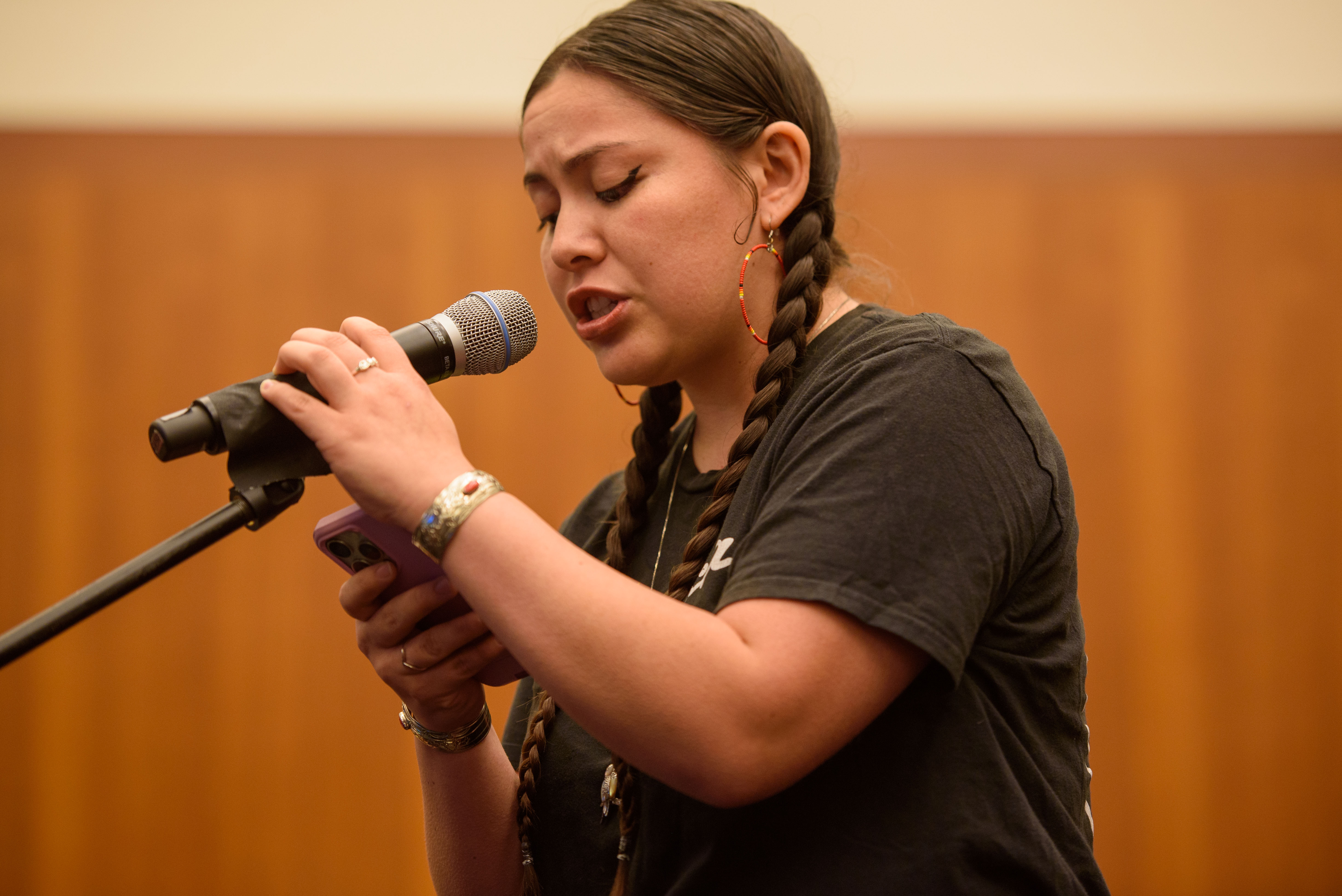
Ahead of a vote on a new housing project, a UCLA student also advocated for its approval.
Jose Merino, a fourth-year political science student, urged the UC to approve a proposed funding for a 19-story student housing building on Levering Ave. – something he said is crucial to addressing the student housing crisis, especially in Los Angeles. The board approved a budget of $351 million for the project at a Wednesday meeting.
[Related: UC Regents committee recommends $351 million for UCLA student housing project]
Several professors also spoke about antisemitism at UCLA.
Leila Beckwith, a professor emeritus at UCLA, said she believes antisemitism is present at UCLA, UC Berkeley and UC Santa Cruz. She added that she believes the UC has failed to enforce policies intended to prevent faculty and departments from using University resources for political advocacy.
Ariela Gross, a professor of law and history at UCLA, urged the regents to fight the U.S. Department of Justice’s lawsuit against the UC, which alleged that UCLA allowed antisemitism on its campus. She added that she does not believe the suit will create a safer environment for Jewish people at UCLA.
“The DOJ takes advantage of Jewish concerns about antisemitism to attack free speech and academic freedom,” she said.
[Related: DOJ files lawsuit against UC for allegedly allowing antisemitic work environment]
The university also received scrutiny over its positions relating to ongoing political controversies and union negotiations.
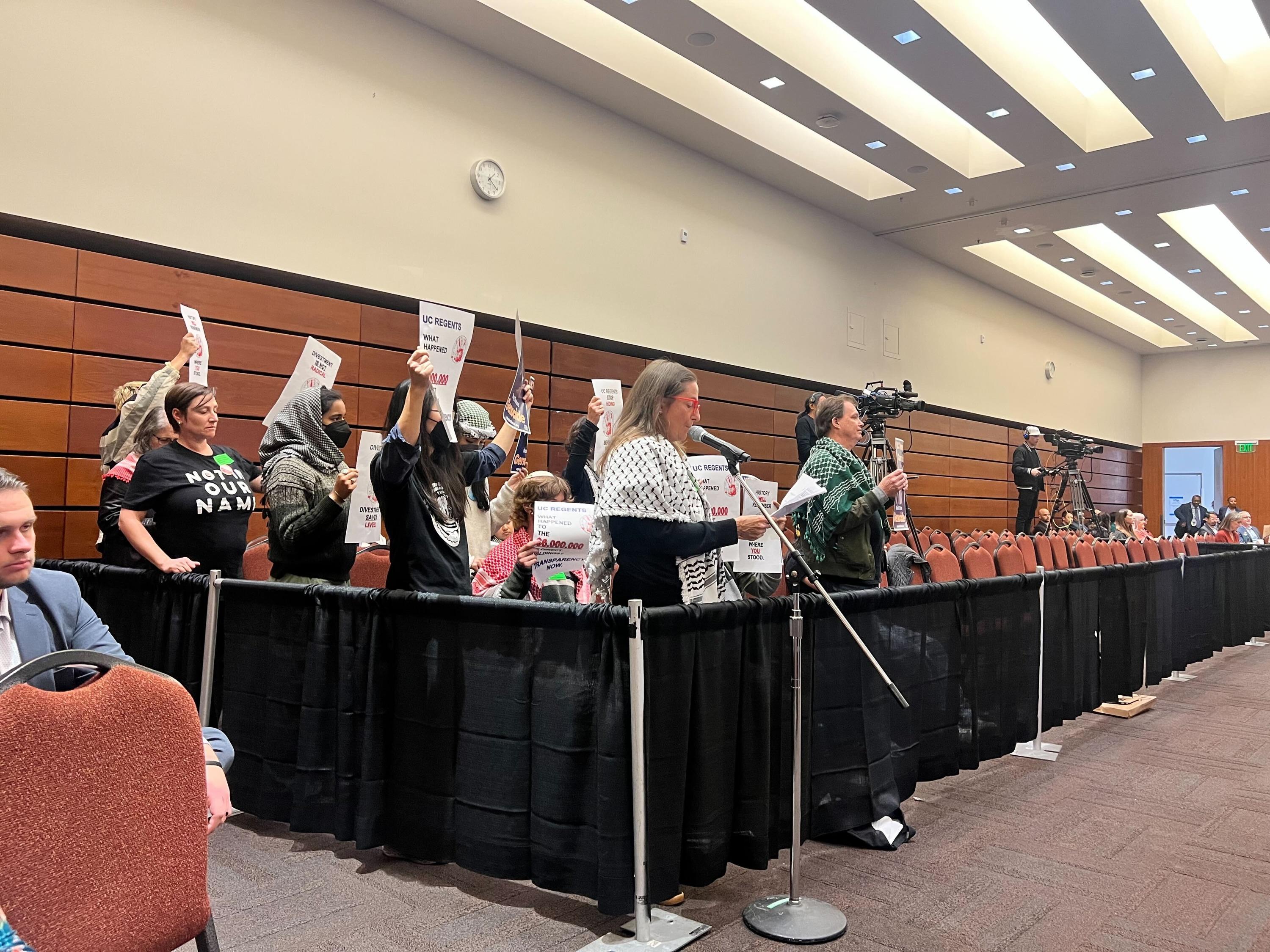
Anya Kiran, a graduate student at UC Berkeley, said she believes the UC has failed to adequately disclose its investments, and urged it to divest from all companies associated with war.
The University’s chief investment officer spoke about the portfolio at a Wednesday meeting.
[Related: UC investment officer discusses assets, what constitutes war-related investments]
Sat Kartar Khalsa, an emergency medicine resident physician at UCSF, urged the regents to adopt a fair contract with the Committee of Interns and Residents, adding that the union’s current contract expires in about three months. The Committee of Interns and Residents/SEIU represents interns, residents and fellows at UCSF.
Khalsa also alleged that U.S. Immigration and Customs Enforcement officers have entered CIR hospitals and refused to identify themselves or leave patients’ rooms. Khalsa claimed that they have asked employees for documentation on the basis of their perceived race.
UCSF did not immediately respond to a request for comment on Khalsa’s allegations.
Michael Avant – the president of the American Federation of State, County and Municipal Employees Local 3299, which has been in negotiations with the UC since January 2024 – said the UC’s current contract proposals to the union are not sufficient to address the high cost of living.
“Your current proposals don’t fix (the) affordability crisis facing our America,” he said. “Instead, they make it permanent.”
Monica Martinez, AFSCME Local 3299’s patient care vice president, said the union’s unfair labor practice committee met and authorized an open-ended strike, adding that she believes the UC has tried to wait out past strikes with a planned end date. The union struck multiple times across the UC during the 2024-25 school year, as well as in November 2025.
[Related: Hundreds of UCLA AFSCME Local 3299 members strike Nov. 17 and 18]
Heather Hansen, a UCOP spokesperson, said in a February statement that the University presented AFSCME Local 3299 with an offer that would increase pay by nearly 32.3% over the life of the contract. It would also ensure every employee earned at least $25 per hour.
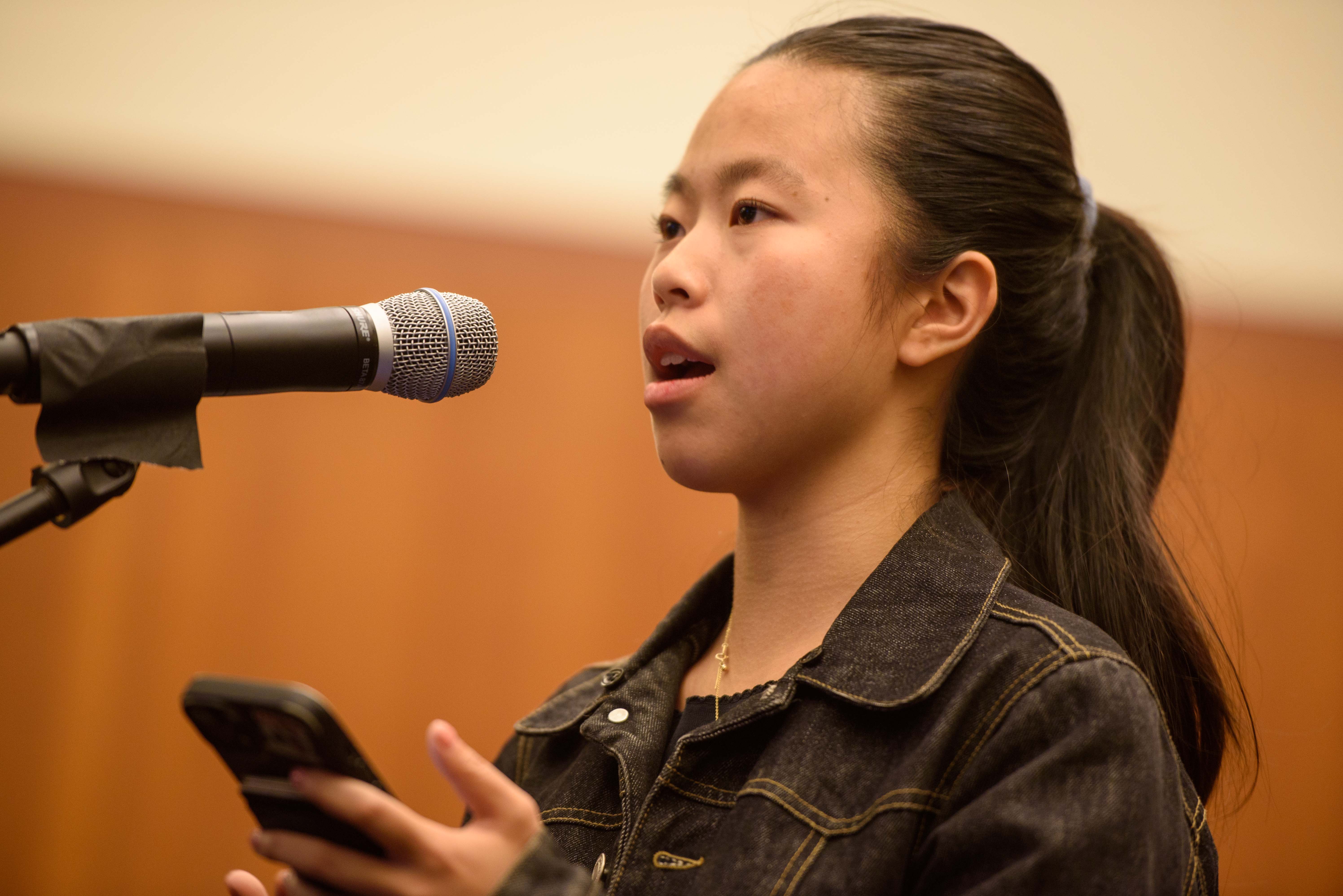
Sherry Zhou, the external vice president of the Undergraduate Students Association Council, said she brought a group of students to San Francisco to discuss new funding for UCLA’s Academic Advancement Program, which supports low-income and first-generation students, following cuts last year.
“Students feel the cutting of student and professional staff to Peer Learning Facility programs,” she said. “They’re feeling the cutting of opportunities to lead and develop research. They’re feeling the cuts to counseling units, which results in longer wait times and less ability to seek those services.”
[Related: Academic Advancement Program to pause some programs, reduce staff amid budget cuts]
Esmeralda Martinez, a fifth-year political science student at UC Berkeley, said she is an undocumented immigrant who was disappointed at the board’s choice to not allow students without documentation to work on campus.
“When it came down to the decisions, the regents cowardly stepped back, and now that the Trump administration is aggressively attacking our communities, the betrayal stings even more,” she said.
The Immigration Reform and Control Act of 1986 makes it illegal for employers to hire undocumented people. The UC has cited legal risks that could come with violating this law as reasoning for not allowing undocumented students to work on campus jobs.
The UC Board of Regents unanimously voted to create a working group to evaluate the viability of allowing undocumented students to work on-campus jobs in May 2023. The Regents, however, later rejected the implementation plan in January 2024.
The California Supreme Court ruled in October, however, that the UC cannot bar undocumented students from holding on-campus jobs. A UCOP spokesperson said in an emailed statement at the time of the ruling that the University was assessing its options and added that the ruling could create legal risks for the UC.
[Related: CA Supreme Court reaffirms UC cannot bar undocumented students from on-campus jobs]
UCOP did not immediately respond to a request for comment about how it is implementing the court’s ruling.
Martinez also urged the regents to establish systemwide guidance for compliance with Senate Bill 98 – which requests the UC to notify community members if federal immigration enforcement is present on campus. She added that she believes the UC should create alternatives to CalFresh for international and undocumented students.
[Related: UC agrees to send alerts on campus immigration enforcement activity]
Jack Feng, the external vice president of the UCLA Graduate Students Association, also urged the regents to increase aid and fellowships, strengthen immigration legal services and provide basic needs support for undocumented and international students.
“This is about safety, equity and the UC’s future – and we must lead,” he said.