Mixed-immigration status families face separation, uncertainty amid ICE crackdowns
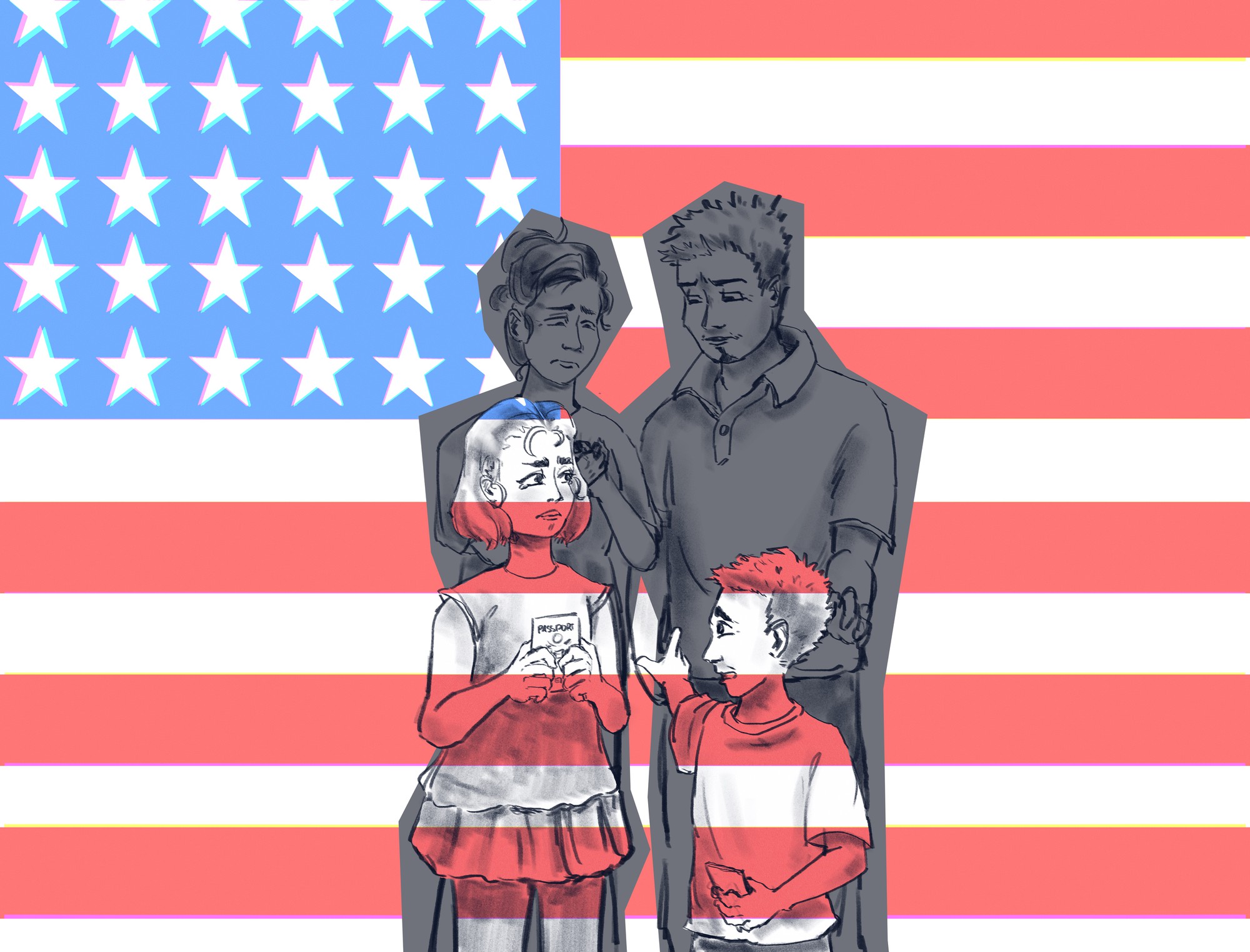
(Helen Juwon Park/Illustrations director)

By Rachel Lee
Jan. 29, 2026 7:33 p.m.
Family separation, foster care, displacement, changes in guardianship – these are only a few possible outcomes for children with undocumented family members in the wake of increased immigration enforcement.
When a child is a United States citizen but their parents are deported, three situations can occur. The child can leave the country with their parents, the child goes under a relative’s guardianship or, if neither option is possible, the child is put in foster care. Without knowing for certain what may happen to them or their children if they are detained or deported, many immigrant parents have made plans to prepare for the worst-case scenarios, according to the Los Angeles Times.
Immigrant families’ concerns have grown increasingly important because of the recent increased aggressive immigration enforcement in LA and across the nation, said Talia Inlender, the deputy director of the Center for Immigration Law and Policy at the UCLA School of Law.
“It’s really indiscriminate, … and it’s sweeping up a lot of our community members, including people who have longtime ties to the U.S. and people who have children and families here,” Inlender said.
[Related: Q&A: Professor Amada Armenta talks impact of immigration-related arrests on Los Angeles]
In any scenario, the U.S. asserts that parents have a constitutional right to custody of their children – regardless of immigration status, detention, or deportation, according to the American Immigration Council.
Therefore, in the wake of a deportation notice or an urgent circumstance, parents can decide to keep their families together and bring their dependents to the country they are removed to.
However, Inlender said U.S. citizen children are often not removed with their parents because federal agencies like U.S. Immigration and Customs Enforcement are not authorized to take custody of them. Thus, in the majority of cases, a parent is deported and has to make arrangements for their children to follow.
For families that want to stay together, a lack of coordination between enforcement agencies and an increase in rapid, irregular and aggressive ICE raids has caused unexpected and prolonged family separation.
The Trump administration has rapidly changed many of the rules and regulations that apply to immigration enforcement, Ingrid Eagly, a UCLA School of Law professor, said.
As a result, there has been an increase in arrests – especially in LA, which are happening unexpectedly through raids that target individuals based on their apparent race, the language they speak or their place of work, Inlender added.
According to Human Rights Watch, analysis of ICE data showed a dramatic increase in arrests by ICE Enforcement and Removal Operations Officers between May to July of last year, with the detentions primarily targeting people without previous violent or criminal history.
When parents are detained, they are allowed at least one phone call to arrange a child caregiver for the time being or to enact their predetermined family preparedness plan, according to the Center for Migration Studies. However, if a call is not sent through or if a family has no one available to take temporary custody of their child, the child welfare system steps in and children can enter foster care.
For other families, their best option is to keep their children in the U.S. This is often the case when a child is older and accustomed to the American school system and is preparing for higher education in the U.S., according to NPR.
Keeping kids in the U.S. can also be ideal when families consider the quality of education in their country of origin in comparison, and the upward mobility that their children can benefit from by staying. NPR also reported that language barriers factor in as a consideration for some children whose primary language is English and not the language spoken in the country they would be moving to.
Karen Magana, a doctoral candidate in the Department of Education at UCLA, said it can be difficult for parents to send their children to school in El Salvador, where her family emigrated from.
“The local school in our village only goes up to the ninth grade,” Magana said. “A lot of students don’t make it past the sixth grade because they don’t have the means to buy the uniforms or the academic materials.”
Though Magana has permanent residency in the U.S., the majority of her family is still undocumented. She said she worries for her relatives who have been severely impacted by the rise in ICE raids within LA and has agreed to take custody of her family members’ American-born children if any of them were to be deported.
“I feel like it was my responsibility to be that person, their designated person to go to the stores, get groceries for them, and take my nieces and nephews out,” Magana said.
Magana isn’t alone in her struggles. In the U.S., 5.5 million American-born children live in a mixed-status family – a household having both residents who are undocumented and residents who have permanent legal status, according to the Center for Migration Studies.
“It’s very difficult to think about, being in such a challenging and horrible situation, to be separated from your child,“ Eagly said.
However, even when a child is put in the planned custody of a relative or trusted family friend, the resulting family separation adds a financial burden and increases economic instability.
Magana said if her siblings were deported, she would worry about being able to look after her nieces as a graduate student. She added that she is unsure whether her apartment is big enough, or if her stipends could cover the necessary expenses to realistically care for them, especially with a four-year-old of her own.
The financial situations of many mixed-status families if they lose an undocumented family member through deportation would be dire. Nearly one million families with at least one U.S.-citizen child would fall below the poverty line if the undocumented breadwinner of their household were to be deported, according to the American Immigration Council.
To start tackling these struggles for students and families, it is important to address both defensive legal protections and affirmative support structures to look after communities, Inlender said.
Currently, the ICE Detained Parents Directive outlines a legal set of guidelines that must be followed to prevent infringement on parental rights during immigration enforcement activities. However, the new version set by the current administration limits and weakens previous protective policies, according to the Immigration Legal Resource Center.
In addition, LA has worked to enact city policies and ordinances to prohibit the use of city and county resources for immigration enforcement. Inlender added that this assures citizens that local tax dollars are not being spent on deporting their community members.
Local communities have also found ways to support their immigrant communities, with mutual aid networks delivering food to families with loved ones who are detained or deported, and showing up to locations with high immigration enforcement activity to document unfolding events and begin to chart a path towards accountability, Inlender said.
For students or staff at UCLA, the UC Immigrant Legal Services Center provides legal support for students and their immediate family members, including mixed-status families. Additionally, UCLA’s Undocumented Student Program and the student organization IDEAS at UCLA provide community, advocacy, and academic support for students who are undocumented or part of a mixed-status family.
Still, Magana said she encourages UCLA – especially professors and staff – to work harder to understand the struggles that undocumented or immigrant students endure and to advocate for their opportunities.
“It’s affecting us in every aspect of our lives,” Magana said. “Hopefully, UCLA can do something to better support, protect and serve their undocumented students.”