Q&A: Professor Amada Armenta talks impact of immigration-related arrests on Los Angeles
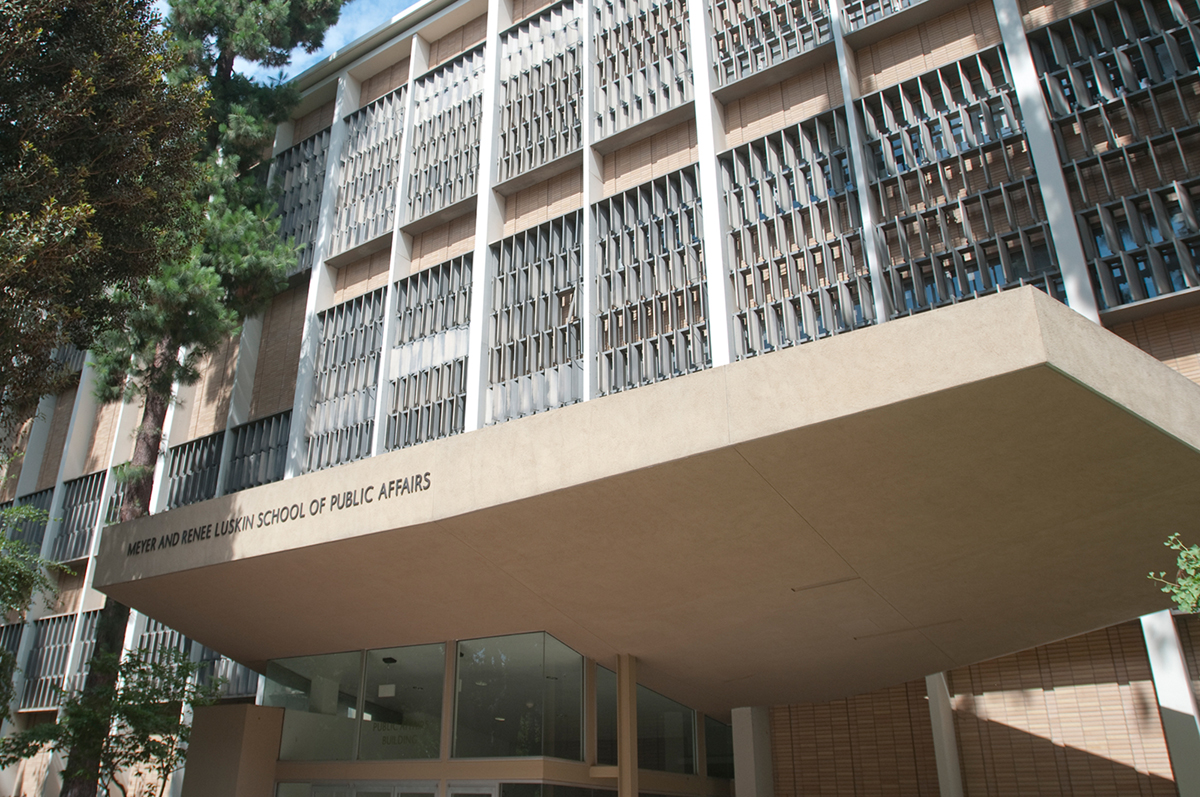
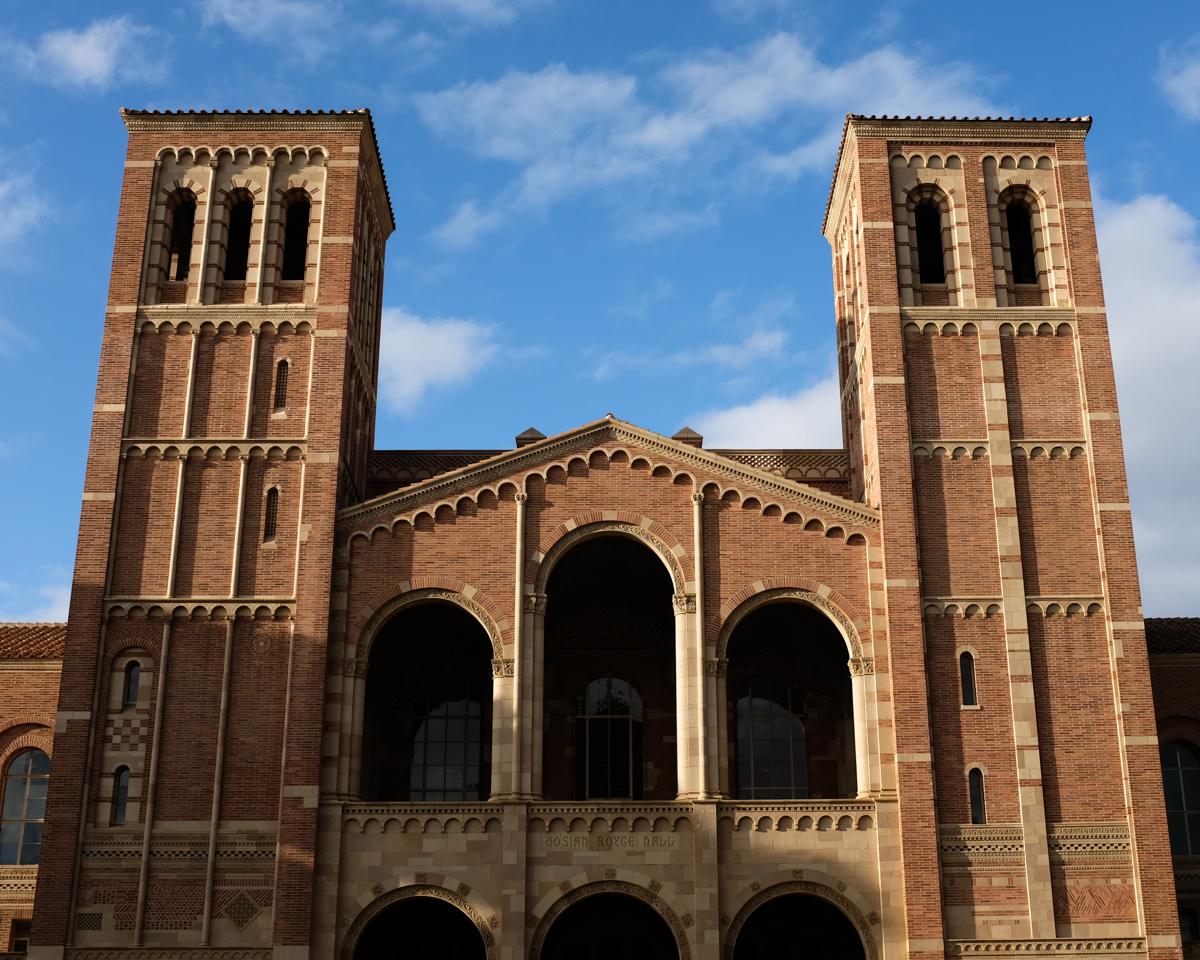
The Luskin School of Public Affairs is pictured. Amada Armenta, an associate professor, sat down with the Daily Bruin to discuss how an uptick in immigration-related arrests has impacted LA. (Daily Bruin file photo)

By Zoya Alam
Jan. 8, 2026 10:57 p.m.
United States Immigration and Customs Enforcement and U.S. Customs and Border Protection have arrested more than 10,000 people in Los Angeles since June, according to the U.S. Department of Homeland Security.
Daily Bruin reporter Zoya Alam sat down with Amada Armenta, an associate professor in the Luskin School of Public Affairs and expert on immigration enforcement in the U.S., to discuss how the uptick in immigration-related arrests has impacted LA.
This interview has been edited for length and clarity.
Daily Bruin: We know that there has been a crackdown of immigration enforcement activity since President Donald Trump took office. Are you able to give us some insight into how the landscape has changed for criminal justice and immigration enforcement?
Amada Armenta: The things that are happening right now are outrageous and should terrify every resident in the United States, regardless of their immigration status – not just because of the cruelty or because of the ways that immigration enforcement agencies and the other federal enforcement agencies that are working with them are breaking the law, but what it means for citizens to live in a country where federal agents seem to think it’s acceptable to require that all of us have identification or proof of citizenship, which has absolutely never been the case in this country.
It used to be that if you were an immigrant who was on the path towards legalization – you were in asylum proceedings, you were on the route to get a certain kind of visa, a green card – immigration enforcement would not try to detain or remove you because you were on a path to legalization. Now, what agencies are doing is taking people on a path to legal legalization, setting appointments for them and detaining them and trying to deport them, even if that person has a valid immigration status and is on a path to a more secure legal status.
The current administration has done things like dismiss judges that they think are too liberal or constrain the ability of judges to make certain kinds of immigration decisions. It used to be that ICE wouldn’t do enforcement in particular areas like schools, churches or health agencies, because it’s important that people access those places with safety. Those restrictions no longer hold true. We’ve seen ICE hold people up against gunpoint, shoot them with chemical things, rubber bullets, pepper spray. They have broken windows. The kinds of aggression are extraordinary and not OK.
DB: Back in October, Los Angeles declared a state of emergency over these ICE raids. Are you able to touch on the implications of such a declaration?
AA: My understanding about the county’s declaration of a state of emergency is that it expands the county’s ability to coordinate, fund and respond to the impacts of ICE raids in the county. LA County already has an Office of Immigrant Affairs that coordinates a lot of their responses toward and for immigrant communities. Since 2017, the County has also funded immigrant legal defense funds that pushes money to trusted immigrant rights organizations and helps immigrants in deportation proceedings find and access legal representation. This also happens in other cities, and it’s really important, because when immigrants have legal representation, they’re much more likely to be able to stay.
The state of emergency really just enhances the county’s capacity to respond to ICE impacts and to fund them more rigorously and more quickly.
DB: The Supreme Court has given some leeway for ICE agents to stop and question people based on their accents, location or skin color. How can ICE agents confirm whether someone who they’re arresting is actually undocumented?
AA: Everyone who’s in the United States has civil rights, and in the United States, it is illegal to racially profile people. That being said, it is absolutely what the federal government is doing.
Law enforcement agents would say it’s based on a number of factors. I would say that legally, it’s actually really challenging to prove racial profiling, because the way it’s often characterized legally in the United States is that one would have to prove that the officer was only acting based on race. First of all, no one is a mind reader, and there’s no officer who’s willing to admit that that’s actually why they were doing that. They only have to say that they were motivated by other things, and that makes it really, really challenging to prove on an individual basis. I would say on an aggregate basis, there is a long history of there being data of disparate stops, arrests and outcomes for Latinos and people of color in general in the United States.
DB: How do you think events of the past year have affected immigration overall? Have you seen any significant changes or patterns that are arising, or is it too early to say?
AA: There are some patterns that we already see and some patterns we will continue to see. I will say the number of international students in the United States is down and will continue to plunge across universities across the country, which has long-term, downstream effects on the United States’ ability to compete, to innovate, to enroll the best and brightest students. I think we see pretty dramatic changes in things like tourism from some countries. There’s regions of the country that depend on tourists from our neighbors like Canada, and those numbers are way down. So this is no longer seen as a friendly or safe place to be an international visitor.
I think there is already evidence that immigration enforcement is dramatically impacting people’s willingness to send their kids to school – school enrollment is down. It’s impacting businesses who report less foot traffic, or an inability to staff the places where they work because people are afraid to come to work.
DB: When do you estimate this state of emergency to be over? Or is this our new normal?
AA: It’s a new normal under this administration. I absolutely do not think it’s the new normal as a country, and I absolutely think that the nation can stop it through mass mobilization.
I’m waiting for that to happen so we can all take part in making sure that this country reflects the values that we were all taught to believe.
DB: Is there anything else you think is important to mention?
AA: The onslaught can make people feel helpless, and that feeling is maybe the goal of an administration that wants to operate with impunity. But we are not helpless. The country has faced very dark days before, and there is no reason why we should accept what is happening.