UCPD shared student’s sexual assault exam results with accused assailant, lawsuit alleges
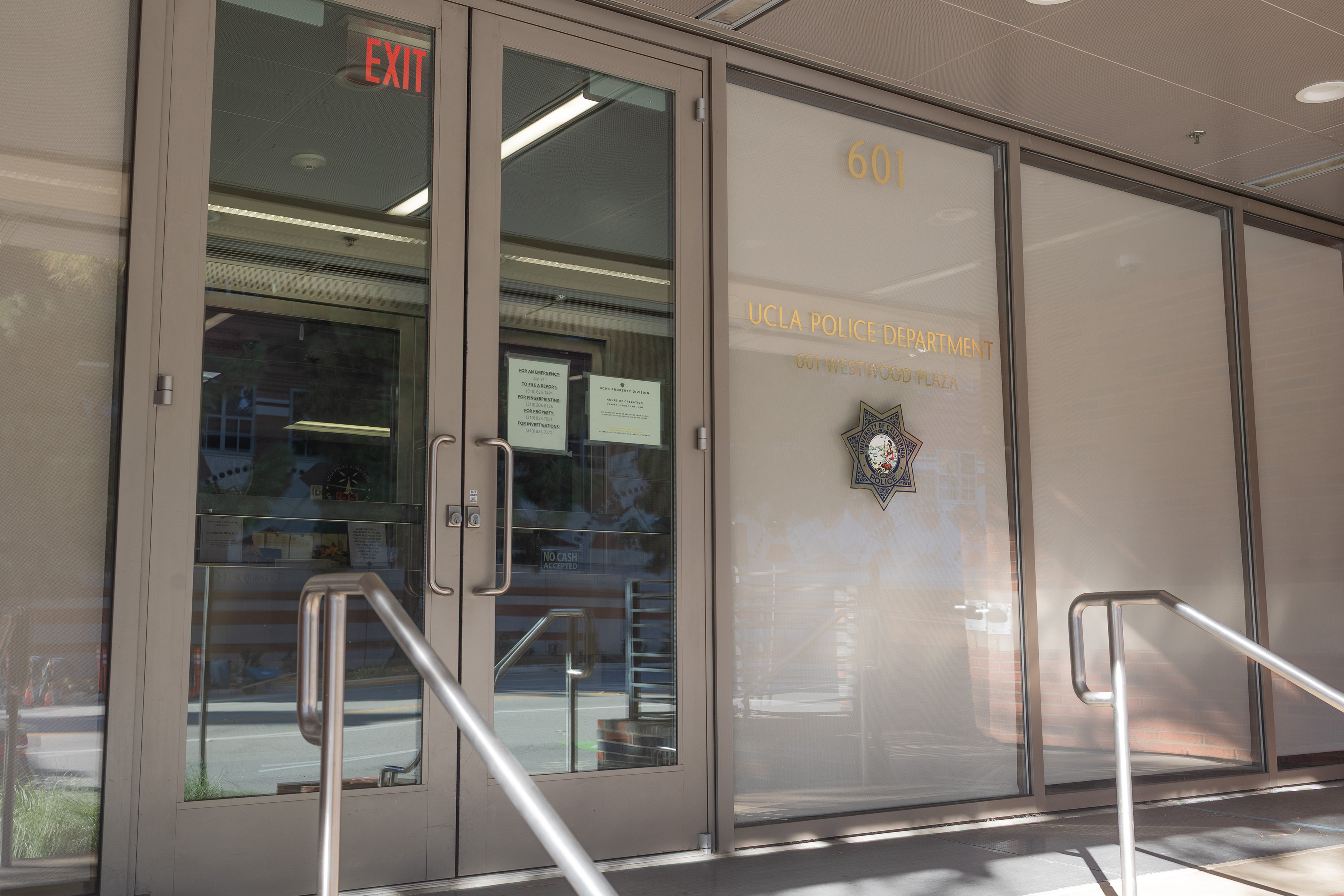
The outside of the UCPD building is pictured. A UCLA alumnus alleged in a complaint that UCPD shared her address and the results of a medical examination with the man she accused of sexual assault. (Chenrui Zhang/Daily Bruin staff)

By Julian Duaybis
Nov. 18, 2026 9:31 a.m.
A UCLA alumnus is suing the UC Board of Regents after UCPD allegedly disclosed her address and the results of a medical examination to the man she accused of sexually assaulting her as a student.
The alumnus – identified as Jane Doe in the lawsuit – alleged that UCPD Officer Selby Arsena provided Doe’s alleged aggressor with information including her address and the results of her sexual assault forensic medical examination, also known as a rape kit report, in 2024. Doe alleged in the complaint that Arsena allowed the man accused of assault to photograph the documents without her consent.
Nine days after Arsena shared the medical documents, Doe’s car windshield was smashed and the day after that, rotting animal remains were left at the door of her university-owned residence, according to the complaint.
“They did not investigate, did not inform and did not protect Jane Doe against the harm of the disclosure of her address and her rape kit report,” said Lina Kaisey, a lawyer representing Doe in the lawsuit.
Doe further alleged that the Title IX office did not inform her immediately that her personal information had been compromised.
The complaint cited the California Confidentiality of Medical Information Act, which prohibits the sharing of medical information without proper authorization.
Doe did not consent to the release of her rape kit information to the Title IX Office, according to the complaint. Doe discovered months later that her information was compromised. A supplemental summary of evidence that Title IX released included an account of her alleged aggressor’s meeting with Arsena, according to the complaint.
Richard Mejia – the director of emergency communications and information for UCLA’s Office of Campus and Community Safety, which oversees UCPD – said in an emailed statement that UCPD has consistent procedures for handling sensitive information during investigations.
Mejia declined to comment on the lawsuit. He did not answer questions about UCPD’s specific policies for handling sensitive information, including if UCPD has a defined review process before sharing sensitive information with external parties.
“UCLA Police takes reports of sexual assault seriously and is committed to conducting thorough, professional investigations while treating those who come forward with care, sensitivity and respect,” Mejia said in the statement.
Doe is asking the court to require the UC to enforce stronger policies related to the handling of medical and identifying information during investigations, according to the complaint. She is also seeking damages for emotional distress and delays in her academic progress, which she said the case’s alleged mishandling caused.
Kaisey said in an interview that Doe’s case reflects gaps in UCPD and the university’s policies on handling people’s private information. The shared records were allegedly stamped with a warning that it would be illegal for UCPD to release them, according to the complaint.
“We don’t know the extent of the voids, and we wouldn’t have known of the voids if this incident didn’t occur,” Kaisey said.
The lawsuit did not specify the Title IX Office’s determination, and Kaisey declined to comment on the result. UCLA’s Title IX Office allows up to 10 business days to appeal the decision of a fact finding hearing, which determines if sexual violence or harassment occurred.
After the Title IX office released a determination on Doe’s case, she attempted to appeal the decision. However, Title IX did not give Doe the proper means to appeal its decision, she alleged in the complaint.
UCLA Media Relations referred The Bruin’s repeated requests for comment on the claims about the Title IX office to Mejia, who referred The Bruin back to UCLA Media Relations. Neither Mejia nor UCLA Media Relations responded in time to further requests for comment.
Doe requested access to transcripts from the hearing to prepare an appeal, but she did not receive the transcripts until two days before the appeal deadline, according to the complaint. The transcripts were in Box files which Doe could not access, the complaint said.
More than two weeks later, the Title IX Office denied Doe’s request for an appeal, citing the 10-business day deadline, according to the complaint.
Doe alleged that UCLA did not provide her with alternative housing options despite concerns for her safety. The university offered Doe temporary housing for no more than 48 hours and did not permanently relocate her, she alleged in the complaint.
Neither Mejia nor UCLA Media Relations responded in time to a request for comment about Doe’s housing accommodations.
UCLA personnel reviewed elevator footage from the day of the vandalism incident and did not find activity they considered suspicious, according to the complaint. The university did not allow Doe access to the footage, citing student privacy laws under the Family Educational Rights and Privacy Act, she alleged in the complaint.
According to the complaint, Doe has experienced anxiety, fear for her safety and trouble sleeping since the alleged disclosure of her private information.
“This is a systems problem, and our lawsuit seeks accountability for what happened to Jane Doe,” Kaisey said. “We also seek to reform the university’s information handling practices so that other survivors aren’t exposed to these risks, and so that UCLA students can trust that their sensitive information is protected when they report sexual assault to UCPD.”