UCLA’s Title IX statistics haven’t been updated for over half a decade. Survivors deserve to be heard
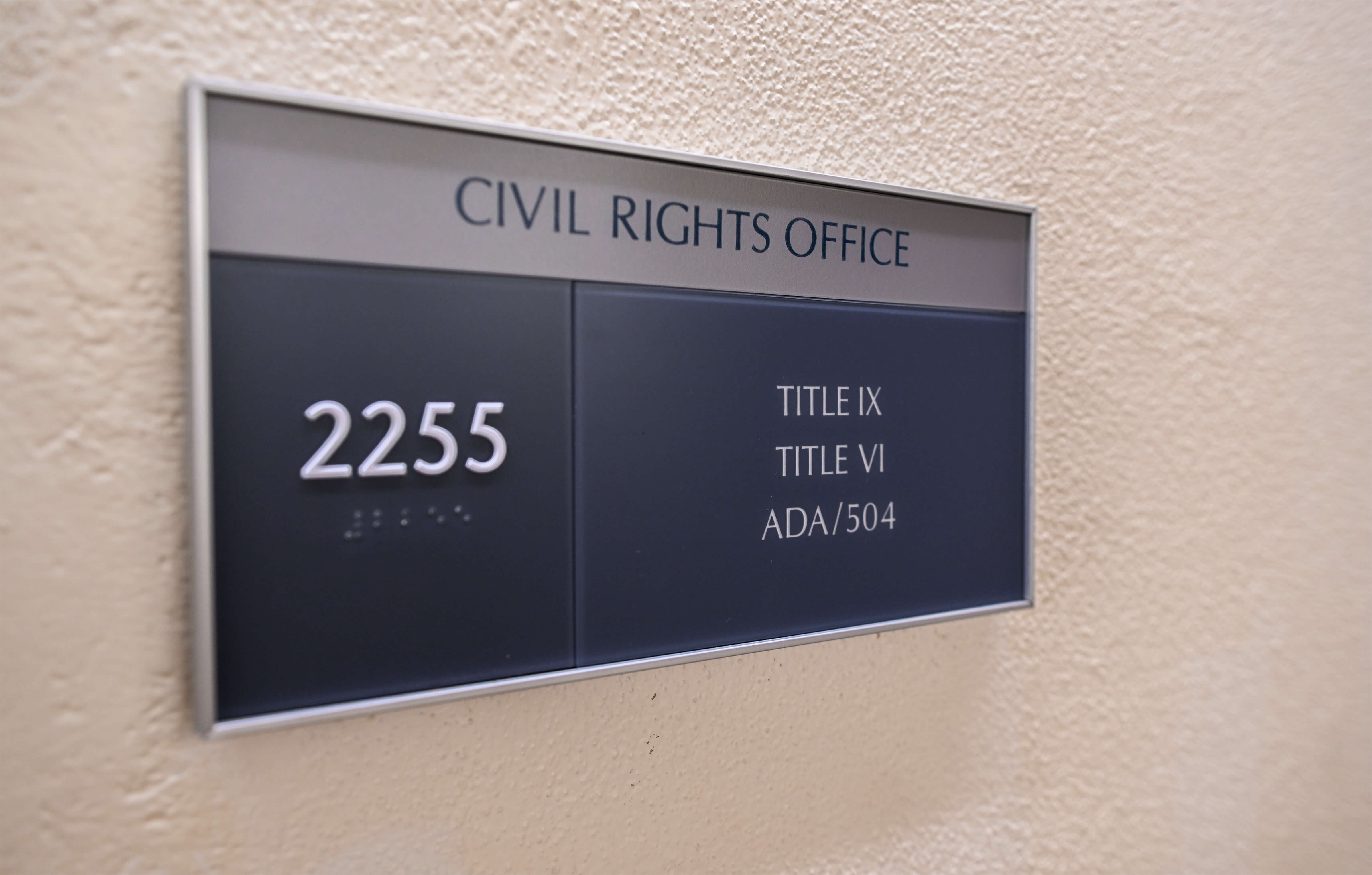
The Title IX Civil Rights Office is pictured above. Columnist Ruby Galbraith argues the office must update the “Reporting Statistics” page on its website. (Andrew Ramiro Diaz/Photo editor)

By Ruby Galbraith
Nov. 5, 2026 7:31 p.m.
UCLA’s Title IX Civil Rights Office claims it is committed to transparency.
But that’s hard to believe when, as of Nov. 5, the “Reporting Statistics” page on its website hasn’t been updated since 2021.
This is unacceptable. To truly show dedication to accountability, UCLA Title IX must update its website with data through 2026.
The webpage links to reports about how many Title IX complaints were brought to the office, as well as how many complaints were brought to formal investigation, for fiscal years 2015-21.
But there are no published links after 2021, and the 2020-21 link leads to an error message.
The website also claims that the Office of Equity, Diversity and Inclusion creates an annual Public Accountability Report that includes Title IX data. The Office of Equity, Diversity and Inclusion was eliminated and replaced by the Office of Culture and Inclusive Excellence in 2025, and the link to the “Public Accountability Report” leads to a 404 error page.
This raises questions about whether UCLA Title IX is actually serving students. Without updated data, it’s even harder to hold the office accountable.
“For the Title IX page to not be updated just really shows so much apathy for students,” said Nava Khurgel, a third-year history and sociology student and co-director of the UCLA chapter of Planned Parenthood Generation Action.
A UCLA spokesperson told the Daily Bruin that UCLA Title IX reports data to the UC Office of the President’s Systemwide Title IX Office. The spokesperson added that UCLA publishes statistics through its annual Clery Act Campus Safety Report.
Sure enough, buried in the 203-page document the spokesperson provided is a table that shows how many cases of “Clery Offenses” occurred at UCLA – including sexual assault, rape, statutory rape, stalking, domestic violence and dating violence.
But Clery data is not the same as Title IX reporting data. The Jeanne Clery Act requires universities receiving federal funding to annually report crimes that occur on campus. Title IX data is distinct. It shows how many complaints were sent to UCLA Title IX and how many actually resulted in a formal investigation by the office.
For example, for the 2018-19 fiscal year, 84% of initial investigations by the Title IX office were closed, while only 3% resulted in a formal investigation.
In 2023, the Daily Bruin reported that UCLA Title IX experienced a 249% increase of complaints between 2015 and 2021, but the number of complaints that turned into formal investigations decreased.
This data is vital to keeping the UCLA Title IX office accountable by making sure the office follows through with students who choose to file a complaint.
Granted, updating the Title IX statistics is far from a full solution to sexual violence on campus. The Campus Advocacy Resources & Education program lacks consistent funding across the UC system, and our mandatory sexual violence prevention training is easy to click through without paying attention.
[Related: The Cornell case is a wake-up call for UCLA to reform sexual violence prevention]
And it’s important to note that some survivors choose not to file an official complaint with Title IX. There are broader issues within this office, including students feeling misled and betrayed during investigations, that simply updating a website won’t fix.
At the very least, basic transparency is a step in the right direction.
In light of the allegations regarding Cornell’s mishandling of the Jane Doe case, UCLA has a responsibility to critically review and refine its own Title IX procedures – especially its failed commitment to transparency.
Students understand the need for this data to be published. The organizers of an Oct. 8 demonstration against sexual violence on UCLA’s campus – which was part of a nationwide walkout and attended by hundreds of students – also demanded that the administration publish a report on the current state of sexual violence at the university.
[Related: Hundreds of UCLA students participate in national walkout against sexual violence]
“There is no excuse for why their statistics have not been updated,” said Jayha Buhs Jackson, one of the walkout’s organizers and the Undergraduate Students Association Council president.
If UCLA Title IX is truly committed to transparency, it should ensure its statistics aren’t outdated by more than half a decade.
Students – and especially survivors – deserve more than broken links.