This UCLA project works to protect voting access ahead of 2026 midterms
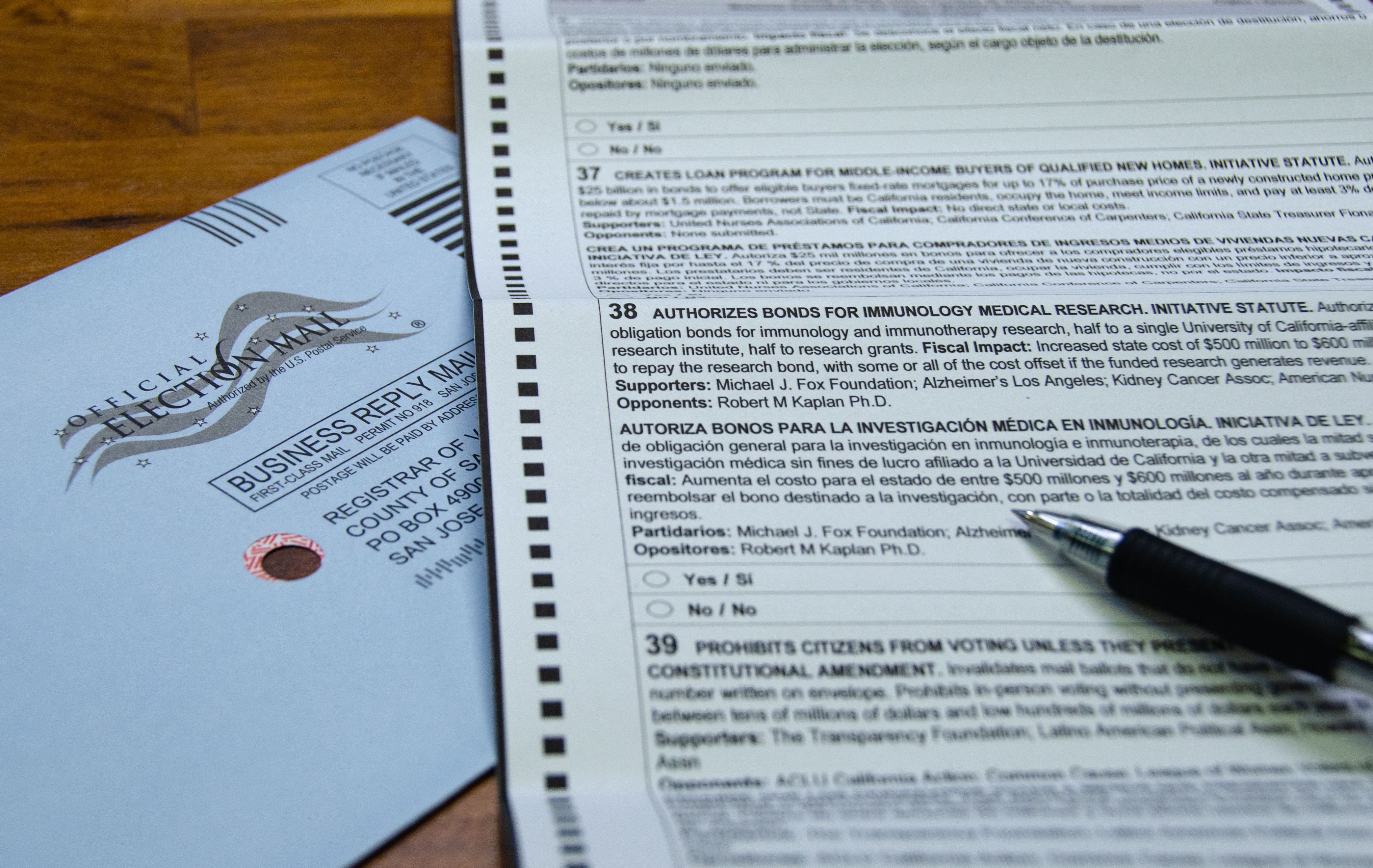
A ballot is pictured. A UCLA research center is working to challenge racial and partisan gerrymandering, voter eligibility and ballot collection issues ahead of the 2026 midterm elections. ((William Gauvin/Daily Bruin staff)

By Vivian Stein
Oct. 31, 2026 8:15 p.m.
A UCLA research center is working to challenge racial and partisan gerrymandering, voter eligibility and ballot collection issues ahead of the 2026 midterm elections.
The UCLA Voting Rights Project, housed within the UCLA Luskin School of Public Affairs and affiliated with the UCLA School of Law and the College Division of Social Sciences, was founded in 2018 as a pilot program by Matt Barreto, the VRP’s faculty director, and Chad Dunn, the project’s legal director, to combine legal and political science perspectives on voting rights.
The program began receiving more funding and campus support in 2020, coinciding with a high-profile national election in which voting rights issues faced increased scrutiny amid the COVID-19 pandemic, Barreto said.
“Right now is probably one of the most crucial times for voting rights issues and voting equality,” Barreto said. “We have a federal government that is attempting to limit access to voting and trying to make voting harder.”
Barreto said the project filed a lawsuit against the U.S. Department of Homeland Security on Sept. 2, claiming that it used unreliable federal databases to allegedly target naturalized citizens who are registered to vote in California.
[Related: UCLA Voting Rights Project sues DHS over alleged election interference]
“Our bottom line is that all voters, regardless of race, ethnicity or political party, all voters should have equal access to voting and should have equal access to representation,” Barreto said.
Research is a key part of that effort, he said, adding that the project employs data scientists who develop research methods, geographic mapping techniques and software to investigate voting rights issues, such as illegal racial gerrymandering and attempts to pass voter identification initiatives.
The project also publishes academic papers and law review articles and supports about four doctoral students as research fellows each year, Barreto said.
Beyond research, the project focuses on educating future voting rights advocates through a year-long voting rights policy and law course, which teaches law students to examine the legal and political science theories underlying voting rights, he added.
Throughout the course, students learn to draft legal complaints, identify the data needed to support them and research election practices across the country, Barreto said.
The student groups also explore ways to expand voting rights in select locations across the country where voting rights may be restricted, Dunn said. The VRP attorneys – including California gubernatorial candidate Xavier Becerra – follow up on selected locations over several years to assess local voting rules and conditions and explore potential improvements.
“Its mission is to provide a clinical education environment for the next generation of lawyers and expert witnesses who seek to protect the right to vote,” Dunn said.
The VRP’s attorneys review potential cases and work with community members who raise concerns about voting access, Barreto said.
Katie DaQuino, a third-year law student and VRP fellow, said in an emailed statement that taking classes on voting rights policy inspired her to join the project.
As a fellow, DaQuino has assisted with legal research and brief writing and learned to use mapping systems to incorporate locational data into legal complaints. The work has shown her how voting rights attorneys adapt their approaches as legal challenges evolve, she said.
“Our right to vote is central to our democracy,” DaQuino said. “It is our ability to have a voice. Eroding this right effectively silences whole communities. The VRP helps to amplify our voices by protecting and enriching the right to vote.”
DaQuino added that she believes it is important for students to be aware of the Voting Rights Project’s efforts to protect voting access.
[Related: Ballot Breakdown – What to know before the 2026 midterm elections]
“It can be easy to feel hopeless, with the constant attacks from the federal government on our campus and our city,” she said. “I hope students can gain back some hope knowing that there are so many people at UCLA working to fight back against this onslaught of attacks.”
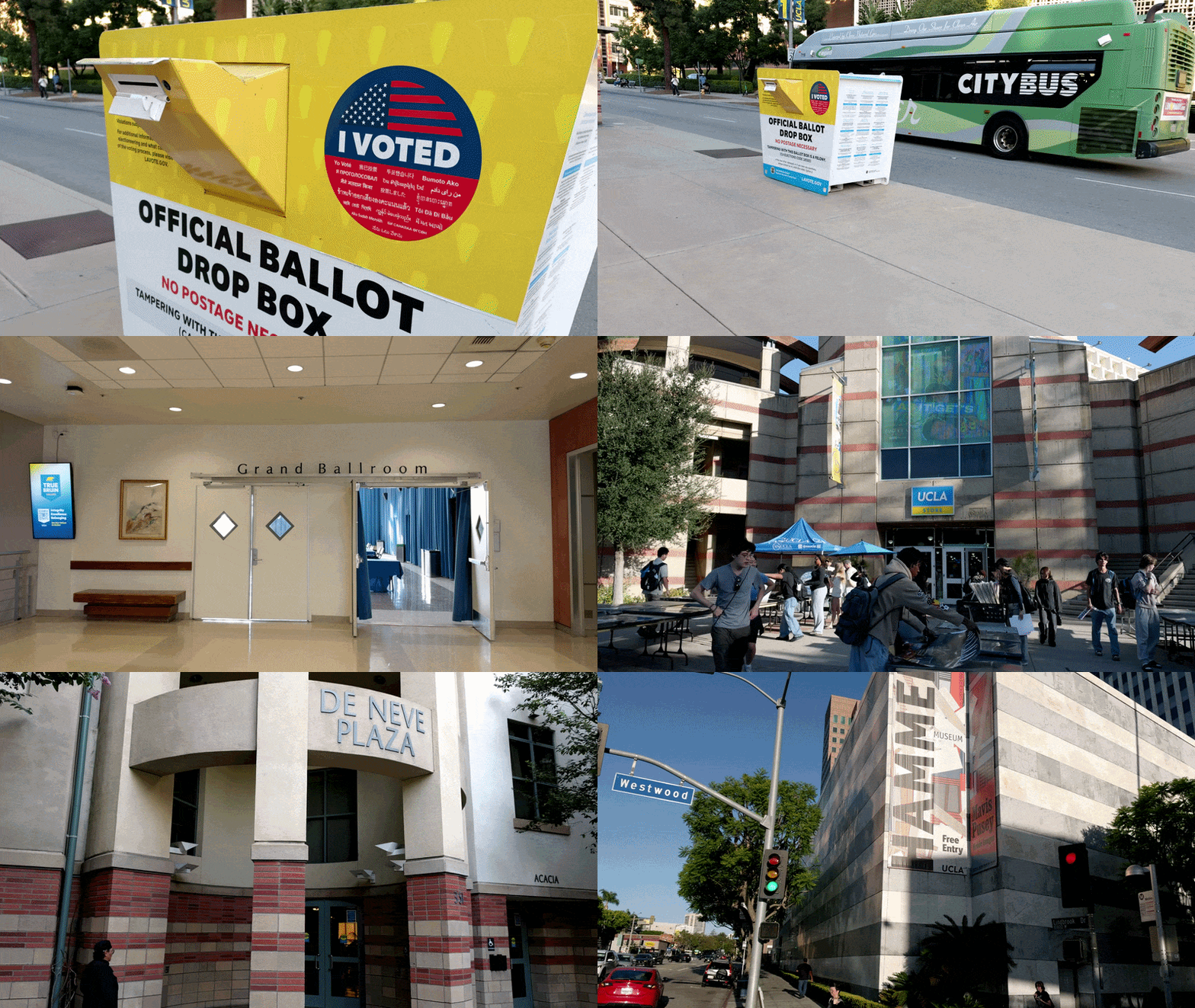
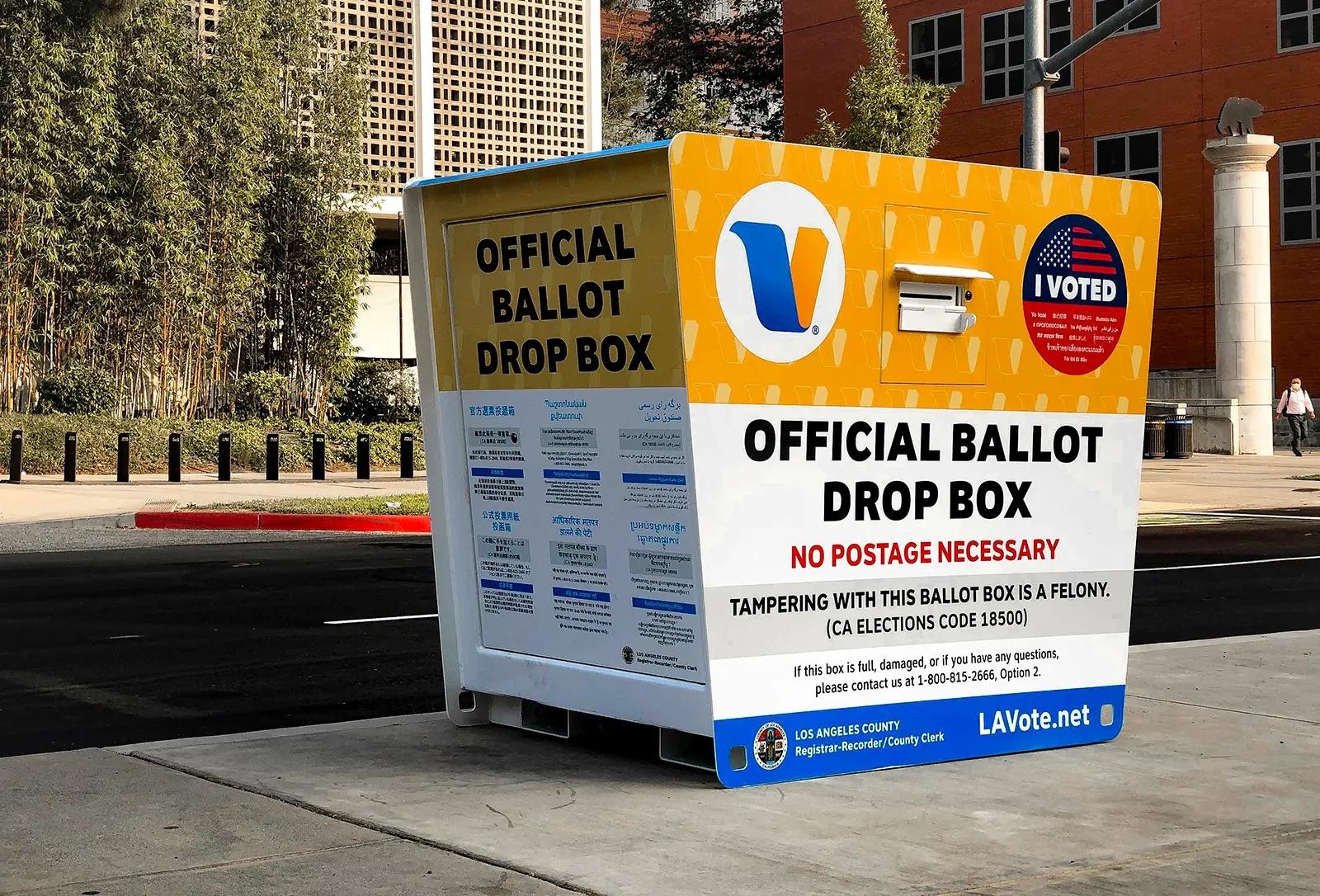
Students can vote in the Nov. 3 midterm elections at multiple locations on campus or in Westwood, including Ackerman Union, De Neve Plaza and the Hammer Museum.