

Here’s what students need to know about Proposition 40’s one-time billionaire tax
(Jacqueline Nguyen/Daily Bruin contributor)

By William Gauvin
Oct. 26, 2026 7:12 p.m.
When California voters head to the polls this November, they will decide whether to impose a tax on California’s billionaires.
Proposition 40 seeks to impose a one-time, 5% tax on the total net worth of all billionaires living in California – up to 255 people – as of Jan. 1, 2026. The measure will appear on the Nov. 3 ballot after it received enough signatures from registered California voters last spring.
[Related: Petitioners push billionaire tax, other initiatives for California ballot]
The tax is expected to generate about $100 billion in revenue for the state, said Emmanuel Saez, a UC Berkeley professor of economics.
The state would use most of the revenue to compensate for the federal funding cuts to Medi-Cal from President Donald Trump’s 2025 One Big Beautiful Bill Act, which are expected to reduce federal funding by $30 billion annually. About 10% of the remaining funds would go toward education and food assistance programs.
“It’s a temporary backfilling of healthcare funding, and it was decided to make it temporary because we don’t know how long the federal defunding is going to last,” Saez said.
Two other propositions on the ballot – 41 and 42 – would nullify Proposition 40 if either gets more votes.
If approved, Proposition 41 would require the state’s auditor to examine new special tax proposals before they appear on the ballot. Proposition 42, on the other hand, would bar new taxes on certain types of personal property.
Kimberly Clausing, the Eric M. Zolt chair in tax law and policy at the UCLA School of Law, said the proposition is controversial because there are few examples of such taxes, both locally and abroad.
“This is so new and so different for California that I think there’s some real concerns about possible negative side effects,” she said.
Opponents of the proposition, among them Google co-founder Sergey Brin, contend that it could cause billionaires to leave the state and subsequently decrease tax revenue in the long run.
The proposed tax has drawn over $160 million in election spending, according to CalMatters.
The proposition has attracted significant opposition spending because of an effort spearheaded by Brin, who has poured more than $56 million against Proposition 40, according to CalMatters. When including his financial support to pass Propositions 41 and 42, his contribution totals over $100 million, according to NPR.
Meanwhile, supporters of the measure – such as Vermont Sen. Bernie Sanders – have amassed and spent around $33 million, according to CalMatters.
Clausing said that backers of the proposal believe it will generate high revenue because they anticipate that billionaires will not leave the state in response to the tax, while the detractors believe billionaires will be more likely to leave and settle elsewhere.
Saez, though, said that even if they left, it would not significantly affect California’s $4.4 trillion gross domestic product.
“They’ve (billionaires) gained $1.5 trillion in wealth over seven years,” he said. “Their income tax payment is only 1.6% of that.”
Evan Salazar, a general representative in the Undergraduate Students Association Council, said that passing the measure would show students that their voice matters in the democratic process.
“It will give a significant amount of hope and ability for students to continue to organize against the federal government, to push back and to understand that we do have power to enact policy to shape the future that we want,” said Salazar, a second-year political science and public affairs student.
Although the measure is billed as a one-time tax, the passage of Proposition 40 could signal that California intends to levy more taxes in the future, impacting economic activity in the long run, Clausing said.
Saez said passing Proposition 40 could spark larger conversations across the country about addressing wealth inequalities.
“If it passes, it could be a turning point,” he said. “That’s why other states, the nation, other countries are looking.
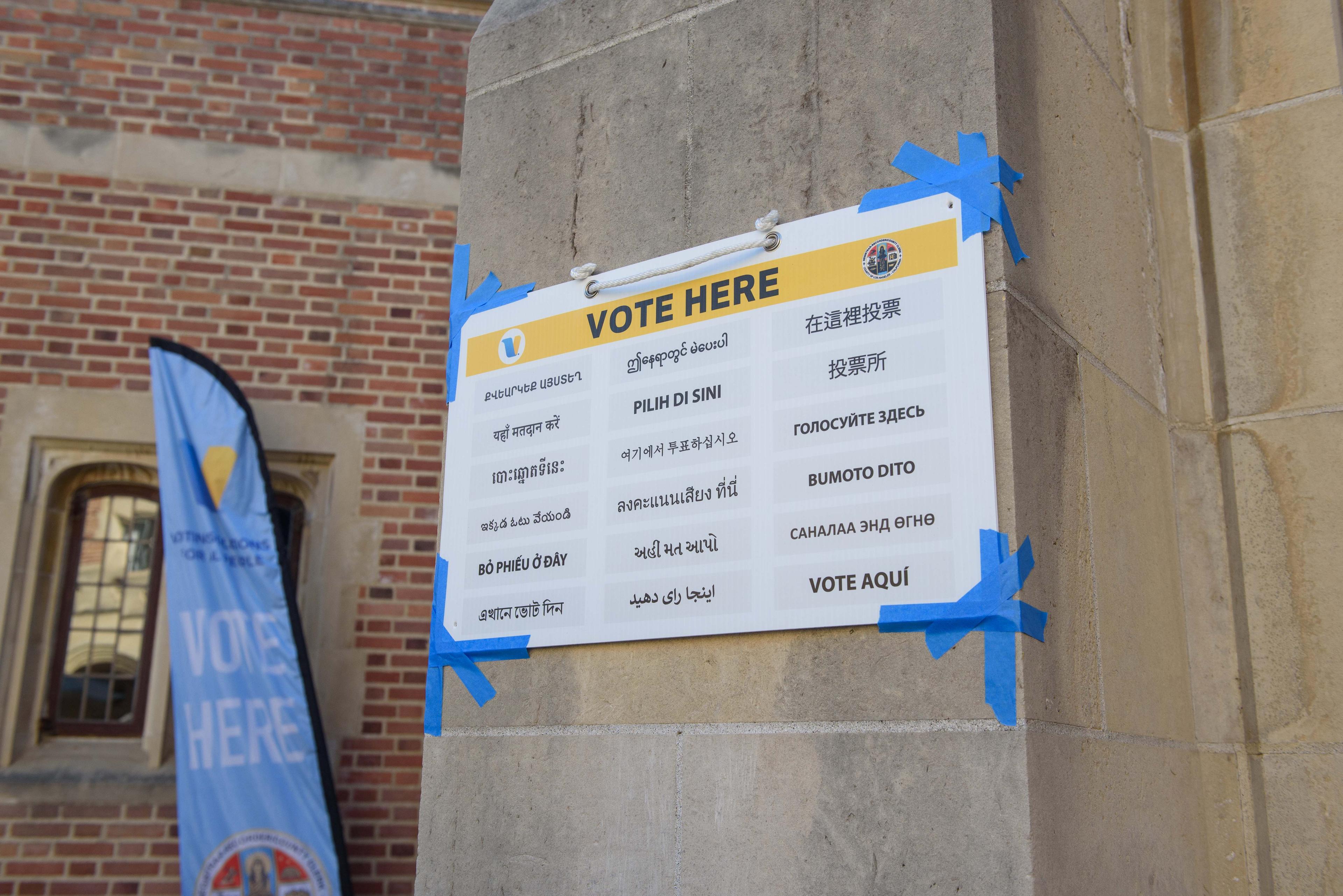
Students can vote in the 2026 midterm elections at multiple locations on and around campus, including Ackerman Union, De Neve Plaza and the Hammer Museum.