Petitioners push billionaire tax, other initiatives for California ballot
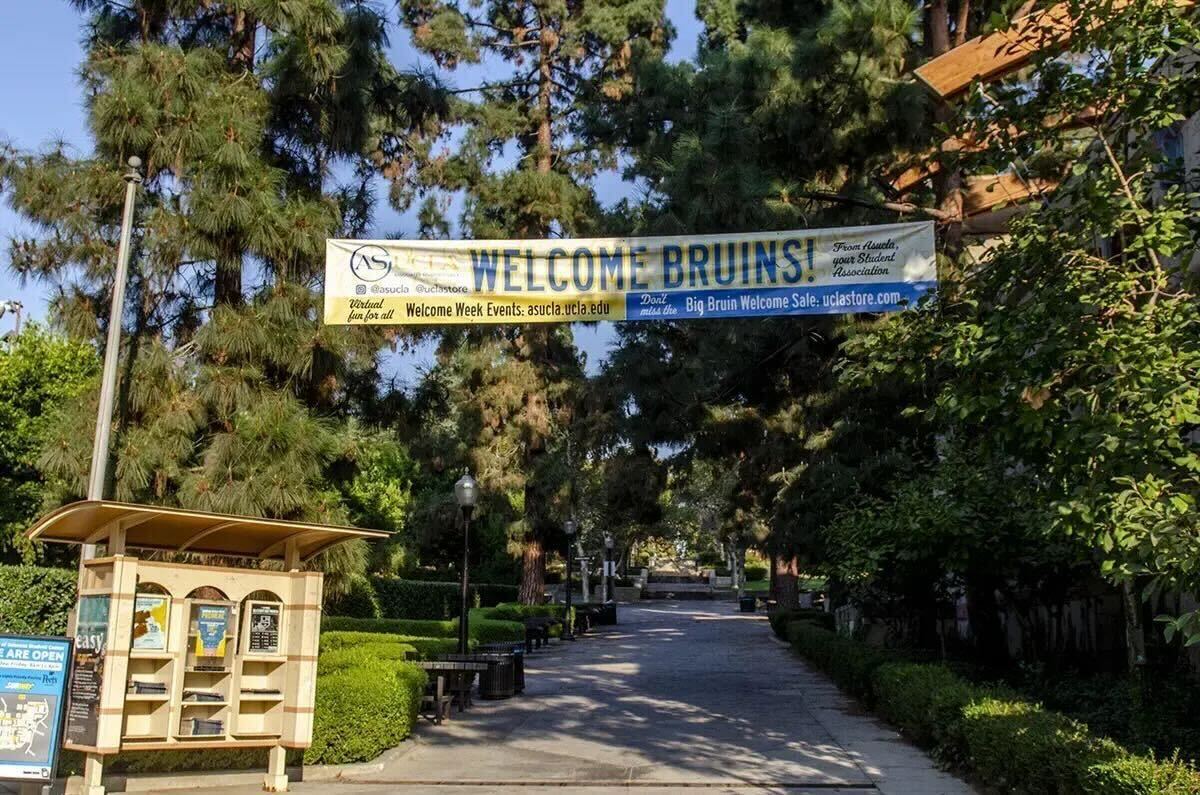
Bruin Walk – one campus location where petitioners typically try to get signatures – is pictured. California advocates are trying to put a tax on billionaires on the November ballot. (Daily Bruin file photo)


This post was updated March 8 at 10:00 p.m.
California advocates are trying to put a tax on billionaires on the November ballot.
Leaders from Service Employees International Union-United Healthcare Workers West and St. Johns Community Health in Los Angeles – a health care justice union and network of community health centers, respectively – filed a ballot initiative in October 2025 that would impose a 5% one-time tax on California billionaires’ total wealth. The money raised from the tax would fund California health care and education, according to a fact sheet sponsored by SEIU-UHW.
Nearly 900,000 registered California voters must sign the petition for it to be added to the ballot. Proponents of the initiative have a maximum of 180 days to circulate the petition, get signatures and file it with county election officials.
The deadline for signature verification is June 25. Signatures must be verified 131 days before the general election, per California law.
The initiative process started in California out of the early-20th century progressive movement for citizens to be more involved in government, said Zev Yaroslavsky, the director of the Los Angeles Initiative at the UCLA Luskin School of Public Affairs – a research center that studies the Los Angeles County Quality of Life Index. It is meant to be a check on the state legislature and governor, he added.
The petitions – which volunteers have approached UCLA community members about on campus – ask registered voters to sign in support of putting several measures on the ballot, including the billionaire tax measure, a measure to prohibit new taxes on retirement holdings and a measure aiming to reduce instances of sexual assault in rideshare services, said Crys Cast, one of the petitioners.
Cast said she works on behalf of Let the Voters Decide, an organization that aids clients in gathering signatures.
“I am so non-biased,” she said. “I just want to get those signatures to get it on the ballot. I want people to make that decision once it gets on the ballot, for California to have the choice, yes or no.”
In addition to encouraging people to sign the petitions, Cast also registers people to vote who have not already done so themselves, she said. She added that she believes it is important for students to vote, especially if they are dissatisfied with the way they are currently being governed.
Cast said she has registered 500 people at UCLA and more than 3,000 people at other UC campuses to vote.
However, Yaroslavsky said he believes students should be aware of what they are actually signing, as they may be funded by special interest groups.
Yaroslavsky added that some petitioners are paid by special interest groups for every signature they get. Thus, some petitioners take on multiple petitions so they can get paid for multiple signatures per person, he said.
“When somebody comes up to you that asks for a signature, you have to assume that somebody’s paying for this person to stand out there,” he said. “It may or may not be a bad initiative. It depends on your point of view.”
Evan Salazar, a first-year political science and public affairs student, said he is gathering signatures for the billionaire tax petition without any financial incentives.
He attended a rally in February where United States Senator Bernie Sanders – an independent who often advocates for taxes on the wealthy – delivered a speech in support of the billionaire tax measure.
He added that he was given petitions by a member of SEIU-UHW at the February rally, but he is only asking people to sign in support of the billionaire tax.
He added that he believes signing petitions is important for a functioning democracy.
Salazar supports the measure, but he would like to see a longer-term tax on billionaires implemented, he said. He added that he worries that if the conditions created by wealth inequality in America continue, quality of life will worsen for generations to come.
“The working class and middle class of America are starting to wake up and see the discrepancies in the ways that they have been exploited,” Salazar said.
As ballot initiatives are circulated, Yaroslavsky said voters should take time to read initiatives instead of going off of what signature-gatherers tell them.
When asked to sign a petition, the first thing anyone should do is ask to read what they are signing, Yaroslavsky said.
“The best, the most important tool in a democracy is to be well informed,” Yaroslavsky said.