Film Review: ‘Klara and the Sun’ rises with whimsy, but falls without depth
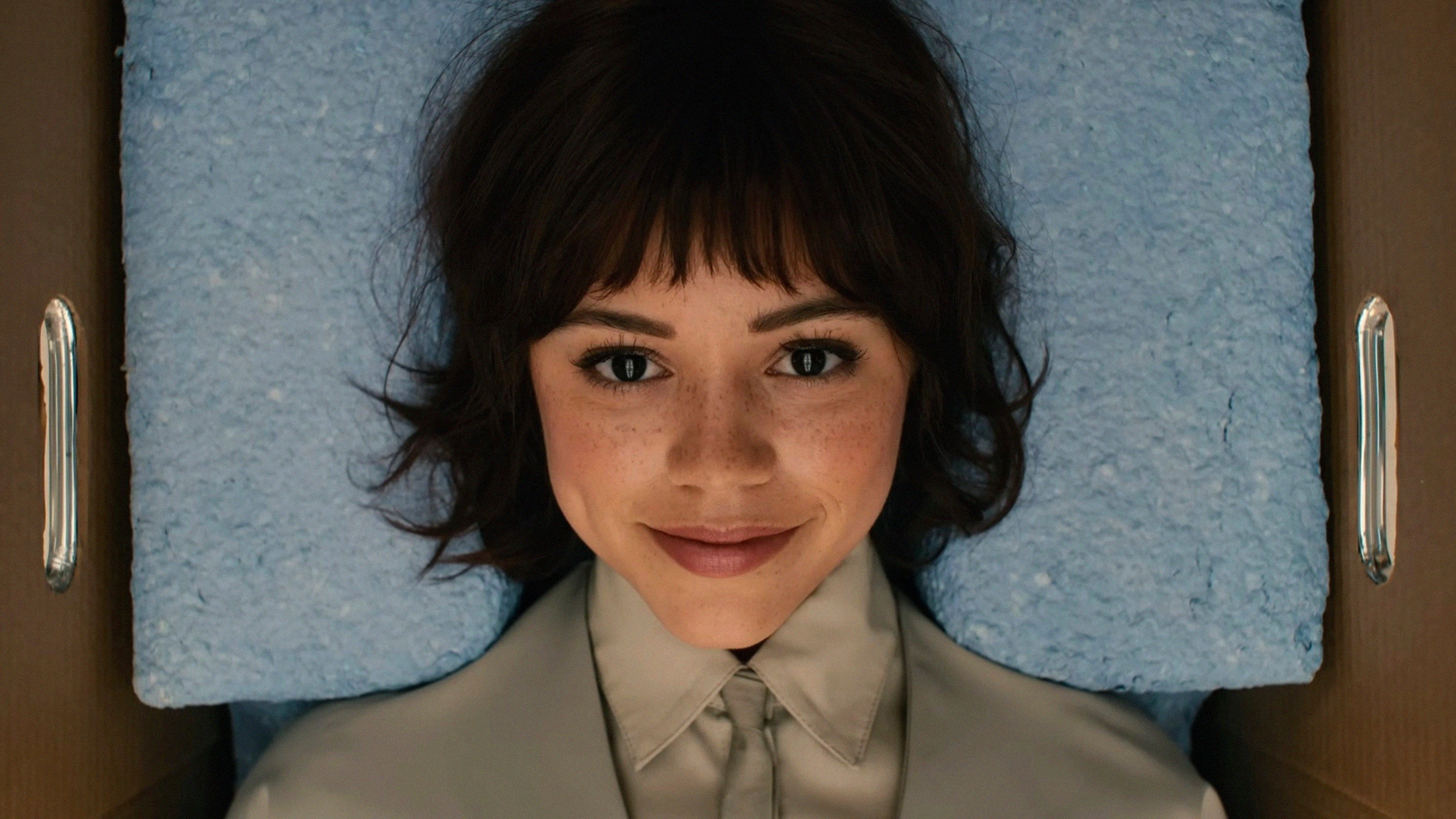
Jenna Ortega (Klara) smiles at the camera. “Klara and the Sun,” the adaptation of Kazuo Ishiguro’s novel of the same name, was released Friday. (Courtesy of IMDb)
“Klara and the Sun”
Directed by Taika Waititi
Columbia Pictures
October 23


By Ali Mo
Oct. 24, 2026 3:30 p.m.
Warning: Spoilers ahead.
For all its whimsical ambition, “Klara and the Sun” gets lost in its own theatricality, stumbling where emotional depth should shine.
Released Friday, Taika Waititi’s newest film follows Klara (Jenna Ortega), an AF – short for Artificial Friend – who attempts to befriend Josie (Mia Tharia), a sick and lonely teenager. Based on the novel by Nobel Prize-winning author Kazuo Ishiguro, the film explores the boundaries between humanity and artificial intelligence. When Klara discovers that Josie’s mother, Chrissy (Amy Adams), has been working to transfer her daughter’s likeness into a robot in preparation for her possible death, the characters are forced to confront difficult questions: Can humans be replaced, and how should the living grapple with grief? While “Klara and the Sun” features a moving performance from Jenna Ortega and stuns with dramatic visuals and a dreamy score, Waititi’s humor-centered interpretation of Ishiguro’s protagonist undercuts the novel’s deeper emotional questions.
For better or for worse, Taika Waititi’s distinctive directorial style is on full display. Known for films such as “Thor: Ragnarok” and “Jojo Rabbit,” Waititi embraces campy aesthetics, quirky humor and vibrant color palettes. “Klara and the Sun” is no exception. Wide-angle shots convey the idyllic nature of Josie’s farm. Michael Giacchino’s symphonic music emphasizes the home’s dreamlike quality. The endless, monochromatic cornfields surrounding their home contrast sharply with Josie’s and Klara’s colorful outfits, visually reinforcing the tension between the world’s bleak realities and the innocence of their friendship. Yet the film’s polished atmosphere also makes its darker themes feel more distant.
Jenna Ortega delivers a performance that is as frustrating as it is endearing. Klara is naive about the world around her, praying to the Sun to heal Josie’s sickness. Josie initially finds this sweet, but as her health deteriorates, she begins scolding Klara and telling her to be more realistic. Klara’s faith eventually drives her to nearly destroy herself as she tries to dismantle a Cootings machine, which she believes is interfering with her ability to communicate with the Sun. While Klara exhibits recognizable human qualities, such as love, empathy and fear, she rarely expresses more difficult emotions, such as anger or jealousy. The film leans into her innocence at the expense of her complexity, hindering the nuance of her performance.
[Related: Film Review: ‘Sense and Sensibility’ successfully brings Austen’s classic to the modern screen]
Klara’s excessive naivety and overwhelming lack of nuance make her a less relatable character, something especially apparent in the film’s comedic set pieces. In an early scene, Klara slips on a rock in a display case, knocking over two other AF’s and crashing into surrounding props. Similarly, her struggles to climb stairs and general lack of spatial awareness reduce her to a one-dimensional, childlike caricature. Her slapstick humor and wacky facial expressions depart from the more restrained characterization in the original novel. Klara’s overly theatrical facial expressions and childish mishaps distract from the message of Ishiguro’s original work, which emphasized the quiet existential sadness of Klara’s existence and her inability to fully express human emotion.
Still, the film’s emotional message emerges when Klara challenges those she had been conditioned to please. When Josie meets her robotic replacement, she encourages her mother to “choose her now” and embrace the fleeting time she has left with her. Chrissy explains that she will always “choose her” but that she also wants Josie’s memory and image to live on. Klara, however, refuses to accept that a replica could truly take Josie’s place, stating that Josie is a unique being that can’t be recreated. Klara puts her love above her instinct to remain agreeable. Although society treats AFs as commodities and discourages them from expressing human emotions, it is Klara who teaches Chrissy that grief and love are inseparable.
The film refutes the idea that humans are replaceable as Chrissy accepts that loving Josie means acknowledging the chance of losing her. The message is poignant, even if the film’s broad comedic choices sometimes prevent the emotional stake from fully landing.
By placing the characters in a world where a human’s personality can be imprinted onto robots and hyper-intelligence can be bought, the film ponders what humans may lose in this process of suppressing emotions and seeking perfection. It also considers the dangers of unchecked technological advancement, which could come at a cost when efficiency and perfection take precedence over empathy. Chrissy ultimately realizes that no genetic modification or cloning will be able to replace Josie or erase her grief.
The film’s ambiguous ending brings these questions into focus, urging viewers to reflect on how society can view love as a weakness. While Klara assures the audience that Josie recovered and went off to college, viewers can’t help but doubt: Was Josie truly healed, or did she die? This is ultimately left up to interpretation. The film ends with Klara’s retirement to a waterfront scrapyard with other decommissioned AFs. Despite the emotional significance of her relationship with Josie, she’s discarded after serving her purpose – a reminder that Klara’s value in her society was completely tied to her utility.
As Klara reminisces on her life, Josie comes and sits by her on the beach, holding hands and watching the sunset. Is this the real Josie, her robotic clone or a figment of Klara’s imagination? This is another question that’s left unresolved.
Unlike many classic dystopian films, “Klara and the Sun” presents a heroine that is content rather than revolutionary, as the title character finds meaning through caring for one person. Although their society is presented as idyllic – banishing the internet to prevent abuse and promoting meritocratic values – their apparent order masks systematic inequalities. Humans without genetic modification are stigmatized as intellectually and socially inferior, while AFs are treated as disposable companions. By allowing these injustices to persist, the film suggests human values of love, compassion and grief continue even in an imperfect society, though its tendency to turn Klara’s innocence into comedic spectacle limits that idea from reaching its full emotional potential.
“Klara and the Sun” may get lost in its own whimsy, but it remains the kind of film that will inspire a philosophical debate long after the credits roll.