

Film Review: ‘Sense and Sensibility’ successfully brings Austen’s classic to the modern screen
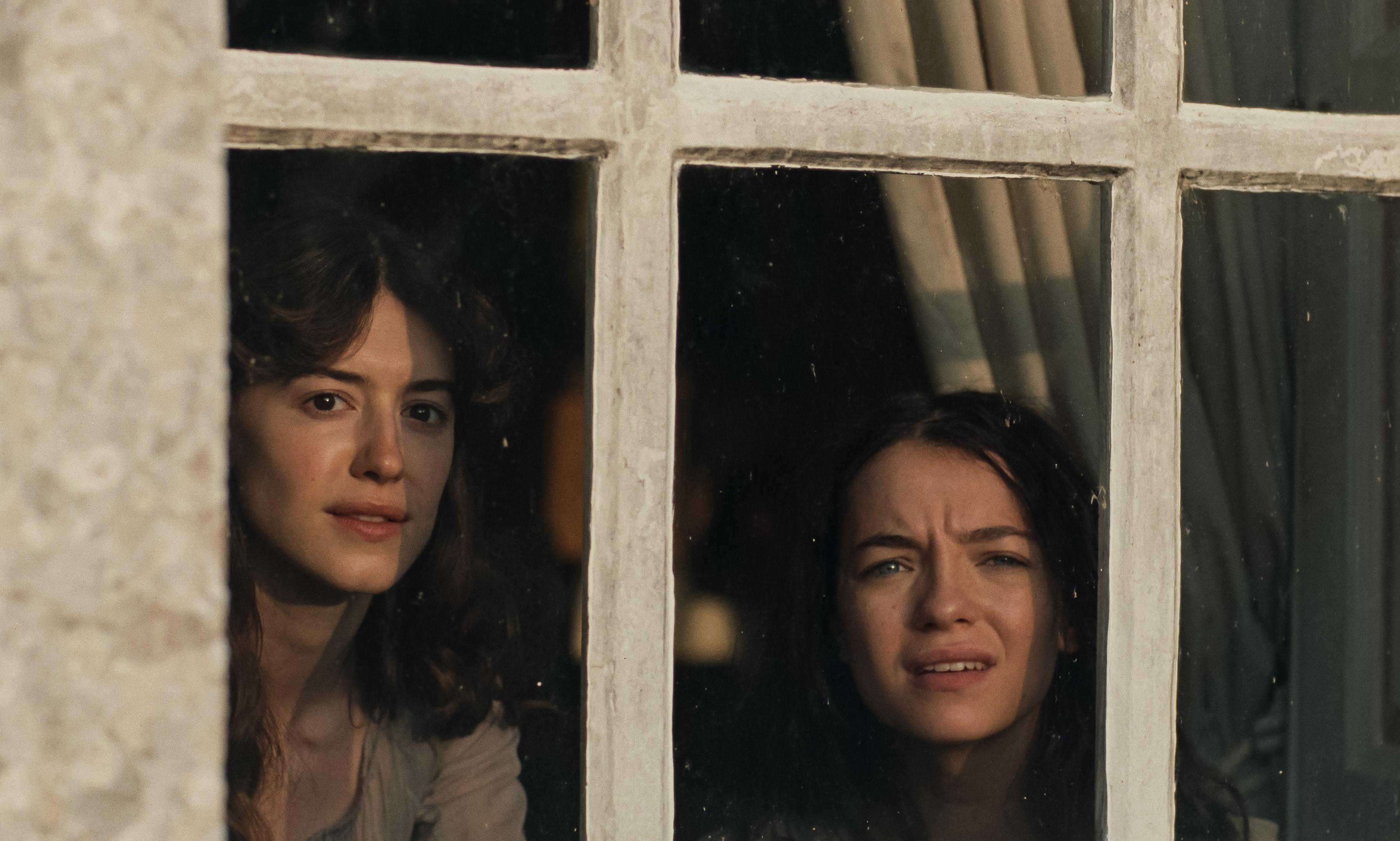
Daisy Edgar-Jones (Elinor Dashwood) and Esmé Creed-Miles (Marianne Dashwood) look out a window. “Sense and Sensibility,” Georgia Oakley’s adaptation of Jane Austen’s 1811 novel, released Friday. (Courtesy of IMDb)
“Sense and Sensibility”
Directed by Georgia Oakley
Focus Features
Oct. 16


By Daniela Fogliano
Oct. 16, 2026 7:11 p.m.
Warning: Spoilers ahead.
“Sense and Sensibility” proves that, centuries later, the complications of romance remain timeless.
Facing the pressure to live up to Ang Lee’s 1995 adaptation, director Georgia Oakley delivers a film that remains authentic to Jane Austen’s 1811 novel while mixing in her own creative flair. The film, released Friday, stars Daisy Edgar-Jones and Esmé Creed-Miles as sisters Elinor and Marianne Dashwood. Moving between rural and urban England and set during the late 18th century, the story begins with the unexpected death of the Dashwoods’ father. His death leaves the sisters attempting to navigate a society where a woman’s financial security depends on marriage. Oakley’s ability to explore the emotional depth of both womanhood and romance with nuance – alongside Edgar-Jones’ and Creed-Miles’ exceptional performances – makes the film worthwhile for fans of Austen’s work and newcomers alike.
One of Oakley’s strongest directorial choices arrives through the dichotomy she highlights between Elinor’s and Marianne’s views on marriage. By varying shots between the sisters’ perspectives, with Elinor’s more private and pragmatic outlook and Marianne’s idealistic pursuit, Oakley reflects Austen’s emphasis on the tension between reason and emotion in courtship. Beyond thoughtfully spotlighting the complexities of romance, the director also delivers moments of laughter and sorrow as the sisters’ relationships face romantic challenges complicated by societal expectations of marriage, depicting how the sisters find strength in their companionship and shared experiences with patriarchal constraints. In one of the film’s most touching scenes, Elinor expresses her deep love for Edward Ferrars – played by George MacKay – after which Marianne embraces her in an exchange that women across generations could appreciate for its expression of the female bond.
[Related: Film review: New ‘Wuthering Heights’ offers frustrating, stunning interpretation]
The vivid cinematography also brought Austen’s words to life, transforming the novel’s descriptions into breathtaking visuals. Shot on 35mm film, the screen resembles a painting, with many emotional and intimate character-focused scenes followed by moments of stillness that linger over the natural landscape. In one of Elinor’s first encounters with her love interest, Edward, the camera focuses on the water, trees and bright flowers that surround them. Nature acts as a visual motif for Elinor and Edward’s relationship, which defies social norms by prioritizing genuine connection over material wealth.
Oakley also uses weather to magnify the internal trials the characters face. In one scene, the cloudy weather creates a gloomy atmosphere as the family prepares to downsize after their father dies. Similarly, after Willoughby, a charming man who wins Marianne’s love before leaving her for a wealthier woman, betrays her, Marianne runs into the woods in pouring rain, the atmosphere representing her emotional turmoil as her hopeful view of love begins to wane. By using weather to reflect the hardships the sisters navigate, Oakley helps highlight to the audience the emotional weight of their experiences.
While cinematography was one of the film’s greatest strengths, its music was a notably weaker area. Most moments were accompanied by orchestral music that failed to enhance the emotional impact of scenes. For instance, a soft instrumental played as Lucy – the female antagonist who attempts to manipulate Edward into marriage – tells Elinor that Edward sees her as a sister, making the scene feel a bit underwhelming despite its significance in the novel. Instead of sticking with the tried and true formula of regency-era-inspired scores, Oakley could have modernized elements by incorporating contemporary songs – following in the path of 2026’s “Wuthering Heights.” Based on Emily Brontë’s 1847 novel, the film included songs from Charli xcx, a choice which drew both conversation and attention and added a layer of intrigue. Including contemporary music in “Sense and Sensibility” would not only have generated more discussion surrounding the film, but would have also created a stronger connection between modern audiences and the characters – emphasizing the shared experience of heartbreak.
[Related: Second Take: Classic literature finds new life in film in an increasingly online age]
Nonetheless, Edgar-Jones’ and Creed-Miles’ exceptional performances made up for the gap left by the film’s score. Through raw, authentic emotion in their facial expressions and dialogue, the actresses added depth to their characters while showing natural chemistry, reinforcing the sisters’ close bond. Fiona Shaw as Mrs. Jennings, a wealthy widow who aspires to help the sisters find husbands, and Bodhi Rae Breathnach as the youngest sister of the family, Margaret Dashwood, both brought light-hearted humor to an emotionally intense narrative. MacKay as Edward exceeded all expectations, delivering a performance as captivating as his charm.
Like Austen’s novel, the movie concludes with a happy ending that leaves the audience feeling fulfilled and empowered. Abandoning her superficial relationship with Willoughby, Marianne and Colonel Brandon (Herbert Nordrum) confess their feelings by the water. Meanwhile, Elinor runs through the hills toward Edward, where the two declare their love for one another in an open field in a moment that feels distinctly Austen. The ending, with an outdoor celebration of both sisters’ marriages, somehow reflects the newfound freedom the sisters experience. This sense of agency stems in part from their financial security but above all from their ability to pursue relationships rooted in genuine love after a tumultuous journey toward that point.
While Oakley takes romance outdoors, audiences should head inside to the theaters and experience the beauty of “Sense and Sensibility” for themselves.