Second Take: “Coyote v. Acme” dodged the Acme anvil, landed a hit of its own
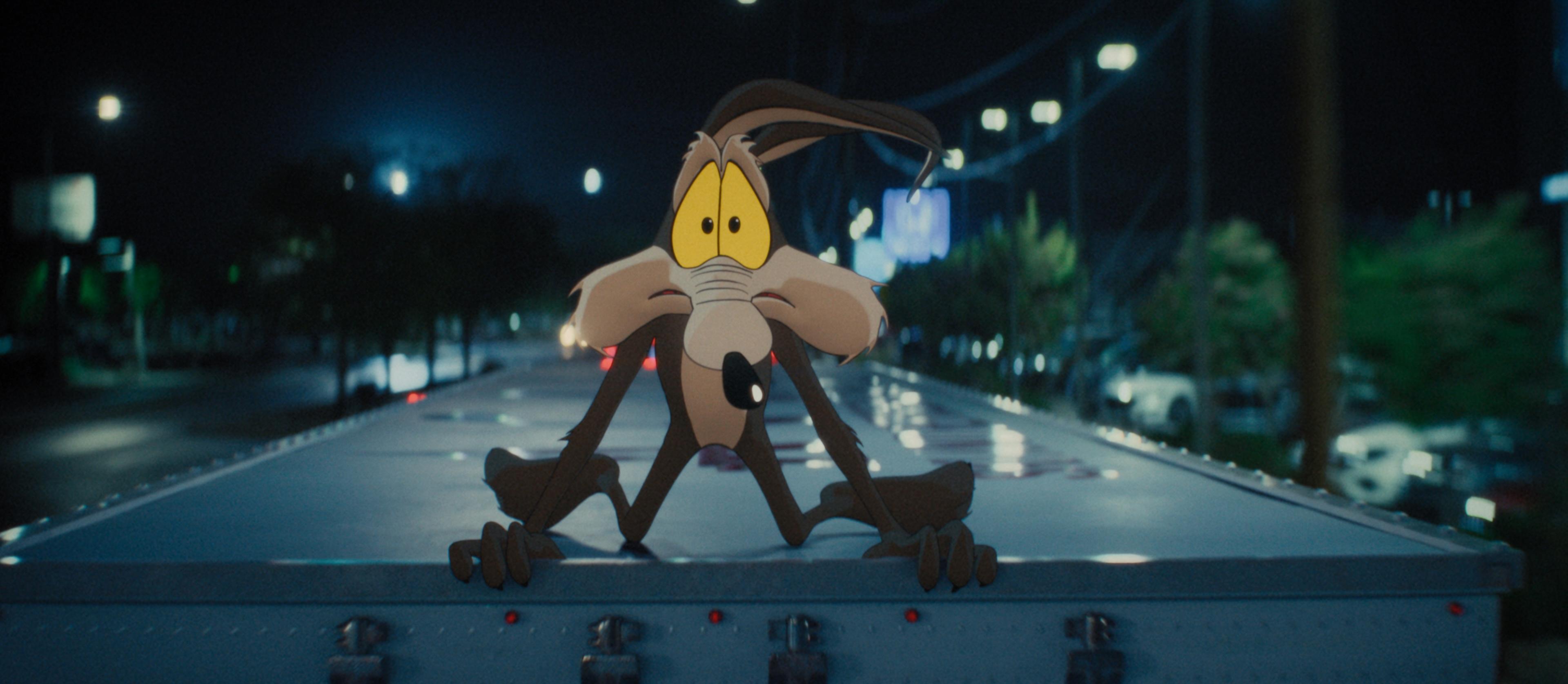
Wile E. Coyote stares into the camera at night. “Coyote vs. Acme,” the most recent live-action/animation hybrid “Looney Tunes” film, was released Aug. 28 by distributor Ketchup Entertainment. (Courtesy of IMDb)

By Caitlin Brockenbrow
Oct. 5, 2026 1:08 p.m.
This post was updated Oct. 5 at 1:21 p.m.
Beep beep! No need to chase down the latest internet and box office sensation: “Coyote vs. Acme” is a sure catch.
The most recent live-action/animation hybrid “Looney Tunes” film has seen nothing but success for distributor Ketchup Entertainment. Released in theaters Aug. 28, “Coyote vs. Acme” earned $15.5 million domestically in its opening weekend, debuting in second place at the North American box office after “Spider-Man: Brand New Day” and grossing over $100 million globally before its streaming release. While those numbers would be impressive on their own, the film’s against-all-odds triumph is all the sweeter given that Warner Bros. Discovery shelved the film in 2023 for a $30 million tax write-off.
Beyond its box office success, “Coyote vs. Acme” has become a social media sensation, reaching well beyond its intended family audience with fan art, fan fiction, cosplay and countless edits of Wile E. Coyote and the Road Runner set to Chappell Roan’s “Casual.”
But why, of all movies, has a courtroom family comedy built around a nearly century-old intellectual property become so popular?
“Coyote vs. Acme” balances updating a familiar franchise without abandoning what made it so beloved – exactly what people need right now.
There is an underdog story both on and off the screen. The outcry that brought the film back only strengthened its message of the little guy. In this case, Wile E. Coyote and his lawyer Kevin Avery (Will Forte) take on the Acme Corporation, a corrupt manufacturing conglomerate. In a time when companies seem to care less and less about consumers and monopolies feel all but inevitable, the reassurance that individuals can and do make a difference is vital for audiences of all ages.
[Related: Film Review: In gripping, clever ‘Primetime,’ the pursuit of justice becomes unjust]
This relevance, however, is just scratching the surface. One smaller, almost throwaway moment in the film actually reflects one of its deeper strengths. While showcasing Acme products, Granny uses predator spray on Pepé Le Pew – a meta-joke acknowledging the skunk’s longstanding portrayal of unwanted “romantic” pursuit as comedy. As some older properties – notably Disney – attempt to erase problematic elements from their past, the “Looney Tunes” franchise’s willingness to acknowledge and poke fun at its own history is refreshing and commendable.
One particularly interesting response to the film has been the aforementioned fan shipping of Wile E. Coyote and the Road Runner, seemingly fueled by the widely reposted courtroom scene in which the Road Runner asks if Coyote is coming back. Whether the moment was intentionally romantic is almost irrelevant, as fans’ interpretation of the duo has brought the characters into the modern age.
While the film makes some refreshing updates, “Coyote vs. Acme” remains true to its source material. That may not sound particularly groundbreaking when so many fans feel betrayed by their favorite franchises being altered by corporate influence for financial gain, but it is a much greater feat than it was even 10 years ago.
The movie is not a direct sequel like its major box office competition. Instead, it’s a loving tribute and continuation of the previously time-constrained Wile E. Coyote-Road Runner shorts, which certainly added to the outpouring of support for the movie. Though based on a New Yorker column by Ian Frazier, the semi-original story is just another tally for “Coyote vs. Acme” that makes it a hit with audiences who have been begging for more originality for years.
The film uses traditional animation in an age dominated by artificially created or assisted art. More striking is the creativity behind the fan content, including original art and romantic interpretations of the central cartoon characters.
Many celebrate “Coyote vs. Acme” as one of the first true family movies in some time, appealing to adults through its courtroom comedy and children through its cartoonish humor. In recent releases, a lot of content aimed at children has been made with children and marketable merchandise in mind. This movie, by contrast, is seemingly more focused on its story and characters – another celebrated departure from its competition.
All these elements set the movie apart, but one central highlight remains: “Coyote vs. Acme” balances its changes while playing on nostalgia. The film has all the updating and differentiating necessary to make it refreshing while still instilling a sentimental feeling in its adult audience. That compromise is what truly makes the movie what audiences need to see – comfort in change.
They “fought the law and the law won,” but “Coyote vs. Acme” won something Warner Bros. Discovery couldn’t put a price on: the love and respect of its many fans.