Album review: Love is the ‘Angel’ on Lizzy McAlpine’s shoulder, supporting her latest record
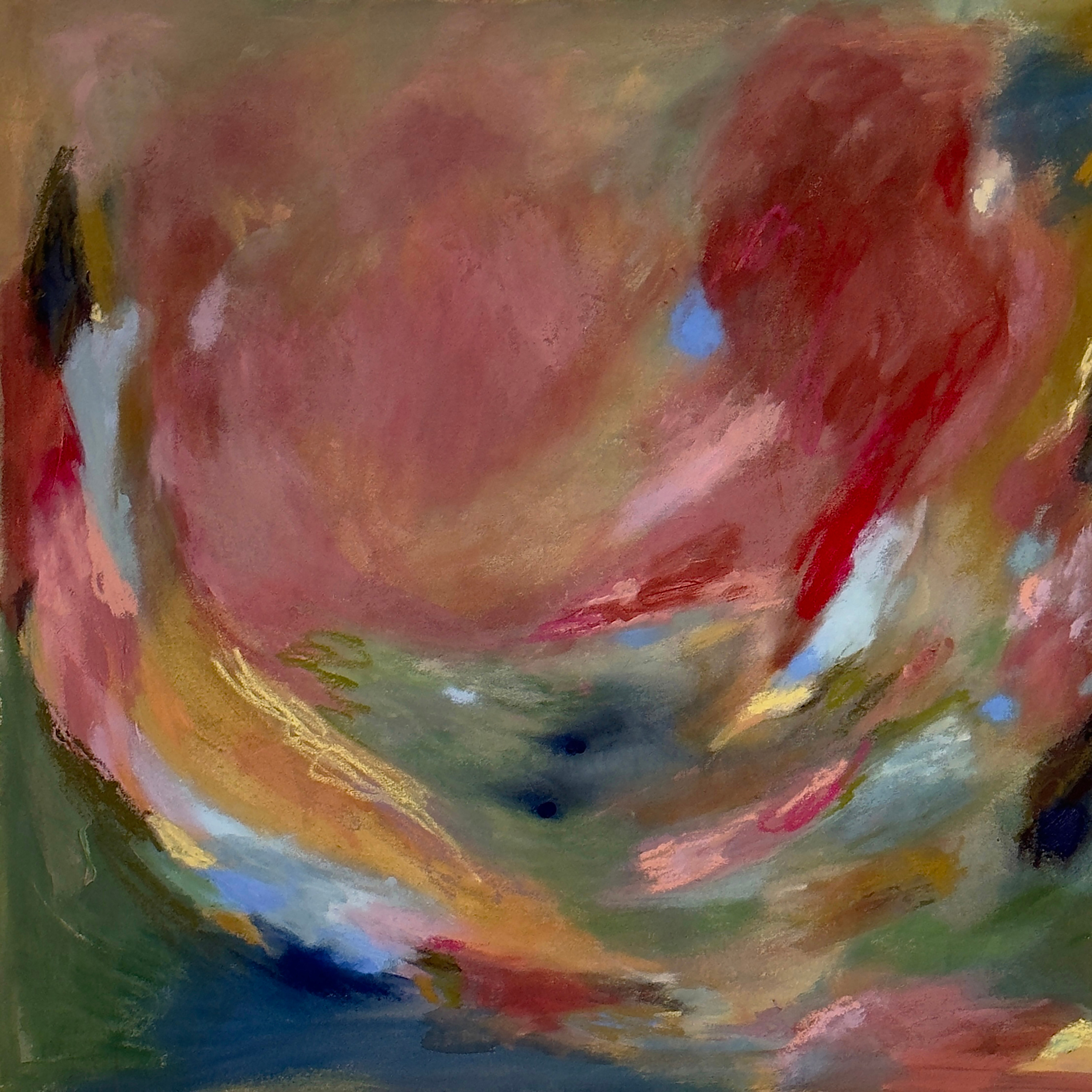
A hand-painted album cover in shades of pink, green, yellow and blue is displayed. Singer-songwriter Lizzy McAlpine released “Angel,” her fourth studio album, on Friday. (Courtesy of 2026 RCA Records, under exclusive license from Indigo Blue, LLC)
“Angel”
Lizzy McAlpine
2026 RCA Records, under exclusive license from Indigo Blue, LLC
Sept. 18, 2026


By Kiara Mack
Sept. 19, 2026 12:40 p.m.
This post was updated Sept. 23 at 8:41 p.m.
Lizzy McAlpine officially earns her angel wings on her fourth album.
Returning to music after a stint on Broadway and a brief foray into acting, the Philadelphia-born singer-songwriter released “Angel,” her fourth studio album, on Friday. If 444 is an angel number symbolizing balance and stability, this record reflects exactly that. McAlpine reunites with collaborators Taylor Mackall and Mason Stoops on this record, while showcasing her mastery of art itself as both a motif and a creative influence on her ever growing career.
“The light in the painting,” the album’s opening track and lead single released July 23, exemplifies McAlpine’s appeal. The nearly four-minute song relies on her delicate delivery to lure listeners in while its sonic landscape slowly builds. Reminiscent of “Let Light Be Light,” a song off her 2021 EP, the track is precisely the kind of slow burn McAlpine has always done best while exhibiting her maturation as a human and musician. “If somewhere there is a heaven, this is as close as I will get,” McAlpine sings as she sets the scene for an especially vulnerable album.
[Related: Album review: Phoebe Bridgers returns to Earth on ‘Lost Weekend,’ finds herself after 2-year break]
The art motifs in “Angel” don’t begin and end with the hand painted album cover and opener. On “Anybody’s fool,” McAlpine paints a medieval fantasy with her as a princess, defeatedly admitting, “Want to move on / And I’m trying to / But when the bombs hit / I look for you.” Moreover, “A car wash and a new pair of pants” is filled with lush orchestration reminiscent of Broadway – likely the result of McAlpine’s time on the Great White Way playing Nellie in the “Floyd Collins” revival from March to June 2025. McAlpine manages to bring all these theatrical elements together with the intricate songwriting and sound of “The moon,” a track that further fleshes out this cohesive, compelling one-woman musical. “The handsome prince and maiden fair / I am in your debt / I am no freer than the moon,” McAlpine sings.
The high point of McAlpine’s artistic approach arrives with the album’s second single, “Ugly things” released Aug. 21, on which the singer-songwriter perfects the classic narrative progression of a Broadway ballad. What begins as a declaration of love and commitment unravels to reveal the messiness that arises in the aftermath. These complicated emotions are paired with layered strings which culminate in a euphoric release like those in McAlpine’s biggest hits, “ceilings,” “Pushing It Down and Praying” and “Spring Into Summer.” These mesmerizing acoustic earworms are McAlpine’s specialty, and “Ugly things” is instantly a welcome addition to that collection.
It’s tough to follow up a career highlight like “Ugly things,” and McAlpine stumbles after the strong start. By the time “Peach” plays, her blooming progression begins to feel a bit too predictable, overly relied-on and even a little too safe for an artist of her caliber. As “Over country,” “Two elevens” and the seven-minute-long “Our strange ways” blend together sonically and tread the same ground lyrically, the album’s momentum slows. Like some paintings, they’re pretty but lack the substance that McAlpine has previously proven herself capable of in albums like “Older.”
[Related: Album Review: Kasabian’s “ACT III” embraces dance but leaves rock identity questions unanswered]
Luckily, McAlpine ultimately manages to put the perfect final touches on the album by pushing herself to shift the lyrical focus away from romantic love to songs portraying platonic, familial and self-love. “Mason’s song” provides an intimate, meta peek behind the curtain and into the creative collaboration between McAlpine and Stoops which began three years ago in the making of “Older.” “I still have things to work on that will never end / But I can’t do it alone,” she confesses to her friend while also learning to accept that difficult truth for herself. This new lyrical ground McAlpine explores successfully offers up a fresh take on her signature sound.
“The crowd” continues McAlpine’s tradition of writing track 13s about her late father who died in 2020 – a way of tracing where she finds herself on her journey of grief. In the album’s devastating emotional climax, McAlpine belts, “Everything I do / I make it big so you can hear the crowd.” Her voice cracks in her attempt to sing as high and as loud as she can, but it’s the vulnerability of the attempt that makes an already heartbreaking song all the more painful in the way only great art can.
McAlpine ties a bow on the album with the titular and closing track, which reveals that the “Angel” in question was her all along. She finally comes to the realization that the love and loss she’s experienced and documented across the record are precisely what has made her into the woman and artist she was always capable of becoming. “Angel” comes full-circle, reframing the “light in the painting” introduced at the start of the album as the love McAlpine receives from another. By the album’s end, this “light” also becomes a reference to the art she creates for herself. “I have always been here waiting / Just to be,” McAlpine concludes.
On “Angel,” McAlpine creates art from her heartbreak, and she does so by “making it big.”