Q&A: Emmy-nominated actress Karolina Wydra says acting is a powerful, fulfilling art
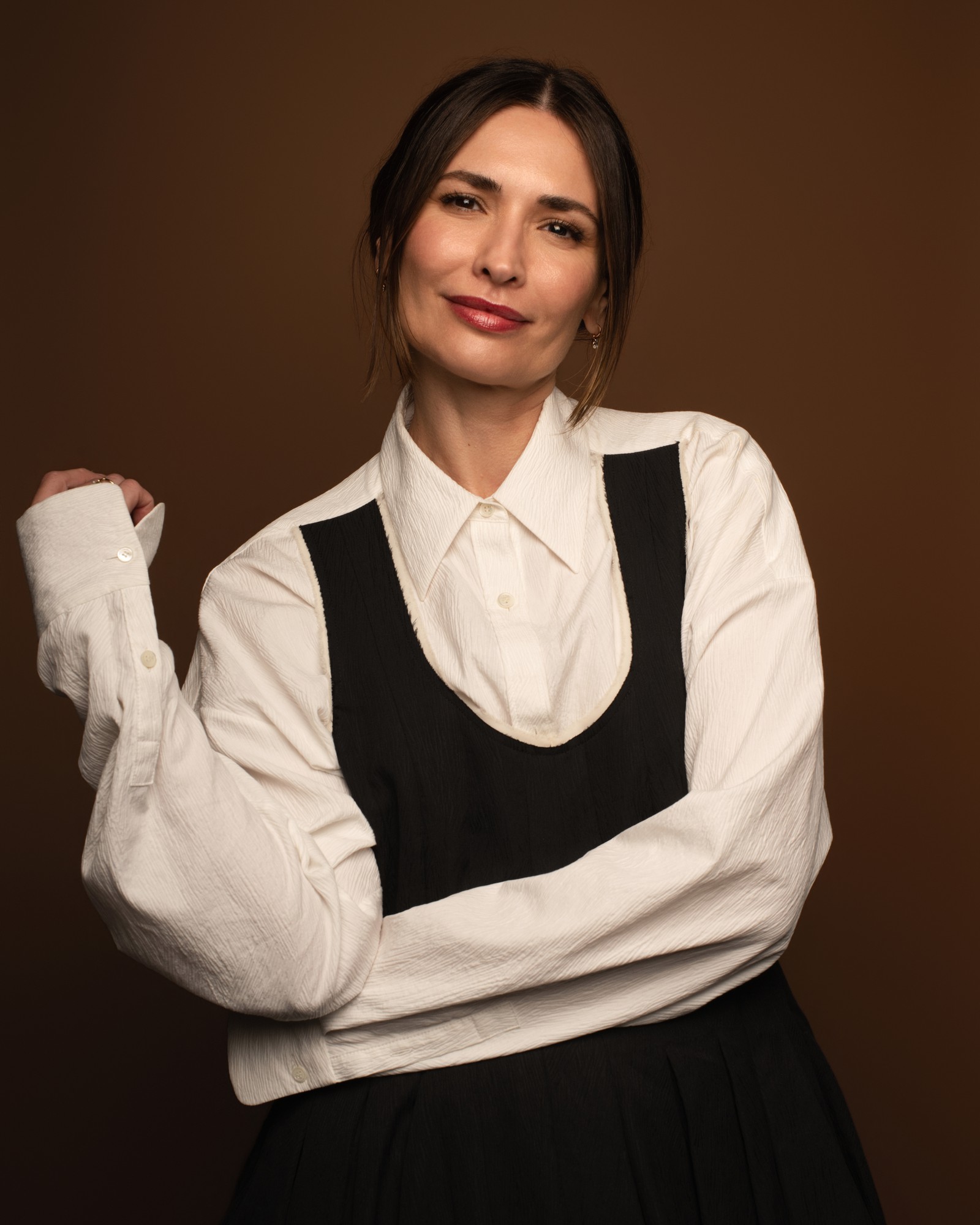
Karolina Wydra smiles at the camera wearing a white collared shirt against a brown background. Wydra was nominated for Outstanding Supporting Actress in a Drama Series for her work on “Pluribus.” (Courtesy of Karolina Wydra)

By Julia Kinion
Sept. 5, 2026 9:32 p.m.
This post was updated Sept. 6 at 7:10 p.m.
From finding financial independence as a model to fulfillment as an actress, Karolina Wydra has now earned an Emmy nomination with her newest role.
This July, Wydra was nominated for an Emmy Award for Outstanding Supporting Actress in a Drama Series for her performance as Zosia in “Pluribus.” Released in 2025, the science fiction Apple TV series created by “Breaking Bad” showrunner Vince Gilligan follows a futuristic version of Earth where an alien virus has infected all of humanity, turning humans into a peaceful hive mind. Zosia, a Polish woman, is sent to chaperone and convert Carol Sturka (Rhea Seehorn), one of the few people immune to the virus. Wydra is known for her work on science fiction and fantasy television shows, such as “True Blood” and “Agents of S.H.I.E.L.D.”
[Related: Q&A: Emmy-nominated alumnus Julie Dash reflects on breaking barriers, building a legacy]
Ahead of the 78th Emmy Awards, Wydra spoke with the Daily Bruin’s Julia Kinion about her journey from modeling to acting, her experiences as an immigrant and her belief in the power of film, television and theater to change the world.
This interview has been edited for length and clarity.
Daily Bruin: You’ve been nominated for Outstanding Supporting Actress in a Drama Series. How does it feel?
Karolina Wydra: It feels surreal. It’s one of those things that you hope for, you dream of, and then when it actually happens, it’s such an out-of-body experience in the most beautiful way. It’s exciting. It’s unbelievable. You can’t believe that your work has been honored in that way.
DB: You emigrated from Poland to the United States when you were younger. What was that transition like for you?
KW: It makes me emotional because of everything that’s happening today. It’s utterly gutting – the hypocrisy and the misinformation and the brutality that people have towards immigrants in this country, especially people from South America, and the misunderstanding of how hard it is to make that journey, how much courage it takes to make that journey for everybody. It takes so much guts to do that for yourself and your family.
In ’92, my family and I came to America. I didn’t speak a word of English. My brother didn’t speak a word of English either. … I was terrified. I owe my parents everything because I know it takes so much courage and bravery to leave everything that you know, everything that’s familiar and start a new life somewhere else that you know nothing about.
The transition was really scary, but looking back, I’m so grateful my parents did what they did. Everything that’s going on today, I really feel it, and I’m incredibly sad and heartbroken by it.
DB: What was your transition into modeling like?
KW: It was fun. You were surrounded by young girls, similar age. You were all together, so there was a level of understanding and a level of identification, like, “We’re in this together.” You didn’t feel alone because they were on the same journey as you were, experiencing these things for the first time: being away from their parents, being scared.
People think modeling is so easy and so glamorous. There are aspects of it that are all that, but it’s hard grind. It’s a really hard grind. You have to fend for yourself. … You had to learn how to be strong and have a sense of your value and worth. You grew street smart right away.
I didn’t necessarily per se love the modeling itself. But I loved the financial freedom I got from it because I was able to provide for myself, as I came from no money. My parents couldn’t help me financially at all, so I had to make my own way.
I was exposed to diversity through modeling. I was exposed to so many things, and what living in New York would expose me to is connecting everybody as one, and it was such a beautiful thing. When somebody said in the ’90s, in New York, “I’m trans” or “I’m gay,” it was so welcoming in that community.
DB: What inspired you to decide to transition from modeling to acting?
KW: Acting was something that I’ve wanted to do since I was a child, and I never knew that it could be an occupation. I never thought that was something that you could actually do for a living. And then when we came to America, even though we were an hour from Los Angeles, Hollywood seemed like a faraway land, something I could never even comprehend to want or desire. Then modeling found me, and I went on that journey.
When I was living in New York, I used to see a lot of theater, and I was an avid film-watcher and cinephile. I consumed cinema so much, and I was obsessed with cinema, and I was obsessed with theater and acting. I just loved it so much. I loved what it did to my being, to my presence, and modeling was never fulfilling. It was a great job, and I was lucky enough to make great money, but it never made me feel whole. It never made me feel alive.
When I was 25, I felt brave enough to approach it and say to myself, “I want to try this.” I felt brave enough to say, “I think I want to see if this is something I’m capable of doing.” I started studying with a lot of people. I got a short film with Mike Figgis. That was my first job. I felt so alive. I was like, “Oh my gosh, I need to do this,” and that’s where my journey as an actress started.
Acting was never about being famous. That was something that I never desired. … I wanted to be a really good actor. I wanted to be the kind of actor that I saw on stage that left me feeling the way they left me feeling – that kind of transcendent everything – and I was left with such a profound experience.
This art form is incredible, and this art form is important because the stories that we are able to see and hear and experience can change lives, can do a lot of beautiful things. They affect our society. They change our society – film, television and theater. When we start to see things, things become more in our face, and we start to change the way we see things.
DB: Do you find yourself drawn to playing certain types of characters, or do you like to experiment in the roles you take on?
KW: I’ve found myself in the niche of being the femme fatale. I love those characters. They’re very fun to play because they’re very opposite of who I am. … I have so much fun with them. They’re just such a fun role to play, or being a con artist is so much fun. You get to play out these things that are just so much fun and get lost in it. So I don’t have a specific thing that I’m like, “These are the only roles I take.”
There’s many roles I want to explore. Zosia is a role that came to me as such a gift because if I didn’t have children, I would have never been able to understand the depths of who Zosia is.
DB: If a young woman who watched your performances wanted to go into film and acting, what would you want her to know?
KW: Know your worth. Always. No matter what anybody says, no matter what criticism you get, whatever it is, know your worth. Know who you are. Stand up for yourself. Speak up for yourself. Be your own advocate, and trust your gut.
This business comes with a lot of disappointments. Be ready for those disappointments. Don’t take them in as your truth. You’re going to get a lot of nos. Don’t trust those nos. Turn things into a yes, and believe in yourself blindly. You have to believe in yourself. And you have to do this because there’s nothing else that you can do. Never give up working hard. Keep working on your craft. Keep honing your craft.
This business is not just about talent. There’s a lot of incredibly talented people that don’t get to work. It’s about perseverance. So don’t give up.