Q&A: Emmy-nominated alumnus Julie Dash reflects on breaking barriers, building a legacy
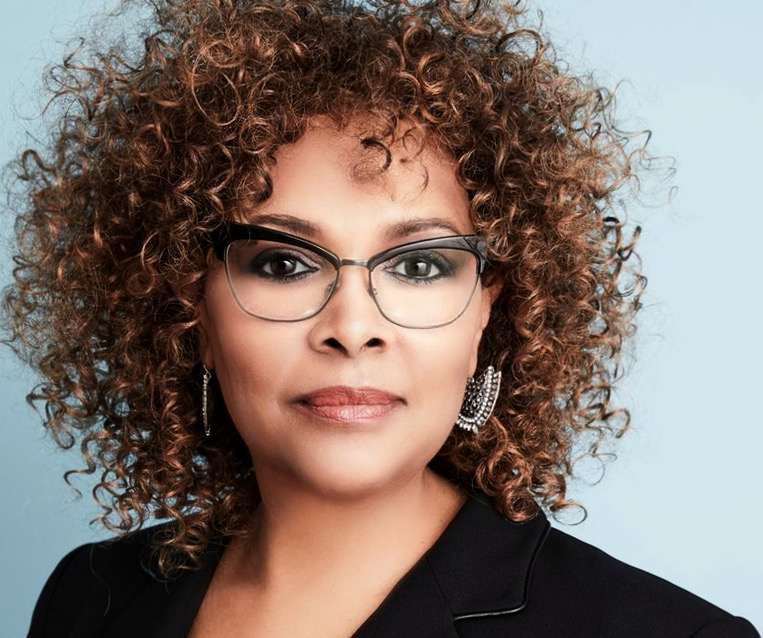
Julie Dash poses in front of a light-colored wall. The UCLA alumnus received an Emmy Award nomination in outstanding directing for a variety special for “Wanda Sykes: Legacy” in July. (Courtesy of Julie Dash)

By Presley Liu
Sept. 3, 2026 12:21 p.m.
This post was updated Sept. 6 at 6:57 p.m.
For Julie Dash, Hollywood has never been a static place. Her place within it hasn’t been, either.
This July, Dash – a UCLA alumnus – received an Emmy Award nomination in Outstanding Directing for a Variety Special for “Wanda Sykes: Legacy.” The nomination marks another chapter in a career that began decades earlier with the director’s 1991 film “Daughters of the Dust.” That film’s visuals and themes influenced Beyoncé’s 2016 visual album “Lemonade,” which drew from Dash’s depictions of Black womanhood and the African diaspora. “Daughters of the Dust” is preserved in the National Film Registry along with her School of Theater, Film and Television graduate thesis, “Illusions.”
[Related: Keke Palmer, UCLA TFT’s 2026-27 Artist-in-Residence, will put community center stage]
Ahead of the 78th Emmy Awards, Dash spoke to the Daily Bruin’s Presley Liu about navigating Hollywood as a pioneering filmmaker, directing an Emmy-nominated special and what she sees next for the next generation of filmmakers.
This interview has been edited for length and clarity.
Daily Bruin: As a graduate student, what did you imagine your career in filmmaking could look like? How much of what exists for young filmmakers today do you feel like you had to build yourself?
Julie Dash: By the time I got to UCLA, I knew exactly what I wanted to do. I had a list of films that I wanted to work on, and that’s all that was in front of me – I never really saw myself having a career in Hollywood because there were very few role models.
I took a lot of interviews. At Warner Bros. and Universal Studios they would say, “How do you make these short films?” That was before independent film became a genre unto itself. Development people would say, “Hm, you did a period piece?” because I did “Illusions.” By the time I graduated from UCLA, I saw myself as working very independent forever.
Because I was very young, I wasn’t seeing a clear path, a future for being a filmmaker. You always just go year by year, try to get through the years at UCLA and come out with a body of work, having worked with other filmmakers who inspired me: Barbara McCullough, Larry Clark, Charles Burnett and Haile Gerima. I can’t really say that I had a career trajectory mapped out. I had a passion, and I was following my passion.
[Related: UCLA TFT, Sundance partnership aims to teach filmmaking beyond the classroom]
DB: Now, you’re an Emmy-nominated director for “Wanda Sykes: Legacy.” Did directing comedy differ from the narrative and historical work we’ve done?
JD: It didn’t. Wanda Sykes is the consummate performer. I didn’t direct her. I directed the cameras to capture her genius. There was nothing that I had to do. She provided. She wrote it. She was up there performing and she’s a very physical comedian, keeps the eye moving. All I had to do was cut from this camera to that camera to the other.
DB: What did you see in her performance that you really wanted the camera to capture?
JD: Her authenticity as a woman, as a woman of color, as a queer woman of color, unabashedly so. She’s just funny. I always just found her tremendously funny even before I worked with her. I was a big fan. She’s unique and totally authentic.
DB: You became the first African American woman to have a feature film receive a wide theatrical release with “Daughters of the Dust.” At the time, did you understand that you were breaking a barrier, or were you primarily focused on making the film you wanted to make?
JD: I was totally focused on making the film I wanted to make. When I was told that, it was like, “Oh, OK,” because I knew filmmakers like Kathleen Collins and Jessie Maple, who made feature films in New York City, independent films. I had no idea what the distribution of their films was, but I know that they came before me. I was really surprised and saddened at the same time.
DB: UCLA’s Hollywood Diversity Report 2026 found that representation declined across almost every major category of streaming in 2025, with women directing just about 24% of streaming films – the lowest figure since the annual report began. As someone who spent decades pushing Hollywood’s boundaries, what does it feel like to see some of those opportunities contracting again?
JD: There are more opportunities, and, at the same time, those opportunities are being pulled back by the whole fear of DEI. Politics have taken over Hollywood and art, and independent film is now just a genre. It’s not really independent because large streamers all call their films independent.
Hollywood has always existed under a cloud of nepotism. I don’t think that will surprise anyone. It’s based upon prior relationships – who you know, what you know, who you are related to or married to. It’s a minefield that has to be traversed. But I think if people are really interested and have a passion for storytelling and making films, we will jump into that minefield and work around that obstacle course. It’s certainly not easy.
DB: As a filmmaker who has traveled across the international film circuit, was there anything that stood out to you?
JD: How many people are interested in seeing our stories – that was the first thing that was a pleasant surprise when I attended the Cannes Film Festival in 1979. People were coming up to us saying, “Do you have a film? We’d love to see the stories that you have.” And then you go back home to Hollywood, and they say, “Oh no, your African American films don’t sell overseas.” That’s been a myth for a long time.
I was in India on a film jury. Per night there’d be 5,000 people. They were just people who loved seeing good international films. That’s the joy of watching films and watching films along with people who love films. All over the world, there are people who want to see stories. They want to go beyond their borders. They want to experience the culture and life of other people and hear their stories and see their stories being told in an authentic way.
DB: For UCLA students who are entering an industry that appears to be narrowing its doors again, what would you tell them about compromise?
JD: Don’t compromise. Surely, you will take work that’s just work to gain income. Sometimes it’s work to gain experience with equipment. Working on music videos, I got to use a lot of equipment that I was not able to have hands on prior.
Sometimes you’re doing it because you want to work with a certain talent. It’s always a challenge to tell different stories in different locations. I see everything as a task and a challenge, a chance to learn. Directing Wanda Sykes was a learning experience for me, even at my age. You have to be open to learning new things at all times as a storyteller.