Second Take: The 2010s aren’t coming back. Let’s put down the Unicorn Frappuccino.
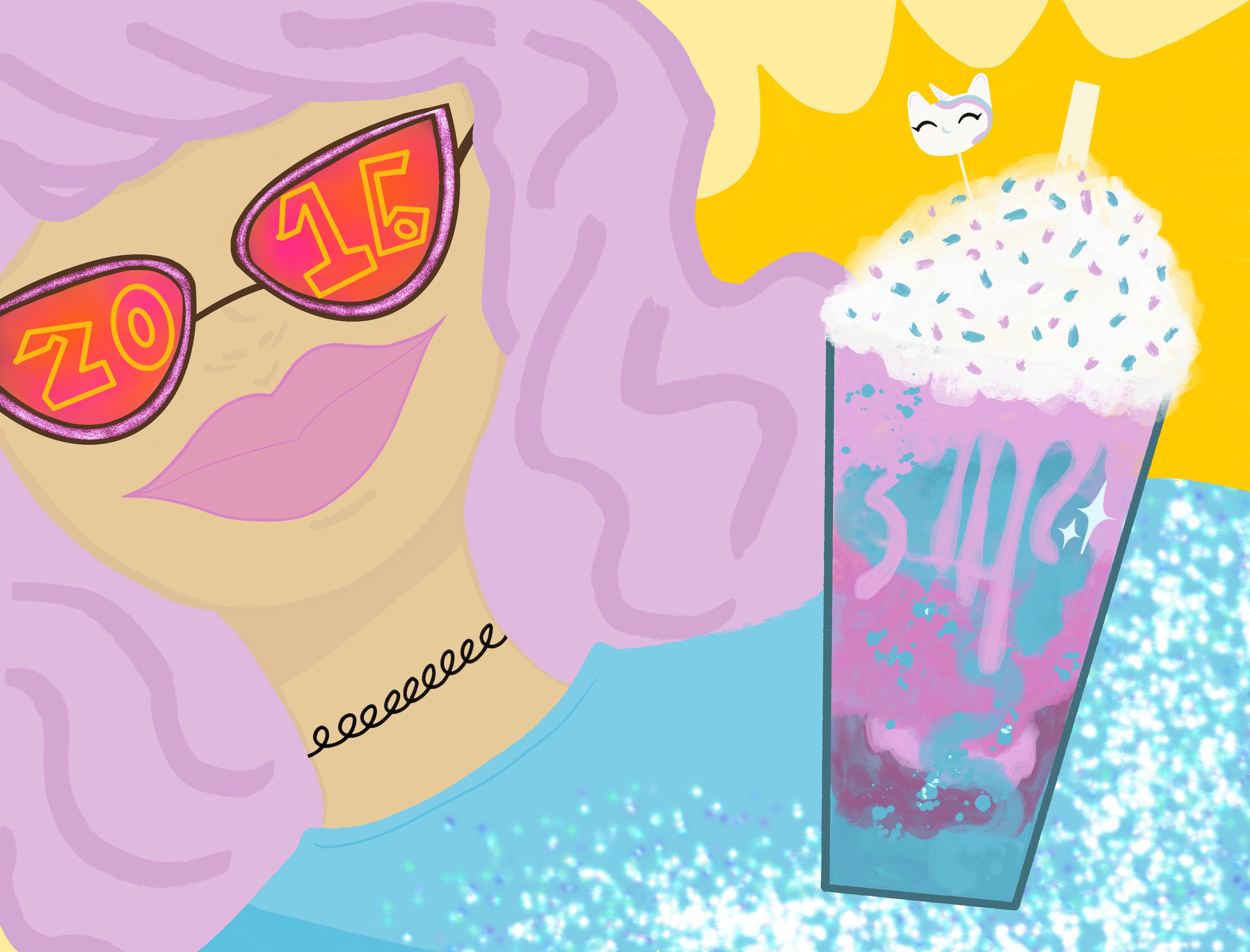
(Nury Salazar-Ibanez/Daily Bruin)

By Lucine Ekizian
Aug. 29, 2026 12:42 p.m.
Although the limited-time Unicorn Frappuccino gave Starbucks consumers a chance to recreate a childlike experience, the coffee chain unoriginally repackaged a nearly decade-old success.
Starbucks sold over 2 million of its pink-and-blue blended drink Aug. 15 and 16. Despite debuting nearly a decade ago and containing in a 16-ounce serving almost double the maximum amount of daily added sugar recommended by the American Heart Association, the drink drove an unparalleled weekend for Starbucks. The coffeehouse chain hit a record-breaking number of Saturday sales in North America for the company Aug. 15.
In 2016, unicorn-themed foods filled Tumblr posts and Snapchat stories with rainbow-hued creations, from grilled cheeses to macaroons. Almost a decade later, how did the Unicorn Frappuccino find its way back to us?
When Starbucks became an official sponsor of Coachella Valley Music and Arts Festival this year, it brought back the drink exclusively for the event. The Unicorn Frappuccino wasn’t the only part of the festival that served as a nod to the 2010s. Headliner Justin Bieber brought back ‘10s era hits such as “Baby” during his set. His original music videos played behind Bieber as he sang alongside his younger self, creating an atmosphere reminiscent of the decade when the songs were released.
The appeal of the 2010 trends could come from the memories they share with the audiences who grew up with them. Many college-aged students were pre-teens or teenagers when Bieber and Nicki Minaj dropped the “Beauty and a Beat” music video in 2012 and when the Unicorn Frappuccino first dropped five years later. Maybe it’s the nostalgia that gives these experiences continued success 10 years later, with whimsical throwbacks offering consumers a chance to go back to their childhood.
But is a decade long enough to make an experience nostalgic? For consumers in their 20s, there aren’t many other options to be nostalgic about. College-aged students weren’t born when the first Harry Potter book came out, or when the “Friends” pilot aired. They weren’t old enough to watch R-rated films such as “Kill Bill: Volume 1” – or Volume 2 – and “Superbad.” Although college-aged students can appreciate these ‘90s and early 2000s experiences, they’re able to feel nostalgic for the 2010s since they were alive for those moments – and were old enough to remember them.
Although the revival of these 2010s trends feel nostalgic for consumers, reliving childhood experiences isn’t necessarily the priority for the corporations reviving them. When Starbucks brought back the Unicorn Frappuccino, it wasn’t because the company longed for a time of rainbow-colored food taking over Pinterest boards.
Starbucks went back to a product it knew was successful. The coffee chain didn’t need a new marketing strategy for the established product to achieve record-breaking sales by limiting the time consumers could purchase the novelty drink. The primed cultural recognition of the drink was enough to drive the record-breaking weekend.
When Bieber performed his Coachella set, he live-searched the YouTube music videos, and strutted in front of thousands of fans as the videos played in the background. There were no frills – just Bieber and a MacBook – and there was nothing original about the set, either. It successfully pleased festivalgoers by relying on the nostalgia of familiar singalongs and music videos, despite being unimaginative.
Artists and companies don’t just go back to what’s nostalgic – they go back to what’s successful. Nostalgia motivates consumers, and a proven success motivates producers to bring back experiences while straying away from investing in new ones.
If Starbucks wants to recreate the success of the Unicorn Frappuccino revival, or if Bieber doesn’t want to hire a set designer for his next show, they need to come up with an original hit for the next generation.