Fighting Food Insecurity at UCLA
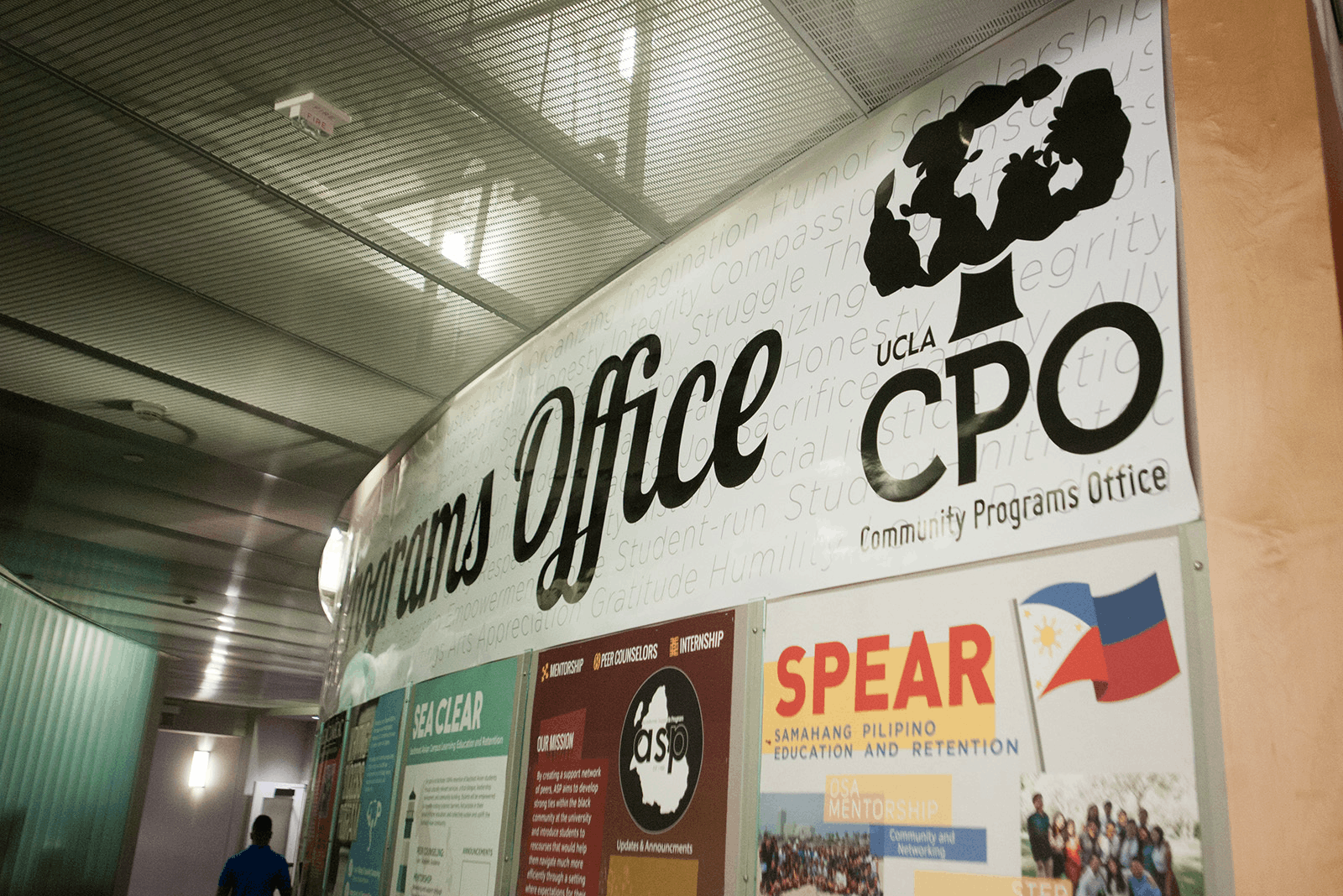
The banner of the UCLA Community Programs Office is pictured. (Daily Bruin file photo)


This post was updated Aug. 27 at 1:47 p.m.
Key Takeaways
- Thirty-seven percent of UCLA students face food insecurity.
- The Community Programs Office hosts a basic needs collective that provides mobile food carts, weekly grocery bundles and seasonal food boxes and uses a strictly anonymous system to reduce the stigma around accessing food assistance.
- Swipe Out Hunger supports thousands of students annually by redistributing unused meal swipes.
- Bruin Dine’s weekly surplus food redistribution peaked at 3,043 meals in winter 2026, with off-campus upperclassmen consistently making up over 60% of attendees.
The UC system currently uses two measures to help students meet their food needs. These measures include food pantries, which provide food and common household items on a self-assessed need basis, and a collaboration with CalFresh, a statewide program that awards eligible students up to $298 for additional groceries to meet nutritional needs.
Programs run by the UCLA administration, namely the Community Programs Office and Economic Crisis Response Team, help maintain UC statewide policies while also starting separate policies of their own. Student-run initiatives such as Bruin Dine and Swipe Out Hunger work with these institutional programs to provide the resources needed to redistribute surplus food to those in need.
Community Programs Office
The Community Programs Office serves to boost student success through support services, focusing on basic needs, academic achievement and leadership development.
Source: UCLA Community Programs Office. Graphic reporting and interactive by Bethany Kim, Daily Bruin staff.
Antonio Sandoval Ayala has served as the director of the CPO since 2008 and chairs the Basic & Essential Needs Committee.
Source: CPO Records. Graphic reporting and interactive by Bethany Kim, Daily Bruin staff.
Food Closet
Established in 2009 as an immediate response to the 2008 Great Recession, the CPO Food Closet became the first food pantry in the UC system. According to Sandoval, the food pantry relied on student volunteers and staff members who routinely paid out of their own salaries to keep shelves stocked with instant noodles in its earliest days.
Unlike other university food pantries across the country that require students to identify themselves or enforce strict quantity limits, UCLA’s CPO explicitly rejects data collection on individual students. Sandoval said this choice is a crucial factor in destigmatizing food insecurity resources.
“We trust our Bruins to make good decisions and to be thoughtful,” Sandoval said. “On other campuses, it’s like 500 students who use it (the food pantry), 1,000, maybe. Our campus – we have so many more because students don’t feel like we’re watching or not trusting them.”
Cultivating Healthy Habits
To ensure these programs offer more than just shelf-stable survival food, the CPO relies on community partnerships to provide fresh and nutritious options. Through partnerships with nearby grocery stores and initiatives such as the Semel Healthy Campus Initiatives Center and Food Forward, the CPO is able to distribute fresh fruits and vegetables.
The CPO is also dedicated to stocking food items that are culturally relevant to UCLA’s diverse student body. The office actively gathers student feedback to supply specific cultural staples – such as varieties of rice, beans and lentils – making sure students don’t have to compromise their dietary habits or culinary heritage because of food insecurity.
Beyond direct food provision, the CPO strives to provide holistic food education. The office helped launch UCLA’s Teaching Kitchen and operates the FITTED project to equip students with the physical wellness and meal preparation skills needed to cook affordable and healthy meals on their own.
Policy Shifts and Funding Bottlenecks
Sustaining a wide-reaching multiprogram infrastructure requires campuswide coordination. The CPO is funded via a patchwork of state legislative grants allocated through the UC Office of the President, student referendum fees and private grocery donations.
However, Sandoval said recent federal and state administrative changes, including narrowing the eligibility criteria for CalFresh and shifts in student loan allowances, could threaten Bruins’ safety nets.
As alternative programs shrink, administrators anticipate an immediate influx of students defaulting to campus resources like the CPO and the Economic Crisis Response Team. In response, the CPO Student Leadership Council is currently lobbying university stakeholders and federal legislators for long-term institutional funding increases.
Economic Crisis Response Team and Swipe Out Hunger
The Economic Crisis Response Team is a campuswide network that provides support to students experiencing financial distress by connecting them to necessary resources. This includes the Emergency Meal Program, which gives students access to emergency meal support through either ASUCLA meal vouchers or UCLA Dining meal swipes. FAFSA-eligible students can receive a maximum of seven meals per quarter for a maximum of three quarters, while those without federal financial aid can receive up to 14 meals per quarter for a maximum of three quarters.
The ASUCLA vouchers are provided through the UCLA Basic Needs Committee and the Office of the Vice Chancellor for Student Affairs, while the emergency meal swipes come from student donations made through the student-run organization Swipe Out Hunger at UCLA.
Source: UCLA Swipe Out Hunger. Graphic reporting and interactive by Chloe Chen, Daily Bruin contributor.
Examining the 2023-26 academic years, fall quarters have the highest frequencies of ASUCLA voucher use.
Bruin Dine
Among the student-led organizations working against food insecurity is Bruin Dine. Started in 2017, Bruin Dine brings leftover food from campus dining locations – including Epicuria at Covel, Kerckhoff Coffeehouse and Pauley Pavilion concession stands – to redistribute at the Student Activities Center.
Source: Bruin Dine. Graphic reporting and interactive by Leo Feng, Daily Bruin contributor.
Since fall 2022, the estimated number of meals distributed by Bruin Dine has increased, reaching a peak of 3,043 meals in winter 2026 and having the greatest increase between spring and fall 2024. The total weight of the food before service matches the estimated meals distributed by Bruin Dine with a notable outlier in spring 2023. Although that quarter had the second-highest amount of food collected by weight, Bruin Dine distributed more meals in seven other quarters.
Bruin Dine president Anna Sklyar, a rising fourth-year business economics student, said in an emailed statement that this growth in meal distribution is due to the group’s efforts toward organizational growth.
“Each year, we have increased the number of cafés and additional food sources we collect from, while also strengthening relationships with other clubs and organizations that donate surplus food,” Sklyar said in the statement. “Our goal is to ensure that leftover food doesn’t happen whenever possible.”
Source: Bruin Dine. Graphic reporting and interactive by Joyce Hu, Daily Bruin contributor.
Beyond the raw numbers, Bruin Dine’s reach extends across almost every demographic of the undergraduate population. Survey data from the 2023 academic year shows that third-year and fourth-year students consistently make up the largest share of attendees, together accounting for over 60% of recipients each quarter. Graduate students remain a steady presence at roughly 20% of recipients.
Housing status tells a similar story. The majority of attendees live in apartments rather than on-campus housing, suggesting that Bruin Dine fills a gap for students who do not receive guaranteed dining plans but still face the rising cost of off-campus groceries. Word of mouth has also proven to be the club’s most powerful organizing tool, with nearly 63% of new attendees reporting hearing about Bruin Dine from a friend by spring 2024.
Challenges and Future Considerations
While the UCLA administration assists these student-run organizations in their operations, there are still obstacles to overcome with regard to food accessibility on campus.
Organizations like Bruin Dine continue to face funding issues. Though presently funded by UCLA’s Resources First Referendum, it no longer receives support through the CalRecycle grant, which expired at the end of the 2024-25 school year.
Students on the regular meal plan can also only donate swipes during finals week, while swipes from other weeks may go unused. This limits the capacity of students and Swipe Out Hunger to redistribute swipes to those in need. Swipe Out Hunger president Carl Maier said in an emailed statement that UCLA Dining said it uses the money saved from unused swipes to lower the cost of meal plans.
“On behalf of Swipe Out Hunger @ UCLA, we reject this as the only outcome of allowing students to freely utilize their purchased meal swipes as they please,” the rising fourth-year political science student said in the statement.
Ultimately, the operation for efficient food recovery across campus is a mutual effort between student-run organizations, the administration and students themselves. Despite remaining challenges, programs like Swipe Out Hunger continue to make a meaningful impact.
“The swipes that we collected have fed nearly 8,000 of UCLA’s 48,000 students, providing substantial assistance to a significant portion of UCLA’s student community,” Maier said.
About the Data
This analysis relies on internal records, estimates and survey data provided directly by campus organizations. Metrics for the Community Programs Office reflect estimated totals for select programs, as many services are intentionally anonymous to avoid stigmatization. Swipe Out Hunger provided tracking data on meal swipe donations and their distribution by the Economic Crisis Response Team from 2009-26. Lastly, Bruin Dine provided weekly food recovery statistics from 2022-26 alongside quarterly attendee demographic surveys from 2023-25.