A catalyst for change: Exploring UCLA’s shift away from single-use packaging
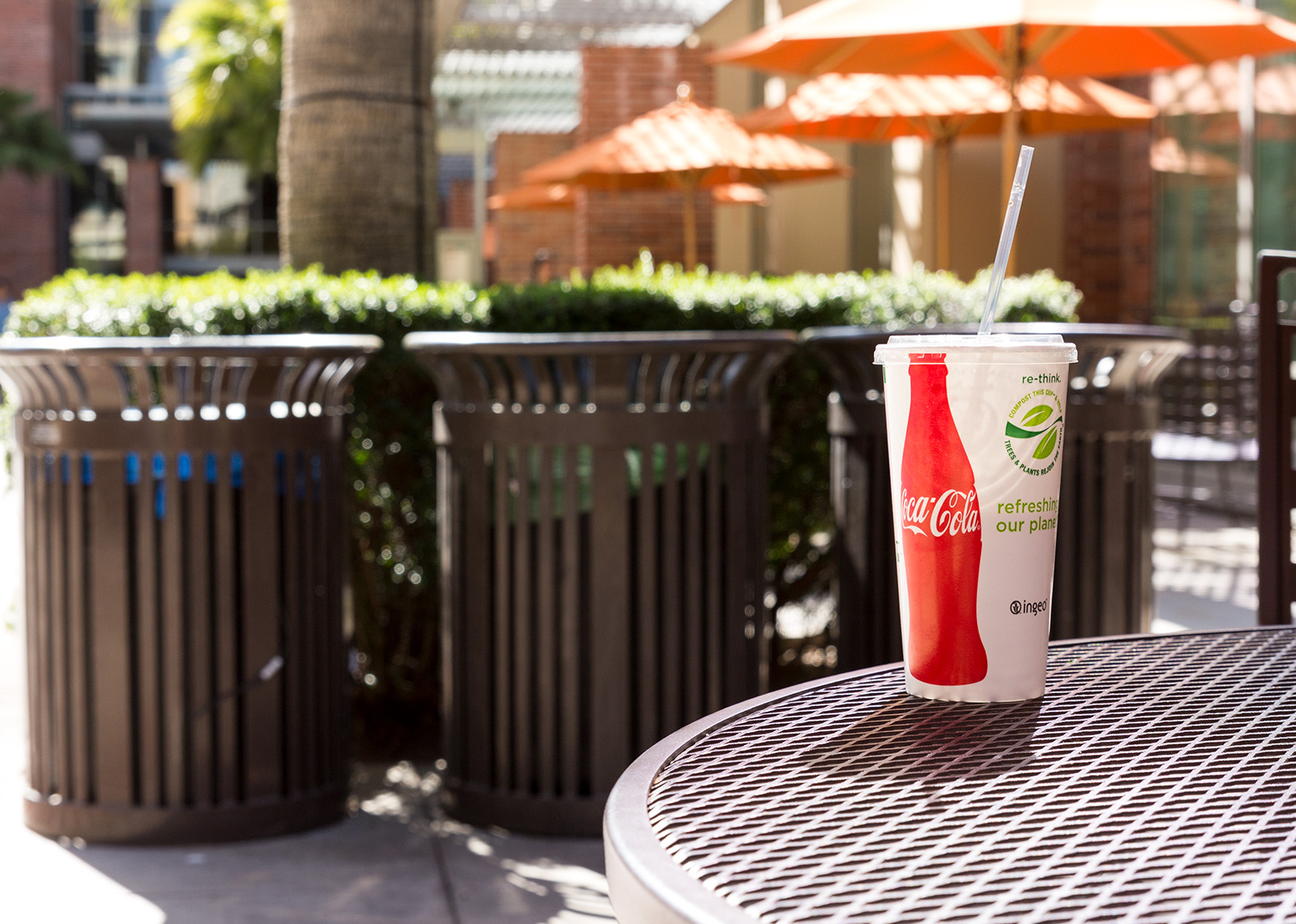
A cup with a composting symbol sits on a table. The UC enacted a policy in 2020 to phase out single-use plastic bags and food service items. (Daily Bruin file photo)

By Nury Salazar-Ibanez
Aug. 15, 2026 11:45 a.m.
Many Bruins are familiar with the small reminder on the side of their coffee cups instructing them to compost once they get their fill of caffeine.
That message, shown on coffee cups sold at campus stores, is part of a UC policy enacted in 2020 to phase out single-use plastic bags and food service items. The policy came in response to advocacy led by California Public Interest Research Group and other student groups, citing plastic’s harmful effects on the environment. It came six years before California’s ban on single-use plastic carryout bags, which went into effect in 2026.
CALPIRG – an organization advocating for environmental sustainability – collaborated with student governments across the UC system and hosted events to collect signatures from students in support of banning single-use plastics. The group gathered about 12,000 signatures over about eight months and announced the new policies with the UC Office of the President in August 2020.
By October 2021, all ASUCLA restaurants had implemented cups and cutlery made from compostable paper or fiber products.
For some students, though, sustainability has come at the cost of convenience. Lucia Fee, a rising fourth-year cognitive science student who works at Jimmy’s Coffeehouse, said the paper cups are difficult to handle and the straws break apart too easily during use.
“We had issues with our lids sticking to the cups if a lot of hot water had been used,” Fee said.
Leila Salam, the Los Angeles Olympic Campaign Coordinator of CALPIRG Students, said she understands asking people to make changes to their everyday lives – such as the switch to paper straws – can seem inconvenient. However, she added that she encourages students to think beyond the immediate impact of their choices.
“The long-term goal is to be not even using compostables but using reusable cups and straws and bowls and whatnot,” Salam said. “It’s important to see a bigger picture of all the ways that our lives – the way they are now – is very unsustainable.”
Foodware made from easily deconstructed materials, including compostable items, often break apart during use, said Daniel Coffee, the project manager of plastic and climate research at the UCLA Luskin Center for Innovation. It’s a fundamental tradeoff of using products that degrade easily into the environment, he added.
However, attempts to make beverage cups more sustainable don’t always succeed, Coffee said. If compostable cups are not disposed of properly or taken to a composting facility, the net environmental impact is similar to plastic cups, he added.
“We need to make sure that we’re not making a switch because it’s superficially better but because the data actually says that we’re going to have demonstrable net benefits through reduced environmental impacts, reduced human health impacts and reduced global warming potential,” Coffee said.
Coffee added that UCLA could explore implementing an incentive structure for community members at on-campus restaurants by providing discounts to patrons who bring in reusable containers.
ASUCLA restaurants have also piloted Reusables – a smart return bins system operated with container tracking labels – to encourage sustainability. It started the program in Greenhouse at Ackerman Union in 2024, and expanded the program to more restaurants, including Sambazon at Ackerman and Northern Lights, over the 2025-26 academic year. The program allows customers to take containers home and return them within five days of check out.
UCLA introduced the Kerckhoff X Reuzzi Dine-In Mug program in May 2023, which allows customers to check out reusable ceramic mugs for indoor cafe use. Customers can bring reusable cups at any ASUCLA coffeehouse and receive a $0.25 discount on their drink. UCLA should encourage sustainability practices by expanding their incentive program, Coffee said.
Khushi Sharma, a rising third-year physiological science student, said she believes the Kerckhoff Dine-In Mug program should be expanded across other locations on campus, as well as with different cup variations and reusable straws. She added that she would like to see an expansion of spaces that allow you to fill your own cup with coffee, such as Joe n’ Go in Ackerman Union.
The health hazards and environmental concerns that accompany single-use containers should be a catalyst for further change, Salam said.
“Something that we need to use once and then throw it away – that never really goes away,” Salam said. “The more that people begin to understand how ridiculous it is that we’ve been doing that, the better and the more likely they will be to shift toward things that are just better for our health and our planet.”