Undocumented students push for UC job opportunities, citing California court ruling
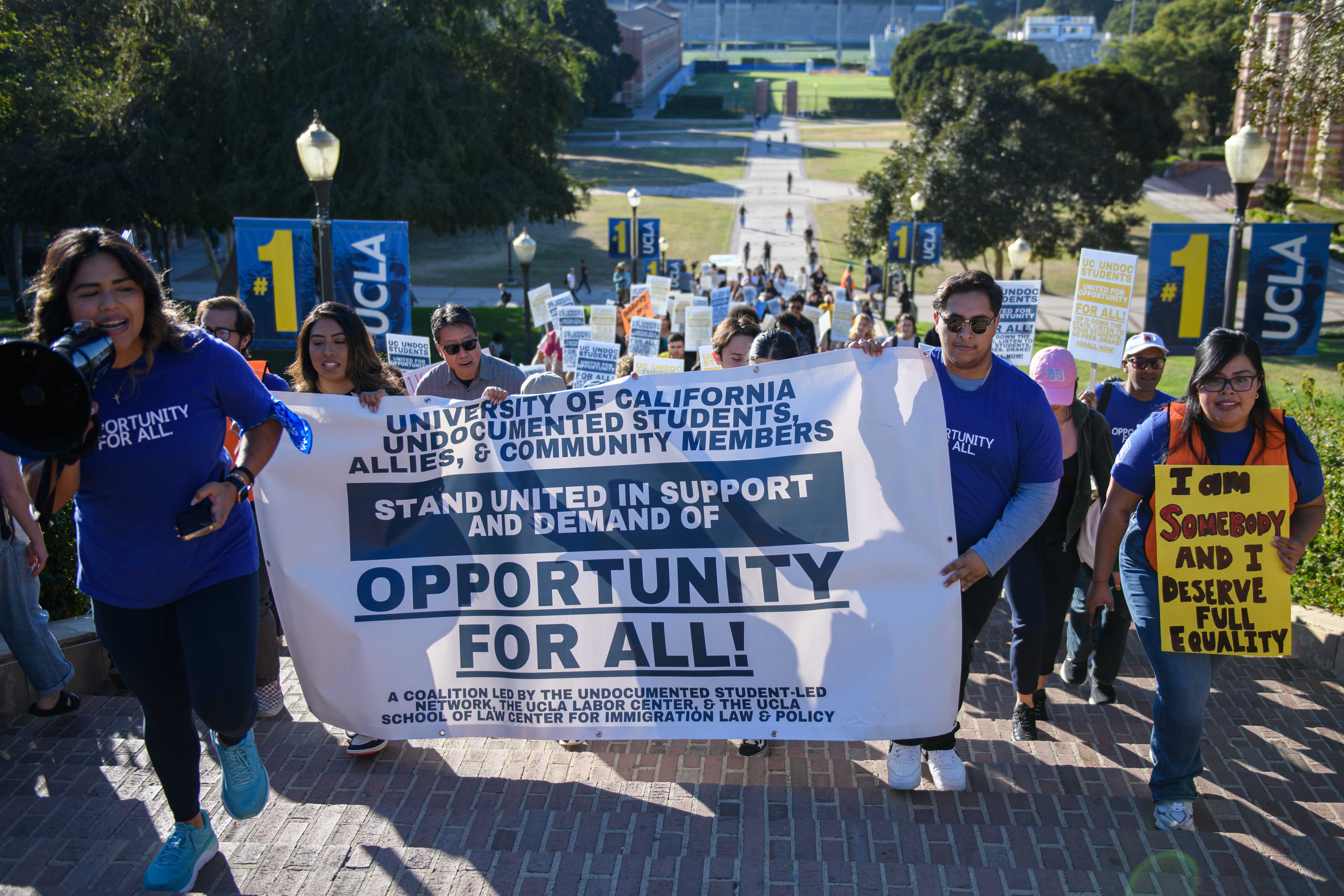
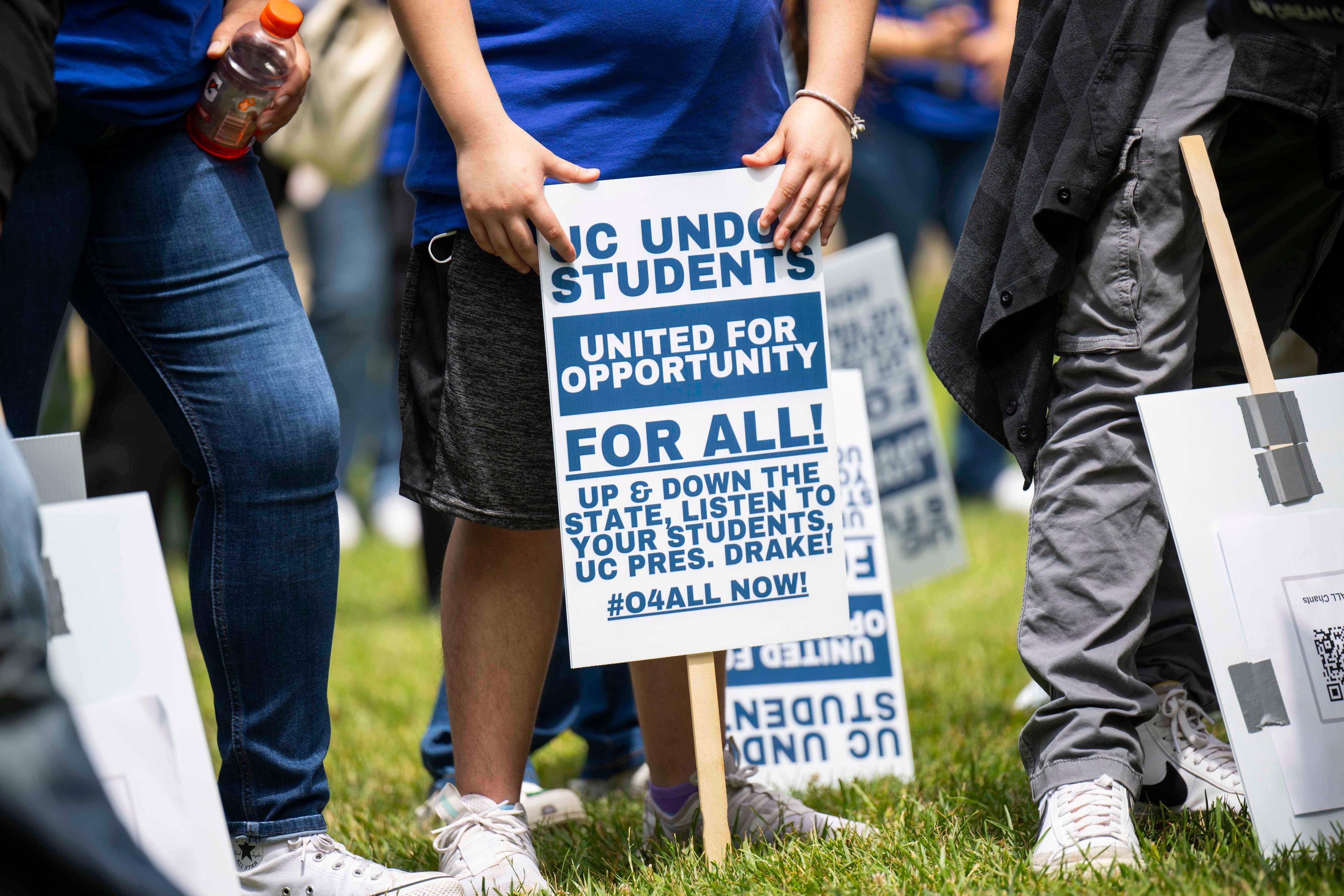
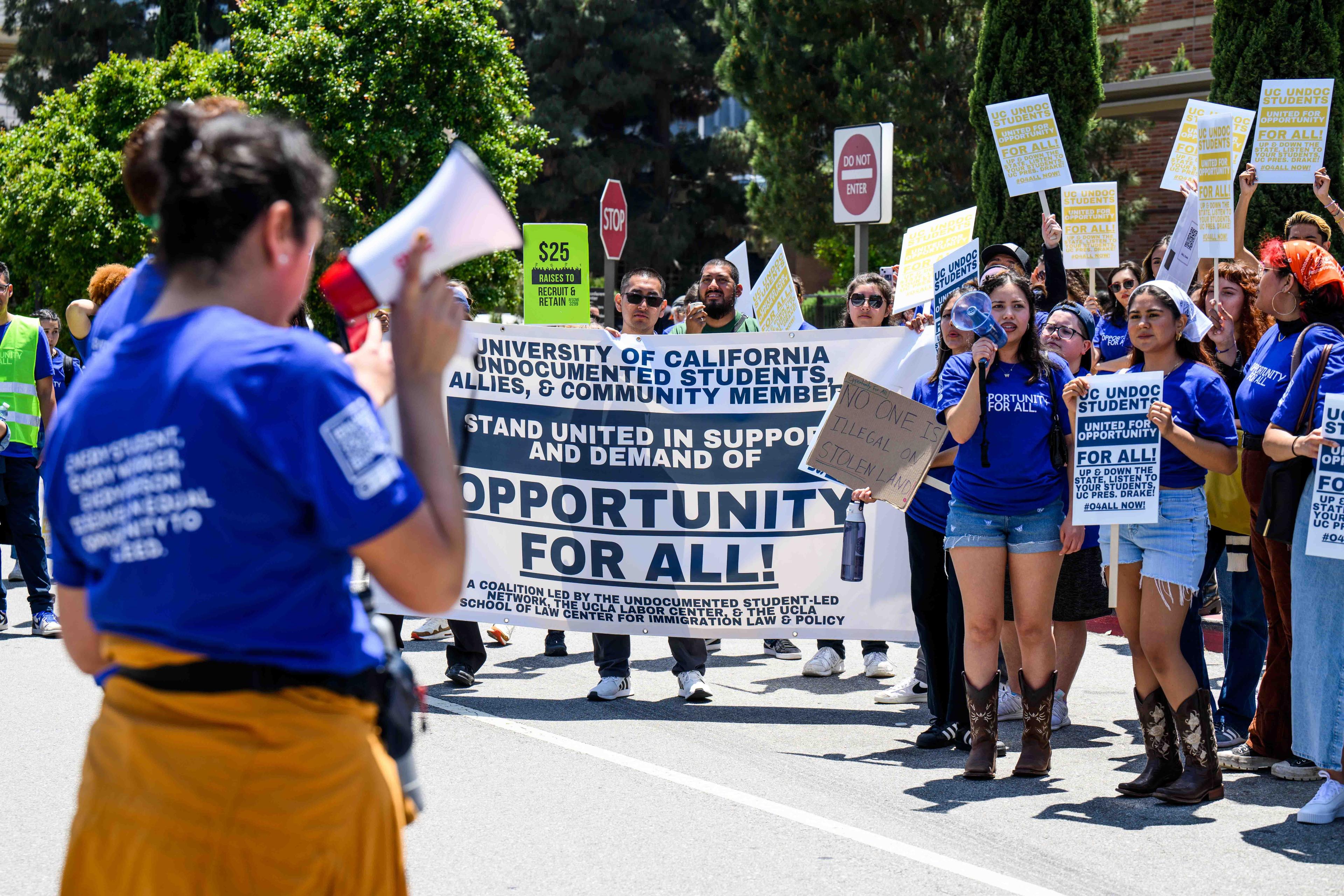
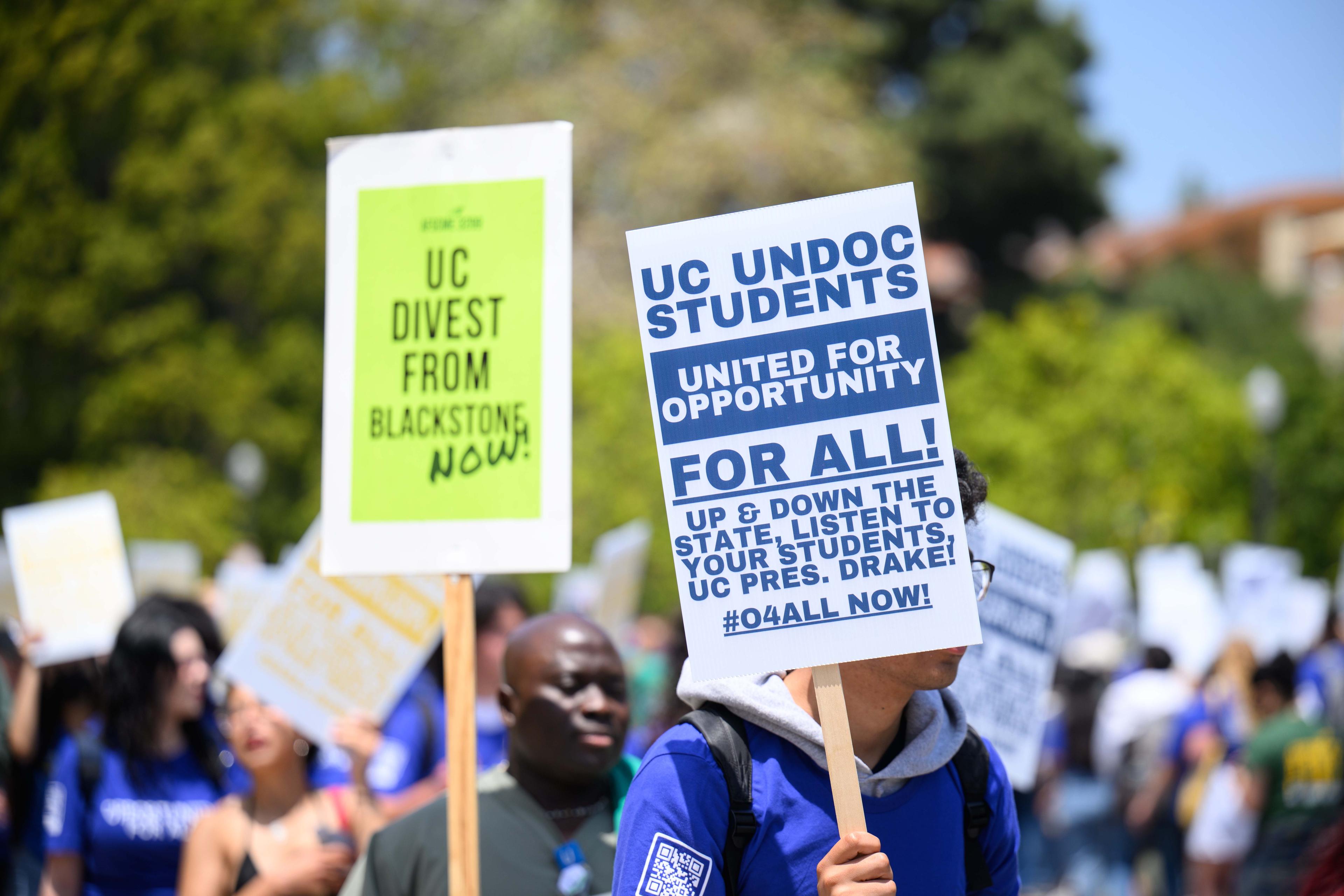
Students march as part of the Opportunity for All campaign at UCLA. The campaign has pushed for undocumented UC students to be able to hold campus jobs. (Daily Bruin file photo)

By Sarah Soroosh Moghadam
Aug. 2, 2026 12:47 p.m.
This post was updated Aug. 2 at 5:52 p.m.
Diego Castro Gomez was accepted to graduate school at UC Merced in 2022.
“My dream was to always pursue grad school, potentially become a professor one day,” said Gomez, who is undocumented.
But after UC Merced asked him for additional documentation on his legal status, the university rescinded his acceptance package – and reduced his funding by around 80%. The program initially offered him full funding to work as a teaching or research assistant for five years
“The school had created these disparities and all these unequal practices,” he said.
The California Supreme Court refused to hear an appeal in the case Umaña Muñoz v. Regents of the University of California in October 2025, letting stand the court of appeals’ ruling that the University cannot bar undocumented students from holding on-campus jobs and that the UC’s current hiring policies discriminate based on immigration status.
[Related: CA Supreme Court reaffirms UC cannot bar undocumented students from on-campus jobs]
However, more than eight months later, immigrant rights advocates said the UC has not taken action to comply with the ruling.
Gomez – one of the many undocumented students across the UC who are not allowed to work on campus – is calling for change as a member of the Opportunity for All campaign, which aims to provide equal access to employment opportunities for all students.
He filed a declaration in the Umaña Muñoz v. Regents of the University of California, which was filed in 2024.
A UC Office of the President spokesperson said in an emailed statement that the University has supported immigrant students by hiring students who have temporary protection through the Deferred Action for Childhood Arrivals program. The court’s decision doesn’t change current hiring practices or mandate the UC to hire undocumented students, the spokesperson added.
Ahilan Arulanantham, an attorney in the case, said the University is required to change its policy to comply with the court’s decision. Alternatively, the court said in its ruling, the University can also change its rationale behind the policy to one that uses proper legal criteria.
“As of now, their policy is literally identical to the policy that the court struck down,” said Arulanantham, the faculty co-director of the UCLA School of Law’s Center for Immigration Law and Policy. “They have to make a change at some point reasonably soon.”
The UC also previously argued during the court case that its hiring policies aim to comply with the Immigration Reform and Control Act of 1986, a federal law that makes it illegal for employers to hire undocumented people. A majority of regents said not complying would risk billions of dollars in federal research grants.
Jerusalen Davila, who is also an undocumented doctoral student in the School of Education and Information Studies, said she believes the university has used complying with federal law as an excuse to put undocumented students’ concerns on the back burner.
Davila is not protected under DACA and does not have work authorization.
“They’re using a lot of language or fear of any federal actions,” Gomez said. “It’s just avoiding their institutional accountability or responsibility.”
Davila added that she believes educational institutions have historically neglected undocumented students.
“If they wanted to give us the opportunity to be hired on campus, they would have already done it,” Davila said.
Many administrative staff and faculty are dedicated to providing a quality education to all their students, Arulanantham said. However, he added that he believes some professors have become more afraid of publicly supporting undocumented students because of retaliation from the federal government.
Although federal law bars employers in both the private and public sector from hiring undocumented students, organizers with the Opportunity for All campaign, including Arulanantham, argue that this constraint does not apply to state employers such as the UC.
These legal barriers can prevent undocumented UCLA graduate students from having a range of paid experiences, including research assistantships, training programs and internships, said Hiroshi Motomura, a law professor and the co-director of CILP.
“Those folks have been prevented from completing their education,” he said. “But it also affects the shift in the livelihood of every student.”
For Davila, this means relying on various undocumented student program fellowships to gain the necessary teaching experience to complete her degree, rather than being a teaching assistant.
“I have a master’s, and I can’t use it,” said Gomez, who hopes to become a professor. “I may have a PhD and may not be able to use it. It just puts a lot of dreams away or shelved somewhere.”
While Davila said she would like to work at a community college if she had the proper work authorization, these laws mean she has to consider independent contracting jobs after receiving her doctoral degree instead.
“Even before I started the PhD, I knew that if I don’t fix my status by the time I graduate, then I’m going to be back to square one,” Davila said.
While pushing for the UC to change its policies, the Opportunity for All campaign has shifted to also advocating for Assembly Bill 713, Arulanantham said.
AB 713 would bar the UC, the California State University system and the California Community Colleges from disqualifying students without federal work authorization from campus employment.
Arulanantham said he hopes that the UC supports the bill, unlike two years ago when several regents opposed Assembly Bill 2586, a very similar bill, from passing, because of federal law. AB 2586 would have allowed undocumented students equal access to campus jobs at public universities.
Gov. Gavin Newsom vetoed the bill because of concerns about complying with federal law, including potential criminal and civil liability for staff who hire undocumented students.
[Related: Newsom vetoes bill that would allow undocumented students to hold campus jobs]
“Now we’ve got the court decision, which has changed the environment somewhat,” Arulanantham said. “Our hope now is that the University would welcome the protection that would come with having a California state law.”
Davila said she hopes California eventually becomes an example of how to best support undocumented students for other states.
Gomez said both AB 713 and the court’s ruling will, in many ways, define his future.
“What the lawsuit was really about was how they can break these narratives of undocumented students having to prove themselves, and proving that they are exceptional and that we deserve dignity,” Gomez said. “It does hurt, in the mind and the soul.”