UC regents discuss $350 million funding increase, cuts to scholarships
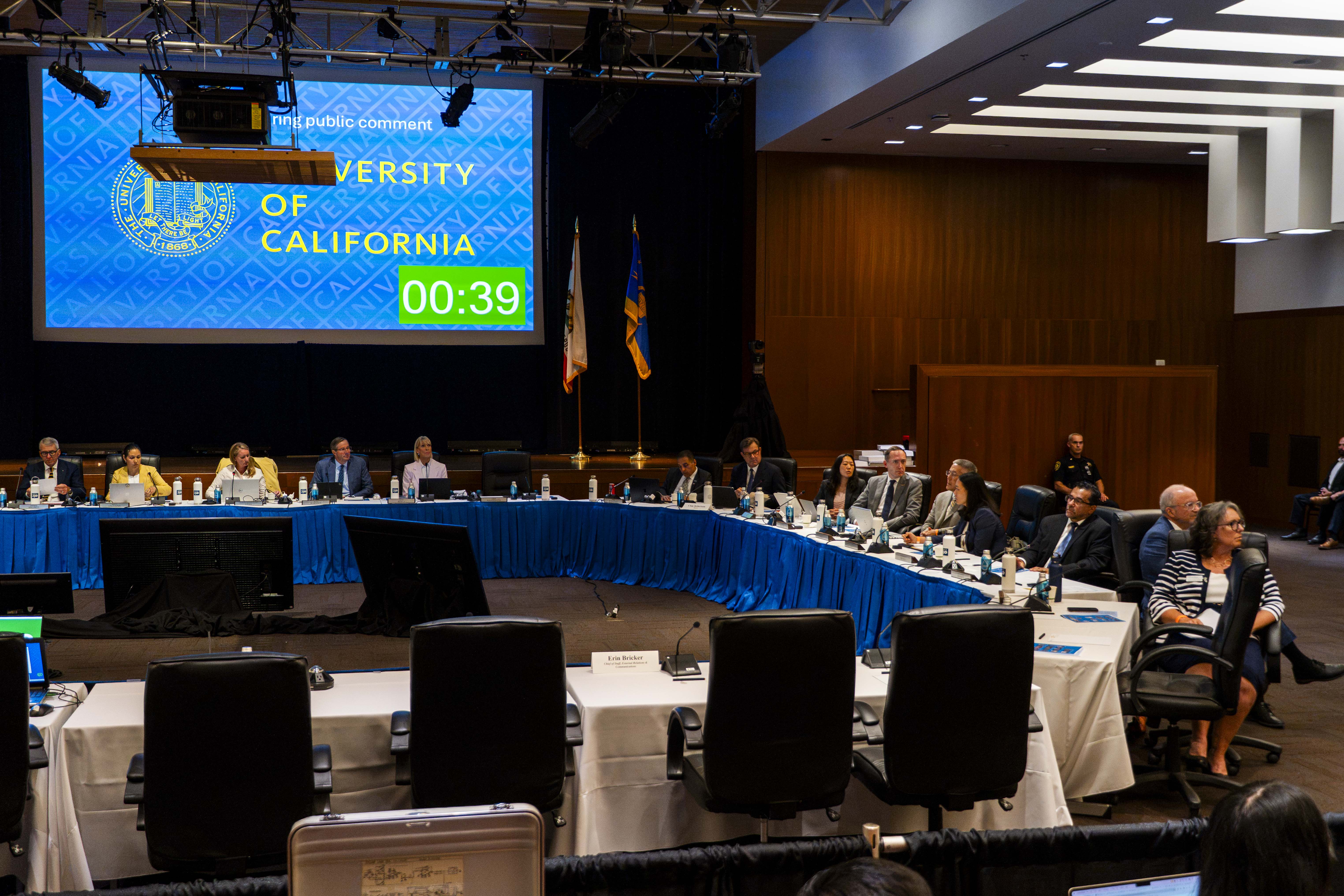
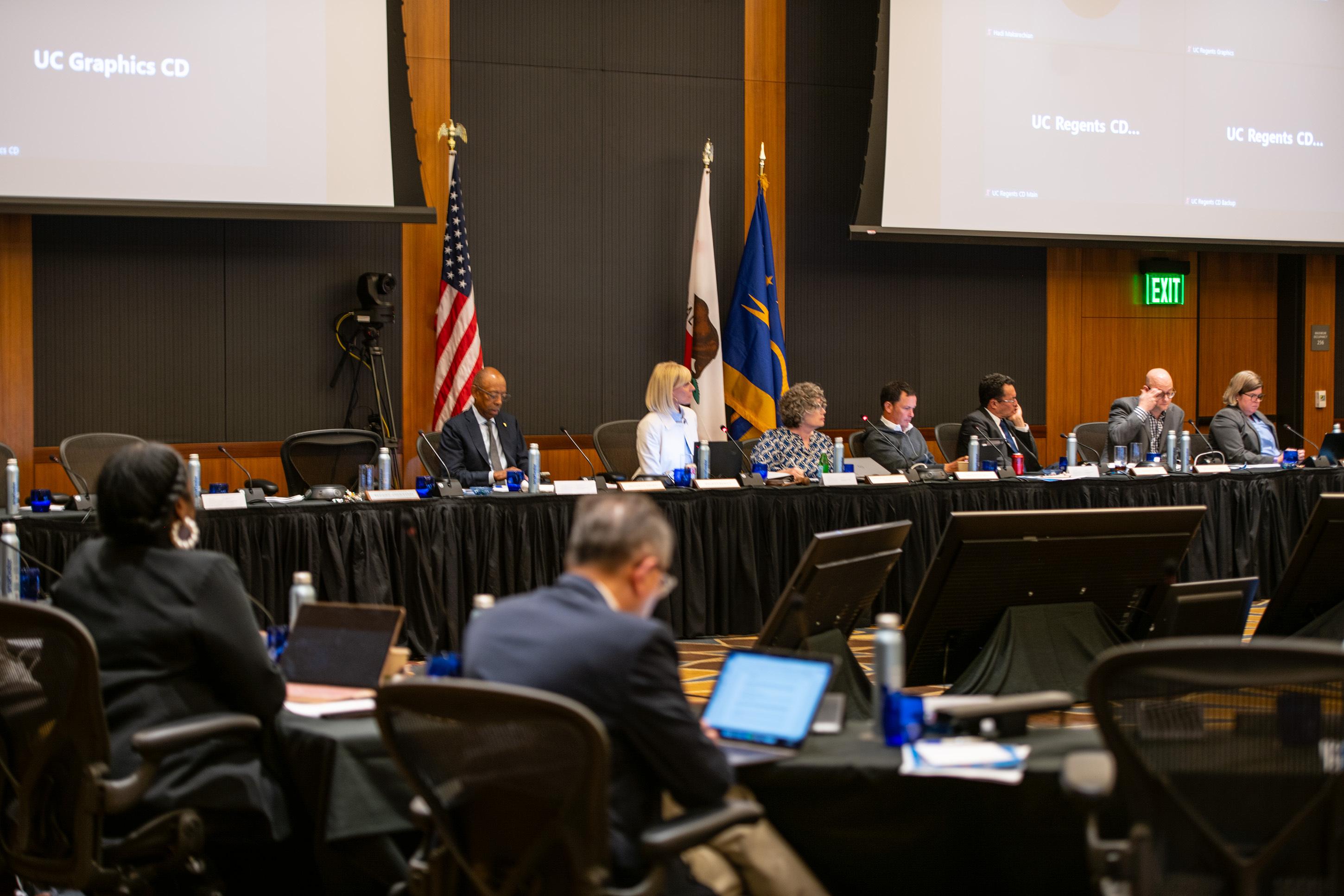
The UC Board of Regents sit at their bimonthly meeting. While Gov. Gavin Newsom’s budget increased funding to the University for the 2026-27 fiscal year, some scholarships had their funding cut, the board said at their July meeting. (Edward Ho/Daily Bruin)

By Saya Mueller
July 18, 2026 3:12 p.m.
This post was updated July 25 at 1:55 p.m.
While Gov. Gavin Newsom increased the UC’s state funding for the upcoming fiscal year, the approved budget also included cuts to scholarships, the UC Board of Regents said.
The regents’ Finance and Capital Strategies Committee shared updates on Newsom’s state budget for the 2026-27 fiscal year and allocations for information technology projects Wednesday at its bimonthly meeting at UC San Francisco.
State funding allocated to the University totals $5.5 billion for the 2026-27 fiscal year, said Nathan Brostrom, the UC’s executive vice president and chief financial officer. Newsom signed California’s state budget June 29, increasing the University’s funding by $350 million.
The increase in state funding stems from the University’s five-year compact, which will grant the University $254.4 million for the upcoming 2026-27 year, said Caín Díaz – the associate vice president of budget analysis and planning. The compact promises the UC an annual 5% increase for five years in exchange for improving graduation rates and enrolling more California residents, according to EdSource.
[Related: Gov. Gavin Newsom signs state budget, granting UC $350 million funding increase]
However, the committee should prepare to advocate for more funding with the uncertainty of a new governor’s administration, Brostrom said. Brostrom added that deferred maintenance projects and the daily operational costs of the University lack funding.
“We’re going to have to turn over every stone,” Brostrom said.
Several campus programs not included in the regents’ funding request – including the UCLA Voting Rights Project, UCLA’s Ralph J. Bunche Center for African American Studies and UCLA Bruin One Access – did receive funding, according to the item. The programs are centered on academic research on voting trends, research on the African American diaspora and providing a lower-cost alternative to purchasing textbooks, respectively.
[Related: Amid student concerns, Bruin One Access to increase to $149 per quarter]
The state budget also included funding cuts to the Middle Class Scholarship program, a scholarship for students from low- and middle-income backgrounds attending California public universities, according to the discussion item.
The cuts halve the UC’s average award coverage for a middle-income student, Brostrom said.
[Related: Bruin Financial Aid scholarship delays, costly overawards spark frustrations]
“It’s about a thousand dollars a student that is cut,” he said.
The regents requested $147.2 million to recoup last year’s deferred funding, but the approved state budget instead deferred the amount to the 2027-28 fiscal year, Díaz said.
Funding for the University’s growing backlog for capital needs was not included in the budget, Díaz said. He added that the regents requested $1.43 billion of one-time funding to cover them all, but the state rejected the request for the third consecutive year.
However, the approved budget includes $61 million for two years of non-resident replacement at three UC campuses, Díaz said. The three campuses were UCLA, UC Berkeley and UC San Diego, according to the Legislative Analyst’s Office.
The overall $5.5 billion for the year includes $110.9 million in one-time support for programs, including initiatives that address healthcare workforce shortages.
The budget allocates $3.6 million to PRIME-Rx, which addresses understaffing in pharmaceuticals for under-resourced populations, according to the discussion item. It also allocates $1.8 million to Advancing Community Care through Eyecare Service and Scholarship, which increases the placement of optometry students in underserved areas to address the shortage of eyecare providers, the item said.
The budget was allocated to serve the growing student population, said Isha Khirwadkar, the student observer. Khirwadkar, a UC San Diego alumnus, also called on the regents to invest more in housing and basic needs.
“I hope this budget is viewed as a starting point, rather than a finish line,” Khirwadkar said.
The regents also approved an informational report covering 29 information technology projects from Jan. 1 through April 30.
The University has allocated more than $5 million to each of the technological projects and detailed the progress, sponsorships and future goals of each advancement, according to the item.
Ten projects – three of which are under UCLA and UCLA Health – had a budget of more than $25 million each, according to the item.
The projects include UCLA’s Security and Network Transformation Program, Financial Aid System Implementation and the West Valley Hospital Acquisition. The programs aim to strengthen campus-wide cybersecurity, streamline financial aid processes and upgrade digital hospital systems, respectively.
Khirwadkar said the regents should include students when developing future budgetary proposals.
“The decisions you make here are most impactful when the students affected by them have a seat at the table,” Khirwadkar said.