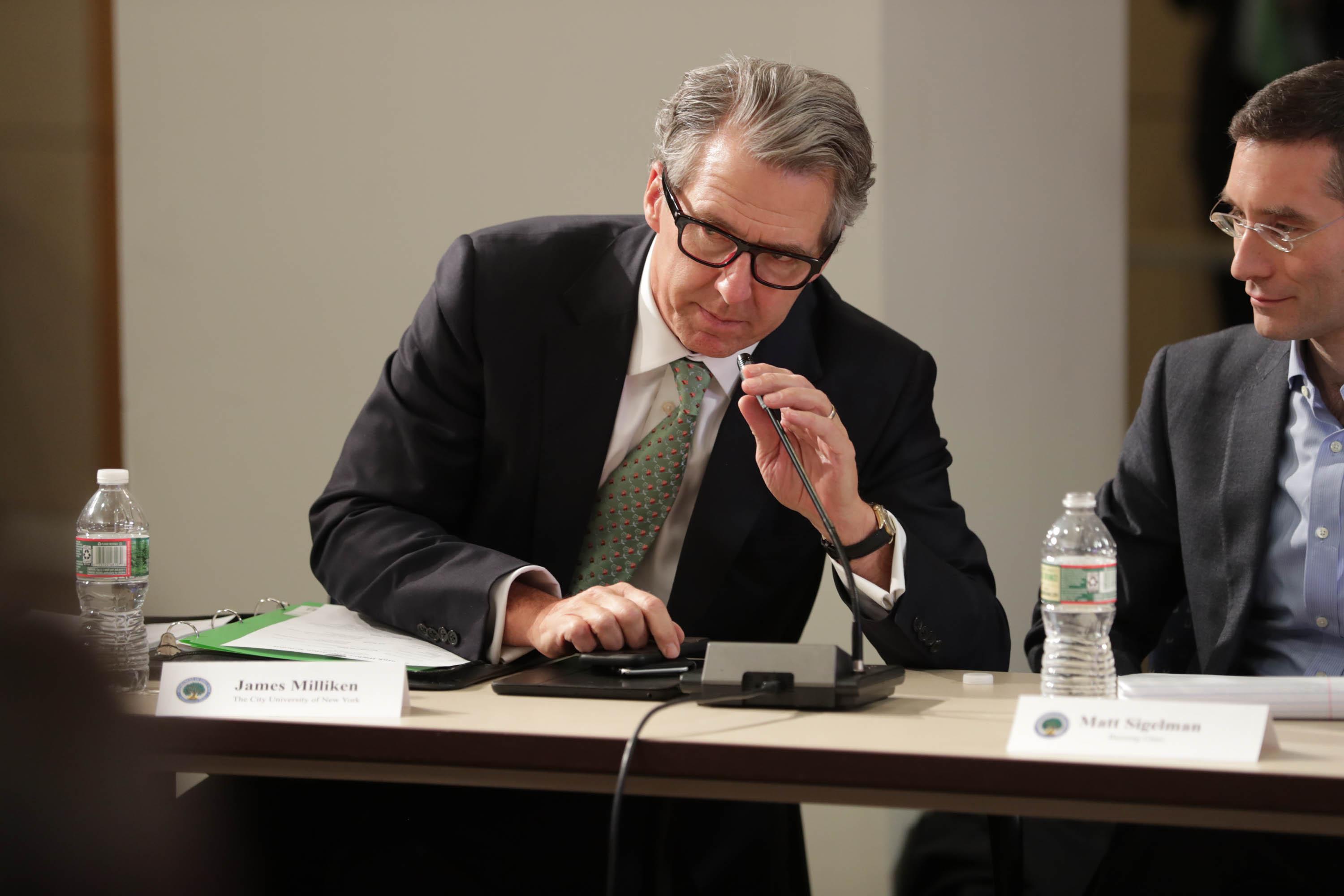
Students, faculty react to UC President James Milliken’s 1st 10 months in office
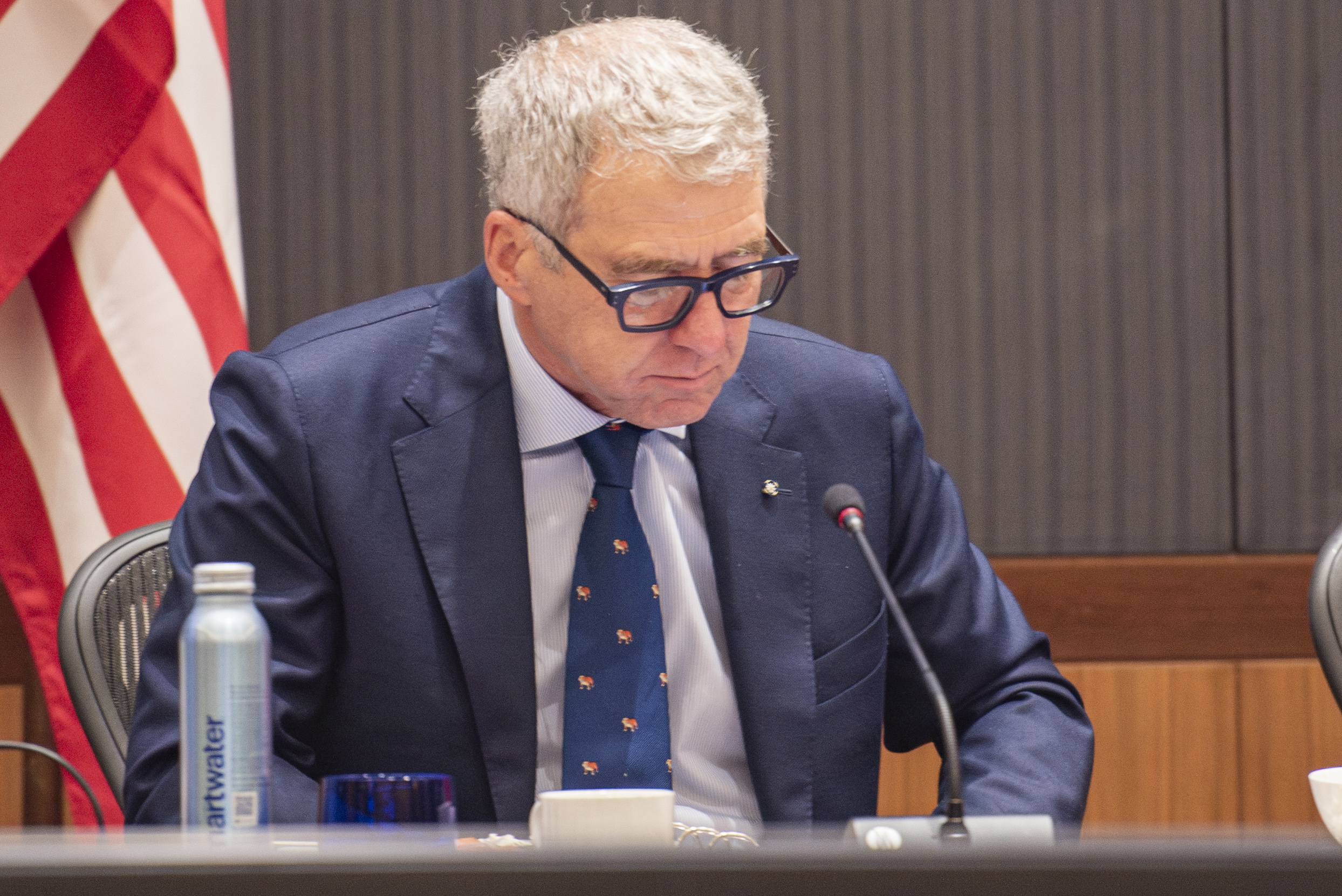
UC President James Milliken sits at a UC Board of Regents meeting. Milliken assumed his position as president of the University 10 months ago, after the federal government froze $584 million of UCLA’s research grants. (Presley Liu/Daily Bruin senior staff)

By Josephine Murphy
June 7, 2026 3:28 p.m.
UC President James Milliken took the helm of the University 10 months ago, immediately after the federal government froze $584 million of UCLA’s research grants.
Since then, the UC has been sued by the Department of Justice three times, seen a proposed increase in state funding and reached contracts with four of its unions. Throughout Milliken’s first 10 months in office, his approach to these issues – particularly relations with the federal government – has been met with both praise and criticism from students and faculty.
William Purdy, a lecturer in the Department of Education, said he believes Milliken has been working to maintain the UC as a leading institution amid the federal government’s attacks on it and higher education as a whole.
“He spent the year trying to establish himself as a thought leader in higher education in order to build credibility as a trustworthy leader of our university system,” Purdy said.
Purdy added that he believes Milliken’s top priority has been to defend and secure funding for the University amid a difficult budgetary environment.
[Related: Federal government suspends research funding to UCLA]
“Milliken’s tried to maintain a fragile financial status quo with respect to state funding,” Purdy said. “He’s been working hard to release federal funds for research and prevent any future stoppages or disruptions to the flow of federal dollars to our research mission, but that has been a pretty uphill climb for him.”
However, Purdy said Milliken’s choice not to sue the Trump administration to restore and ensure stable funding going forward has been controversial.
The federal government suspended nearly $600 million of UCLA’s research funding in late July, alleging the university allowed for antisemitism, affirmative action and “men to participate in women’s sports.” A federal judge restored the vast majority of the funding in August and September and blocked the Trump administration from withholding or threatening to withhold funds from the UC in November.
Several lawsuits led by UC faculty have restored the vast majority of the funds the federal government froze from UCLA and several other UCs last year. But Harvard University – where the Trump administration froze about $2.2 billion in grants in April 2025 – confronted the federal government head-on with litigation within days of having its funding frozen.
Chancellor Julio Frenk said in a January interview with the Daily Bruin that the university had not been in contact with the federal government since it sent a proposed settlement agreement to UCLA in August, which would allow the university to regain its federal research funding. The proposed settlement would have increased the federal government’s oversight over UCLA and required the university to make several policy changes, including banning gender-affirming care for minors at its health centers.
Milliken said in a February interview with the Los Angeles Times that he decided to engage in negotiations rather than sue after watching Harvard’s prolonged battle with the administration and the “devastating actions” it took against Harvard in the meantime.
After Harvard sued, the secretary of education said the federal government would no longer give any grants to the university – and more than five federal agencies canceled their grants to the university in the following days. President Donald Trump also signed a proclamation barring international students from attending Harvard, which a judge quickly blocked.
A UC Office of the President spokesperson said in an emailed statement that Milliken has been focused on expanding student opportunities and defending research throughout his tenure thus far.
“President Milliken has led the University of California through an unprecedented period of political attacks on higher education,” they said in the statement. “Under his leadership, UC has fought to protect its community and has successfully helped stave off much of the financial pain and disruption that some have experienced.”
The spokesperson added that Milliken has preserved the University’s independence amid these attacks.
“It’s hard to say if we’re comparing approaches – the University of California and Harvard – whose approach is better,” Purdy said. “Negotiation is expected to produce positive results for those entering into the negotiation, and so I do think that Milliken, as president of the UC, will be judged based on the results or lack of results he gets from these negotiations that he’s discussing.”
Frenk said in a written statement that he believes Milliken has presented steady leadership amid an unprecedented federal landscape.
“His commitment to academic excellence, innovation, and public impact has reinforced UCLA’s standing as one of the world’s leading universities,” Frenk said in the statement. “Over the past ten months, I have worked closely with him as he has led the UC system with energy, vision and resolve.”
Aditi Hariharan, president of the UC Student Association, said she believes that while Milliken focused on having conversations with the federal government when he first stepped into the role, he did not consult with students enough when making decisions. Hariharan, who also served in her role under former UC President Michael Drake, added that she believes students do not know enough about the results of these negotiations.
UCSA had monthly meetings with Drake during his tenure – something that has not yet been established with Milliken, said Hariharan, a fifth-year nutrition science and political science student at UC Davis.
She added that she believes the UC has, in some ways, complied with the Trump administration’s demands, such as by reducing the use of diversity-related terms in public. The UC replaced its Department of Equity, Diversity and Inclusion with the Office of Culture and Inclusive Excellence in October. Trump signed an executive order on his first day in office banning DEI in the federal government – and has pressured universities to eliminate diversity programs, including by threatening to withhold federal funding from institutions that do not comply.
[Related: UC eliminates EDI department, creates Office of Culture and Inclusive Excellence]
Hariharan added that she believes Milliken has not publicly expressed his priorities, instead blaming pressure from the federal and state governments for his decision-making.
“I knew that the UC Office of the President and Board of Regents was navigating this predicament of how do we maintain our financial picture while keeping the UC programming, but because they were doing so without any real student consultation or input, I felt that I didn’t know what they would care about more or what they would prioritize, what values they would choose to uplift more,” she said.
However, Milliken has aligned himself with student leaders on increasing textbook affordability and basic needs, Hariharan said. At a meeting with Milliken in early May, she said she raised concerns regarding a lack of transfer student advising over the summer, reduced funding for a disabled students’ program and concerns about free speech across UC campuses.
However, Hariharan said she believes Milliken has not been committed enough to addressing those campus-level issues. UCOP did not immediately respond to a request for comment on whether it plans to address the student leaders’ concerns.
Brinaye Grant – who was selected by the UCSA to speak on behalf of student priorities at the regents’ March meeting – said in a written statement that she believes Milliken has consulted with students, but there is more room for progress. Students want the University to be transparent about its decision-making regarding federal funding changes because it can impact their educational experiences, she added.
“Students appreciate when leadership is visible, communicative, and proactive rather than reactive,” Grant said in the statement. “There’s an opportunity to strengthen trust by making students feel more consistently included in conversations that affect them.”
Miguel Craven, the 2025-26 student regent-designate, who will transition into the role of student regent – a voting position on the UC Board of Regents – July 1, said in a written statement that he believes Milliken has shown interest in understanding the student experience and accounting for student voices.
“As we continue this year I look forward to his continued good judgement and collaboration with not just myself, but students across the UC,” Craven said in the statement.
Grant added that while federal funding cuts have been a major challenge for the UC during Milliken’s tenure thus far, she believes he should pay equal attention to state- and campus-level concerns.
“The UC system is incredibly large and complex, and issues like budget constraints, housing, affordability, political scrutiny, and maintaining academic excellence all intersect,” Grant said in the statement.
Grant, a second-year education and social transformation student, said the University must address affordability concerns for students while considering long-term financial pressures.
Purdy said he believes Milliken must prioritize maintaining diversity, equity and inclusion and supporting the UC’s undocumented students and their families, as well as nontraditional students. He added that as a public institution, the UC has a duty to promote democracy and justice.
Purdy said he was impressed by the UC’s ability to avert long labor strikes under Milliken – given that several were set to begin during his tenure.
Three units of UC-United Auto Workers and the American Federation of State, County and Municipal Employees Local 3299 – which represent about 100,000 workers total – threatened to strike over the past year, but both backed down after reaching contracts with the University.
UC-UAW – which represents about 60,000 academic student employees, graduate student researchers, student service and advising professionals, and research and public service professionals – had been in contract negotiations with the UC since July and October, and AFSCME Local 3299 – which represents about 40,000 skilled craft, patient care and service employees – had been in contract negotiations since January 2024.
Purdy said he believes Milliken will grade his own success primarily on his ability to establish a strong financial future for the University and rebuild trust in higher education.
“We have to appreciate who Milliken is and the rarity of a leader who’s worked with several systems of higher education,” Purdy said. “It’s our power as a system, it’s our collective power that guarantees our success as a university.”