UCLA history panel examines historical roots of modern immigration policy
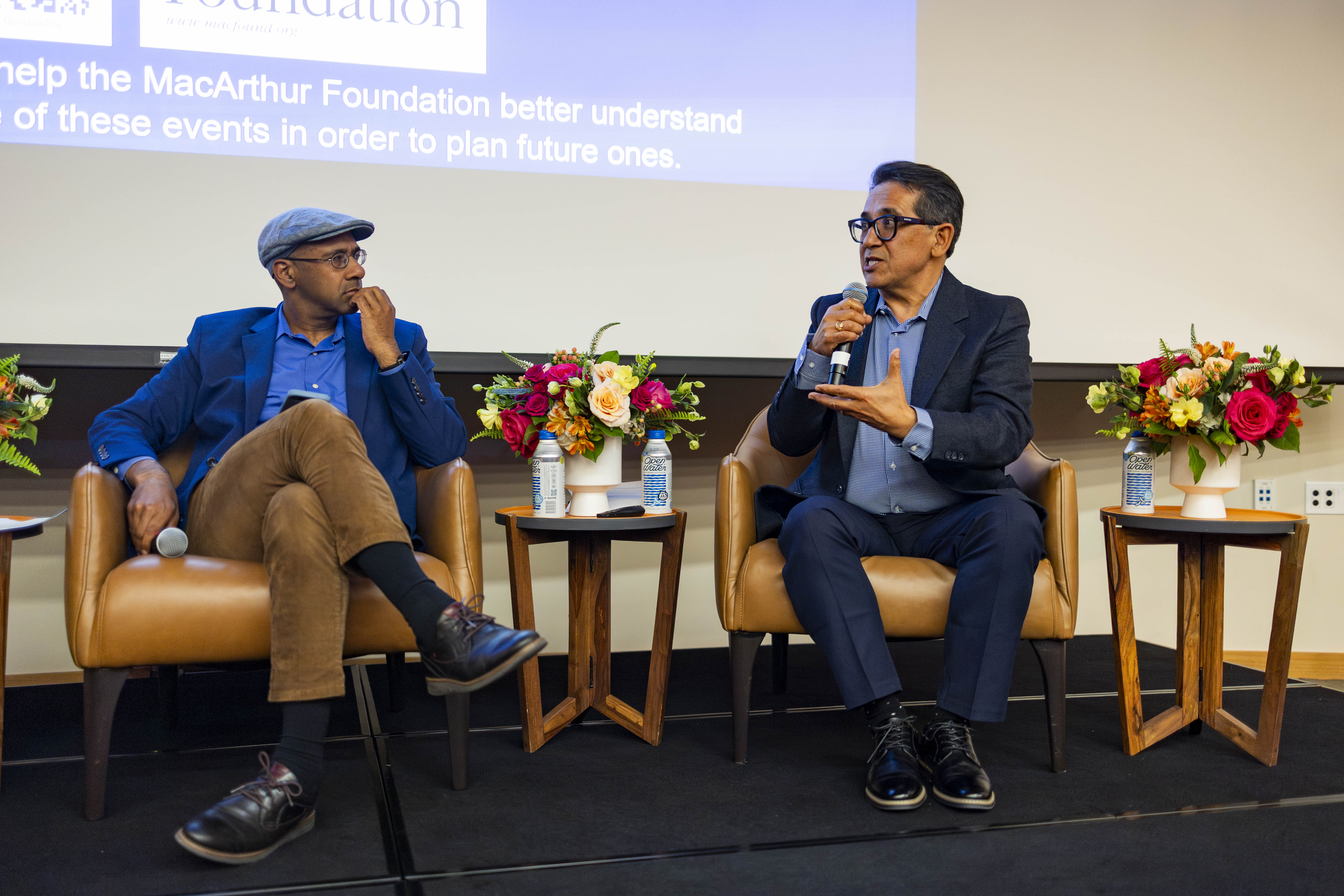
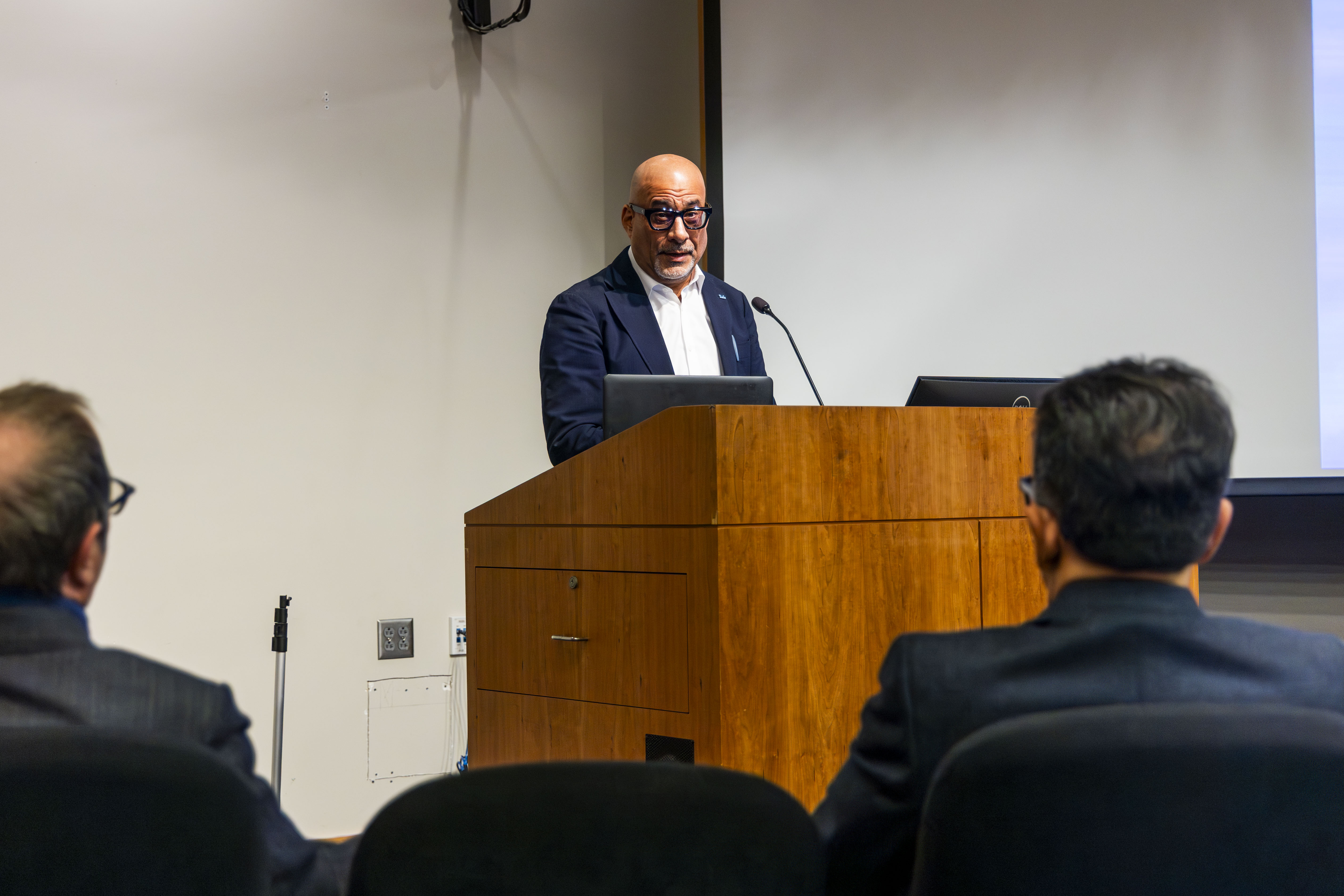
Ahilan Arulanantham, the faculty co-director of the Center for Immigration Law and Policy, and Ruben Hernández-León, a sociology professor, speak at a panel. Arulanantham said humanitarian protections for immigrants have historically prioritized white immigrants. (Chenrui Zhang/Daily Bruin staff)

By Rune Long
June 1, 2026 10:41 p.m.
This post was updated June 3 at 10:01 p.m.
Professors said President Donald Trump’s crackdown on immigration mirrors historical discrimination at a Wednesday panel hosted by UCLA’s history department.
The UCLA Meyer and Renee Luskin Department of History hosted an event titled “U.S. Immigration Policy: Where do we go from here?” in the California NanoSystems Institute Auditorium as part of its Why History Matters series.
The series, which is in its 15th year, brings professors across different departments to explain the impacts of historical events on the present and future. Past topics have included Los Angeles wildfires, gun violence in the United States and filmmaking.
Kelly Lytle-Hernández, a professor in African American studies, history and urban planning, said during the panel that discriminatory immigration policies began prior to the Civil War, with laws targeting Black people. However, the 1882 Chinese Exclusion Act – which suspended the immigration of Chinese laborers – laid the foundation for present-day immigration policy by establishing that the Constitution has limited application when the U.S. government attempts to remove people from the country, she added.
Trump has promised to conduct the largest domestic deportation campaign in U.S. history in his second term.
U.S. Immigration and Customs Enforcement arrested about 1,200 people per day between December 2025 and January 2026, according to the American Immigration Council. ICE conducted large-scale raids throughout multiple cities across the country – including in LA and Minneapolis – last summer.
Lytle-Hernández said she believes the current U.S. immigration system reflects historical exclusion and the prioritization of white immigrants in the 1920s.
“I’ve begun to think about the immigration system as a machine – a deeply rooted, historically built, engineered-over-centuries machine that we are grappling with today,” Lytle-Hernández said during the panel.
Ahilan Arulanantham, the faculty co-director of the Center for Immigration Law and Policy said during the talk that humanitarian protections for immigrants have historically prioritized white immigrants – or those fleeing regimes that oppose the U.S.
An example of this discrimination was laws that protected white refugees fleeing Haiti and Cuba after their respective revolutions, he added.
Anti-immigrant movements have condemned the Temporary Protected Status designation, which allows the U.S. Secretary of Homeland Security to prevent immigrants from countries that have been designated unsafe from being deported or detained, Arulanantham said.
He added that President Donald Trump has targeted Haitian and Venezuelan immigrant communities with Temporary Protected Status, including by claiming in a September 2024 presidential debate that Haitian immigrants in Springfield, Ohio, were eating their neighbors’ pets.
Arulanantham said he believes Trump’s messaging aligns with historical anti-immigrant messaging from the 19th century, when former U.S. president Grover Cleveland accused Chinese immigrants of eating pet rats during his 1888 campaign.
“Why does history matter? Because we are living it again and again and again, it’s the same thing,” Arulanantham said.
Arulanantham said during a Q&A that he believes the Trump administration is unlikely to be successful in overturning birthright citizenship, which is automatically granted to anyone born in the U.S., regardless of their parents’ citizenship status.
Trump signed an executive order seeking to eliminate birthright citizenship – which nonprofit organization American Civil Liberties Union challenged in a subsequent lawsuit – on the first day of his second term. The Supreme Court will decide on the case in June.
Andrew Garcia, a UCLA alumnus who attended the event, said he learned about the fragility of support systems for immigrants. He added that he was inspired by Arulanantham speaking about a registry, which allows some people who have resided in the U.S. continuously since before Jan. 1, 1972, to apply for a Green Card.
Garcia added that, as a high school teacher in South Central LA, he believes it is important for him to educate his students on all aspects of U.S. immigration history.
Arulanantham – who grew up in a Sri Lankan Tamil refugee community that fled civil war as a result of racial discrimination – said his background makes him passionate about liberties for immigrant communities in the U.S.
“In isolation, we will achieve very little. It’s actually by coming together that we can transform things, and there will be many battles to fight,” said Ruben Hernández-León, a sociology professor and one of the panelists, in an interview. “The young people do face a reality in a world in which old people who are on their way out are making decisions for them, but the only way to change that balance is by activating yourself and taking a step forward.”