Opinion: College may breed competition, but community building should be at the forefront
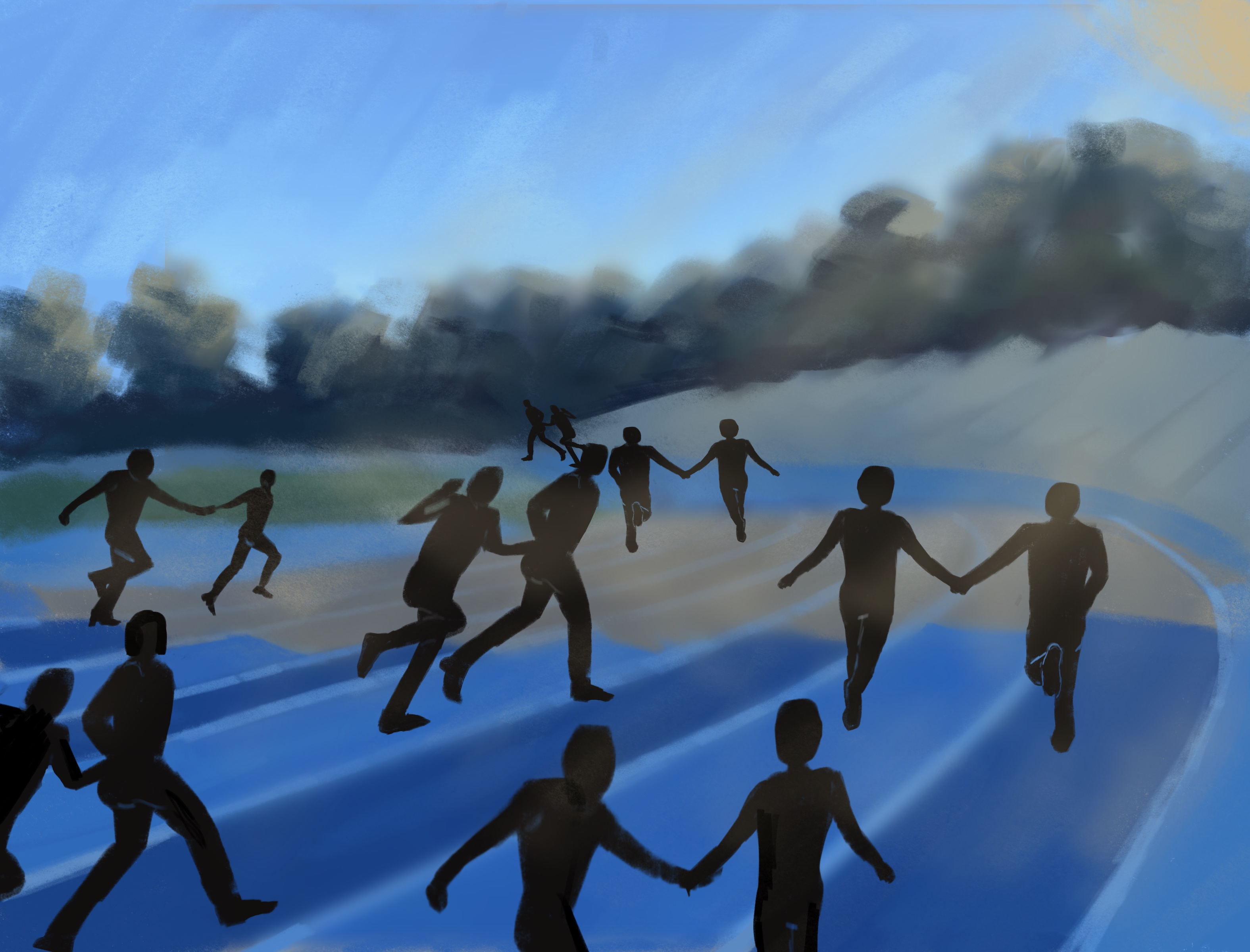
(Monserrat Rodriguez/Daily Bruin)

By Ivy Kim
May 26, 2026 12:45 p.m.
Millions of high school seniors in the United States are meticulously planning their next steps.
With an excess of online discourse about choosing a school, college is seen as the biggest contract a young adult can sign.
However, college has become less of a safety net for success. A quarter of American adults said it is extremely or very important to have a four-year college degree to get a well-paying job, according to the Pew Research Center.
Colleges present themselves as the perfect fit for your dreams, promising a sense of possibility. Incoming students believe the institution they attend will provide them with a picture-perfect college experience.
But success isn’t guaranteed after college, no matter the numerous clubs, organizations or internships students collect.
Students should instead refocus their attention on community, rather than competition. Furthermore, students must reframe how they think about competition and view it, above all else, as a learning opportunity.
Student life is a major selling point of college, and there are endless opportunities at a large university such as UCLA to connect with people. Yes, academic performance is important, but a flawless transcript isn’t more meaningful than having a reliable village.
Arjun Brahmandam, a first-year applied mathematics student, said he decided to attend UCLA for the research opportunities and strong academics.
“For a school that is so reputable, it should provide the opportunities to give me success,” Brahmandam said. “But it’s ultimately up to you on how you want to use them for yourself.”
Given the number of students and finite opportunities, competition is inevitable – whether it is joining a business fraternity or applying for leadership within a club.
Competition may make students root against their peers or become more self-critical. But students should see competition as a challenge rather than a barrier.
Instead, students should feel lucky to be surrounded by peers, faculty and community members who are knowledgeable in their respective interests.
Lindsay Oh, a first-year art student, said she found that UCLA’s competitive atmosphere has provided her with a community of artists she is excited to collaborate with and lean on for support.
“The art department is pretty strong and pretty selective, and that was the part that made me decide to come here,” Oh said. “When a school is selective, you get a group of peers that are committed to what they’re doing, and that’s a good environment to grow your practice in.”
Framing the competitive nature of UCLA as a perk rather than a shortcoming may be the shift the student population needs.
While competition can drive students to strive to achieve, there is a fine line between learning from those around you and making interactions feel transactional. An approach to community that puts people – instead of the potential LinkedIn connection – first is crucial to fostering a village, rather than a corporate-esque community.
College is usually only four years of students’ lives. Many students are stuck on making the time worth it – whether it’s getting the prestigious internship, becoming the president of a club or getting a job.
Whether or not students achieve these goals, it shouldn’t take away from the opportunities to develop as an individual through the missteps and victories that are given to students at UCLA.
Nathan King, a first-year mathematics student, said he started a new social club he has not named yet on campus because he feels a responsibility to do good in the community, regardless of how it would impact his future career.
“People would disagree with me, but I think it’s fun,” King said. “I love UCLA, and I love making it a happier place for other people.”
When students leave UCLA, they shouldn’t feel regret about the community they could’ve fostered. Students should aim to feel like they optimized the time they spent – but not because of their perfect GPAs or the internships they secured.
Instead, it should be due to the communities they built and supported.