Culinary Grand Prix: Lapaba fuses together Italian, Korean food to create comfort

(Britany Andres / Daily Bruin staff)
Lapaba
Travel Time: 30 minute drive
Location: 558 S Western Ave, Los Angeles, CA 90020
Price : $35 per person
Hours: 5-10 p.m. Wed. - Sat., 5-9 p.m. Sun.

By Gianluca Centola
May 12, 2026 1:40 p.m.
This post was updated May 12 at 9:14 p.m.
Lapaba’s fusion comes in the form of traditional Korean flavors in Italian comfort food.
Lapaba – a portmanteau of “la pasta bar” – fuses the name with its handmade pastas and Korean flavors. At the helm are husband and wife Matthew Kim and McKenna Lelah – who previously worked at Nancy Silverton’s Melrose staple, the Michelin-starred restaurant Osteria Mozza.
As I walked underneath the bright neon sign and into the restaurant, I was greeted by an inviting, exciting bar setting with a clear view of the kitchen while two full tables sat in the back corner. From the buzz of the open kitchen to the lively atmosphere and great music, Lapaba seemed like the place to be. Despite my reservation being on the later side at 9:15 p.m., the restaurant never felt like it was quieting down until it closed.
Sitting at the corner table with a view of the entire restaurant, I was greeted by Manuel, an enthusiastic waiter who made me feel like I was a regular at the newly opened restaurant. As I got the rundown of the compact menu, it was clear that everyone – from the waitstaff to the guests – was eager to be there.
As the shareable dishes made their way to the table, what stood out from first glance was the freshness and comforting feeling that each dish had.
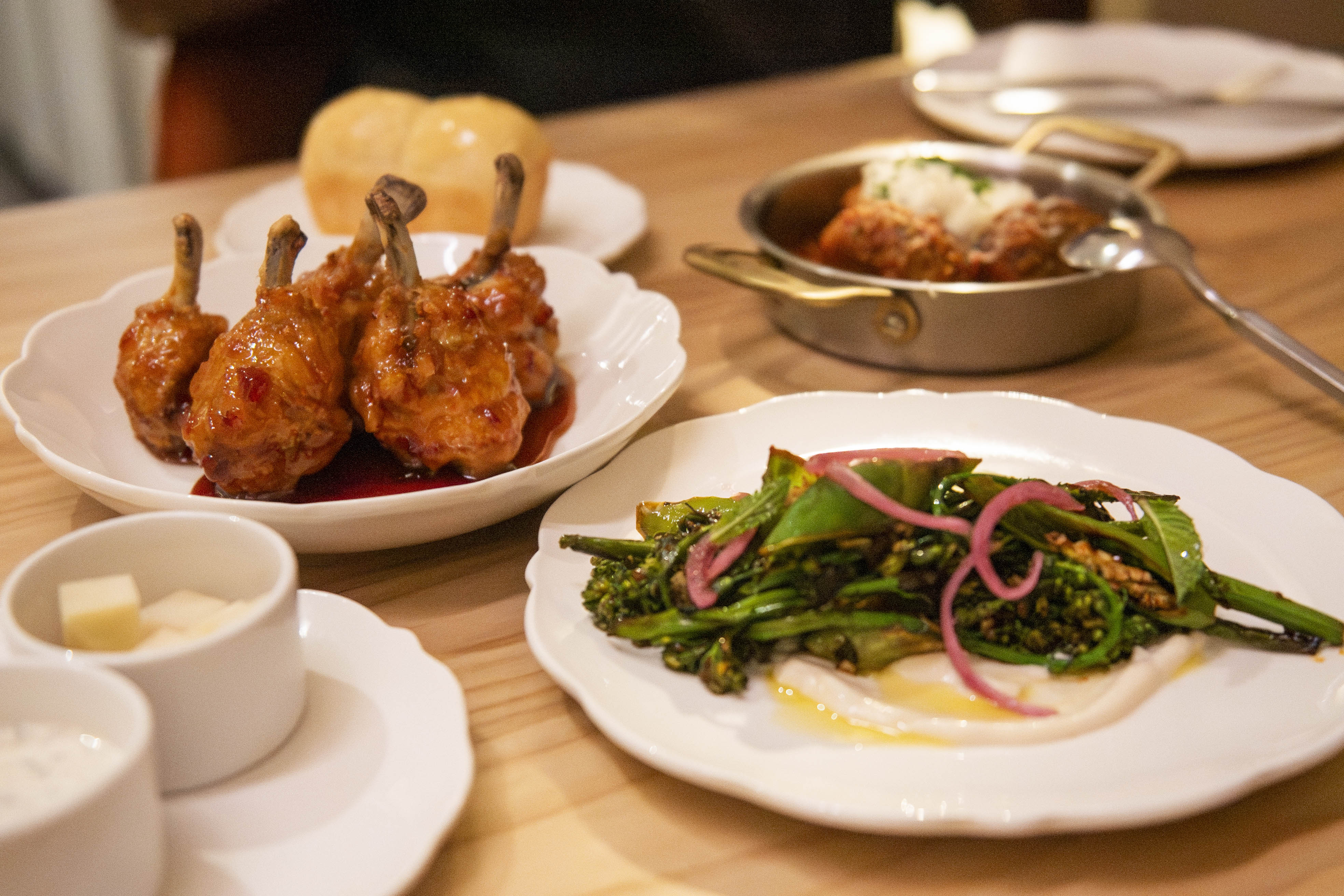
The fried chicken’s crisp crunch, in addition to the light and flavorful sauce it was marinated in, made for a great starter. However, what made the chicken stand out from perhaps a similar dish at another restaurant was the yuzu ranch. The tang of the sauce, spice of the chilis and citrus notes in the ranch made for a unique twist on a classic dish. As someone who does not typically enjoy ranch, the citrus and subtle bitter flavor paired well with the spice from the chicken itself.
When I asked what the most underrated dish on the menu was, I was recommended the charred broccolini, which came on a bed of whipped tofu and tossed in ssamjang – a spicy soybean-based dipping sauce. The broccolini pieces were crisp and fragrant, and the tofu was smooth and buttery, but again what made this dish stand out was the spice and earthy complexity of the ssamjang.
[Related: Culinary Grand Prix: With ‘a heaping side of love and family,’ Tev’s Kitchen takes the palate home]
Of the starters, however, the shining dish was far and away the bulgogi meatballs, paired with four pillowy soft milk bread buns. What looks like a standard meatball quickly transformed into the crux of what Lapaba is all about. The meatball itself was cooked perfectly, not too heavy and an overall great size. The traditional bulgogi flavor shone in every bite and further added to the acidity and earthiness of the truffle tomato sauce. The sauce ratio was terrific, considering the leftover sauce was great for soaking the milk bread with every other bite. The sauce was also the right consistency, as it would stay on the meatball but not drench it and overpower the flavor of the bulgogi meat.
The starters highlighted Lapaba’s traditionally Italian dishes with Korean-backed flavors. This motif continued into the main pasta dishes with the flavors and new fusions still feeling comforting and familiar.
“Essentially, the restaurant is inherently Italian with Korean influence,” Lelah said.
She added that Kim’s childhood experience with Korean food has been a fun way to experiment with Italian flavors and ingredients in a way that’s nostalgic yet inventive.
“Taking those nostalgic experiences and his nostalgic experiences of growing up with Korean food … has been really fun, while making sure we’re paying respects and being respectful to both Italian and Korean heritages, influence and food,” Lelah said.
Both pasta dishes I ordered, the radiatore and galbi jjim and agnolotti and cheesy corn, were more great examples of the harmony that Italian food and Korean flavors bring to the table. The radiatore and galbi jjim – a short rib pasta with red wine and shiitake mushrooms – was rich, hearty and comforting. The twisty al dente pasta was a great vessel to deliver the tender short rib with every bite. Again, at its core the dish felt very Italian, but the shiitake mushroom and Korean spices gave it a refreshing and exciting take on a Bolognese.
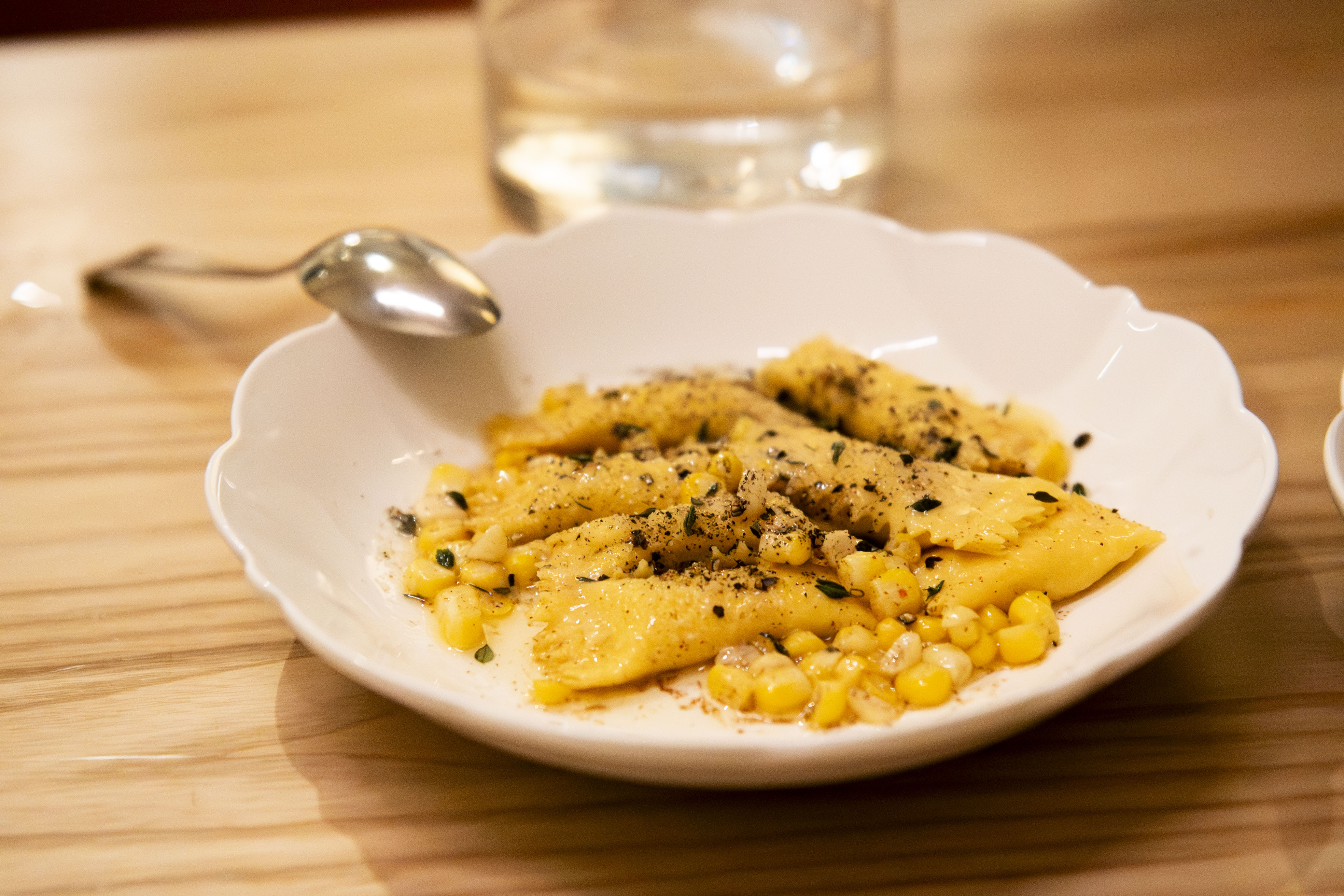
Furthermore, the agnolotti and cheesy corn pasta was a light and comforting pasta that contrasted the short rib pasta exceptionally well. The smokey flavor from the scamorza – a cheese similar to mozzarella – stood out as a primary flavor that added depth to a simple yet powerful brown butter and thyme sauce. The corn’s texture was light and added a crunch that paired well for a complete dish.
[Related: Restaurant preview: New eateries, fusion set to spice up fall for LA foodies]
The fact that each pasta was meticulously crafted just on the other side of where I was seated was a testament to Lapaba’s dedication to handcrafted pastas and freshness. From their pastas to market-sourced produce, Lelah said she enjoys the seasonality of their menu.
“California has the best produce in the country and it’s right in our backyard,” Lelah said. “We really take advantage of that, and we go to the market and source everything ourselves and incorporate a lot of that into our menu.”
While each dish was creative yet comforting, the fragrant produce and commitment to handmade pastas make a huge difference that separates Lapaba from other restaurants in Los Angeles.
To cap off the meal was arguably the biggest surprise of the night: the BTS, a black truffle soft serve with brown butter and bread crumbs. What seemed like an unusual pairing was the highlight of the night. It was sweet, umami, crunchy and – in a way – encapsulated the night of fusion.
All in all, Lapaba – a vibrant place where Italian cuisine is revamped – explores how fusion can take two popular cuisines to new heights.
“At the end of the day, we’re just trying to make food that is craveable and tastes good, and it just happens to be Korean-Italian,” Lelah said.