Eve Mori transforms a playhouse, brings new generations to the past in ‘Himeyuri’
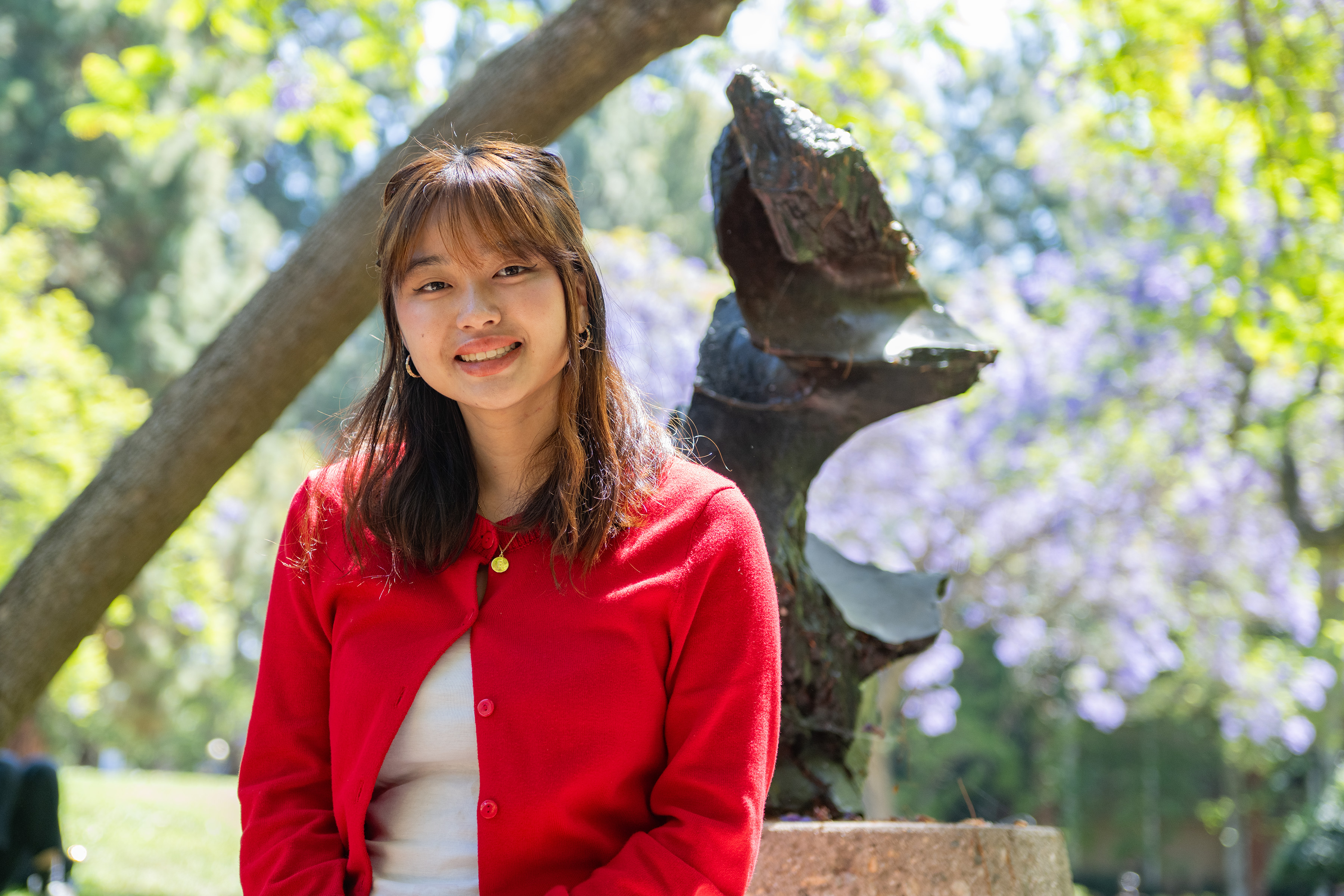
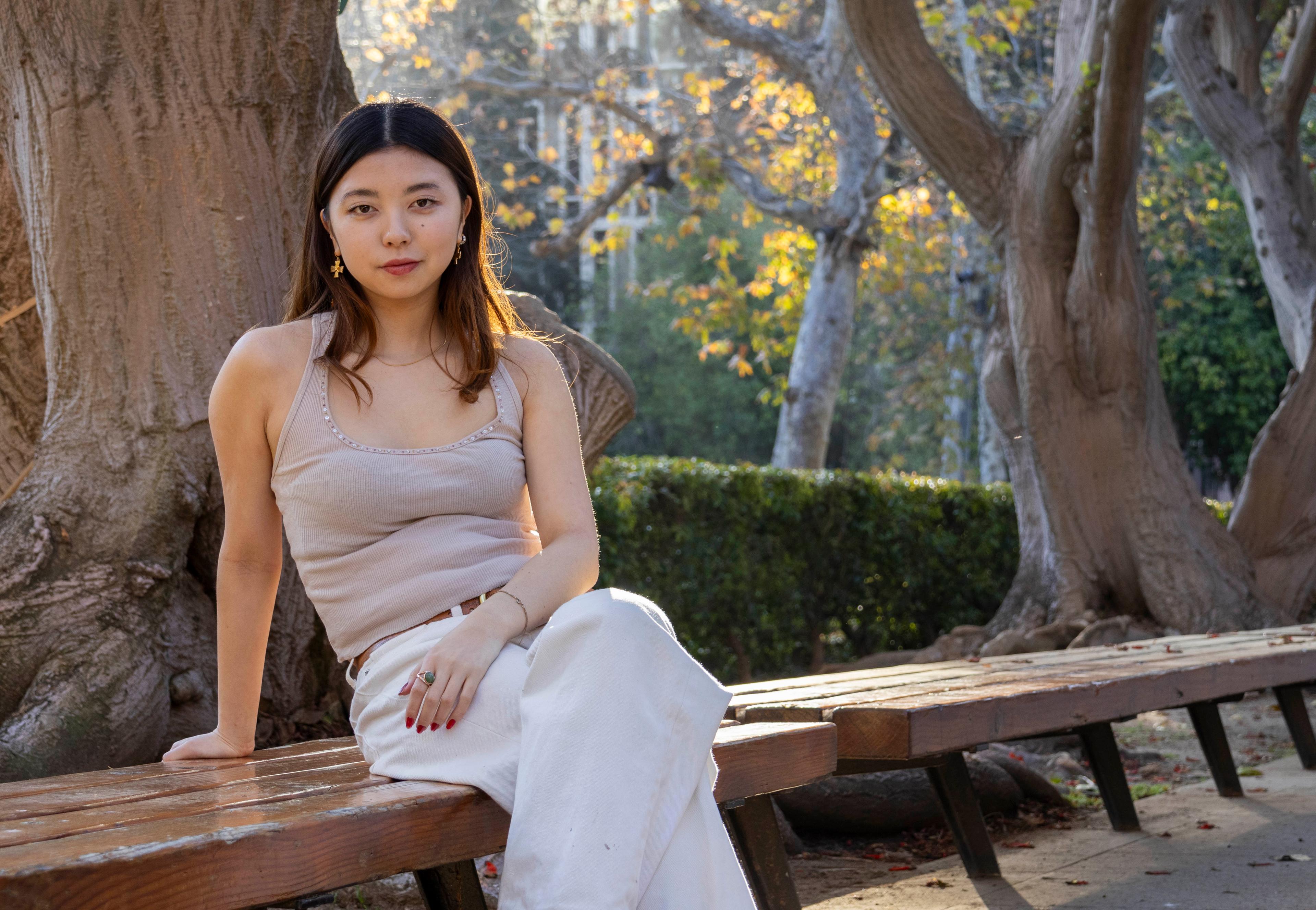
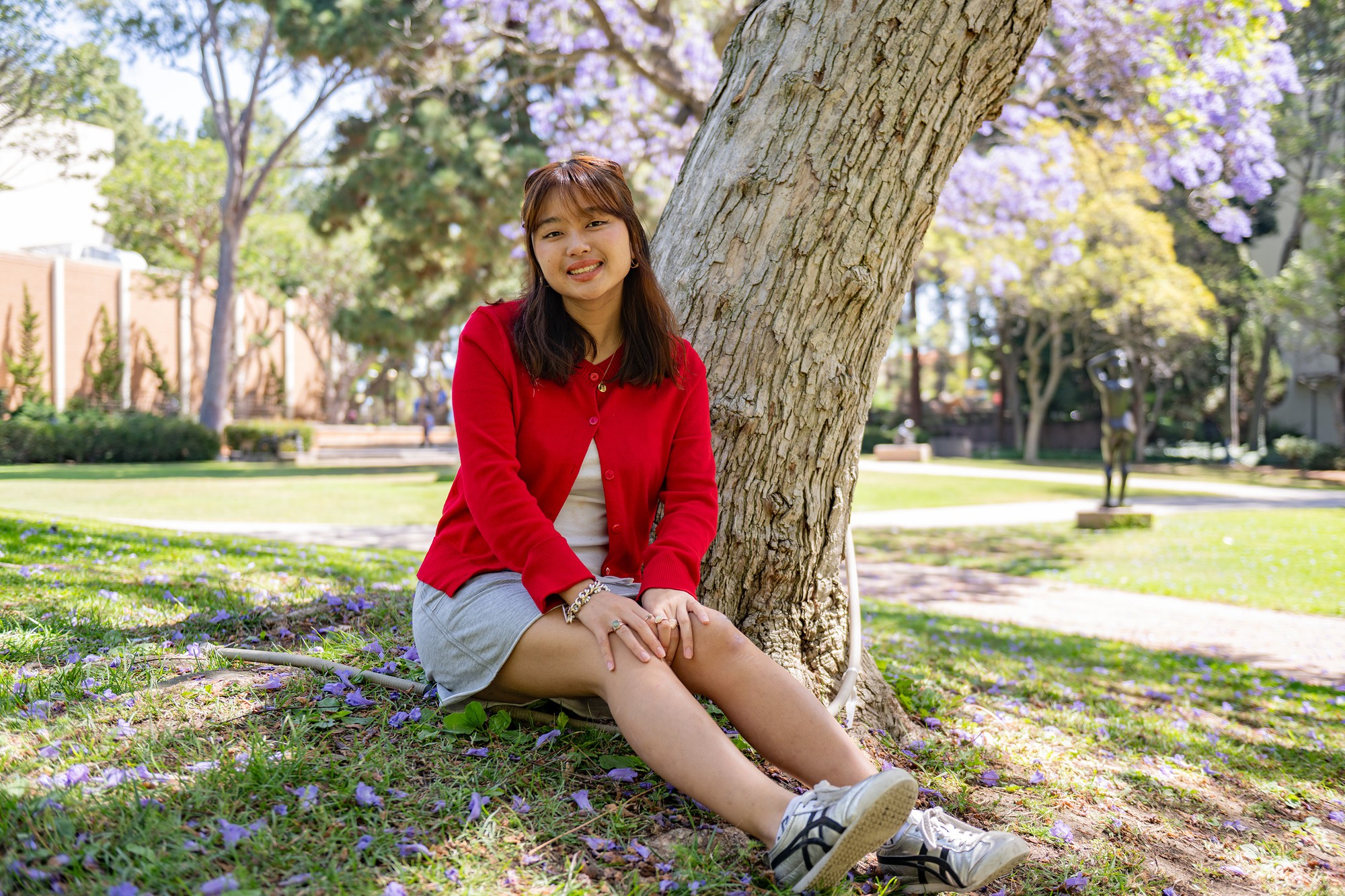
Eve Mori is pictured wearing a red cardigan over a white top in the UCLA Sculpture Garden. A second-year theater student with a focus on directing and scriptwriting, Mori wrote and directed her play, “Himeyuri.” (Charlie Hamilton/Daily Bruin)

By Daniela Fogliano
May 7, 2026 4:03 p.m.
This post was updated May 20 at 9:50 a.m.
Serving as a bridge between the past and present, Eve Mori has transformed Freud Playhouse into a place where a new generation can watch history vividly come to life.
Eve Mori, a second-year theater student with a focus on directing and scriptwriting, has employed her filmmaking expertise to bring awareness to a historical event often overlooked in classrooms. As both director and co-writer, Mori’s play “Himeyuri” switches between 1945 and 2009 to highlight not only the Battle of Okinawa but also its lasting impact across generations. Her play will be featured at the Freud Playhouse on May 21 and 22 at 7:30 p.m., creating an opportunity for the UCLA community to learn about a pivotal moment in Japanese history.
“My biggest thing is just encouraging the audience to consider not only the historical realities of the war, but also their relevance today especially, and serving as a call for reflection and dialogue within both UCLA and LA,” Mori said.
[Related: AFTeR PARTY’s ‘Merrily We Roll Along’ spotlights community, creativity]
Having traveled to Japan in high school, Mori said she was able to learn briefly from her grandparents about the Battle of Okinawa. Mori added that she felt deeply touched by this event but also bothered by its lack of coverage in school curriculums. However, it was not until a trip to Okinawa this summer that Mori said she decided how to bring all the knowledge she had gained about the war back home to Los Angeles. She said she wanted to use entertainment and theater as a vehicle to convey this information.
Building on her personal connection, Mori added that she took great effort to adopt a multifaceted approach to addressing emotionally taxing topics. She said she conducted extensive online research, visited the Himeyuri Peace Museum in Okinawa and spoke with Okinawa organizations in both Japan and the United States to learn more about the culture – allowing her to address this topic from a variety of perspectives.
Mori said the play begins in 2009, then switches to 1945 when Ricki, one of the play’s characters, introduces his girlfriend June to his family. Ricki’s grandfather Kenji, a survivor of the Battle of Okinawa, mistakes June for her own grandmother, Reina, who Kenji knew as a teenager. Then, June finds a journal belonging to Reina, shifting the play’s scene to the Battle of Okinawa as Ricki reads aloud about their grandparents’ wartime experiences.
To connect this event with a younger audience, Mori did not merely present the war itself, but showed its role within the broader framework of the present day, she said. Through Ricki and June finding the journal, Mori said the audience is brought back to the time of the war in 1945, while also showing them the impact such memories have on present-day characters. Mori added that she aspired to show how imperative it is for younger generations not only to learn about past atrocities but also to explore their impact today.
“I thought centering young people in the narrative would create a direct emotional connection for student audiences and make the history feel immediate and personal, rather than distant or abstract,” Mori said.
Lead actress Lindsey Segimoto said Mori is not only devoted to connecting the audience with these events but also worked fervently to connect the cast to these experiences. Segimoto said Mori aimed to have cast members reflect on how the struggles experienced by the play’s characters could manifest in their own lives, even if on a smaller scale. In doing so, Segimoto added that Mori not only strives to educate those immersed in the play but also cultivates an emotional awareness of how the war impacted parties involved, both directly and indirectly.
[Related: ‘Still moving forward’: Jerry LeVasseur film shows overcoming adversary with hope]
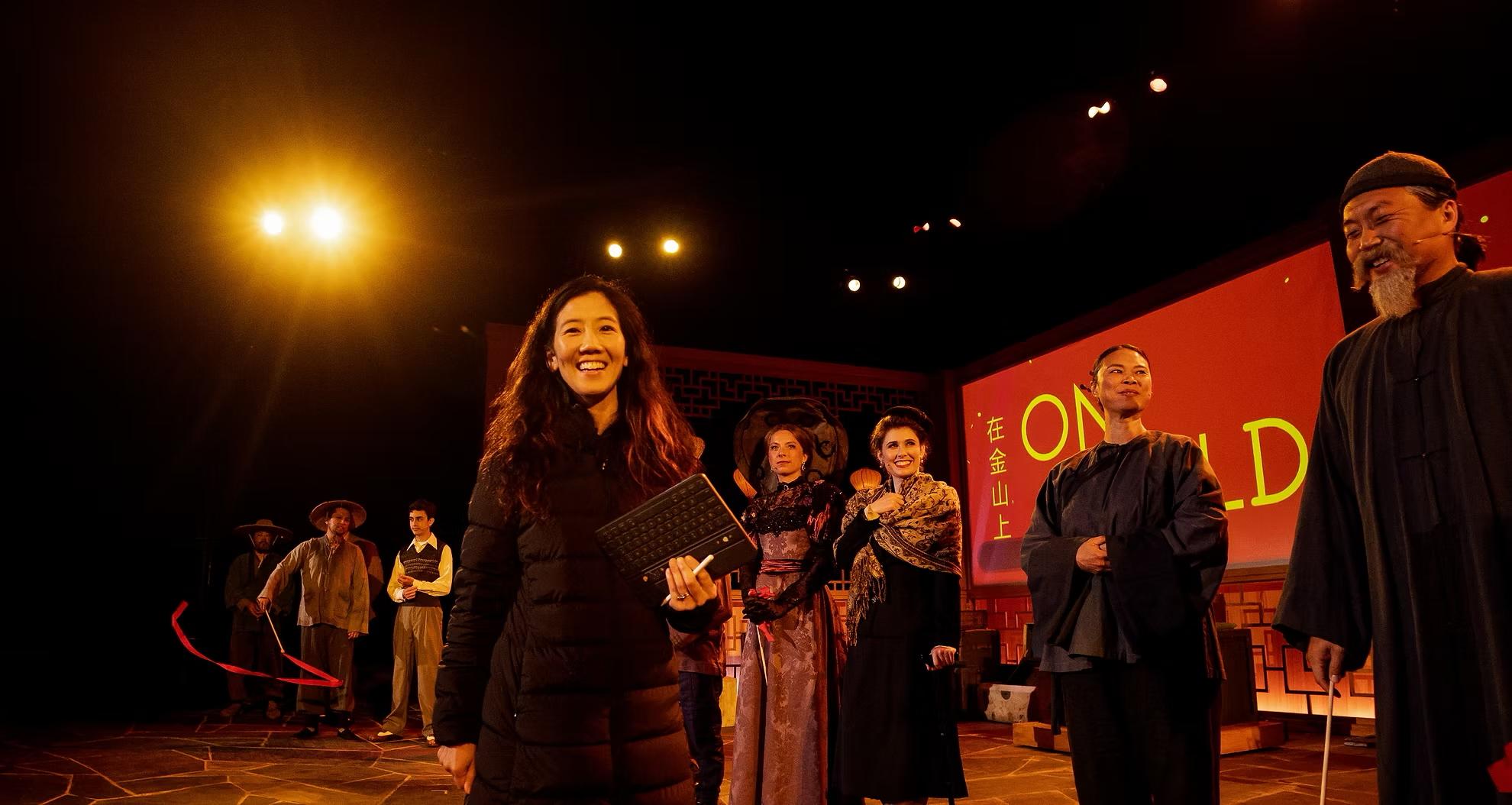
According to scenic designer Tae Scholl, Mori worked meticulously to create the emotional and physical landscape of the war. While wanting to create a minimalist, harmonious background that would not detract from the individual conversations on stage, Scholl said that he and Mori put great care into the play’s background. Specifically, he said they created large, intimidating caves inspired by the caves Mori saw during her visit to Okinawa, allowing the scene to authentically represent real-time Okinawa.
“She gave me collections of images for the vibe that she wanted and then specific pieces and furniture,” Scholl said. “We did a lot of discussion about what we could do with our budget to get her the blocking results that she wanted while still remaining feasible for us.”
As a student of the UCLA School of Theater, Film and Television, Mori said she deeply appreciates the supportive environment surrounding her studies. She added that she takes a directing class each quarter, attending it twice per week for three hours, which allows her to collaborate with faculty members and her peers and strengthen her filmmaking skills. Drawing on both UCLA and LA’s vibrant community for inspiration, Mori said she also drew much influence from her day-to-day experiences.
“Directing is not something you can learn from just being in a classroom,” Mori said. “Throughout my day, whether I’m walking to class or a coffee shop, I try my best to observe people as much as I can around me to be able to authentically track characters that are real human beings.”
Looking forward, Mori hopes to continue making a difference with her work. Through “Himeyuri,” Mori added that she was able to use art as a way to seek greater representation for Asian and Pacific Islander experiences and stories – an effort she plans to continue to embark on throughout the trajectory of her career as a storyteller.
“Art is one of my biggest forms of expression, and I don’t think I can live without it,” Mori said. “It’s also amazing to know that my art can also have that impact for another person as well.”