California Latinos are still facing pay, environmental inequality, UCLA report says
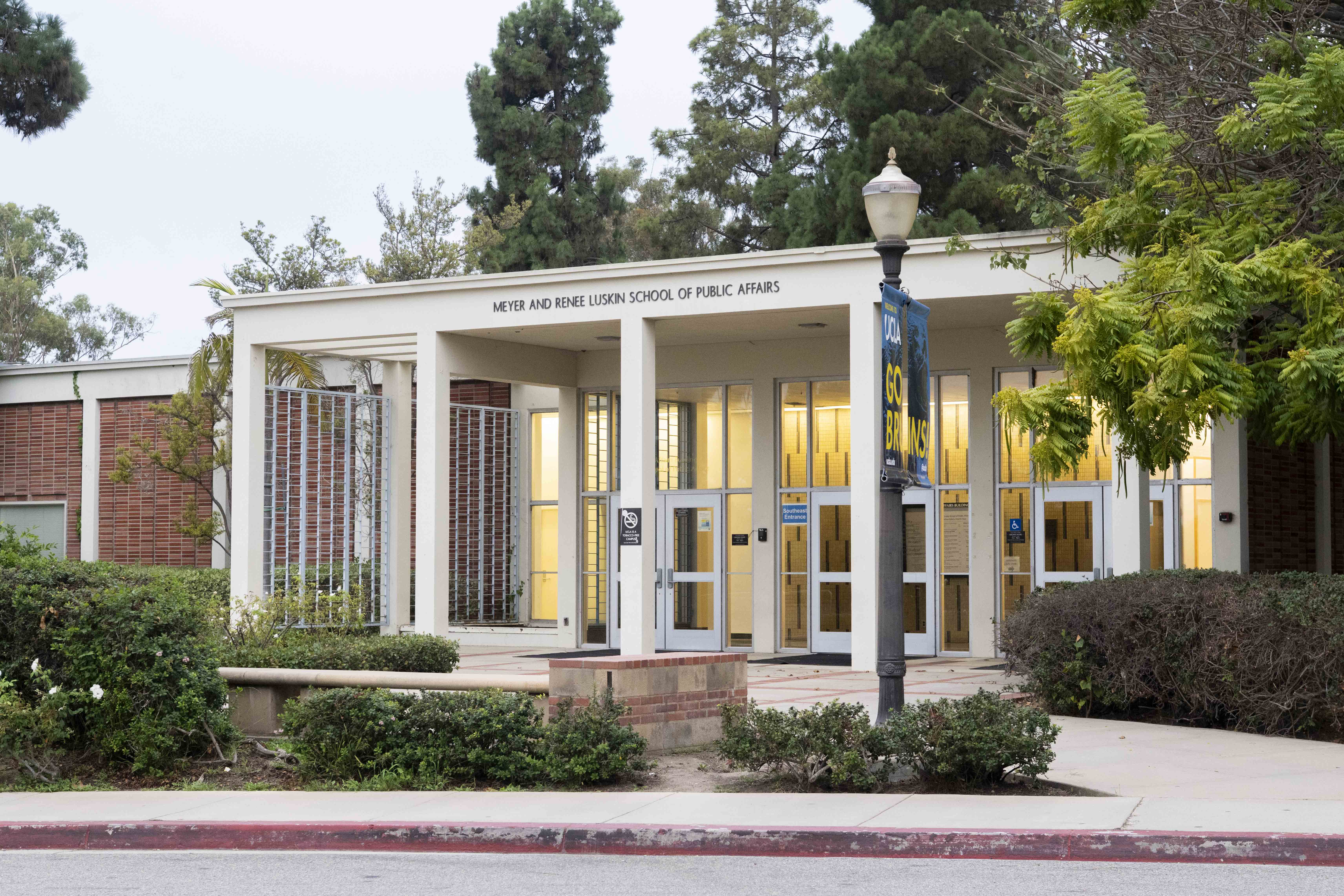
The Meyer and Renee Luskin School of Public Affairs is pictured. Latinos make up approximately 40% of California’s population, but continue to face inequities in wages, health care and education, according to a report from UCLA researchers. (Crystal Tompkins/Daily Bruin senior staff)

By Lilly Leonhardt
April 24, 2026 1:39 p.m.
Latinos make up approximately 40% of California’s population but continue to face inequities in wages, health care and education, according to a report from UCLA researchers.
UCLA Latino Policy and Politics Institute’s annual State of Latinos in California report is meant to provide lawmakers with insights for policy decisions to support the Latino community, according to its website. The study covers how Latinos are faring in a variety of social issues, including language barriers, pay gaps, environmental inequities and housing access.
While 68% of Latinos in California were born in the United States, nearly five million are either undocumented or live with undocumented family members, according to the report. Being from a mixed-status family is a factor underlying wage, health care and home value gaps, given undocumented immigrants’ ineligibility for most social safety net programs, according to the report.
The Trump administration ramped up immigration enforcement activity in Southern California in June, sparking protests. U.S. Immigration and Customs Enforcement arrested 14,302 people across Los Angeles, Orange, Riverside, San Bernardino, Ventura, Santa Barbara and San Luis Obispo counties in President Donald Trump’s first year in office – an uptick of nearly 10,000 arrests from President Joe Biden’s last year in office, according to the Deportation Data Project.
One of the most pressing issues facing Latinos is pay inequity, said Javier Murillo, an LPPI policy fellow and former Daily Bruin contributor.
Latina women make an hourly wage of $18 for every $29 made by non-Latina women, according to the report. Latino men typically earn an hourly wage of $20 for every $35 made by non-Latino men, the report said.
“Other issues that are pressing are housing and health care coverage, but at the root of those is an associated financial precarity,” said Murillo, a fourth-year Chicana/o and Central American studies and sociology student. “When you have a lack of accessible or reasonable incomes, that’s at the root of everything else.”
Rodrigo Dominguez-Villegas, LPPI’s director of research, said he believes it is especially important to address barriers for the Latino community because it makes up a large portion of California’s population. The report forecast that the Latino population in California will likely remain stable at 40% in the coming decades.
Addressing issues such as education access and wage gaps in the Latino community will help boost California’s economy, Dominguez-Villegas added.
“Closing these Latino opportunity gaps is not a symbolic goal,” he said. “It is a statewide economic strategy.”
Gov. Gavin Newsom signed Senate Bill 642, which extends the period in which people can file equal pay claims, and SB 464, which requires employers with 100 or more employees to submit annual pay data reports to the state government, into law in 2025 to combat gender pay inequities and increase pay transparency. Dominguez-Villegas said he believes the new laws will not directly address pay gaps but could allow people to better understand the reasoning behind pay inequities.
While the report found that California Latinos’ educational attainment has increased, Latino workers with bachelor’s degrees are less likely to work in high-wage and high-growth industries than their non-Latino counterparts, according to the report.
Limited access to professional networks can lead to less involvement in high-wage industries, Dominguez-Villegas added. Latino workers are disproportionately concentrated in occupations with higher automation risk, such as landscaping, construction, freight, stock and material movers, according to the report.
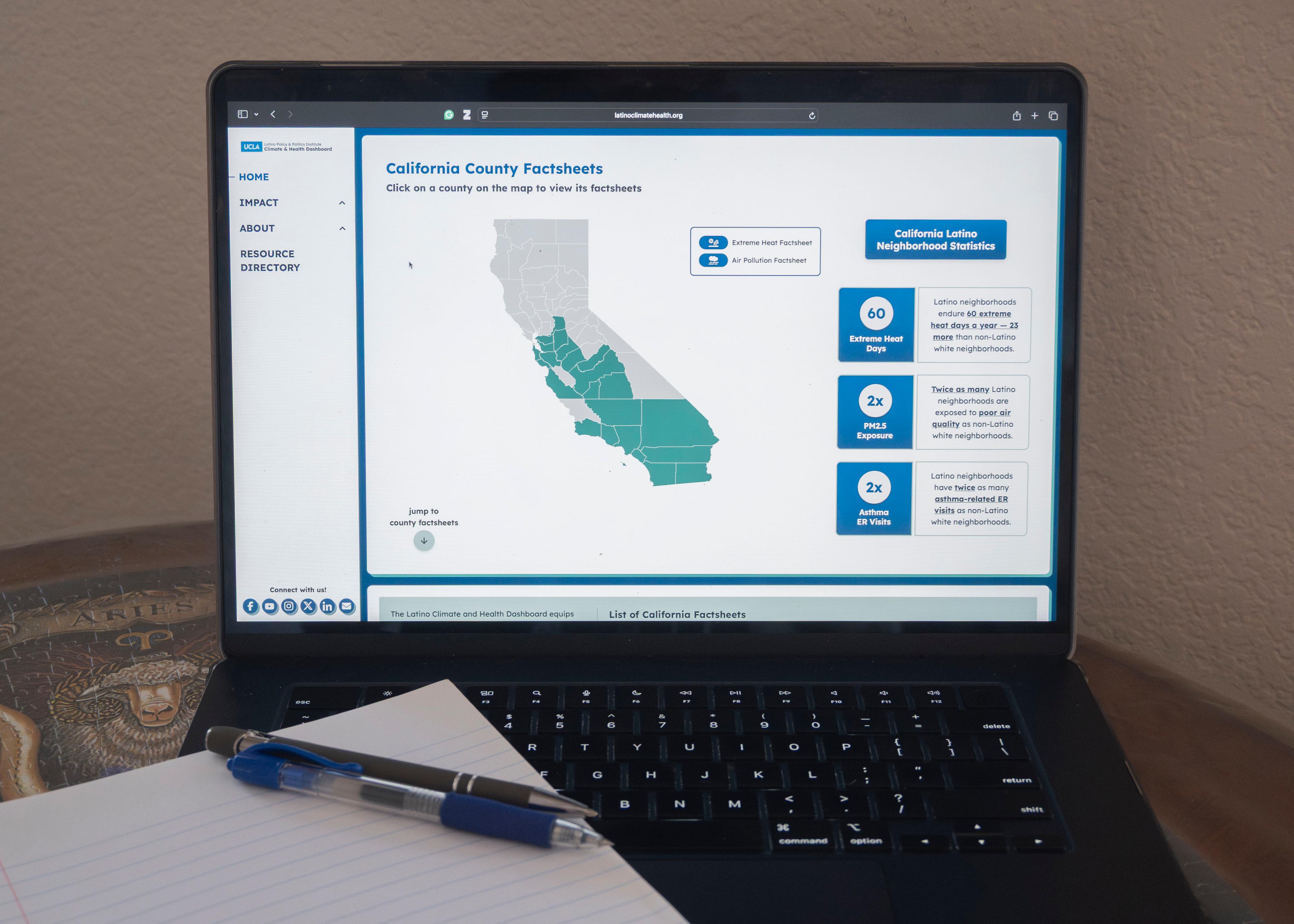
Latino neighborhoods face environmental concerns – such as air pollution, traffic density and extreme heat – at higher rates than their non-Latino, white counterparts, according to the report.
Julia Silver, a senior research analyst with the UCLA LPPI, said in an emailed statement that a combination of decades-old policies and modern factors have led to environmental inequities in Latino communities. Redlining, a practice lasting from the 1930s to the late 1960s in which governments rated neighborhoods that people of color resided in as high-risk areas for lenders, pushed Latino and Black communities into areas near highways, factories and industrial sites that still have significantly lower home values today, she added in the statement.
“Older policies like redlining set the stage by determining which communities ended up closer to pollution and away from parks and green space,” she said in the statement. “But more recent and developing dynamics, such as job segregation, wage gaps, and the continued lack of investment in these neighborhoods, keep those conditions in place and can even make them worse.”
Dominguez-Villegas said it is important for UCLA students – as future California leaders – to read and understand the report.
“The main takeaway for university students (is) that a lot of the outcomes that we see in society are not by chance,” he said. “They are not because of individuals, specific actions, but many times they are related to more systemic issues.”