Universities Allied for Essential Medicines advocates for affordable health care
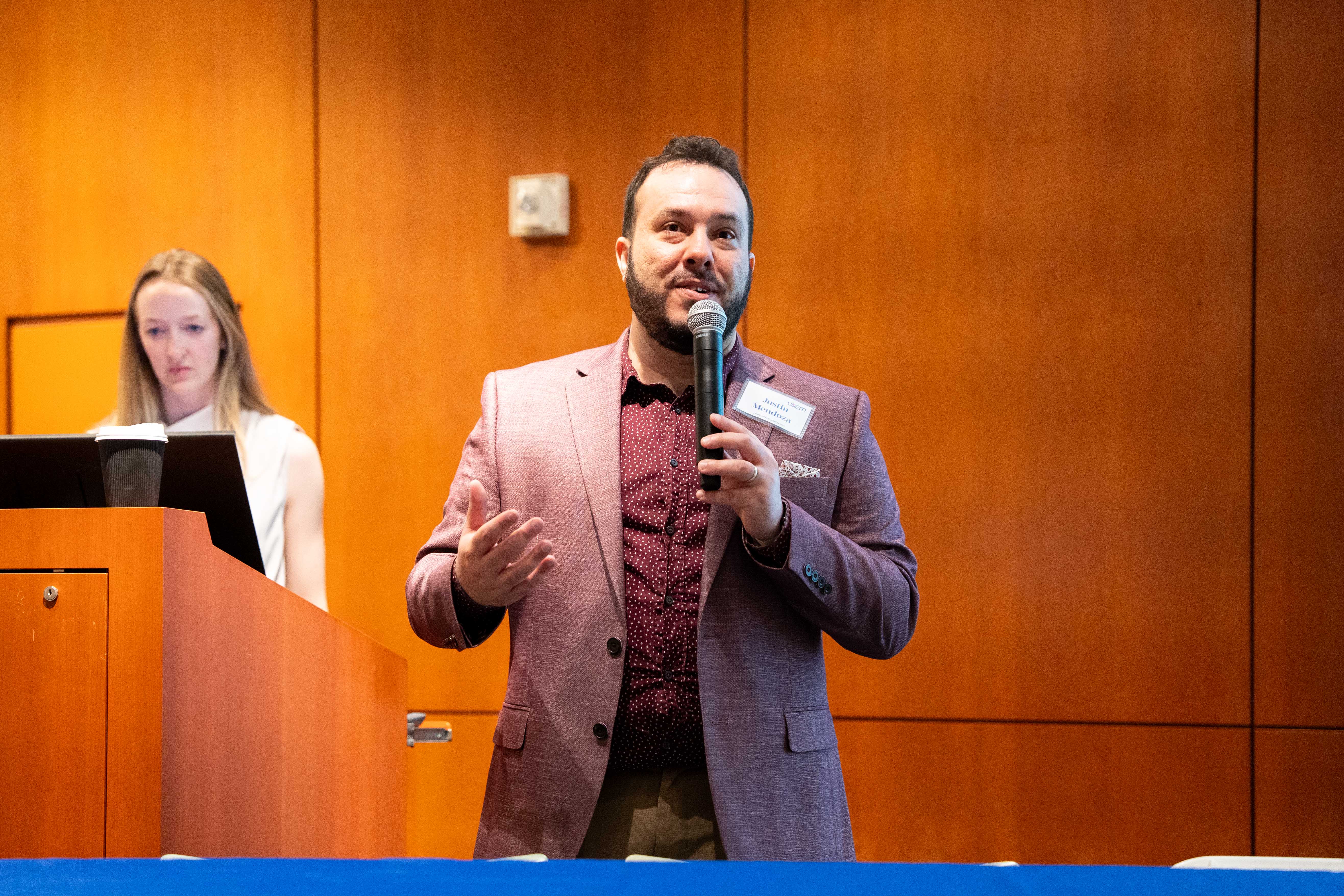
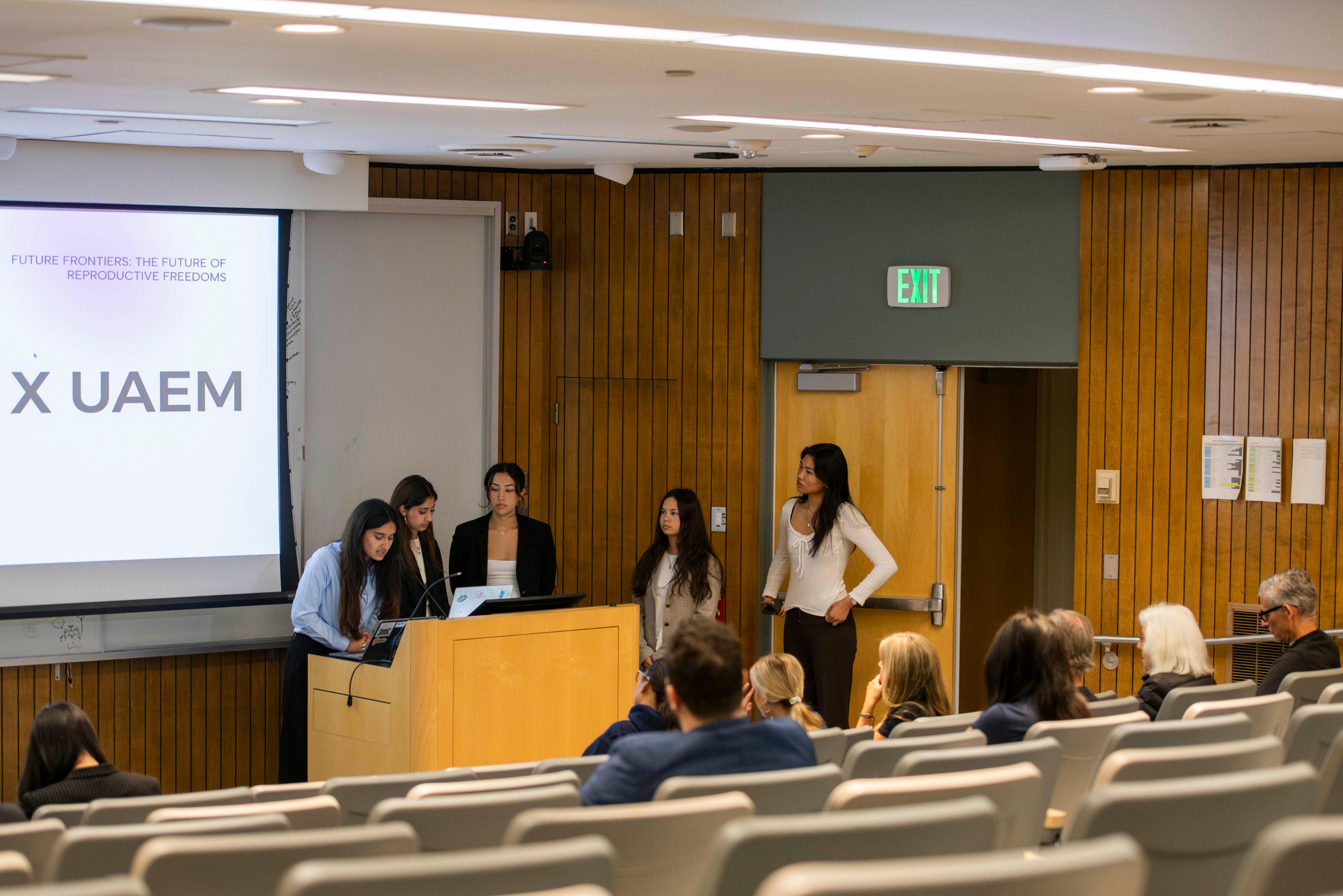
Justin Mendoza, the executive director of UAEM North America, is pictured giving a speech. UAEM, an international advocacy organization that has chapters at universities including UCLA, raised awareness about medication unaffordability during its annual North American conference at the Neuroscience Research Building from April 3 to 5. (Joice Ngo/Daily Bruin staff)

By Kyan Wang
April 12, 2026 10:04 p.m.
While a vial of insulin takes as little as $2 to manufacture, it can cost consumers $250 in the United States.
Universities Allied for Essential Medicines, an international advocacy organization that has chapters at universities including UCLA, raised awareness about medication unaffordability during its annual North American conference at the Neuroscience Research Building from April 3 to 5. Aashi Jhawer, the president of UAEM UCLA, said the conference’s theme – “People before Profit” – aimed to draw attention to rising drug prices.
“We’re seeing these kinds of drugs being placed out of the hands of the people that need them the most,” she said. “If science isn’t able to access the people that actually need the science, then is there really a purpose behind that science that we’re conducting?”
Jhawer said she hoped to teach participants about scientists’ efforts to increase medicine accessibility and find a community passionate about fighting for change.
The conference’s keynote focused on Lenacapavir, a twice-yearly medicine used to prevent and treat HIV.
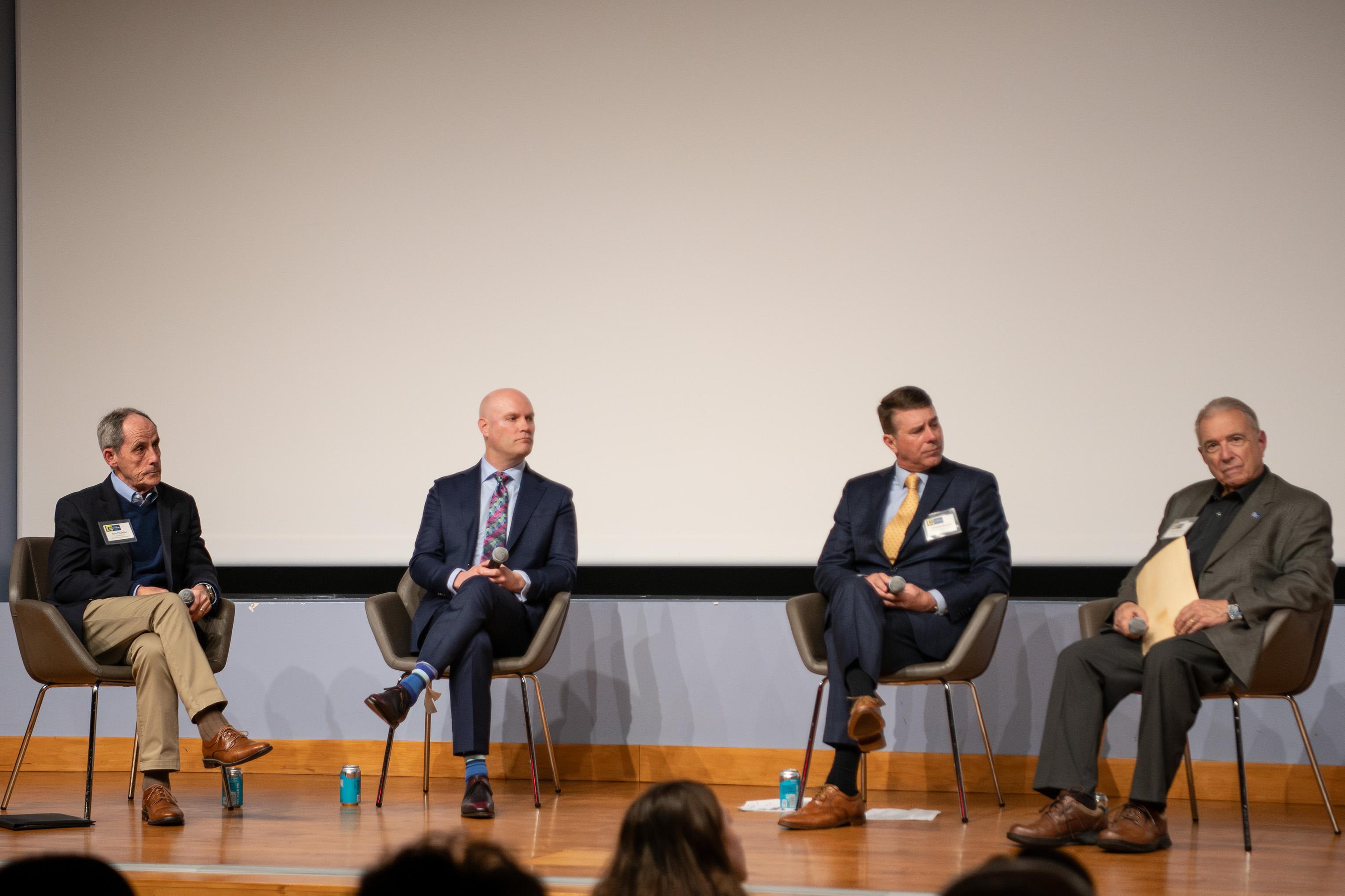
Wesley Sundquist, the co-chair of the biochemistry department at the University of Utah, spoke on his research to discover the drug target of Lenacapavir. A panel during the event also noted the inaccessibility of that medicine, which is listed in the US at $28,218 per person annually by Gilead Sciences.
Rahil Modi, a member of UAEM’s North America Coordinating Committee, said universities can adopt affordable access plans for medicines. Affordable access plans mandate that companies that want to license university research must create distribution plans for low- and lower-middle income countries, as well as vulnerable populations in the United States, he added.
Modi said UAEM’s activism led UCLA to introduce an affordable access plan policy in its licensing templates in 2020, although new licensing agreements with the AAP have yet to be signed.
“I would hope for a fair pricing system for people that are in those vulnerable populations,” Modi said. “I would also like them (companies) to see partnering with the local governments in whatever country they decide to license or decide to expand their market out to.”
Speakers at the conference emphasized the importance of federal research funding, which the Trump administration has slashed since early 2025. Peter Maybarduk said Public Citizen is pushing for California Senate Bill 895, which would introduce a $23 billion bond for research on the November ballot if approved by the California State Legislature and Gov. Gavin Newsom.
[Related: Senate Bill 895 seeks to establish $23 billion research fund amid federal cuts]
Student participants also presented and displayed their research projects in a poster session at the event. Mmesoma Ozokolie, a first-year human biology and society student, and Allen Qi, a first-year public health student, presented a project on public transit access, redlining and overdose rates in Los Angeles County.
Ozokolie said their group found a correlation between racial inequality, redlining and overdose rates in LA. However, the group did not find a correlation between transport access and overdose rates, she added.
Qi said he decided to research the topic after witnessing the fentanyl crisis in San Francisco, adding that he was curious about solutions to lower mortality rates during opioid overdoses.
“No matter somebody’s identity or socioeconomic background, we all deserve the same standard of health care treatment,” Qi said.
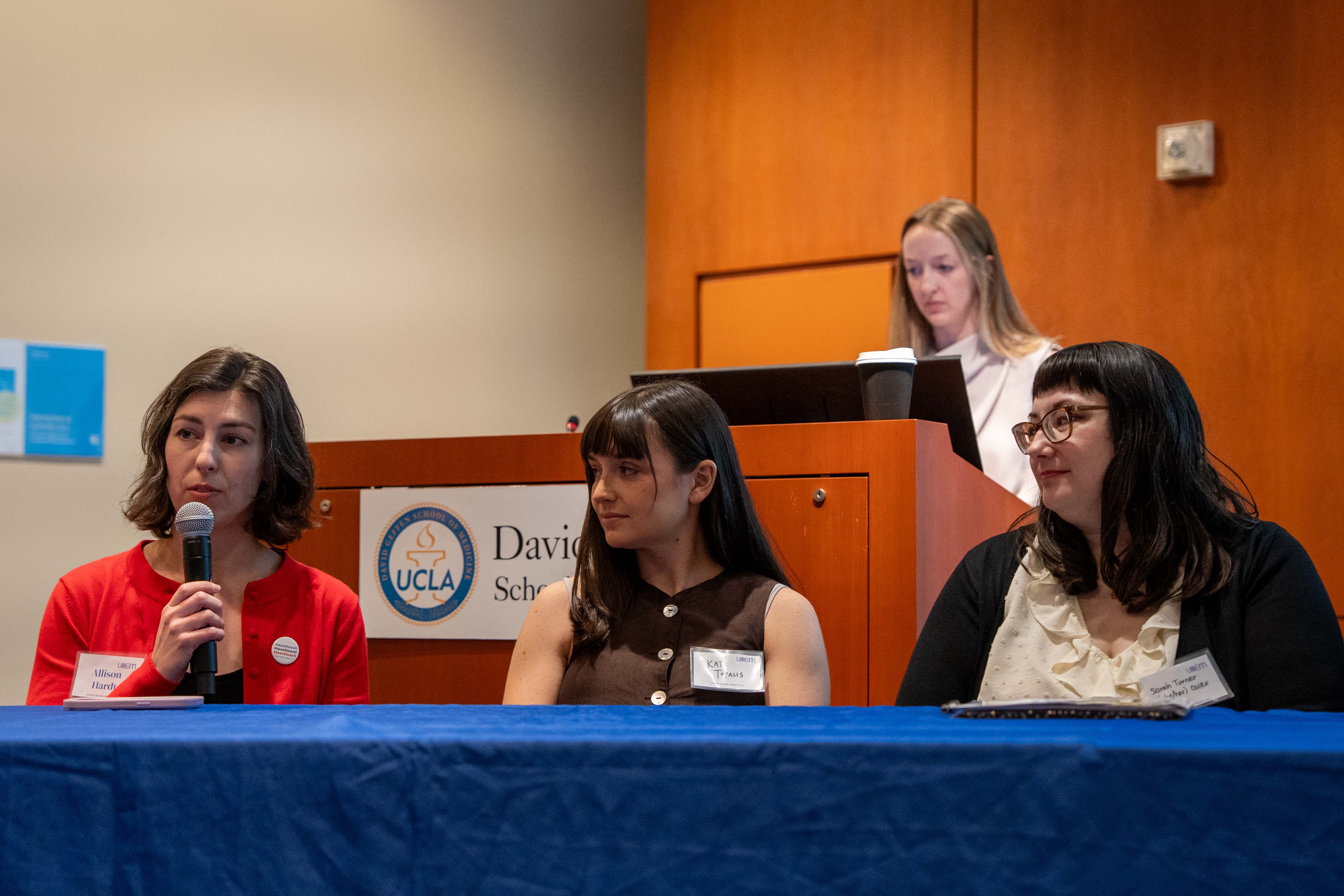
Tomas Mazeika, a second-year philosophy student who attended the event, said he was surprised by panelists’ personal stories on living with Type 1 diabetes. He added that the panelists shared about health emergencies requiring them to buy exogenous insulin for as much as $300 without insurance.
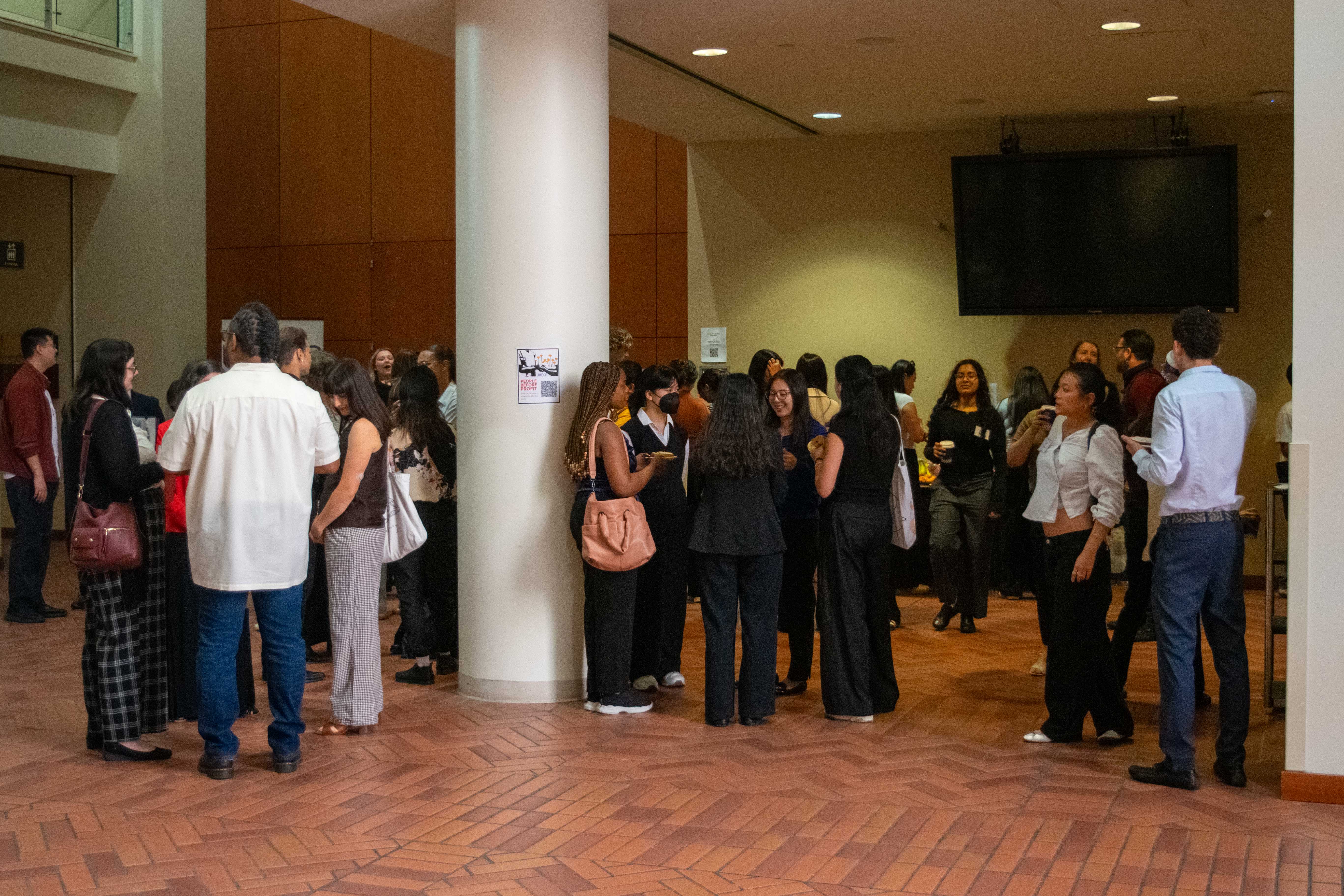
“If we’re able to get those (stories) out there, that’s a good catalyst for change,” Tomas said.
UAEM UCLA began planning the conference at the end of last summer, Jhawer said. Event organizers applied for several grants to fund the conference, which was free for UCLA students, faculty and staff.
Justin Mendoza, the executive director of UAEM North America, said he believes students play a significant role in fighting for affordable medication.
“This campus actually led the way on affordable access planning, and that was driven entirely by students here,” Mendoza said. “I hope that students are able to take lessons from folks who have done on their own campuses and build and learn from there.”