Film review: ‘The Drama’ transcends genre, themes with intentional production, storytelling
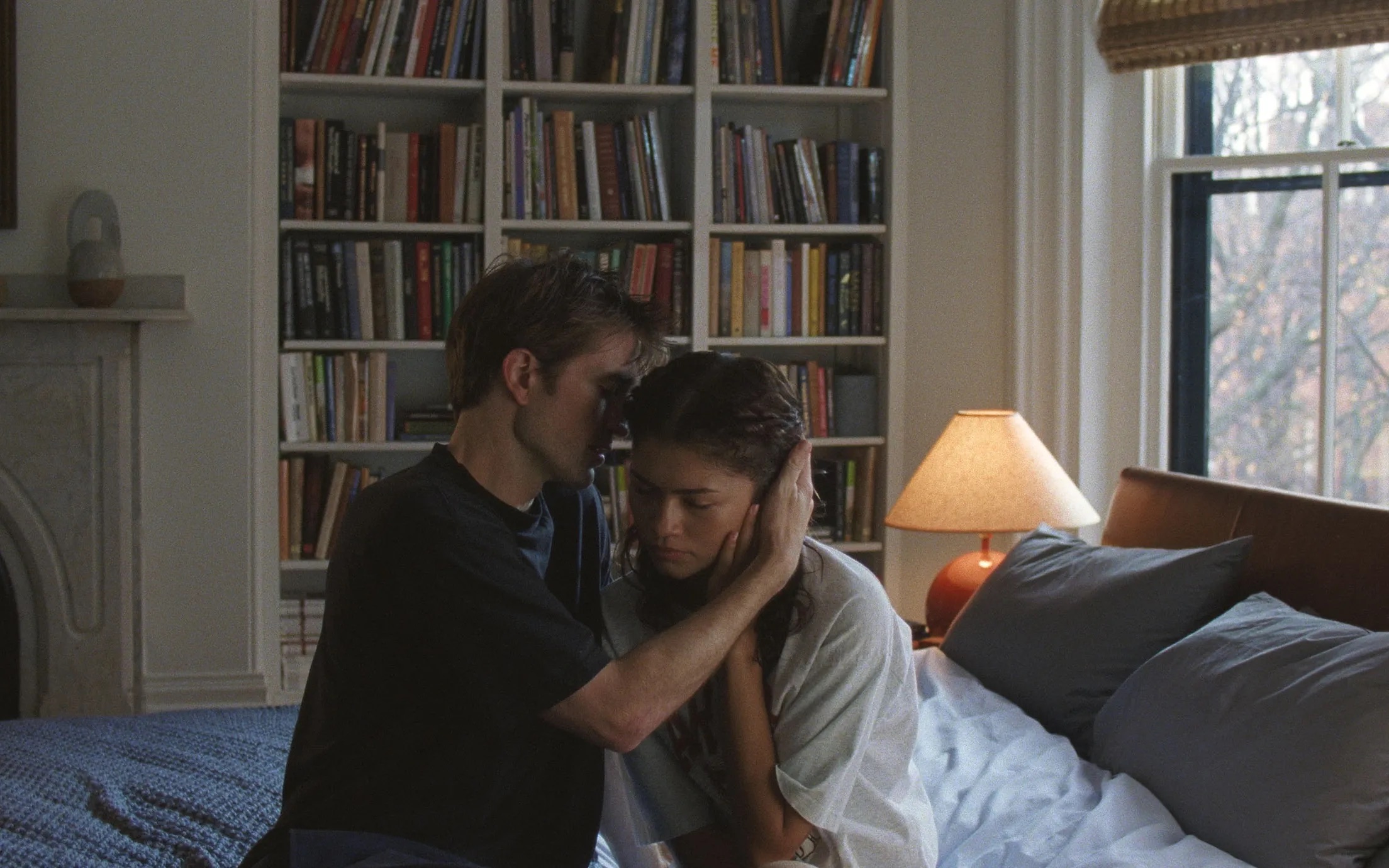
Robert Pattinson, who plays Charlie, holds Zendaya, who plays Emma in “The Drama.” Written and directed by Kristoffer Borgli, the A24 film, released April 3, portrays the young protagonists as they navigate the chaos that ensues one week before their wedding. (Courtesy of A24)
“The Drama”
Directed by Kristoffer Borgli
A24
Apr. 3


By Kemyron McCoy
April 7, 2026 1:21 p.m.
This post was updated April 9 at 9:05 p.m.
Editor’s note: This review contains mentions of gun violence that some readers may find disturbing.
Warning: spoilers ahead.
Despite its title, “The Drama” is a film that transcends genre, theme and several expectations.
Written and directed by Kristoffer Borgli, the romantic “dramedy” walked down the aisle April 3, presenting itself as a love story, before quickly unraveling into a layered exploration of relationships, morality and uncomfortable truths about its central relationship. Starring Zendaya and Robert Pattinson, the film follows the young couple Emma and Charlie as they navigate through chaos after a secret is revealed a week before their wedding. Through its exploration of acceptance, honesty and morality, “The Drama” presents a love story that also sparks conversation and awareness of broader social issues – ultimately making it a must-watch movie.
Within the first few minutes, “The Drama” is set up as a seemingly predictable romantic comedy. However, as the film progresses, it is clear the story is not what audiences likely expected. The climax begins when Emma and Charlie are prompted by maid of honor, Rachel (Alana Haim), to share the worst thing they’ve ever done. Charlie shares that he once cyberbullied someone in high school, though his confession does not compare to Emma’s – which is shockingly disturbing. Emma shares that, during high school, she planned a school shooting, which is the drama that serves as the film’s title.
The plot is driven by Charlie trying to grapple with Emma’s past, which creates an emotionally-challenging dynamic for Charlie – within himself, with Emma and with Rachel, who has a personal connection to Emma’s confession. Rather than simply focusing on the romance, the film begins to pose the question, “When we marry someone, are we marrying them for who they are or who we know them to be?”
[Related: Film review: ‘Project Hail Mary’ is a stellar adaption worth watching]
Apart from the film’s refreshing originality, “The Drama” stands out due to its flawless tonal shifts. There is no singular genre that can encapsulate the film, as it blends elements of romance and drama with dark comedy and even some aspects of thriller. Much like relationships themselves – which can involve laughter, tears and even moments of distress – “The Drama” reflects this emotional range through its seamless changes in tone.
Through its multiple genres, the film provides the audience with relevant social commentary that ignites conversations about mass shootings and their relevance within America. Due to the film’s use of dark comedy, some moviegoers may not appreciate the film’s invitation to start difficult conversations. However, that is a key element of what makes “The Drama” such a compelling film. It provides watchers with the opportunity to engage in discourse about how embedded gun violence is in modern society. The film’s ability to transform a casual night at the movies into a thought-provoking experience is what makes “The Drama” so impactful.
The film’s success also lies in the complexity of its characters and the strength of its cast. Emma is a clear example of this. Her character is shaped by loneliness. She contemplates committing a school shooting. Although she does not to go through with the act, the feeling lingers with her throughout the film.
Her partial deafness also contributes to her sense of isolation. Zendaya’s performance showcases both the humanity and unease in Emma, making the character shockingly relatable yet also difficult to fully empathize with.
The film mainly follows Charlie as he deals with his insecurities about Emma’s past, and Pattinson does a wonderful job in making his character’s internal struggle feel authentic. The film also features Mamoudou Athie, who portrays Mike – Charlie’s best man. It also includes performances from Hailey Benton Gates and Jordyn Curet, with Curet offering further depth to Emma’s character by portraying her younger self.
Rather than relying solely on visuals to enhance storytelling, “The Drama” builds through pacing, editing and unspoken dialogue. These stylistic choices shine in the repeated use of “starting over” as a motif. This is first introduced during Emma and Charlie’s “meet-cute,” when a failed conversation leads to an actual restart of their interaction.
After Emma’s confession, the couple pretends to recreate its first meeting as a way to move past the weight of her past. This element resurfaces at the end of the film when Emma reintroduces herself to Charlie. Charlie does the same, and the interaction shows them forgiving each other for their actions and a willingness to start over regardless of shortcomings. Emma constantly offers second chances, even when she wasn’t offered one of her own. Through this, the film reinforces its central themes and serves as a simple lesson to the art of “forgive and forget.”
[Related: Second take: ‘Sinners’ paves the way for future musical representation at Oscars]
The cinematography by Arseni Khachaturan elevates the film’s emotional impact. Shot on 35 mm film rather than digitally like most modern films, it allows viewers to experience an intimate, grounded visual style that mirrors the emotional depth of “The Drama.” This is magnified by the meticulous editing of the film, which feels reserved, avoiding quick camera changes and sporadic cuts. Instead, the majority of the shots are held in extended takes with minimal camera movement, allowing the performances and storyline to take the center stage.
One of the film’s strongest moments comes during Charlie’s wedding speech, a chaotic scene, which maintains its heightened significance due to the still camera technique and lack of visual cuts that could otherwise confuse the viewer. This stillness forces the audience to sit with the discomfort of the film and fully appreciate its comedic writing. The intentional decision to shoot on film could also reflect Emma and Charlie’s relationship – which is far from perfect. In this way, the film’s visual stylization reinforces the idea that their relationship, much like the medium itself, is textured, imperfect and real. Together, the artistic choices of the film enhance its identity, making it not only fun but equally captivating to watch.
Ultimately, “The Drama” is a film that offers love, humor and, as its title suggests, drama. Regardless of what originally draws viewers in, they will all exit the altar with a sense of entertainment as well as a lingering curiosity about the questions the film offers them.