This Oaxacan cafe in Sawtelle is supporting Bruins while honoring its proud heritage
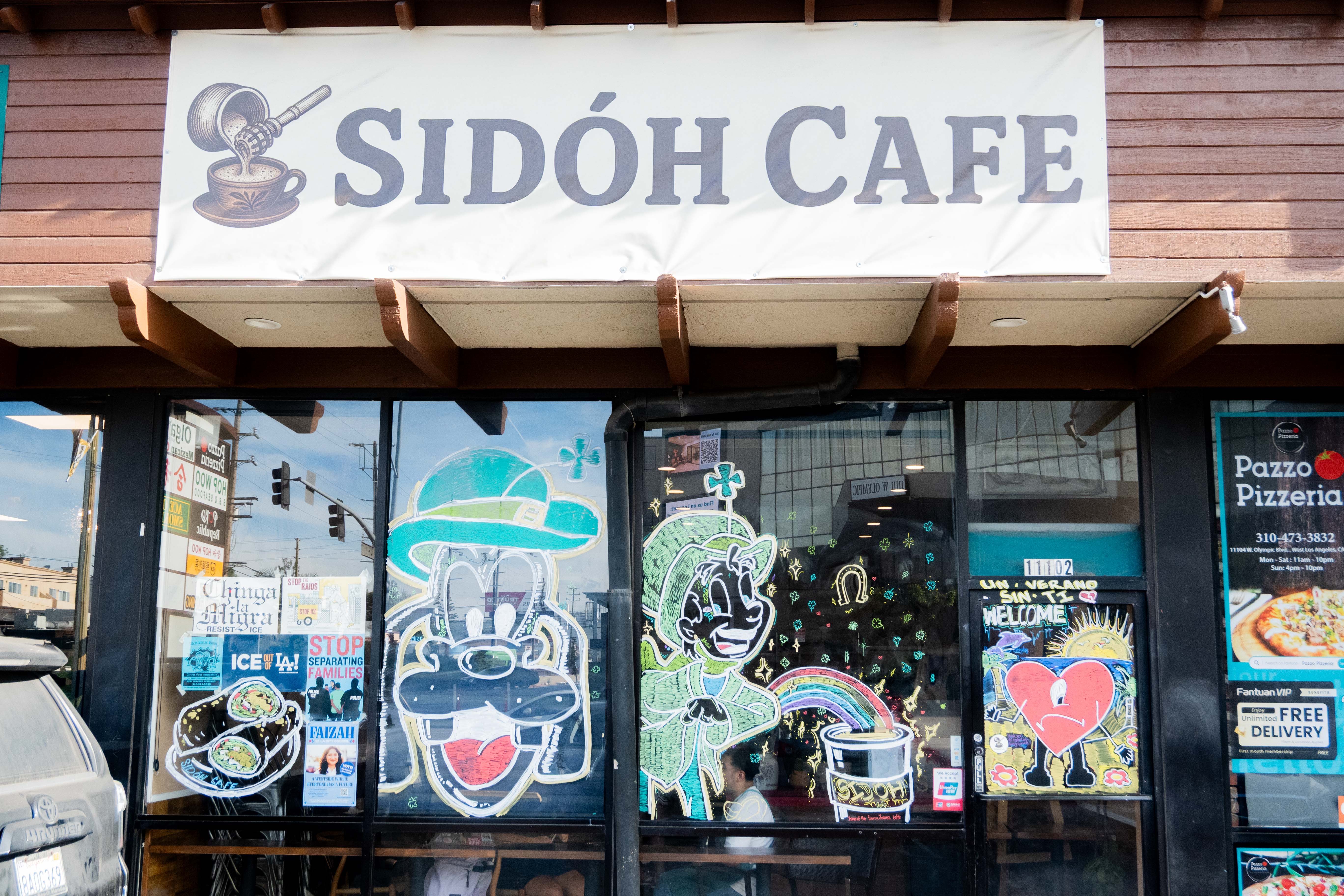
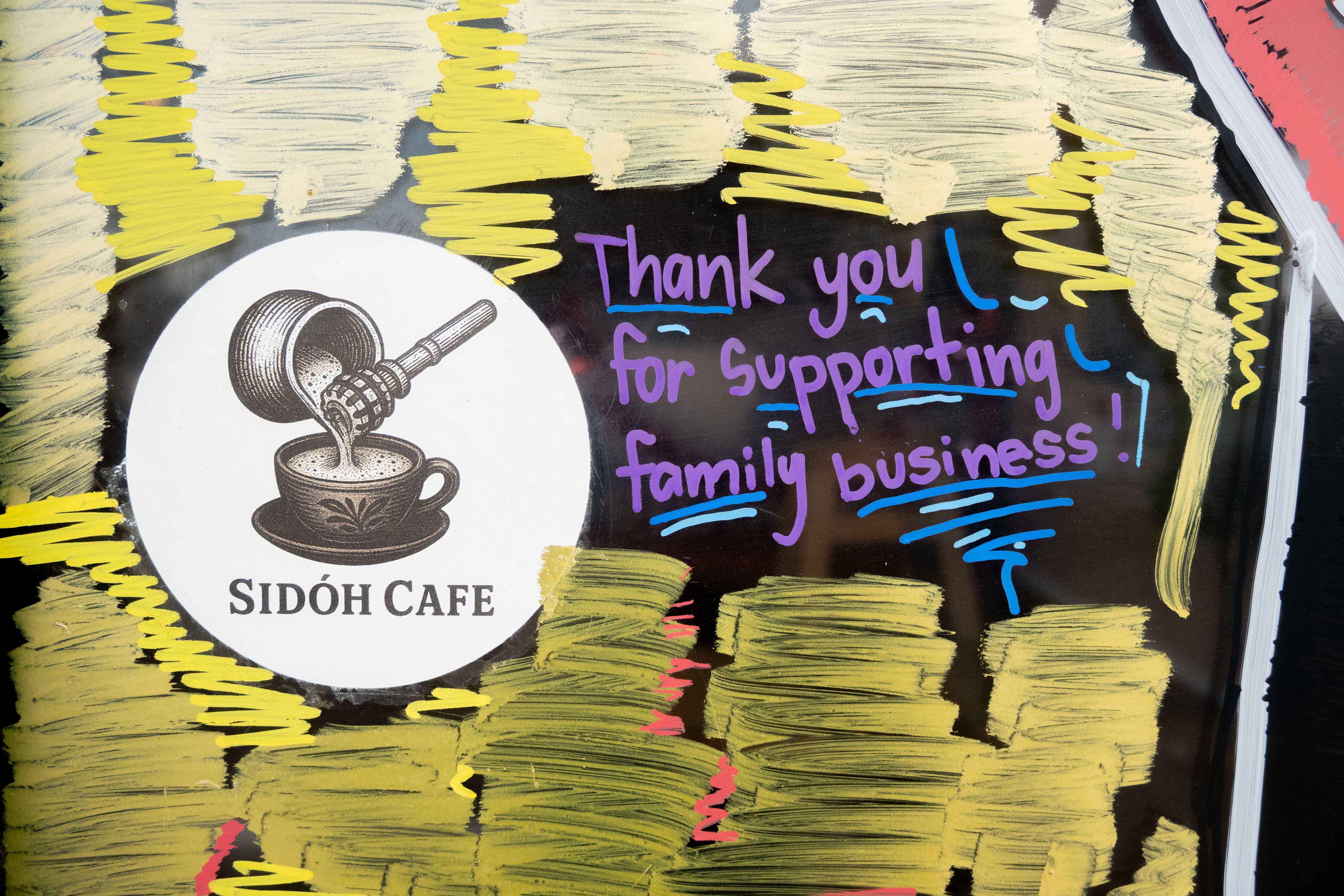
Sidóh Cafe’s windows are decorated with drawings. Mark Garcia, a UCLA alumnus, co-founded the Oaxacan cuisine restaurant alongside his brother in the spring of 2025. (Karla Cardenas-Felipe/Daily Bruin staff)

By Sophia Pu
April 2, 2026 9:58 p.m.
When brothers Mark and Jason Garcia came across an unassuming strip mall along Olympic and Sepulveda Boulevard, they knew it was the place to open their cafe.
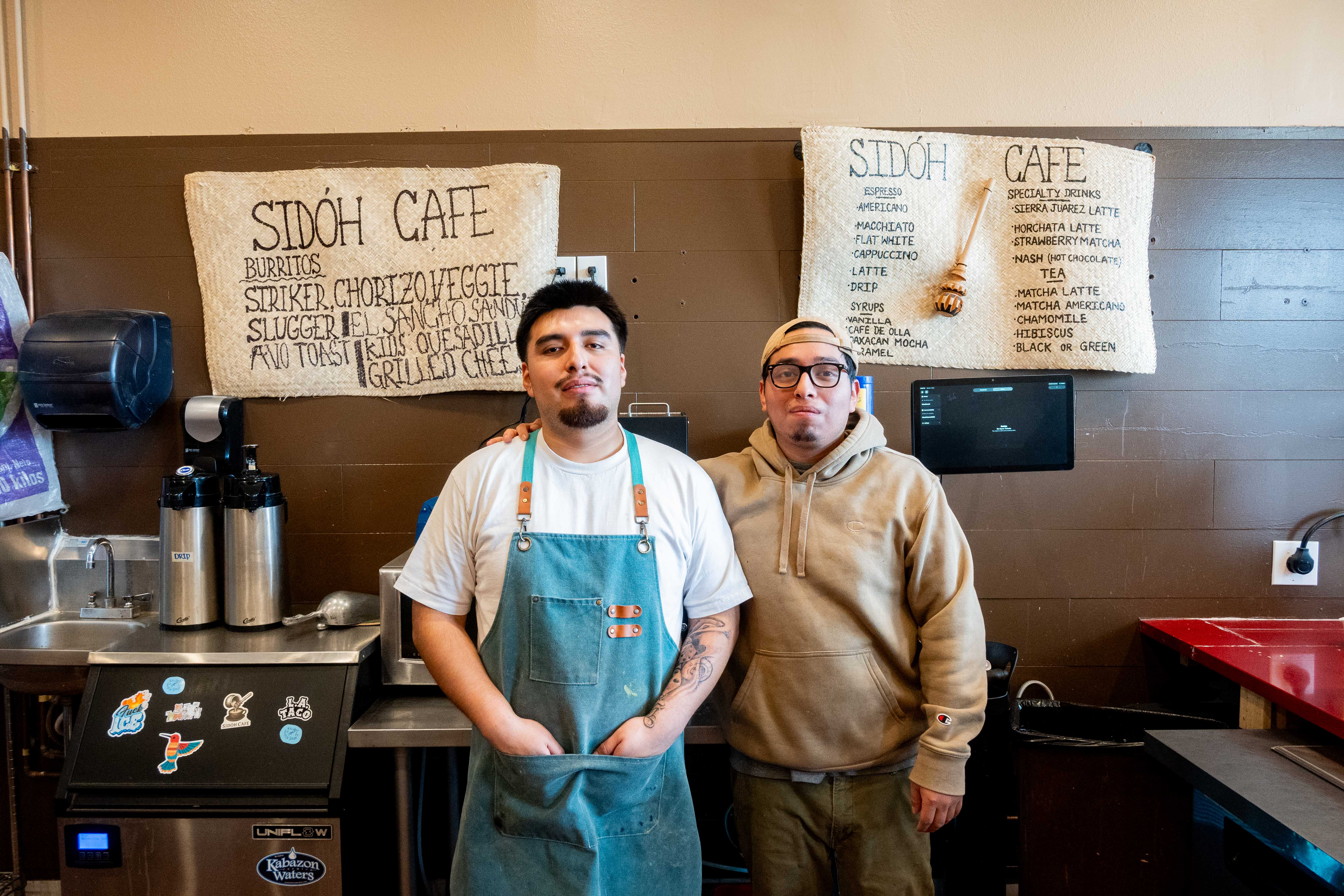
Mark Garcia, a UCLA alumnus, co-founded Sidóh Cafe – which serves Oaxacan-inspired drinks and food – with Jason Garcia in the spring of 2025. The restaurant, which is decorated with vibrant window paintings and posters reading, “STOP ICE,” is located in Sawtelle, the neighborhood their family first moved to after emigrating from Oaxaca, Mexico, Mark Garcia said.
His family is part of a large Oaxacan population that made Sawtelle, Venice and West Los Angeles their home in the 1970s and 1980s, he said. Gentrification and rising rents later forced the Garcias and much of the Oaxacan community out of West Los Angeles, Mark Garcia added.
Starting Sidóh Cafe in Sawtelle was a way for the brothers to show LA that the Oaxacan community is still alive and thriving in the area, Mark Garcia said.
“The culture and the community is still here – there’s nothing you can do to put us to bed, we’re always going to be here,” he said. “Sidóh, for us, is an act of resistance.”
“Sidóh” is a word in Zapotec, a language family indigenous to southern Mexico, according to the cafe’s Instagram account. The word translates to “first light,” which is when work begins for the family.
The cafe opens at 6:30 a.m. every day with day laborers, house cleaners and restaurant workers grabbing coffee from Sidóh before work, he added.
Atop the barista counter is a drawing of an indigenous woman with “West Los Angeles” tattooed on her shoulder, which Mark Garcia said his youngest brother drew. He added that Sidóh Cafe’s menu is written on petates – mats people use in Mexico and Central America to rest on – while Jason Garcia said their drinks are served in mugs made of barro rojo, or Oaxacan red clay.
Sarai Rojas, a third-year Chicana/o studies and political science student who has visited the cafe, said the attention to detail in the restaurant’s decor made her feel represented. The references to Oaxacan culture set Sidóh Cafe apart from other Latino-run coffee shops, she added.
A silhouette of the mountains that enclose Oaxaca’s central valley is spray-painted on the cafe’s wall. Jason Garcia added that their Oaxacan home has a view of the same mountains, and Mark Garcia said customers often point to the location of their family’s village on the wall.
“We wanted for them to feel like a piece of them is part of the shop,” he said.
Mark Garcia said he worked in investment banking in New York after graduating in 2023. After months of spending mealtimes alone, he realized how important his family was to his health and happiness and returned to LA, he added.
“Now I get to work with family, now I get to uplift them,” Mark Garcia said. “(Opening Sidóh Cafe) is more so to say, ‘This is what I got to show for everything that I’ve gone through.’”
Mark Garcia said many of his cousins helped renovate the space by painting the cafe’s walls, wiring electricity and setting up the plumbing. His uncle ensured the kitchen equipment was complete, constructed the cashier area and built benches, he said.
While the brothers crafted menu items and oversaw the cafe’s finances, their sisters formulated syrup flavors to use in drinks, he added.
All of Sidóh Cafe’s coffee is sourced from the mountainous region of Sierra Norte in Oaxaca, where Mark Garcia said his family has a coffee farm and operates their supply chain. He added that sourcing the coffee beans requires a six hour drive from the mountains to the city in Oaxaca, after which his uncle stores the beans and sends them to Tijuana, Mexico via air freight.
Mark Garcia said his family drives across the United States-Mexico border every two weeks to retrieve the beans and roast them in their LA home.
Sidóh Cafe offers better prices to coffee bean growers in their village in comparison to wholesale corporations, which do not value the labor as highly, Mark Garcia said. He added that Sidóh Cafe’s business model differs from companies that profit off products from Oaxaca but have no Oaxacan ownership.
“We really saw it as a chance to maintain that Oaxacan ownership on Oaxacan coffee, especially now that the specialty coffee scene is growing,” he said.
Reinvesting in the community is central to Sidóh Cafe’s mission, Mark Garcia said.
The cafe hosted a grand opening in May 2025 that attracted a crowd of more than 300 people and featured band performances, a mechanical bull and games.
One week later, U.S. Immigration and Customs Enforcement raids across LA created fear for much of the community that supported the cafe and its grand opening, Mark Garcia said. He added that staff often carpooled together to work at the cafe because they were afraid of potential ICE presence on public transit.
A September Supreme Court order temporarily allowed the continued use of race and Spanish language use as criteria for immigration stops. ICE and U.S. Customs and Border Protection arrested more than 10,000 people in LA as of Dec. 11, according to the U.S. Department of Homeland Security.
“A lot of the community that came out to support our grand opening couldn’t come out, and we really felt it as an obligation,” Mark said. “They came out to support us. It’s only right for us to, in some way, try to help out the community as well.”
Sidóh Cafe raised more than $1,000 for families impacted by ICE raids in partnership with LA-based running clubs Floreciendo en Movimiento and Oaxacali, Mark Garcia said. He added in a written statement that the cafe is stocked with flyers and “know-your-rights” cards from the West LA rapid response network, a grassroots movement that reports ICE sightings and provides resources to those impacted.
Mark Garcia said storefronts neighboring Sidóh Cafe report vehicles they suspect were associated with immigration enforcement.
Mark Garcia’s work is rooted in “tequio” – an indigenous Mexican value of giving back to the community, said Rojas, the internal vice president of Grupo Estudiantil Oaxaqueño. GEO, which often partners with Sidóh Cafe, is a student organization at UCLA that seeks to promote and preserve indigenous Oaxacan culture, according to its Instagram account.
Sidóh Cafe often provides coffee, pan dulce and a space to meet for GEO events, Rojas said. As a first-generation transfer student, Mark Garcia said he found friends at UCLA through GEO and the Latino Business Student Association.
Mark Garcia said he is also working with a group of LBSA interns to produce social media content, marketing and fundraising materials for the shop. Ashlley Dionicio, the Sidóh Cafe committee lead for LBSA, said Mark Garcia listened to each intern’s ideas and helped beginners build social media marketing skills, which gave her confidence as a first-generation college student.
LBSA is now helping Sidóh Cafe look into the costs involved and capital needed to open a second location, said Dionicio, a third-year international development studies student. Mark Garcia added that he is looking to branch into the Koreatown area, where there are large Oaxacan communities facing eviction.
“We want to be part of that fight,” Mark Garcia said. “To be part of that fight, we need boots on the ground.”