‘Just trying to advance your work’: Mark Tramo’s connection to Jeffrey Epstein
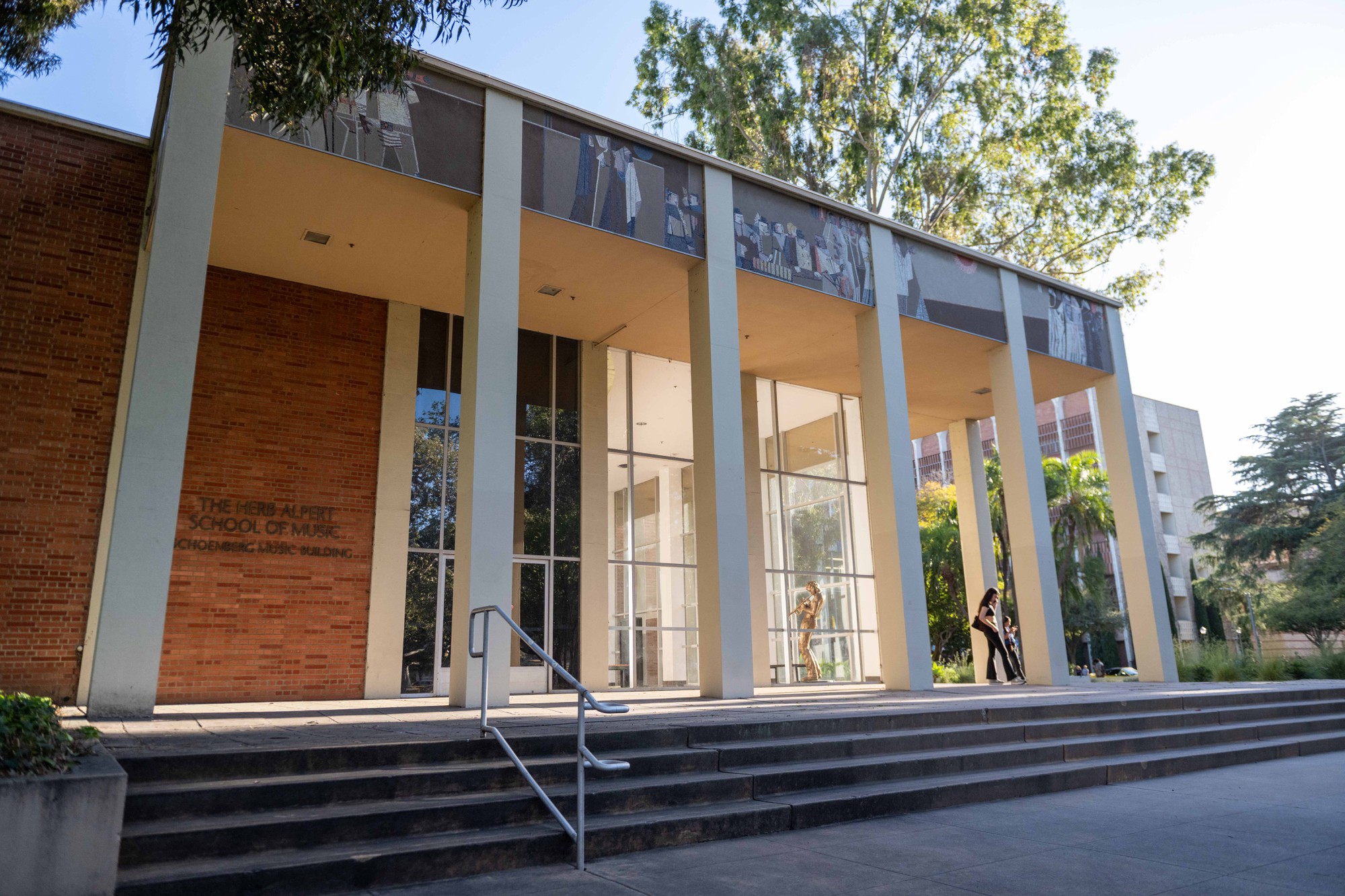
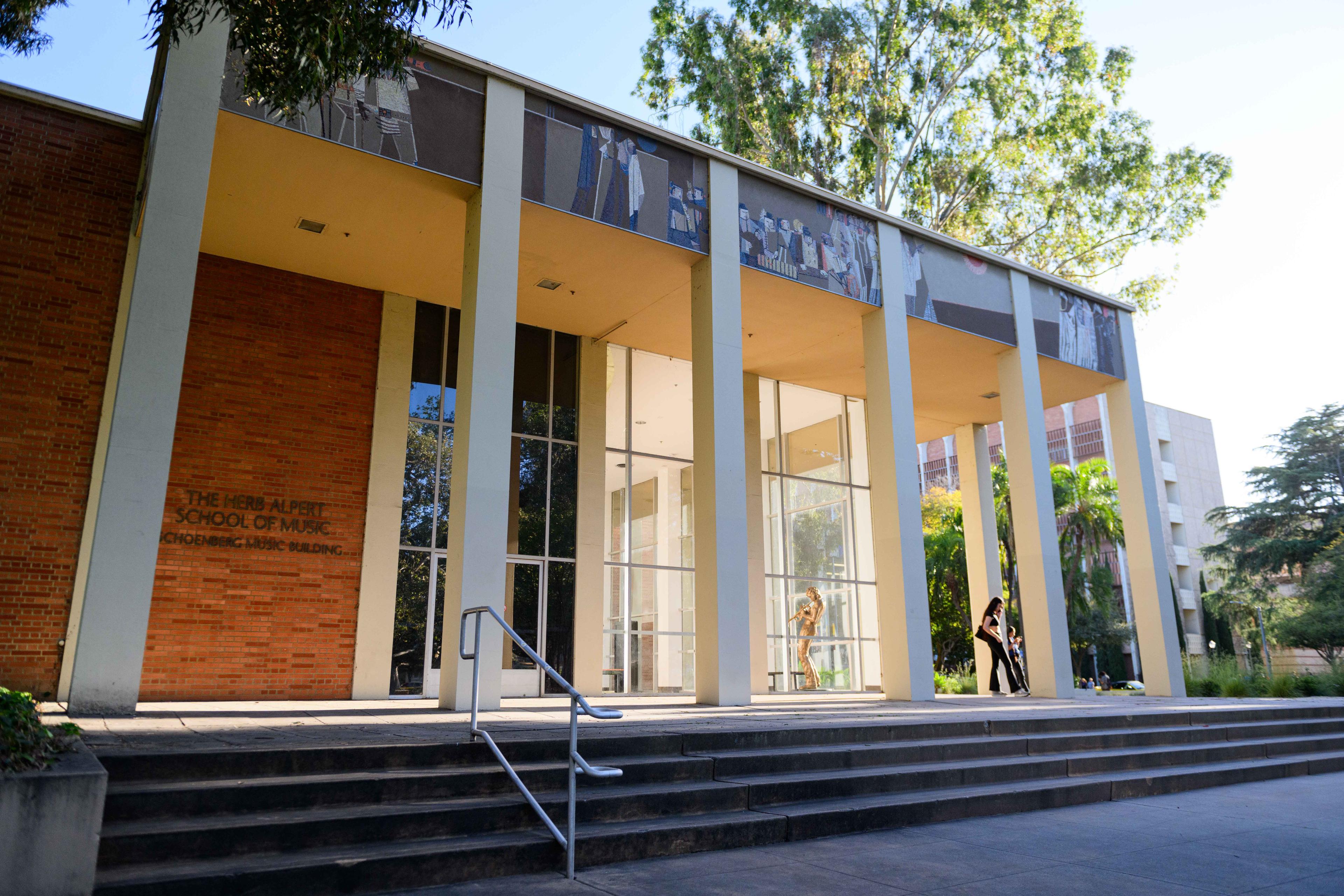
Schoenberg Hall, one building where Mark Tramo – an associate adjunct professor of neurology – has taught, is pictured. A UCLA professor sought donations from and spoke about his scientific research with convicted sex offender Jeffrey Epstein after the financier’s initial 2008 conviction, according to U.S. Department of Justice documents. (Daily Bruin file photo)

By Phoebe Huss
March 15, 2026 3:19 p.m.
A UCLA professor sought donations from and spoke about his scientific research with convicted sex offender Jeffrey Epstein after the financier’s initial 2008 conviction, according to U.S. Department of Justice documents.
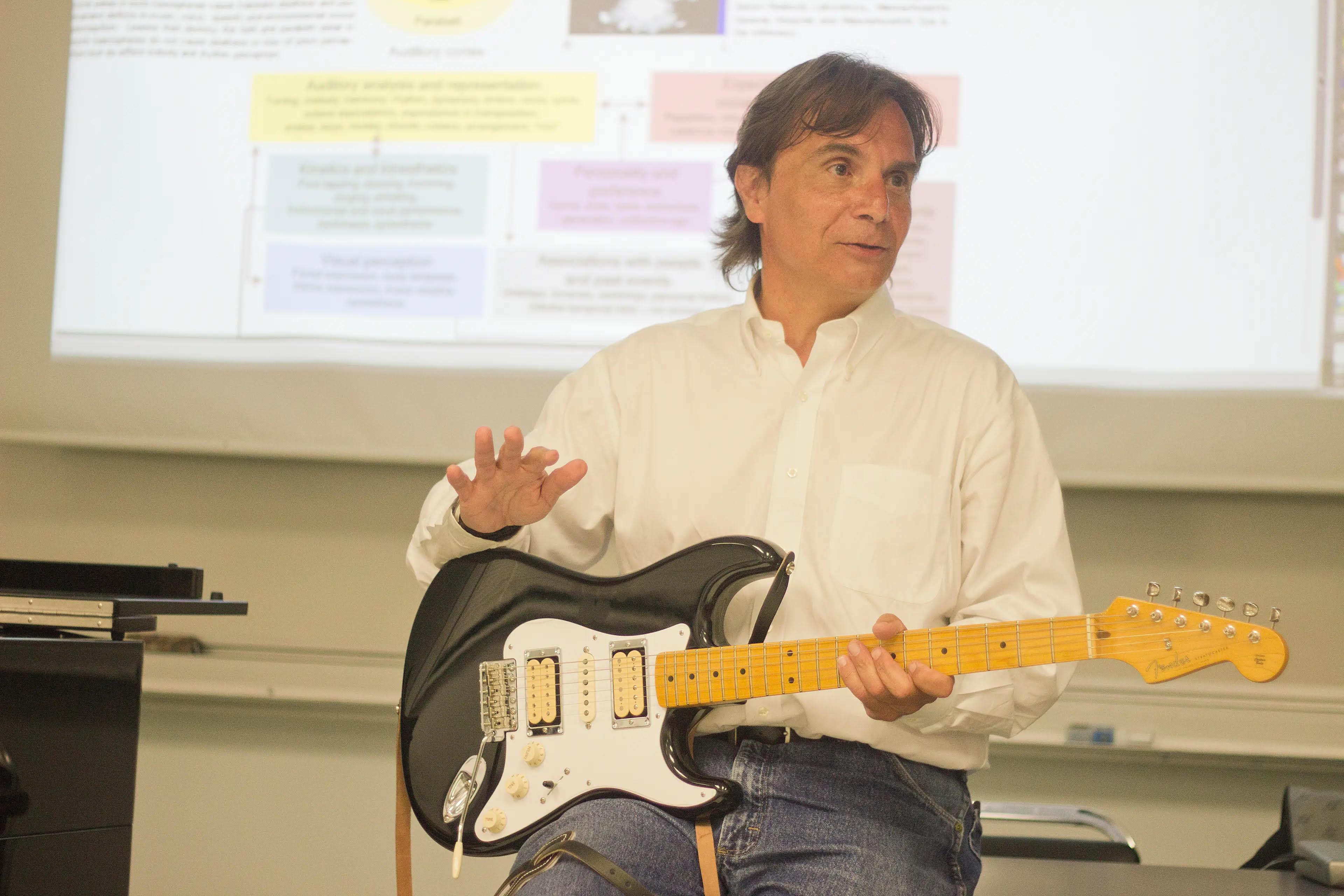
Mark Tramo, an associate adjunct professor of neurology, was a recipient of Epstein’s donations and maintained a relationship with Epstein – who died in jail while awaiting trial for sex trafficking minors – for about two decades. The two men frequently spoke about Tramo’s research and Epstein’s scientific interests.
Tramo and Epstein corresponded over email and met on Skype in the time period between Epstein’s conviction for soliciting prostitution from a minor in the late 2000s and his July 2019 detainment for sex trafficking minors, according to documents released by the federal government in late 2025 and early 2026. The name Tramo appears about 1,300 times in the DOJ file library.
Appearing in the documents does not imply criminal wrongdoing. Several people denied wrongdoing in relation to Epstein following their mentions in previous releases.
Tramo said in a March 6 email to the Daily Bruin that he will retire in June, adding that he canceled his spring 2026 undergraduate class – “Science of Music.”
He added that he believes people have misinterpreted his relationship with Epstein, which he described as philanthropic. Tramo did not respond to a request for comment about Epstein’s connection to his research.
[Related: UCLA professor to retire, cancel spring class amid criticism over Epstein ties]
Epstein funded Tramo’s neuroscience research since the pair met in the 1990s, when Tramo was a professor at Harvard University, including by sending Tramo a check for $100,000 in February 2017 and pledging an unconfirmed amount in December 2011.
Epstein had a particular interest in the mind and brain, Tramo said in an interview with a Daily Bruin columnist. He added that Epstein’s criminal convictions were accepted by the Harvard community as a minor offense.
Tramo also said in a January emailed statement that he never asked about Epstein’s 2000s convictions.
Tramo told a Daily Bruin’s columnist in January that he only discovered the full extent of Epstein’s behavior when Miami Herald journalist Julie Brown published an exposé on Epstein’s crimes – which was published in November 2018.
“It was like, ‘Oh my God,’” Tramo said in the interview. “I remember being angry because it was like, ‘Oh wow, this is my benefactor. What an idiot. Thanks a lot.’”
Epstein and Tramo continued to talk over email and Skype in 2019, according to DOJ files, and Tramo kept asking about funding months before Epstein’s death.
Tramo has researched the neuroanatomy and neurophysiology of cognition and music perception, and founded and directs the Institute for Music and Brain Science, which studies the impact of music on the brain to develop cures and rehabilitation methods for neurological issues.
Epstein funded the institute’s studies on ambient music helping patients with Parkinson’s disease, music alleviating pain and stress in premature babies and the role of the auditory cortex in loudness perception, according to the DOJ documents.
But starting in June 2017, Epstein repeatedly told Tramo that he found the science of listening to music boring and wanted to fund research investigating composers’ brain structures and genetics.
“I am not interested at all in the listening ZERO only the composing,” Epstein said in a September 2018 email to Tramo.
Tramo accepted funds while at UCLA
Epstein told Richard Kahn – his accountant – to give $100,000 to Tramo on Feb. 2, 2017, about twenty minutes after Tramo emailed his assistant the nonprofit information for IMABS.
Later that same day, Tramo emailed Judi Smith – which appears to be a nickname for the Judith Smith, the former dean of the Herb Alpert School of Music, where Tramo was also an instructor. Tramo’s email said a patron of IMABS was interested in donating to UCLA and asked to schedule a meeting to discuss it.
This donation would provide Tramo with the funding to write a neuroscience book, Tramo said to Smith in the email. Four days later, on Feb. 6, Gratitude America Ltd. – one of Epstein’s charities – wrote a $100,000 check to the institute.
The DOJ publicly released a scan of the check, as well as millions of other files from Epstein’s estate and related to his prosecution, Jan. 30.
Smith said in an emailed statement that she does not recall meeting with Tramo to discuss the potential donation, and that the donation was unrelated to the music school.
Epstein additionally pledged a donation to IMABS in December 2011, while it was registered as a nonprofit in Massachusetts and after Tramo began teaching at UCLA. Tramo moved IMABS to California in 2015 and it achieved nonprofit status in 2015 as a public charity.
Tramo said in a February emailed statement that he and his colleagues did not approach Epstein about donating to UCLA.
The neurology professor also sent an email about a New York Academy of Sciences event to “[email protected]” in March 2011, calling the recipient Jeffrey. Another recipient of the email is copied, but their address was redacted by the DOJ.
The email address has been inactive for many years, and no UCLA records indicate it belonged to Epstein, a university spokesperson said in an emailed statement.
Funds that are not directly sent to UCLA are not typically bound by the university’s rules for research, unless the funding recipient uses university space or equipment, said Mildred Cho, professor at the Stanford Center for Biomedical Ethics.
Cho added that most universities strive to keep the relationship between researchers and their sponsors at arm’s length.
“There’s a good reason for these rules,” she said. “If the universities become basically paid advertisements for people’s viewpoints or for company products, then it’s going to really undercut the trustworthiness of all kinds of academic science.”
[Related: UCLA professor discussed students, class with Jeffrey Epstein, DOJ documents show]
How the two met
Epstein, who had more than 1,000 sex abuse and sex trafficking victims – according to the FBI, was a former math teacher and “hobbyist” in science, he told ScienceInsider in September 2017. He served on the advisory board of the Harvard Mind/Brain/Behavior Interfaculty Initiative, which studies the relationship between the nervous system and human behavior.
In the 1990s, Tramo – who taught at Harvard University until 2010 – gave a talk before the advisory board, and Epstein requested to meet him afterwards, Tramo said in an emailed statement. He said in the January interview with the Daily Bruin columnist that Harvey Fineberg, who was Harvard’s provost at the time, told him Epstein was highly impressed with Tramo’s work.
Tramo said in an emailed statement that Epstein sought Tramo and other academics out, adding in an interview that Epstein wanted to align himself with prominent figures. Tramo and 26 other scientists appear on Epstein’s “List of Scientists” released by the DOJ.
“Philanthropy is how he (Epstein) moved up the social ladders,” said Michael Scroggins, a lecturer at the UCLA Institute of Society and Genetics who teaches a course on research ethics.
Epstein used his charity to buy access to institutions, people and social situations – all while gaining a halo of beneficence, Scroggins said.
But Epstein was also trying to insert his own ideas about science into academia, said Arthur Caplan, a professor of bioethics at the New York University Grossman School of Medicine. Caplan added that he believes Epstein – who never completed his undergraduate degree – liked the esteem of those with degrees and positions he himself did not achieve.
“He really enjoyed the ability to influence thinking,” Caplan said. “There’s something rewarding to him about being able to manipulate these so-called ‘smart people.’”
Tramo said in the January interview with the Bruin’s columnist that he saw Epstein as a Great Gatsby-like figure because of his wealth and bachelor lifestyle.
“He was a smart guy,” Tramo said in the interview. “(He) had ideas and wanted to share them.”
For instance, a summer 2016 conversation between Tramo and Epstein inspired Tramo to add passages on Chaos and Evolutionary Psychology to his pop-neuroscience book, Tramo said in an April 2017 email. Epstein also told Tramo to stay away from mechanics in March 2011, to which Tramo responded “you bet.”
The Harvard interfaculty initiative – and Epstein’s contributions – enabled Tramo to develop a Music, Mind and Brain course about the intersection of music and neuroscience. He brought the course to UCLA, which involved reviewing studies and research papers from IMABS, in 2010.
Tramo never talked about who funded the institute, according to two students who took the class in fall 2025.
Caplan said he thinks it is unfair for professors not to disclose their funding sources to students.
“Students don’t know if somebody’s got an agenda that funded a particular scientist’s research, and they’re looking at a particular hypothesis not because they think it’s the best one, but that’s what the donor wanted them to look at,” Caplan said.
[Related: UCLA professor Mark Tramo’s ties to Jeffrey Epstein raise mixed student reactions]
In the 2010s, Tramo forwarded emails to Epstein from students in his UCLA course discussing a group project as well as his 2014 student roster. He also forwarded emails to Epstein from Harvard and UCLA students seeking research opportunities, to secure funding for IMABS from Epstein, Tramo said in an emailed statement.
In September 2013, when Tramo accepted a student’s invitation to a Cognitive Science Student Association dinner, he also sent the email to Epstein. The student, Cody Kommers, now an alumnus, said in an emailed statement that Tramo adding Epstein to the thread seemed random.
The email address only appeared as “jeevacation” and did not give Epstein’s name, so Kommers did not realize the recipient was Epstein at the time, he added. The alumnus also said Epstein did not attend the dinner described in the messages, and that he had no correspondence with him.
Epstein was sentenced an to 18 months in prison in June 2008, the same year he registered as a child sex offender. He was released on probation after 13 months. An article in Page Six – a New York Post gossip column – published May 19, 2010, referred to Epstein’s prostitution solicitation convictions without specifying that they involved minors.
Later that day, Tramo emailed Epstein, saying that he read an article in Page Six and wanted Epstein “to know you still matter,” as well as asking him to call if he wanted to chat. However, Tramo told the Harvard Crimson in September 2025 that he never read about what happened to Epstein in 2006 and 2007.
Epstein weighed in on research
Epstein told ScienceInsider in September 2017 he wanted to fund the smartest minds – as well as the rebels – of the science world through his philanthropy.
On more than one occasion in 2017 and 2018, Epstein responded to Tramo’s emails by trying to get the scientist to focus research on music creation, rather than perception.
Cho said if a donor tries to guide a scientist into studying something specific, the scientist may feel obligated to do what they say. She added that she believes this is a long-standing problem in research.
“Once you have this funding relationship started, obviously your incentives are to keep it going,” she said. “You want to keep the funders happy, show that you’re productive. … People who receive funding are obviously going to not try to damage that relationship.”
Scroggins also said the shifting interests of some philanthropists make consistent sources of funding difficult to find.
“Donors like Epstein, their interests … can be as fleeting as a butterfly,” he said. “We have a guy like Epstein who’s interested in one thing this year and something else next year. Science doesn’t work on that timeline.”
In 2017, Epstein said he was funding research by Tramo on music production. Tramo continued to pursue studies on music perception, saying in a December 2017 email he wanted to design an acoustic environment optimal for brain, language and social development for infants who spent time in Intensive Care Units.
“Lots of babies to help/save, man!” Tramo wrote in a November 2017 email about the project, with Epstein blind copied.
One of the DOJ files is an IMABS grant proposal titled “The Jeffrey Epstein Project for Brain Development in Critically-Ill Infants,” which names Tramo as its contact and sought to assess the effects of auditory stimulation on at-risk infants in the NICU and after their discharge.
The proposal – asking for about $500,000 – is undated and the title does not appear in any other files released by the department. Epstein did not name the project or agree to fund it in any messages to Tramo released by the federal government.
Tramo told the Los Angeles Times that he messaged Epstein about babies sucking more vigorously on pacifiers when they hear their mother’s voice in September 2017 because of this neuroscience project.
The email garnered criticism from students and community members. In mid-February, flyers posted around campus read “UCLA Professor told Epstein to play a recording of the mother’s voice to get the baby to suck harder … Why are we not outrage?”
Tramo said in the January interview with The Bruin columnist that public grants, like those from the National Institutes of Health, are difficult to obtain for the type of science he pursues.
Scroggins said private donations typically allow researchers to work with more freedom and less oversight. Tramo said in the interview that he does not want to know the flaws of the people who fund his research.
“You look behind the curtain and there’s some major flaw; you just wish you never looked,” Tramo said. “You’re just trying to advance your work, for the betterment of society, especially in the medical field.”
Tramo added in the January interview that he did not feel pressured to take funds from Epstein, but said he chose to do so to proceed with his research.
“It’s you wanting to achieve and succeed and advance your work,” Tramo said.