UCLA professor Mark Tramo’s ties to Jeffrey Epstein raise mixed student reactions
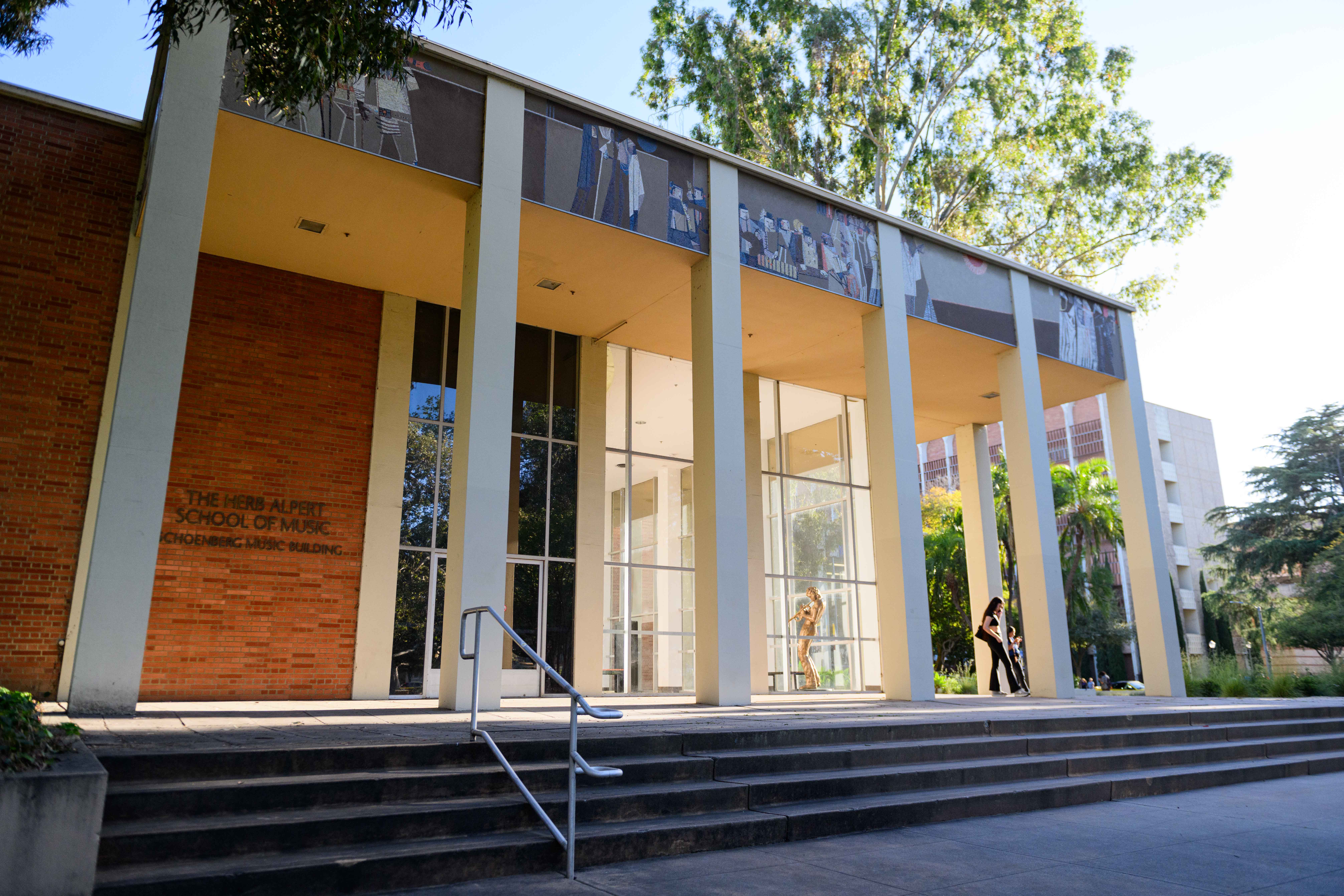
UCLA’s Schoenberg Hall is pictured. Recently publicized communications between a UCLA professor and convicted sex offender Jeffrey Epstein sparked varying levels of disapproval among students. (Daily Bruin file photo)

By Phoebe Huss
Dec. 23, 2025 8:45 p.m.
This post was updated Jan. 6 at 10:11 p.m.
Recently publicized communications between a UCLA professor and convicted sex offender Jeffrey Epstein sparked varying levels of disapproval among students.
Mark Tramo – an associate adjunct professor of neurology at UCLA – sent emails to Epstein in 2007 and 2018, according to Bloomberg and emails released by the United States House of Representatives’ House Oversight Committee. Lesley Groff, one of Epstein’s executive assistants, sent Epstein a “Skype schedule” in 2017 including a virtual meeting with Tramo, according to another email released by the committee.
Per Bloomberg, Tramo said in his 2007 email that he would stand by Epstein after it was reported that he was preparing a guilty plea to charges for soliciting prostitution – including from a minor – for which he served a 13-month sentence.
Epstein, who died in jail in August 2019 in what the U.S. Department of Justice later concluded was a suicide, was charged with sex trafficking of minors and conspiracy to commit sex trafficking of minors in July 2019. Epstein had relationships with prominent political and academic figures, including President Donald Trump, former President Bill Clinton and former Harvard University President Lawrence “Larry” Summers.
Epstein had over 1,000 sex abuse and sex trafficking victims, according to the FBI.
During his 2024 presidential campaign, Trump said on Fox News that he would declassify government files on Epstein if elected, adding on the Lex Fridman Show in September 2024 that he would have “no problem” releasing a list of clients who visited Epstein’s island. After his inauguration, however, Trump repeatedly dismissed calls to release the files and claimed they were not credible.
Following pressure from Congress, Trump signed the Epstein Files Transparency Act – which was first proposed in July – into law Nov. 19. The law requires that U.S. Attorney General Pamela Bondi releases the files within 30 days, except for those that she determines should not be publicized to protect “national security.”
Three photos in the new files – which were released Dec. 19 – are of Epstein wearing a UCLA sweatshirt, taken in a helicopter with one of his alleged victims. In an interview with attorney Gloria Allred, the victim said she was assaulted by Epstein four times when she was a minor.
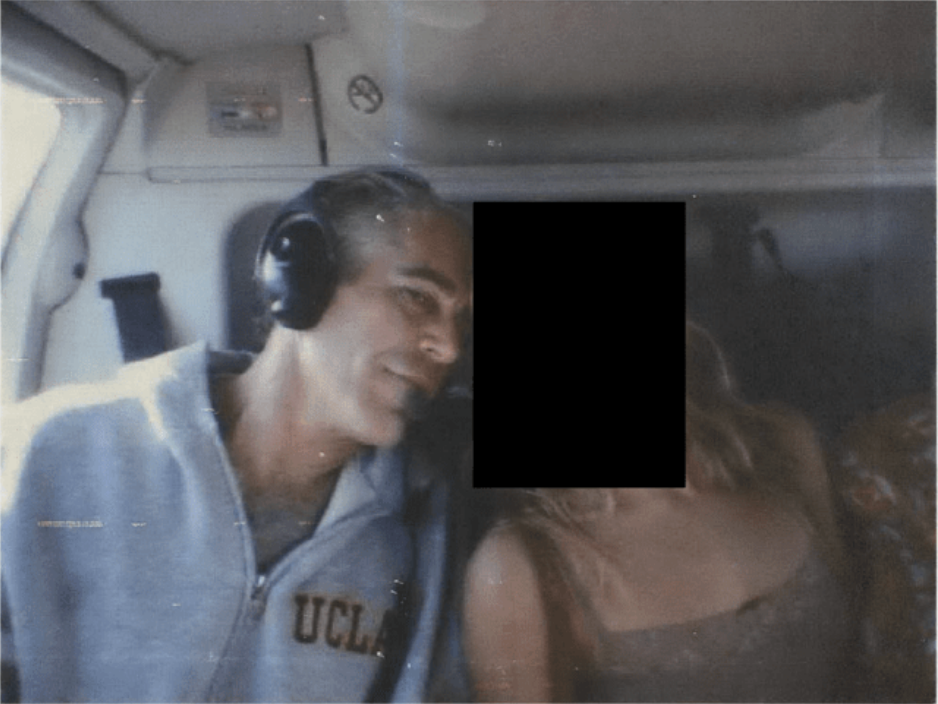
In addition to documents released by the Justice Department, the Oversight Committee released more than 50,000 pages of documents from Epstein’s estate between September and December. The released documents included the email with the Skype meeting schedule, as well as a 2018 email sent from Tramo to Epstein.
In the 2018 email Tramo said he planned to analyze an interaction between rapper Ye, formerly known as Kanye West, and Trump. The professor added in the email that he was sharing the information with Epstein “Given your (Epstein’s) interest in Creativity.”
Tramo sent the 2007 email to Epstein’s assistant after reading reports that Epstein was planning to enter a guilty plea, according to Bloomberg.
“I read the newspapers this morning. … Please remind him that boys from The Bronx (even if they end up at Harvard) have long memories, know all about cops, and stay true to their friends through thick and thin (no less peccadilloes),” Tramo said in the email, according to Bloomberg.
Tramo declined to comment on his contact with Epstein, instead referring a Daily Bruin reporter to a statement he gave the Harvard Crimson, in which he said he “never asked or read about what had happened in 2006-7.” He added in the statement that he “had been duped to believe” Epstein committed minor offenses.
Tramo also said in the emailed statement to The Crimson that he never visited Epstein’s private island and that he did not know Epstein was a “pervert.” He added that he met Epstein in the 1990s while working as a professor at Harvard Medical School.
“I never visited Epstein’s island, never flew on his planes, and never saw him with young girls,” Tramo said in the emailed statement to The Crimson.
At UCLA, Tramo taught “Music, Mind, and Brain,” a neuroscience course on how the brain processes music. He has taught UCLA courses combining music and brain studies since at least 2013.
A student in Tramo’s class this fall, who was granted anonymity out of fear of retaliation from Tramo, said she found it ignorant that Tramo expressed support for Epstein in the 2007 email, adding that she believes it “wasn’t really his place” to send the email if their relationship was purely based on research.
“We scientists know to usually wait until more information comes out before we say anything,” she said. “We always need to be sure about stuff like that.”
She added that, as a female student, Tramo’s communications with Epstein made her uncomfortable.
Another student, who was also granted anonymity out of fear of retaliation from Tramo, said they believe Tramo was likely aware of the allegations against Epstein when he sent the 2018 email.
In the decade following Epstein’s 2008 guilty plea and leading up to his 2019 arrest, dozens of women came forward about Epstein sexually abusing them, including when many of them were minors.
The second anonymous student added that they found it upsetting that Tramo maintained contact with Epstein after his initial jail sentence.
“You can’t say that you didn’t know what was going on if then you’re still contacting him past his initial arrest,” they said.
However, Grace Wang, a second-year comparative literature and neuroscience student who took Tramo’s class in fall 2025, said she does not believe the email says much about Tramo’s link to Epstein, adding in an emailed statement that he seems like the type to email “anyone of even remote interest to him.”
Whenever Tramo thinks of something, he “says it or sends it,” Wang said, pointing to a time that he once said in class that he emailed record producer George Martin to ask about a Beatles’ song.
Epstein named Tramo on a short list with other figures – including physicist Lawrence Krauss and “Chomsky,” likely referring to Noam Chomsky, a linguist who has been tied to Epstein – in a summer 2019 text message to an unknown recipient. A few days before, the unknown recipient asked Epstein for subject matter experts in mathematics and science.
Epstein’s message includes figures who are not math or science experts, however, making it unclear whether he was responding to the inquiry for experts.
Epstein also included “summers” on the list — likely referring to Summers, who was also the U.S. Treasury Secretary under Clinton and visited Epstein’s island, according to The Crimson. Summers stepped back from teaching Nov. 19, a day after he canceled his public commitments following the emails’ publicization.
“Some of you will have seen my statement of regret, expressing my shame with respect to what I did in communication with Mr. Epstein, and that I’ve said that I’m going to step back from public activity for a time,” Summers said to his class on Nov. 18 in a video posted on Instagram by students.
Tramo’s course involved reviewing studies and research papers from the Institute for Music and Brain Science this fall, according to students in the class.
The institute, founded by Tramo, allegedly received grants from the Jeffrey Epstein VI Foundation – which donated to artistic, scientific and humanitarian causes – between 2010 and 2012, according to an archived version of the foundation’s website.
“Him (Tramo) having founded the Institute comes up a lot, but we’ve never really talked about funding or associations,” Wang said.
She added that the papers read in class were mostly funded by National Science Foundation or National Institute of Health grants.
An archived version of the foundation’s website also said Epstein donated to UCLA and the “Institute of International Education, UCLA” between 2010 and 2012. The university has the UCLA International Institute as well as an International Education Office, but does not have an “Institute of International Education,” which is the name of a separate nonprofit organization Epstein has been linked to that is not associated with UCLA.
Epstein allegedly made many of his contributions through three charities – C.O.U.Q. Foundation, Epstein Interest and Gratitude America Ltd. – including $1,000 to the UCLA Foundation, according to Internal Revenue Service filings reviewed by the Miami Herald. The filings also show that Epstein donated to the “Institute of International Education.”
A spokesperson from UCLA Media Relations said in an emailed statement that UCLA has no records of philanthropic gifts from the Jeffrey Epstein VI Foundation. The spokesperson did not comment on the alleged donations reported by the Miami Herald.
It is normal for academic institutions to ask potential donors for money, said Michael Fleming, an adjunct professor of organizational development and public policy at UCLA and the president of the David Bohnett Foundation, a grant-making organization.
Andrea Fraser, an art professor and area head of the Interdisciplinary Studio at UCLA, said in an emailed statement that non-profit organizations do not typically limit where donations can come from, even if donor activities contradict the goals of the organization.
“The typical justification for this model is that the good done by mission-driven organizations outweighs the social harm that may have been done by wealthy donors,” said Fraser, who researches philanthropy, in the emailed statement.
Fraser added that recipients receive not just money, but entry into a world of privilege.
Fleming said some donors and recipients have ongoing relationships, such as when a donor and recipient run in the same social circles based on their academic interests.
However, there are also benefactors who have no social relationship with their funding recipients, said Fleming, who has taught a course on philanthropy at the Luskin School of Public Affairs for 14 years.
Fleming added that both grantors and grantees typically maintain written documentation to prevent miscommunication. Some alleged recipients of Epstein’s gifts told NBC in 2019 they had no record of the financier’s contributions.
Tramo did not respond to a request for comment on whether he spoke with Epstein preceding Epstein’s alleged donations to the Institute for Music and Brain Science. In 2012, a news release from Epstein’s foundation said his donations constituted “substantial backing” of the institute’s study of the effect of music on premature babies.
The second anonymous student said Tramo is an expert in neuroscientific research of music in relation to the brain, which made his affiliation with Epstein particularly “disappointing” and “shocking.”
“He’s really one of those first people who pioneered that subject in neuroscience, so it’s really disappointing to see that that might have been coming from some dirty money,” the student said.
Nathaniel Le, a third-year neuroscience student in Tramo’s fall 2025 class, said he does not have enough information about the relationship between Tramo and Epstein to alter his feelings toward the class.
“I believe many of the Harvard professors who corresponded with him (Epstein) and received funding in the early 2000s were part of what you would call Epstein’s public image,” Le said in an emailed statement. “Until there is solid proof that Dr. Tramo was receiving illegal favors or visited the island, my enjoyment of his class will not be diminished.”
Wang also said she does not believe Tramo’s correspondence with Epstein is “enough to make any sort of judgment.” She added that she does not think differently about her professor, whom she said she has learned a lot from in the class.
However, the first anonymous student said her views on Tramo have been negatively impacted in light of his relations with Epstein.
“In my family, it was taught that the people you hang around with says a lot about yourself,” she said.
The second anonymous student said they would appreciate clarity from Tramo on his “later” correspondence with Epstein. The first student also said it would help if Tramo would sit down with a reporter and set the record straight on his thought process behind communicating with Epstein, clarifying whether he knew about the charges against Epstein or not.
“(It) would probably give a lot of students a clearer image of who he is,” she said.
Contributing reports by Josephine Murphy, national news and higher education editor.