UC agrees to send alerts on campus immigration enforcement activity

The California State Capitol is pictured. A state senator passed a bill that recommends the UC alert school community members when immigration enforcement has conducted activity on campus. (Edward Ho/Daily Bruin)

By Phoebe Huss
Feb. 18, 2026 10:33 a.m.
This post was updated Feb. 18 at 11:27 p.m.
The UC agreed to comply with a new state law requesting that it alerts students and staff about immigration enforcement activity on campus, the bill’s author said.
Senate Bill 98, also known as the Sending Alerts to Families in Education Act, mandates that public K-12 schools, as well as the California State University and California Community College systems, notify students, faculty and family members when federal agents are confirmed to have conducted immigration enforcement on their campuses.
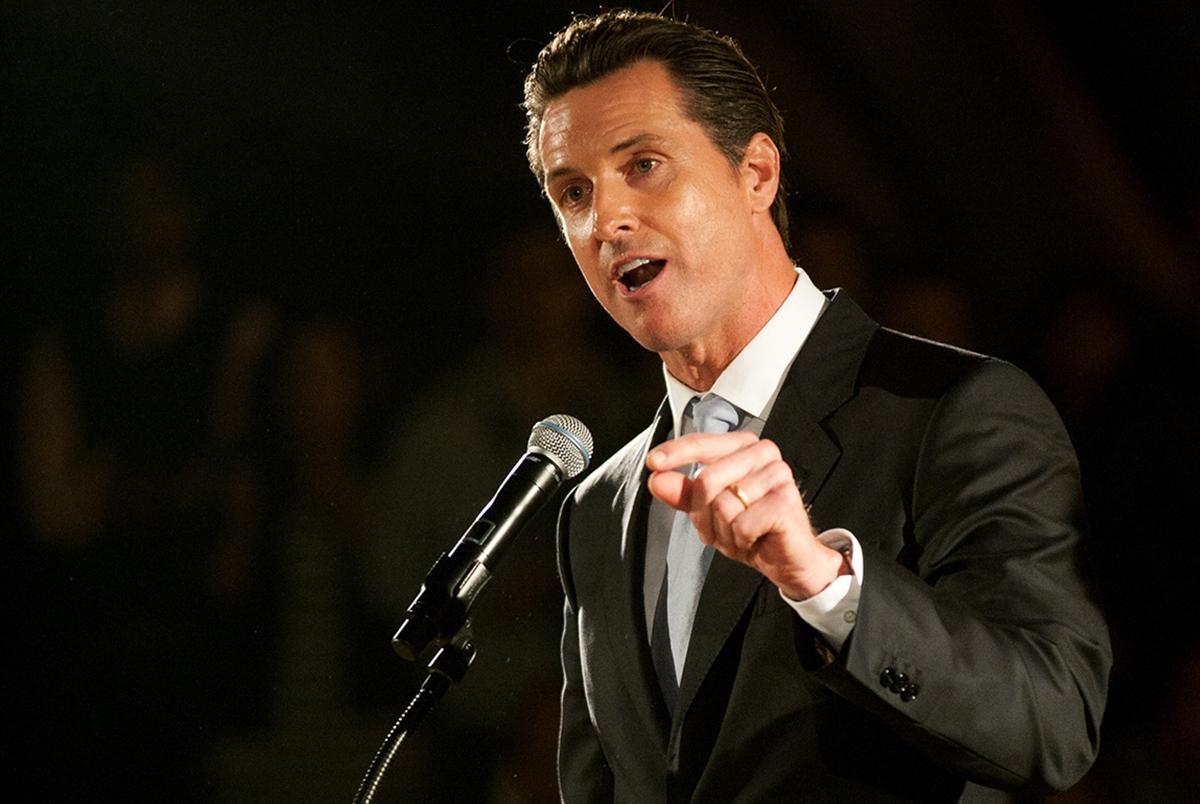
The act – signed by Gov. Gavin Newsom in September 2025 and taking immediate effect – requests the UC system send these notifications, because the UC has autonomy granted by the state constitution, according to a senate bill analysis.
Language like “request” instead of “require” is often used in legislation relating to the UC, a spokesperson for State Senator Sasha Renée Pérez, the bill’s author, said in an emailed statement.
Pérez, however, told the Daily Bruin in an interview that every UC campus has agreed to implement the notification system on their campus.
The senator said undocumented students from UC Berkeley approached her to write a law protecting college students shortly after she took office in December 2024. The students feared federal agents would conduct immigration enforcement more aggressively after President Donald Trump took office, Pérez said.
“We were hearing from students across the state, primarily college students, that there was a lack of a clear and consistent policy for how to inform students when the Department of Homeland Security, United States Immigrations and Customs Enforcement, and Customs and Border Protection was on campus,” the senator said. “Having one standard policy became really important and critical.”
In April 2025, immigration agents attempted to enter multiple public elementary schools in Los Angeles, looking for five students between first and sixth grade. School administrators denied the agents entry, according to The Guardian.
Pérez said these incidents inspired her to include K-12 systems in her legislation.
“We want to make sure that parents, guardians, as well as students, understand what is happening on their campus … so that families can understand what to do to protect themselves,” Pérez said.
Steve Lurie, UCLA’s associate vice chancellor for campus and community safety, said at a Jan. 26 information session that the school built an email notification system for SAFE Act notifications that functions similarly to BruinALERT – emergency notifications sent by text, email or phone call. Lurie added at the session that students and faculty should contact UCPD if they believe they have witnessed immigration enforcement activity on campus.
These notifications are not meant to be early warnings, Lurie said. UCLA will only send the messages after UCPD verifies federal officials were or are on campus for the purpose of immigration enforcement, he added.
[Related: UCLA shares immigration enforcement policies, procedures in accordance with CA law]
The SAFE Act defines immigration enforcement as investigating, enforcing or assisting in the investigation or enforcement of a federal law that penalizes a person’s presence in or entry into the country. Lurie said at the information session that the act could apply to officers from any federal law enforcement division, including the Federal Bureau of Investigation, if they are enforcing federal immigration law.
To confirm enforcement activity, UCPD will ask either the federal agents on-site or DHS officials in LA if the agents have already left campus, Lurie added at the session.
Following UCPD confirmation, UCLA will email students, staff and all email addresses signed up for BruinALERT with the date, time and location of the enforcement action, along with a link to additional resources, per the SAFE Act.
Lurie added that there are many reasons a federal agent could be on campus that would not trigger the notification system, such as checking on visa statuses or reviewing students’ transcripts if they are applying for a government job. He added that UCPD will be strict in verifying all incident reports, which he said could cause potential delays in notifying students.
“I hope you can all agree that sending out a notification that turned out to be false would be a terrible outcome,” Lurie said. “There have been already, in the last three to six months, several false alarms.”
Lurie added that, as of the meeting date, no confirmed immigration enforcement activity has taken place at UCLA.
Pérez also said she hopes the law will help combat misinformation surrounding false reports.
“Rumors can spread like wildfire,” Pérez said. “People (can) become really alarmed and become very fearful because they think that there is ICE present on their campus when there’s not.”
Several faculty members asked questions at the information session about what they can do to protect students from immigration agents on campus. Lurie responded to most inquiries by saying faculty should first contact UCPD if they encounter federal agents.
Lurie added at the information session that faculty should be careful not to obstruct law enforcement.
“If they insist on doing anything, and they are armed law enforcement agents or badges, you should not try and stop them,” Lurie said.
Lurie also said at the information session that if an agent attempts to enter a classroom using a warrant, UCPD will contact lawyers to evaluate the warrant’s validity.
Jack Feng, a third-year doctoral epidemiology student and external vice president of the Graduate Students Association, said while the federal government enacts immigration policy, initiatives such as the SAFE Act can benefit undocumented, immigrant and international students.
“We need the institution – UCLA and UC – to stand up to protect our students from harmful federal overreach, particularly those who continue to be exposed to further harm,” Feng said.
Unlike the CSU and CCC systems, the UC is primarily governed by its systemwide leaders – the UC Board of Regents – instead of the state legislature. Pérez said this means most state laws cannot change UC policies.
“We can only advise and try to implore, if you will, the UC to do something, but because of the way the state’s constitution is designed, the legislature does not have the authority to direct the UC to do anything,” Pérez said. “But we did work very closely with the UC system to make sure that all campuses were implementing this bill to its full fidelity.”
Before Newsom signed the SAFE Act, more than 50 school districts and organizations registered with the state legislature as supporters of the law – including the UC Student Association, a coalition of UC undergraduate, graduate and professional students.
In April 2025, the Senate Appropriations Committee said in a bill analysis that the SAFE Act will incur only “minor and absorbable” costs for the UC and CSU, but added that the notification system mandated by the bill will cost the CCC between $1.2 and $1.7 million to implement. The money will be used to update existing immigration enforcement procedures and protocols and to “clarify the responsibilities of the district chancellor/college president,” according to the analysis.
Pérez said in an assembly committee hearing that Proposition 98 will cover implementation costs for the CCC system. The proposition guarantees minimum funding for K-12 schools and community colleges, and is calculated annually based on state revenue and inflation.
Stephany Cartney, a UCLA alumnus, testified in support of the SAFE Act in a senate committee hearing in March 2025. Cartney – who emigrated from Nigeria with her mother and sister at age eight and grew up in San Diego – said at the hearing that she was afraid to attend her classes due to increased immigration enforcement under the second Trump administration.
“Transparency around immigration activity in our educational communities would ease the stress and anxiety faced by me and so many other immigrant students and families significantly and allow us to regain a sense of trust and safety in our schools,” Cartney said at the hearing.
Pérez said she will continue to advocate for California immigrants, including students, amid heightened federal immigration enforcement activity.
“I want students to know that we’re going to do everything we can as the state, and I’m going to do everything that I can as a legislator, to make sure that they’re protected,” Pérez said.