Film review: ‘The Strangers: Chapter 3’ sabotages suspense with excessive exposition
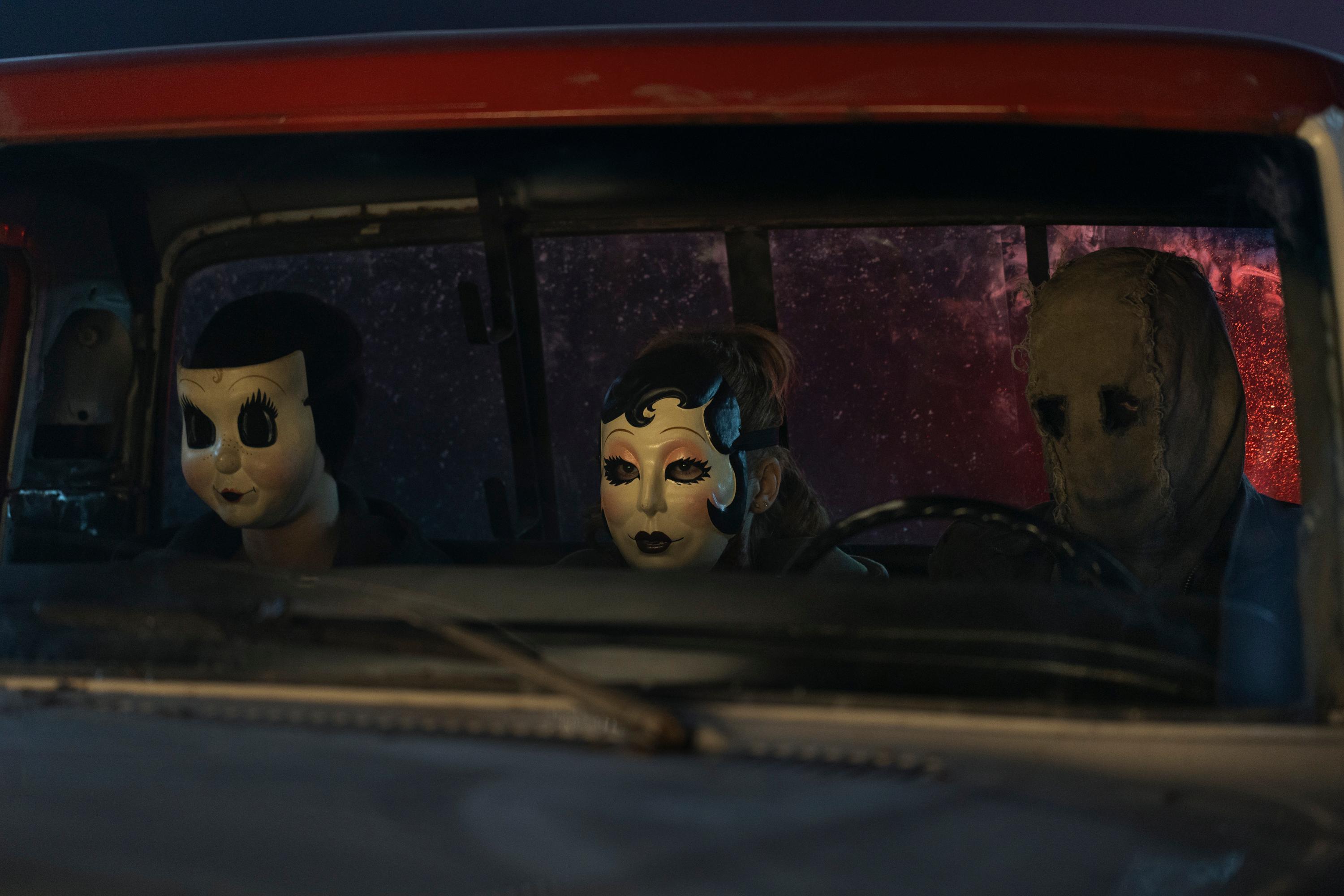
Three masked individuals are pictured sitting inside of a car, shoulder to shoulder. “The Strangers: Chapter 3” marks the third and concluding installment in the franchise. (Courtesy of Lionsgate)
“The Strangers: Chapter 3”
Directed by Renny Harlin
Lionsgate
Feb. 6


By Eric Sican
Feb. 10, 2026 1:43 p.m.
This post was updated Feb. 10 at 8:31 p.m.
Warning: Spoilers ahead.
“The Strangers: Chapter 3” arrives with the promise of finality but collapses under the weight of a franchise too eager to explain itself.
Released Feb. 6, this installment serves as the concluding chapter in Renny Harlin’s trilogy. The film picks up immediately after the events of “Chapter 2,” with Maya (Madelaine Petsch) briefly evading her attackers before crashing her car and being recaptured by Gregory – also known as Scarecrow (Gabriel Basso) – and Dollface. What follows is not a tightening spiral of dread but a blunt exercise in endurance horror, one that confuses cruelty for suspense and exposition for substance.
From its opening moments, “Chapter 3” signals its priorities. The film is less interested in generating fear than in closing narrative loops. The Strangers, once terrifying in their motiveless violence, are now burdened with explanations. Gregory’s reveal as Sheriff Howard Rotter’s (Richard Brake) son is delivered through a string of flashbacks that feel perfunctory rather than revelatory, reducing his menace to a small-town pathology problem rather than something existentially unsettling.
Maya’s forced induction as the new Pin-Up Girl is positioned as the film’s central horror. Branded, masked and coerced into inhabiting the identity of the killer she just survived, she becomes a visual shorthand for the franchise’s fixation on its own iconography. Yet these scenes linger without purpose. The shock wears thin quickly, replaced by a numbing repetition that prioritizes discomfort over dread.
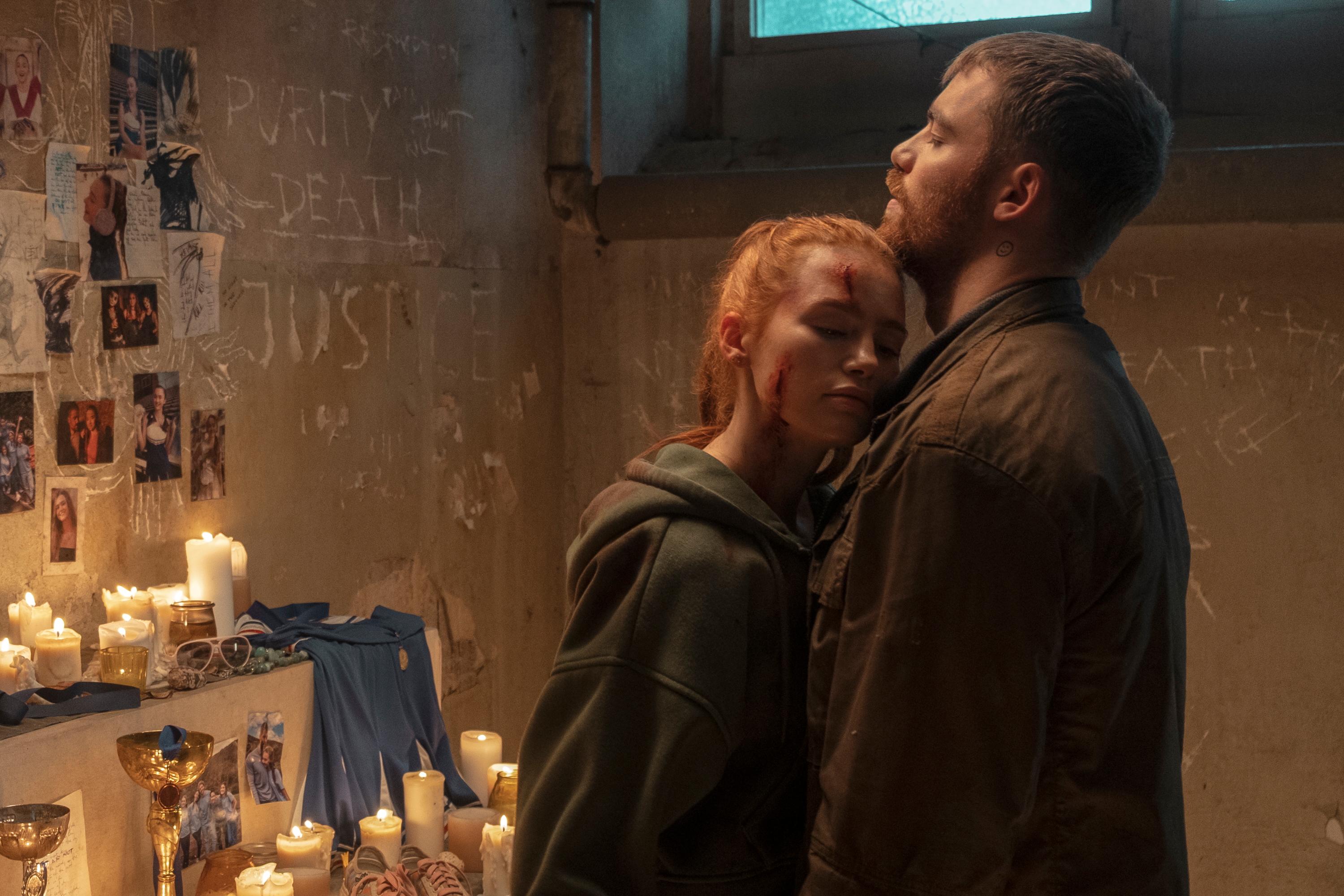
Petsch gives a committed physical performance, embodying exhaustion and fear with visible strain. Still, the script offers little psychological texture, leaving the film’s unease to rest largely on elements like music and lighting. Maya is pushed from one ordeal to the next with minimal interiority, her survival framed as spectacle rather than character development. The film stretches her suffering across its 91-minute runtime, mistaking duration for depth.
Basso’s Gregory is similarly undercut by the film’s insistence on backstory. His emotional attachment to the original Pin-Up Girl is framed as tragic, an attempt to lend romantic gravity to his violence. Instead, the film reduces him to a flat, one-note figure, his motivations shaped more by cliche than by any genuine sense of interiority. His volatility feels petulant rather than frightening, his cruelty motivated by wounded longing rather than something truly unknowable. The Strangers become understable, and in doing so, they lose their edge.
Visually, the film confines itself to underground spaces and dim interiors, leaning into claustrophobia as a substitute for tension. But the narrow setting quickly becomes monotonous. The camera lingers for too long, draining scenes of urgency and allowing suspense to dissipate. What should feel suffocating instead feels stagnant.
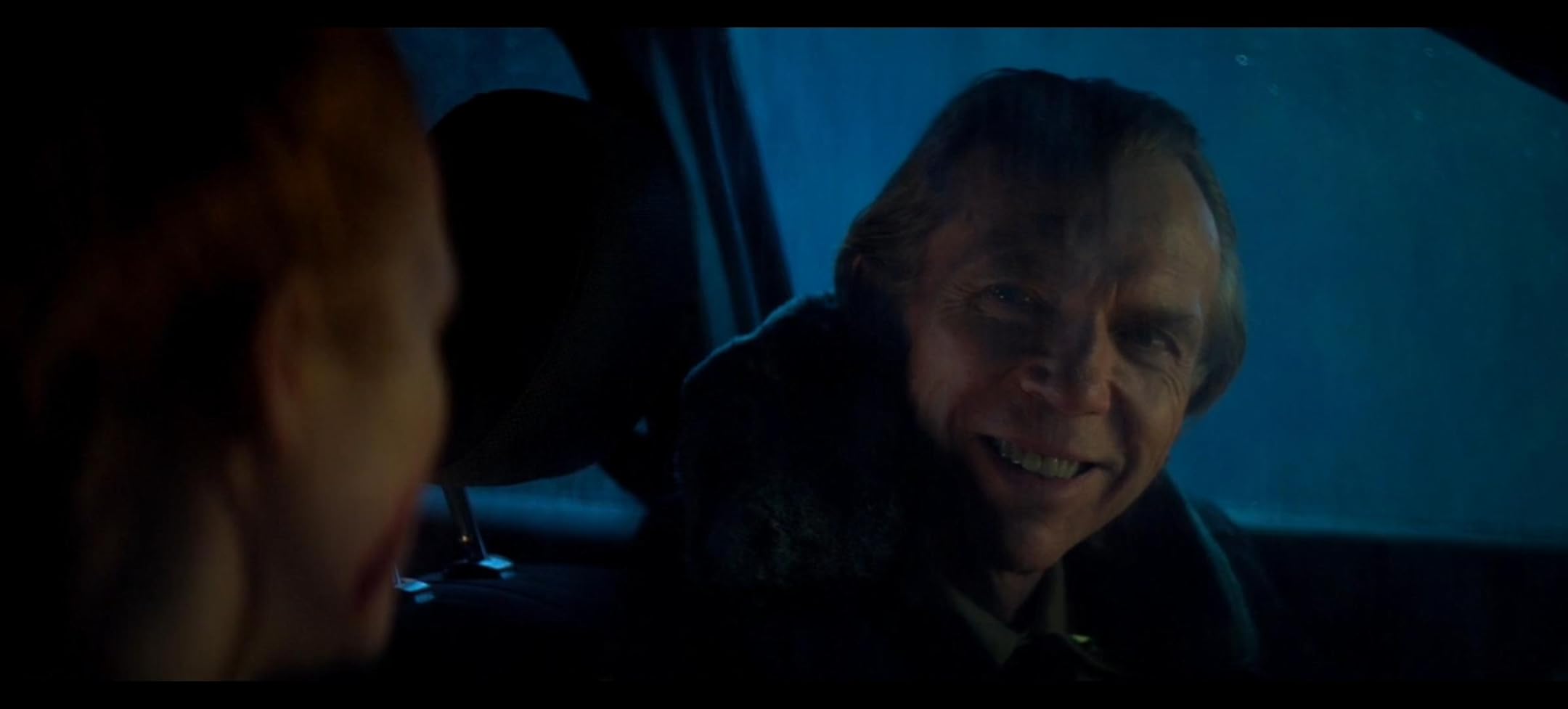
The revelation of Sheriff Rotter’s complicity introduces the idea of institutional rot, positioning the town of Venus, Oregon, as a silent accomplice. Yet this thread is introduced late and resolved hastily, functioning more as narrative housekeeping than thematic exploration. When Maya kills the sheriff, the moment lands without weight, more procedural than provocative.
The final confrontation between Maya and Gregory gestures toward poetic reversal. Manipulating his emotions, she lures him into vulnerability before killing him with the very knife he once offered her. It is a conceptually fitting end that never quite earns its impact. The psychological tension the moment demands is rushed, blunted by the film’s earlier excesses.
In the closing scene, Maya emerges from the underground lair alive, battered and silent, holding the Scarecrow mask loosely in her hand. The image suggests reckoning rather than transformation, a quiet acknowledgment of what she has endured. But after a film so eager to explain itself, this final restraint feels out of place, a hollow gesture toward ambiguity that arrives too late to resonate.
By its conclusion, “The Strangers: Chapter 3” has stripped its villains of mystery and its horror of tension. In trying to give meaning to senseless violence, the film dilutes the very terror that once defined the franchise. What remains is a grim, overextended finale that confuses closure with consequence, leaving little behind beyond exhaustion.